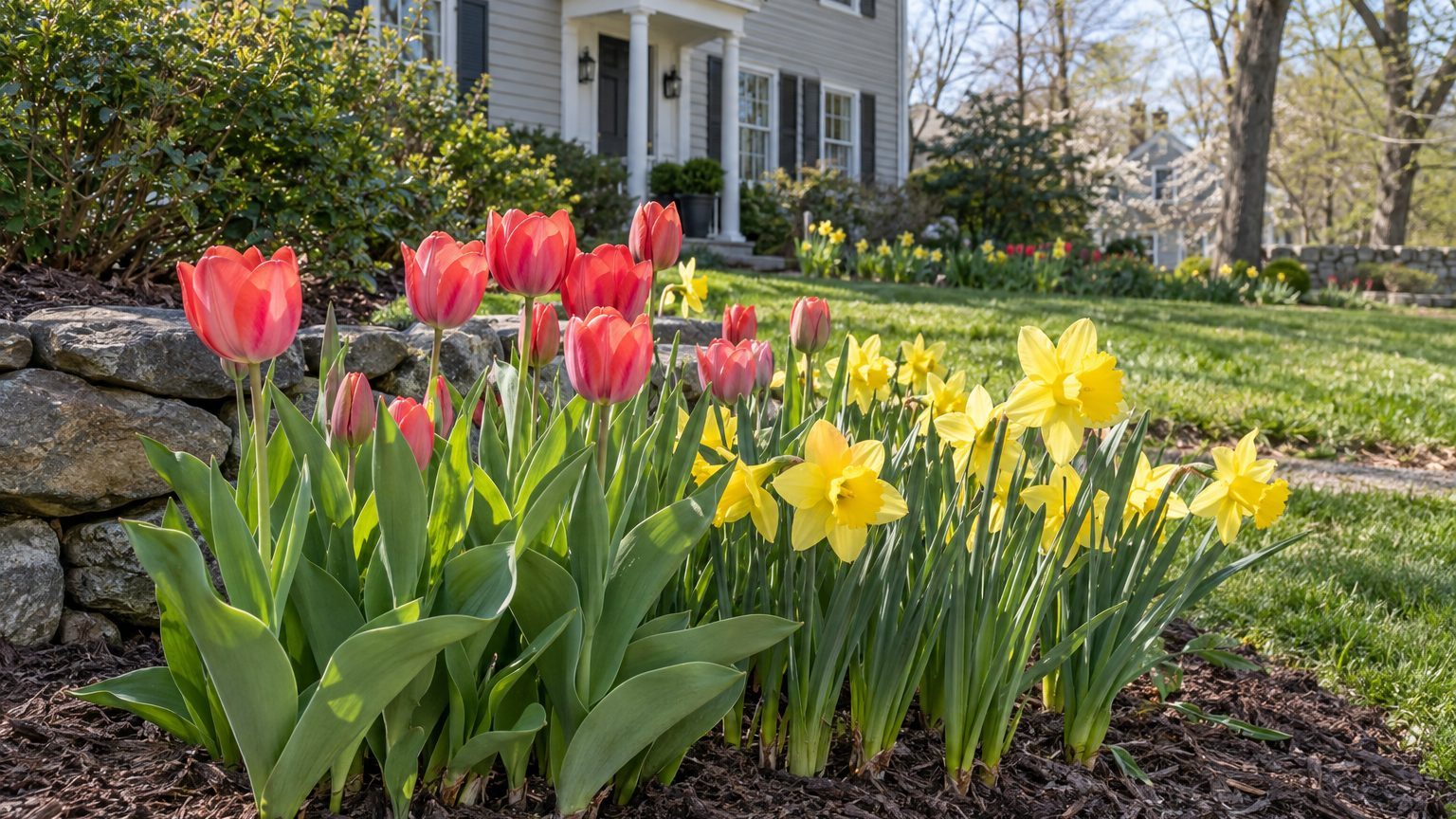
Daffodils shining under a bare maple in April are a Massachusetts regular, and they come back year after year with almost no help. Tulips, crocus, alliums and hyacinths all bloom here too, but they do not all last equally well. The right choice depends on your winter, your wildlife and how much care you want to give.
Best Spring Bulbs to Grow in Massachusetts

Daffodils are the dependable choice, with Fosteriana tulips, alliums, crocus and hyacinths close behind. Massachusetts spans USDA zones 5a to 7b, and every bulb below handles that range. The winter cold here also supplies the chill that most bulbs need before they flower.
Daffodils
Most daffodils are hardy to zone 3, so Massachusetts winters are no threat to them. They last longer than tulips, and they are the more reliable perennial bulb.
Deer, voles, squirrels and rabbits leave them alone. Daffodils also naturalize well, especially in partly shady spots under trees.
Fosteriana Tulips
Most garden tulips fade after a few seasons. Fosteriana tulips perennialize well, which makes them the tulip to pick if you want blooms to return.
Plant them in sun with good drainage. Fence or protect them if animals visit your yard, since tulips are a favorite food.
Alliums
Alliums, the ornamental onions, bloom at the end of the bulb season and carry color after the daffodils fade. They do not need a chill period to bloom, so a mild winter spell does not hold them back.
Crocus
Crocus are small, early and cheerful, tucked into lawn edges or beds. Squirrels, voles and rabbits eat them, so they do best where you can guard them or accept some losses.
Hyacinths
Hyacinths add fragrance near a door or walkway. Like tulips, they need about 12 to 16 weeks of cold to flower, and a Massachusetts winter delivers it without any help from you.
Massachusetts — the year and the numbers
- State
- Massachusetts
- USDA zones
- 5a-7b
- Last spring frost
- April 1 to April 8
- First fall frost
- November 3 to November 14
- Annual rain
- 44 in
- Lawn zone
- cool-season
- Source
- NOAA NCEI 1991-2020 Climate Normals, 32F freeze probabilities · Boston
How to Choose Spring Bulbs for Your Massachusetts Garden
Start with what your yard throws at a bulb: cold, hungry animals, shade or a short list of free weekends. Each problem points to a different bulb.
Think about how long you want the planting to last, too. A bed of tulips is a seasonal treat, while daffodils are an investment that keeps paying.
| Your situation | What suits it in Massachusetts | Why |
|---|---|---|
| Very cold winter | Daffodils | Most are hardy to zone 3, far colder than your winter gets. |
| Deer, squirrels, voles or rabbits | Daffodils | Animals leave them alone, while tulips and crocus get eaten. |
| Little time for upkeep | Daffodils in a partly shady spot | They naturalize well and last longer than tulips. |
| Tulips that return | Fosteriana tulips | They perennialize well, unlike many short-lived tulips. |
| Worry about winter cold | Tulips and hyacinths planted in October | They need about 12 to 16 weeks of cold, which a Massachusetts winter supplies. |
| Doubt about chilling | Alliums | They need winter cold to bloom |
Daffodils can also serve as deer training plants. Set them around more tempting plants and animals learn to browse elsewhere.
Which Spring Bulbs Suit Different Parts of Massachusetts
Massachusetts has more climate variety than its size suggests, and a few local differences change what you plant.
- The Berkshires: Winters bite harder here and spring frost lingers later, so lean on daffodils, the most cold-tolerant bulb. Expect blooms toward the later part of the season.
- Boston and the waterfront: Milder than anywhere inland, which makes this the easiest place for tulips and hyacinths. They still get the winter cold they need.
- Inland suburbs: Frost arrives earlier in fall and leaves later in spring than at the shore. Daffodils and Fosteriana tulips are a safe bet, with alliums to finish the season.
Wherever you garden, check your own yard for microclimates such as a warm south wall or a frosty low spot.
Spring Bulb Buying Mistakes to Avoid in Massachusetts
Planting Too Early
Bulbs that go in during warm weather can sprout in the fall, and that tender growth does not survive winter. Wait until the soil has cooled below about 60°F. In Massachusetts, October is the month to plant, so roots form before the ground freezes. If the ground is not frozen, November or December still works.
Expecting Tulips to Last Forever
Many tulips fade after a few seasons, and animals make it worse. A big tulip order near wildlife often means a bare bed by the second spring. Mix in daffodils, choose Fosteriana tulips, or plan to replant tulips as a seasonal display.
Cutting Leaves Too Soon
Tulips and daffodils flower on energy their leaves store. Cutting or tying the foliage while it is green starves the bulb. Remove only the faded flowers and leave the leaves until they turn brown, and next spring’s blooms will be stronger.
Where to Get Spring Bulb Advice in Massachusetts
Local help is easy to find. University of Massachusetts Extension is the state’s land-grant extension service and answers questions about bulbs, soil and pests, with advice tuned to Massachusetts conditions.
- University of Massachusetts Extension publishes planting guidance and fact sheets, so check it before you order bulbs in late summer.
- Your county or regional extension office can look at a problem bed or a soil question, so call before planting season starts.
Common Questions
When Do Tulips and Daffodils Bloom in Massachusetts?
Most flower in April and May. The earliest hardy bulbs can open as soon as March, while later varieties bloom in late April and May.
Can You Plant Bulbs in December in Massachusetts?
Yes, as long as the ground can be dug. A bulb still in the bag is better planted late than stored over the winter.
Do All Spring Bulbs Bloom at the Same Time?
No. Spring bulbs bloom in a long succession, from snowdrops and winter aconites at the start of the season to ornamental onions at the end. Planting several kinds spreads the color across the spring.