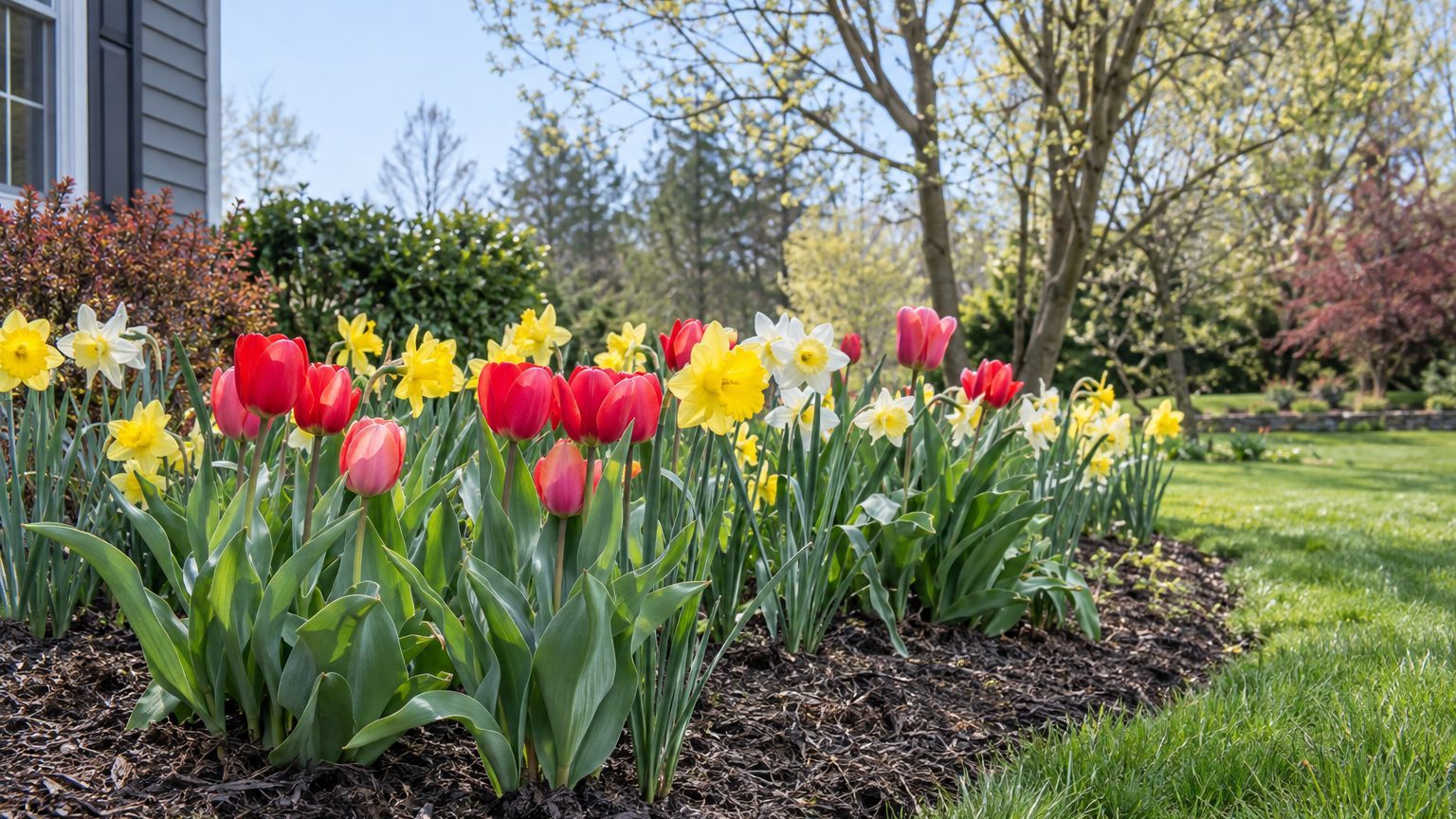
Green tips pushing through cold soil in spring are the first sign that the bulbs you planted the previous fall made it. In Yukon, tulips and daffodils flower once the spring warm-up has taken hold, which comes later than in the southern provinces and states. What follows covers timing, signs, aftercare and local differences.
When Do Tulips and Daffodils Bloom in Yukon?

Tulips and daffodils bloom when spring warmth arrives, and no set month applies across the territory. Yukon has no local bulb-timing guidance of its own, so the planting dates here are based on the local climate as best it can be judged. Confirm local timing with a garden centre or a garden society.
| Bulb | When it blooms in Yukon | What sets the timing |
|---|---|---|
| Snowdrops | Follows spring warming, at the start of the bulb season | Hardy enough to winter over in the north |
| Daffodils | Follows spring warming | Long-lived and reliable as a perennial bulb |
| Greigii tulips | Follows spring warming | Came up the first spring after a mild winter in Yukon |
| Scilla and grape hyacinth | Follows spring warming | Scilla winters over well in Fairbanks, grape hyacinth sometimes does |
| Alliums | Follows spring warming, at the end of the bulb season | Needs the cold of winter to bloom |
Frost is the other clock. In Whitehorse the average last spring frost is June 5, and in one year out of two it arrives later, so treat that date as the middle of a window and never as a safe one. Northern and upland yards run weeks behind. The reference city sits in Canadian hardiness zone 1b, which does not convert to a USDA zone. A tulip that needs 12 to 16 weeks of cold has no trouble getting it here.
Yukon — the year and the numbers
- State
- Yukon
- Hardiness zones
- 1b
- Last spring frost
- June 5
- First fall frost
- August 25
- Annual rain
- 10 in
- Lawn zone
- cool-season
- Source
- Environment and Climate Change Canada — Canadian Climate Normals 1981-2010, station WHITEHORSE A · Whitehorse
How to Tell Your Bulbs Are About to Bloom
Bulbs announce themselves well before the first petal opens, and the signs are easy to read at ground level.
- Green tips poking through the soil mean the roots set last fall survived the winter and the bulb has restarted.
- Leaves that lengthen and open out mean the plant is now gathering energy, so protect them from trampling and from careless raking.
- A flower bud rising from the center of the leaves means bloom is close, and a late cold snap is the one thing worth covering against.
- A bud that shows colour at its tip, whether yellow on a daffodil or red on a tulip, means the flower will open soon.
- Tall, narrow leaves on alliums followed by a round bud on a stiff stalk mean the end of the bulb season has come.
Growth that stalls in a cold spell usually resumes with the next warm spell, so a pause is no cause for alarm.
What to Do After Tulips and Daffodils Bloom in Yukon
Snip off the faded flowers and leave everything else. The leaves keep feeding the bulb for next year’s bloom, so they stay on the plant until they turn yellow or brown. Never cut them green, and do not tie them into neat knots, because a tied leaf gathers less light.
Expect tulips to fade after a few seasons, since they are often short-lived in the garden. Daffodils last longer and are the more dependable perennial bulb, which makes them the safer choice for a spot you would rather not replant.
Wildlife shapes what survives. Voles, squirrels, rabbits and deer eat tulips and crocus, while daffodils are left alone. If tulips keep vanishing from a bed, plant daffodils in that spot and keep tulips in a protected corner.
How Bloom Time Shifts Across Yukon
Yukon is large, and bloom follows local warming, so yards a few hundred miles apart can flower on quite different schedules.
- Whitehorse: This is the reference point for the frost date above.
- Dawson City: Northern districts such as this one run weeks behind Whitehorse, so the frost risk lingers longer.
Upland yards and cold hollows behave like the northern districts, so watch your own garden rather than the town’s reputation.
Where to Get Bulb Advice in Yukon
Canada has no county extension offices. Agriculture and Agri-Food Canada is the national starting point, and the territorial agriculture department and local gardeners fill in the details for Yukon.
- Visit Agriculture and Agri-Food Canada for general guidance on growing and hardiness, and check it before choosing bulbs for a new bed.
- Ask at a local garden centre or garden society in late summer, when bulbs arrive and planting advice is freshest.
- Call the territorial agriculture department with questions about soil or pests when something goes wrong in spring.
Common Questions
When Should You Plant Tulips and Daffodils in Yukon?
August and September are the planting months, with late August to early September as the target. Planting then gives roots time to form before the ground freezes, without pushing the bulbs to sprout in fall.
Do You Need to Chill Bulbs Before Planting in Yukon?
No. Refrigerator chilling is meant for places with winters too mild to give bulbs enough cold, and Yukon winters supply plenty of it.
What If Bulbs Are Still in the Bag After Planting Time?
Plant them anyway, as long as the ground can be dug. A bulb planted late has a better chance than one stored over the winter.