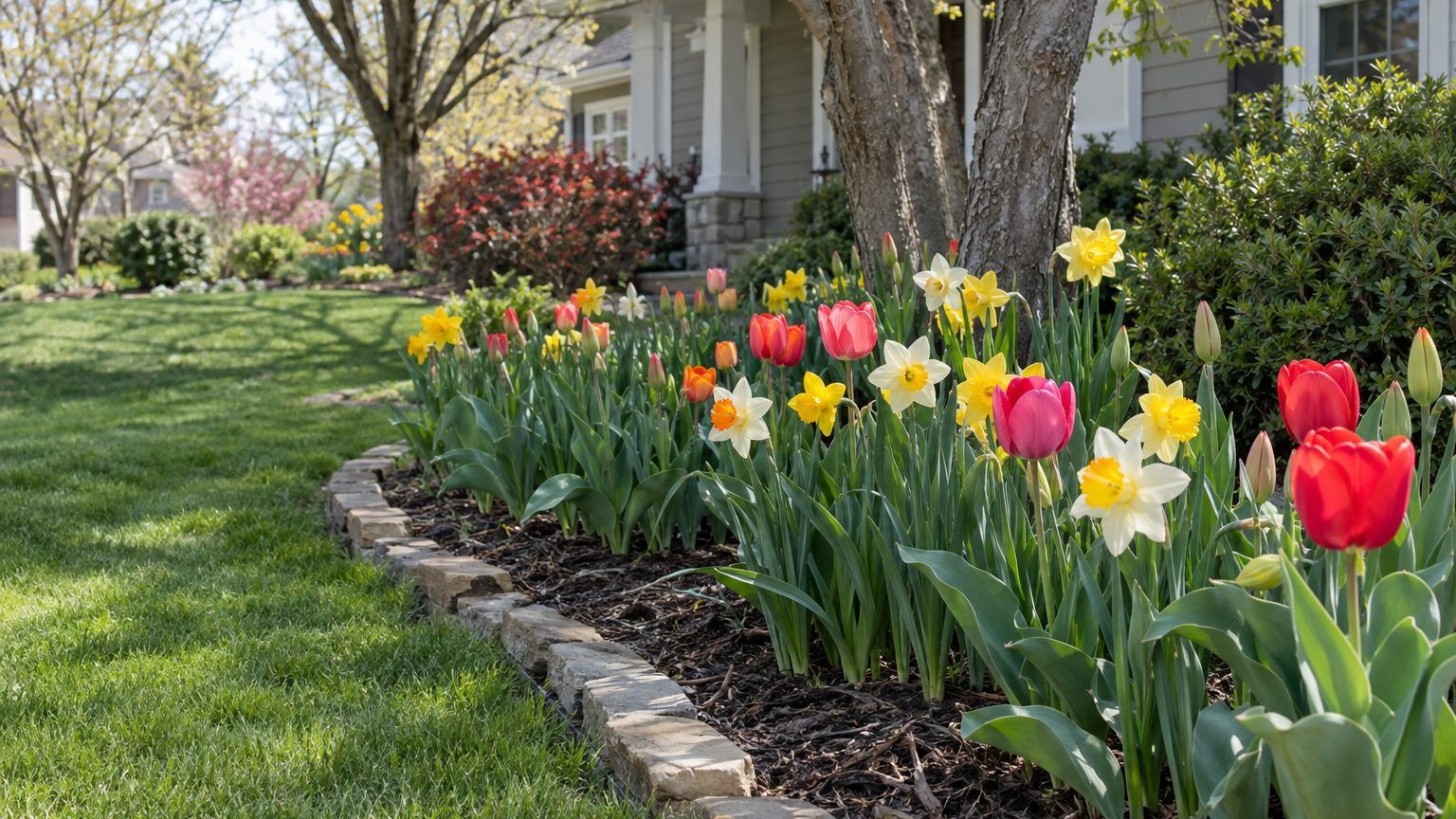
Green tips pushing up through cold spring soil are the first sign that bulbs have made it through a prairie winter. In Saskatchewan, tulips and daffodils flower in April and May, with tulips at their fullest from late April to mid-May. Spring weather in the province decides where a given year lands inside that window.
When Do Tulips and Daffodils Bloom in Saskatchewan?

Tulips and daffodils bloom in April and May. The flowers follow the warming of the soil and air, so a mild spring brings them on sooner and a slow, cool one holds them back. Dates here follow the nearest comparable climate on the northern plains, so confirm local timing with a garden centre, a garden society or a provincial gardening group.
Saskatoon sits in zone 3a of the Canadian plant hardiness system, which is a separate scale from the USDA map. Bulbs that get a long, reliably cold winter have the chill they need to flower.
| Bulb | When it blooms in Saskatchewan | What sets the timing |
|---|---|---|
| Daffodils | April to May | Location and spring temperatures, which shift from year to year |
| Tulips | April to May, at their peak from late April to mid-May | Location and spring temperatures, which shift from year to year |
Crocus, hyacinths and alliums also flower in spring, and ornamental onions (alliums) come at the very end of the bulb season. Their exact weeks shift with each spring’s warmth, so watch your own beds rather than a fixed date.
Saskatchewan — the year and the numbers
- State
- Saskatchewan
- Hardiness zones
- 3a
- Last spring frost
- May 18
- First fall frost
- September 18
- Annual rain
- 14 in
- Lawn zone
- cool-season
- Source
- Environment and Climate Change Canada — Canadian Climate Normals 1981-2010, station SASKATOON SRC · Saskatoon
How to Tell Your Bulbs Are About to Bloom
Bulbs announce themselves well ahead of the first petal, and a regular walk along the bed shows where each planting stands.
- Pointed green tips breaking the soil mean the bulbs have woken up, so pull back any heavy mulch gently and let light reach them.
- Leaves that open and lengthen show the bulb is working, and daffodils and tulips are likely to flower in April or May.
- A flower bud rising from the center of the leaves means bloom is close, and it is time to check the forecast.
- Buds that show color while still closed mean the flower will open as soon as the weather turns warm, often within the peak tulip window from late April to mid-May.
- Stems that stall or bend in cold wind mean the plant is waiting on warmth, and a bulb that pauses usually resumes when temperatures rise.
A frost on open flowers can damage petals, but the bulb underground stays safe and returns the following spring.
What to Do After Tulips and Daffodils Bloom in Saskatchewan
Snip off the faded flowers and leave everything else standing. The leaves feed the bulb for next year’s bloom, so they stay on the plant until they turn brown. Never tie them in knots or cut them while they are green, however untidy the bed looks in the meantime.
Tulips are often short-lived in the garden, because years of hybridizing have weakened their ability to return. Daffodils last longer and are the more reliable perennial bulb. Species tulips, the shorter types with smaller flowers, tend to come back better than large hybrids, and you can treat the big hybrids as annuals if they fade.
Wet, heavy clay is hard on hybrid tulips, which evolved in dry climates. Planting annuals that need a lot of water right on top of the bulbs makes it worse. Daffodils are left alone by voles, squirrels, rabbits and deer, while tulips and crocus are among their favorites.
How Bloom Time Shifts Across Saskatchewan
Saskatchewan is a large province, and spring does not arrive everywhere at once. Bloom runs behind in northern and upland districts and comes sooner where spring warms up earlier.
- Saskatoon: The average last spring frost here is May 18, which means frost arrives later than that in one year out of two. Open flowers can meet a cold night, even though the bulbs themselves are safe.
- La Ronge and the northern districts: Spring warms later than in Saskatoon, so tulips and daffodils flower behind the April and May window.
- Cypress Hills: Upland ground stays cooler, so bulbs here tend to bloom later than those on the plains below.
A frost date marks the risk of a cold night, not the day bulbs start growing, so judge your own yard by what the shoots are doing.
Where to Get Bulb Advice in Saskatchewan
Canada has no county extension offices, so local help comes from the province and from people who garden nearby. Use them to confirm timing for your own district.
- The Government of Saskatchewan agriculture resources point you to provincial agriculture staff and publications, a good place to start in late winter.
- A local garden centre can tell you which bulbs sold in your area have done well, and early fall is when the selection is best.
- A garden society or master gardener group in your town can share what has bloomed locally, so ask at a spring meeting.
Common Questions
Can You Plant a Bulb That Is Still in the Bag After Fall?
Yes. A bulb that never got planted is better in the ground late than stored over winter, so plant it as long as the soil can be dug. Planting in September and October is ideal, but a late bulb still has a chance.
Do Tulips Need a Cold Winter to Flower?
Most spring-flowering bulbs need about 12 to 16 weeks of cold to bloom. Saskatchewan winters supply that without help, so you do not need to chill bulbs in the refrigerator the way gardeners in mild climates do. According to Iowa State University Extension, alliums need the cold of winter to bloom, like other spring bulbs.
Which Spring Bulbs Do Deer and Rodents Leave Alone?
Daffodils are left alone by voles, squirrels, rabbits and deer. Alliums have a slight skunky odor that repels rodents and deer, which makes both bulbs good choices next to tulips and crocus that animals tend to eat.