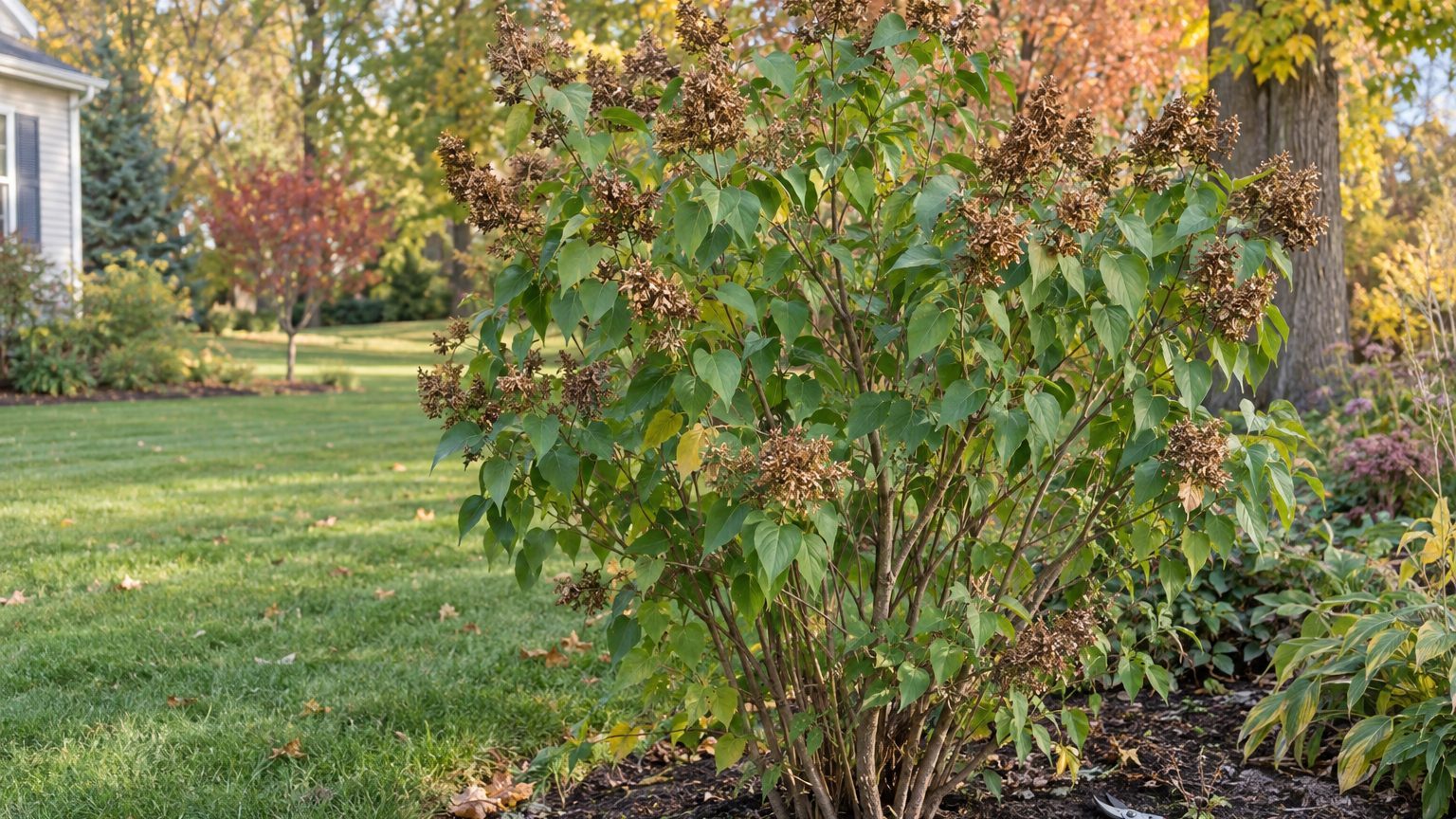
Brown, papery flower clusters hang on a lilac after the late-spring show, and that is the signal to reach for the pruners. In Saskatchewan the timing is simple to keep right: trim soon after the blooms finish, because the shrub starts setting next year’s buds almost immediately.
When to Prune Lilacs in Saskatchewan

Prune lilacs in Saskatchewan in June, right after the flowers fade. The calendar here follows the nearest comparable climate, so confirm local timing with a garden centre, a garden society or a provincial gardening group.
Lilacs bloom on last year’s wood, and the flower buds for next spring form soon after this year’s flowers drop. Cutting in June removes the spent clusters and leaves the new buds untouched.
| Type of pruning | When in Saskatchewan | Why |
|---|---|---|
| Routine upkeep: spent clusters, crossing or weak stems | June, right after the flowers fade | Next year’s buds are not yet set, so nothing is lost |
| Same upkeep cut, done while the shrub is dormant | March or April | Works for shaping, but it removes that spring’s flowers |
| Thinning or hard renovation of an overgrown lilac | March or April | Opens up a crowded shrub, at the price of the next flowers |
An overgrown shrub cut back hard will not flower for a few years afterward, so reserve that cut for lilacs that have already stopped performing. Lilacs set buds after the spring flush, so trim them as soon as that bloom fades.
Saskatchewan — the year and the numbers
- State
- Saskatchewan
- Hardiness zones
- 3a
- Last spring frost
- May 18
- First fall frost
- September 18
- Annual rain
- 14 in
- Lawn zone
- cool-season
- Source
- Environment and Climate Change Canada — Canadian Climate Normals 1981-2010, station SASKATOON SRC · Saskatoon
How to Tell When Your Lilacs Are Ready to Prune
The shrub gives clearer timing than any date, and in Saskatchewan the signs show up from late spring into June.
- The flower clusters turn brown and dry, which means the bloom is over and the cut can go just below each spent head.
- Petals are dropping and the scent has faded, a sign that the shrub is already turning its energy toward next year’s buds.
- A common lilac that finished early is ready before the late lilacs and tree lilacs, which flower in June, so each shrub gets its own timing.
- Fresh green growth is pushing out below the old flower heads, and this wood will carry next spring’s flowers, so leave it alone.
If a shrub has plenty of leaves but never flowered this year, there is nothing to wait for, so keep any cut light.
Should You Prune Lilacs in Fall or Winter in Saskatchewan?
No. Pruning in late summer, fall or winter cuts off the flower buds that were set after the last bloom, so the next spring comes up with far fewer flowers or none.
Late winter is a different matter. In March or April, while the shrub is still dormant, you can shape a lilac or remove selected stems. The price is that spring’s flowers, because those buds are on the wood you remove.
A hard renovation of an overgrown lilac belongs to the same late-winter window, and it costs flowers for a few years. Lilacs also need a cold winter rest to mature their buds, which suits Saskatchewan well. Saskatoon sits in Canadian hardiness zone 3a, a Canadian system that does not convert to a USDA zone.
How Lilac Pruning Time Shifts Across Saskatchewan
The June window moves with when your lilacs finish flowering, and that varies across the province.
- Saskatoon and the central prairie: lilacs here flower in May into June, and pruning follows soon after the last clusters fade.
- Cypress Hills: higher ground runs later than Saskatoon, so the blooms finish later and the pruners wait with them.
- Prince Albert and the districts to the north: spring arrives later than in Saskatoon, so lilacs bloom and finish later as well.
Wherever you garden, let the faded flowers set the day rather than the calendar.
Where to Get Lilac Advice in Saskatchewan
Saskatchewan has no county extension office. Local help comes from the provincial agriculture ministry, garden groups and nurseries, and the Government of Saskatchewan agriculture pages are a good place to begin.
- The provincial agriculture pages cover gardening and plant questions, so check them before spring work begins.
- A local garden society or master gardener group knows when lilacs bloom in your town, so ask just before the flowers open.
- A garden centre can confirm local timing and advise on your variety, so visit while the shrubs are in flower.
Common Questions
Is Saskatchewan Too Cold for Lilacs?
No. Lilacs need a cold winter rest to mature their flower buds and do best in cold-winter climates. They are more likely to struggle in hot, humid summers than in a Saskatchewan winter.
Can a Late Spring Frost Damage Lilac Flowers in Saskatchewan?
It can. At Saskatoon, the last spring frost falls on average around May 18, which means that in one year out of two the frost comes later than that. Treat it as the middle of a window, and expect northern and upland districts to run later.
Why Is an Older Lilac Blooming Poorly?
Look at the shrub’s light and its crowding. Lilacs thrive in sunny spots with good air circulation, so a lilac in shade with a dense tangle of old stems will bloom poorly. If the stems are crowded, a thinning or renovation cut in March or April can help, though it will cost flowers first.