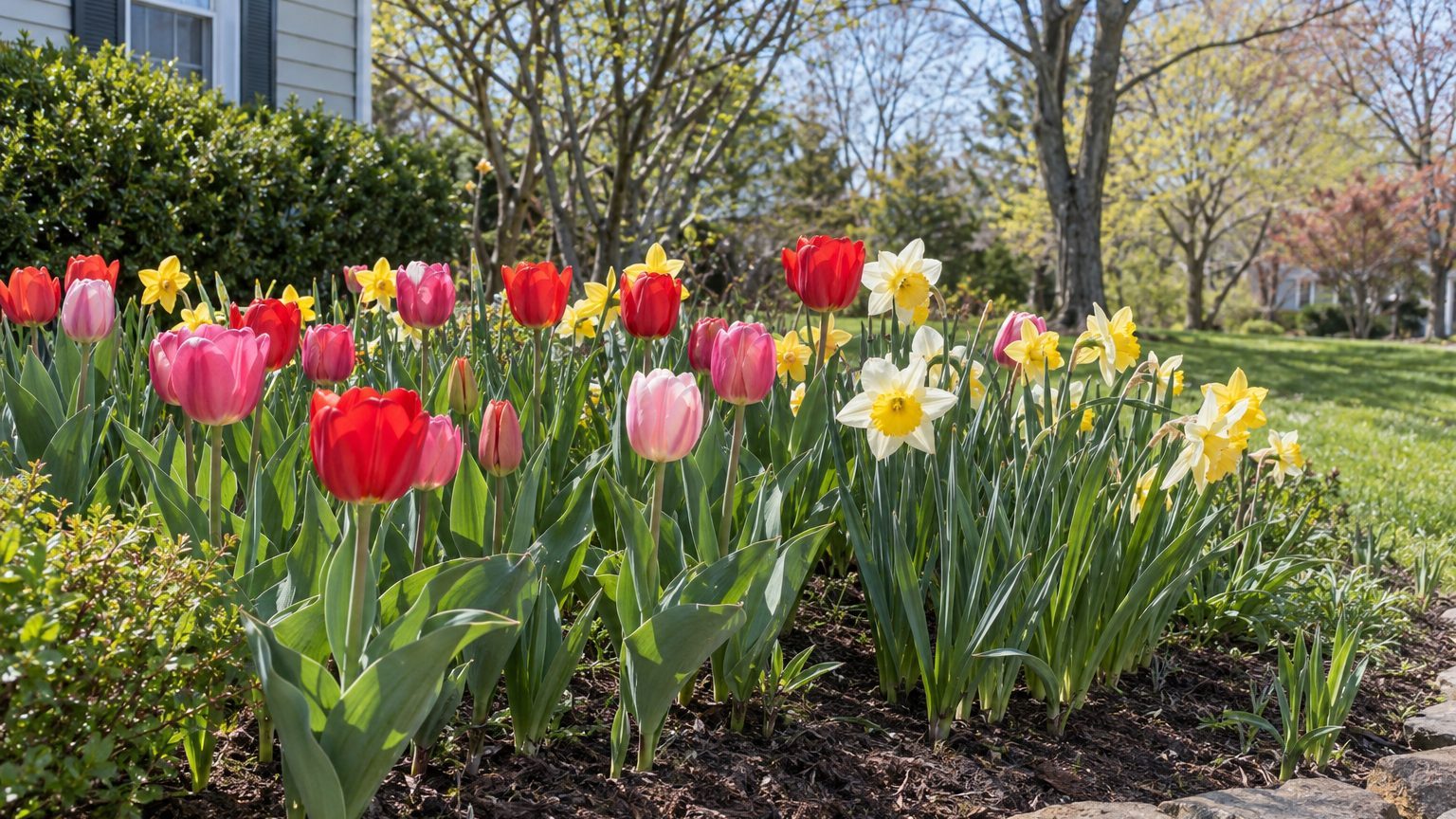
Green daffodil spears pushing through cold ground and tulip buds swelling in the bed are familiar sights in North Carolina yards as winter loosens. Bloom time here depends on the variety, the warmth of the spring, and where in the state your yard sits.
When Do Tulips and Daffodils Bloom in North Carolina?

Tulips and daffodils bloom in North Carolina from February through April. Early, mid and late-season varieties open in succession, so a bed planted with a mix can carry color through all three months instead of peaking for one weekend.
| Bulb | When it blooms in North Carolina | What sets the timing |
|---|---|---|
| Daffodils | February through April | Early, mid or late-season variety; no chilling needed |
| Tulips | February through April | Variety season and enough cold; pre-chilled bulbs go in the ground in December |
| Alliums | Near the end of the spring bulb season | Needs cold of winter to bloom |
Crocus and hyacinths follow the warming of spring rather than a set month. Where winters run too mild, hyacinths get the same refrigerator chilling as tulips. Most spring bulbs want 12 to 16 weeks of cold before they flower.
North Carolina — the year and the numbers
- State
- North Carolina
- USDA zones
- 5b-8b
- Last spring frost
- March 23 to April 5
- First fall frost
- October 30 to November 8
- Annual rain
- 44 in
- Lawn zone
- transition-season
- Source
- NOAA NCEI U.S. Climate Normals 1991-2020, 32F freeze probabilities · Charlotte
How to Tell Your Bulbs Are About to Bloom
Bulbs announce themselves in stages, and each stage tells you something you can act on.
- Green tips breaking the soil mean the bulb has rooted and woken up, so pull back any heavy mulch that might smother the shoots.
- Leaves that open into a clump show the plant is working, and a flower bud tucked in the center means bloom is on the way.
- Daffodil buds that stand up and swell, still wrapped in their papery sheath, are close to opening and can be watched for a color break.
- Tulip buds that turn from green to the shade of the petals while still closed are nearly ready, so this is the time to decide which stems to cut for a vase.
- A thick flower stalk rising from the leaves of an allium signals that the round heads are not far behind.
- Tips that are chewed off or missing altogether point to voles, squirrels, rabbits or deer, which go after tulips and crocus but leave daffodils alone.
Spring warmth moves all of this along, so a warm spell speeds the sequence and a cool one slows it.
What to Do After Tulips and Daffodils Bloom in North Carolina
Snap off the faded flowers and leave everything else. The leaves keep feeding the bulb after the petals drop, and that stored energy decides next year’s bloom. Let them stay on the plant until they turn yellow and then brown. Never cut them while green, and never braid or tie them into neat bundles.
Tulips are often short-lived in the garden, and in North Carolina they can be the shortest-lived of all. In Eastern North Carolina, the soil stays too warm for tulips to come back reliably, so they are treated as annuals and replanted each year.
Daffodils are the dependable perennial bulb. They multiply over time and need no chilling or pre-treatment. ‘St. Keverne’ is a large yellow daffodil that returns and multiplies in southern landscapes. If you want bulbs to count on, daffodils are the ones to plant more of.
How Bloom Time Shifts Across North Carolina
The February through April window stretches or shrinks depending on elevation and distance from the coast.
- Blue Ridge mountains: Spring arrives weeks later here than in the rest of the state, so bulbs bloom later and the season tilts toward the April end.
- Piedmont around Charlotte: The middle of the state sits between the mountains and the coast, so bloom follows the window as a whole.
- Eastern North Carolina and the coastal plain: Spring warms earlier here, which pulls bloom toward the front of the window and makes the soil too warm for tulips to return.
A south-facing wall in any of these areas will bring bulbs on a little ahead of a shaded bed.
Where to Get Bulb Advice in North Carolina
Local conditions vary enough across the state that nearby help pays off, especially if you are choosing varieties or troubleshooting a bed that did not bloom.
- NC State Extension publishes bulb guidance for the state, and it is worth reading before you buy in fall.
- Your county extension center can answer questions about your own soil and local pests, and it is a good first call if bulbs disappear or fail to flower.
Common Questions
When Should You Plant Spring Bulbs in North Carolina?
November is the target month, though October and December also work. Wait until the soil has cooled below about 60°F, which usually happens from mid-October through early December. That gives roots time to form before the ground freezes, without tempting the bulbs to sprout in fall.
Can You Still Plant Bulbs That Sat in the Bag Past December?
Yes. A bulb still in the bag does better in the ground than stored through winter, so plant as long as the soil can be dug. Late-planted bulbs may bloom a little behind the rest, but they will usually still flower.
Do Deer Eat Daffodils in North Carolina?
Daffodils are left alone by deer and rodents. Voles, squirrels, rabbits and deer do eat tulips and crocus, so a bed that suffers losses is often best planted with daffodils.