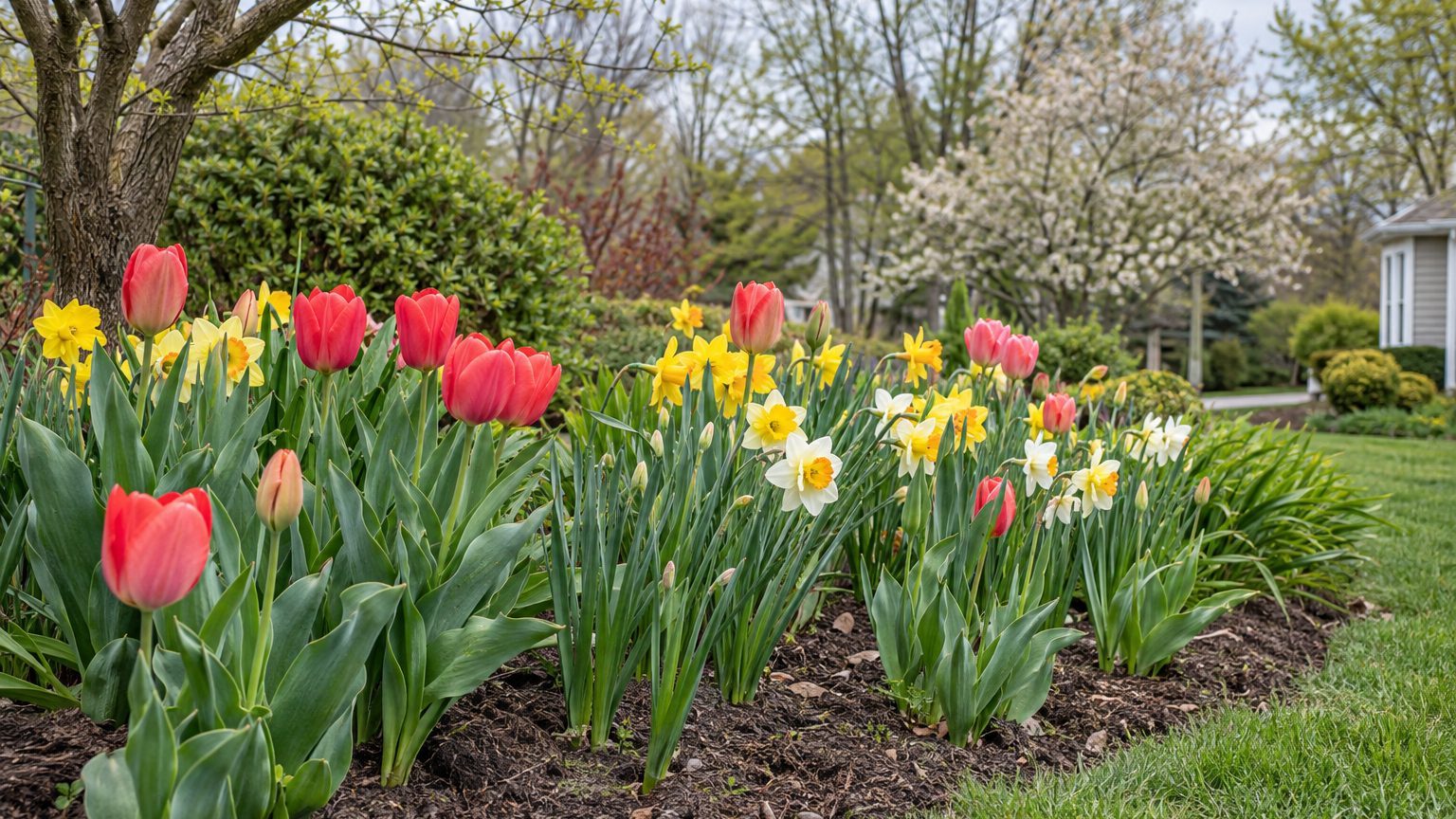
Spring bulbs in Hawaii are a different project from the same bulbs on the mainland, because the islands have no winter frost in the places where people garden. Tulips and hyacinths still flower here, but only when you give them the cold they miss.
When Do Tulips and Daffodils Bloom in Hawaii?

Tulips and daffodils bloom as the weather warms in spring, and the timing is set by when the bulb finishes its cold rest, not by a calendar month. Lowland Hawaii has no freeze, so a bulb gets no natural chill in the ground.
Most spring-flowering bulbs need about 12 to 16 weeks of cold to flower. Where winters are too mild to give it, tulips and hyacinths are chilled in the refrigerator before planting, and that chilling decides when the bloom can start.
| Bulb | When it blooms in Hawaii | What sets the timing |
|---|---|---|
| Daffodils (narcissus) | Follows the warming of spring once the bulb has had its cold | Cold rest first, and mild winters make the true daffodil a harder crop |
| Tulips | Follows the warming of spring after chilling | Refrigerator chilling before planting, since the ground never gives it |
| Hyacinths | Follows the warming of spring after chilling | Refrigerator chilling before planting |
| Alliums | Blooms after a winter chill | Needs winter chill before blooming |
Crocus and the early, mid-season and late tulip groups have no separate timing here, so treat them like any other chilled bulb. The USDA hardiness system, which rates only the average annual extreme minimum temperature, places the islands in zones 9a to 13a, and the upper slopes differ from the coast. Frost reaches only the high summits of Mauna Kea, Mauna Loa and Haleakala, never the gardens below. Rainfall, elevation and windward or leeward exposure govern growing here.
Hawaii — the year and the numbers
- State
- Hawaii
- USDA zones
- 9a-13a
- Frost
- none in an average year
- Annual rain
- 16 in
- Lawn zone
- warm-season
- Source
- NOAA NCEI 1991-2020 Climate Normals: not-computable flag for every freeze percentile at 32F and 36F, zero days per year at or below 32F, station USW00022521 — https://www.ncei.noaa.gov/access/services/data/v1?dataset=normals-annualseasonal&stations=USW00022521 · Honolulu
How to Tell Your Bulbs Are About to Bloom
Bulbs announce themselves in stages, and each stage tells you something about what to do next.
- Green tips pushing through the soil mean the bulb has rooted and woken, so keep the bed lightly moist and leave the planting site alone.
- Flat, strap-like leaves opening wider tell you the bulb is feeding itself, so do not trim them even if they look untidy.
- A flower stalk rising from the center of the leaves means the buds were formed, which is proof the chilling worked.
- Buds swelling and starting to show color mean the bloom is close, so move potted bulbs to a spot where you will see them.
- Leaves that stay short with no stalk in the middle point to a bulb that missed its cold, and that matters for next year’s chilling.
Rain and strong wind can flatten a stalk just before it opens, so a sheltered corner helps tall tulips.
What to Do After Tulips and Daffodils Bloom in Hawaii
Snip off the faded flowers and leave everything else. The leaves keep working after the petals drop, feeding the bulb for next year, so they stay on the plant until they turn brown. Do not tie them in knots or cut them while they are green.
Expect tulips to be short-lived in the garden, and plan on fresh chilled bulbs rather than a repeat show. Daffodils last longer and are the more reliable perennial bulb, so they are the ones worth leaving in place.
Voles, squirrels, rabbits and deer eat tulips and crocus, while daffodils are left alone. If animals visit your yard, that is one more reason to lean on daffodils.
How Bloom Time Shifts Across Hawaii
Bloom timing moves with elevation, rainfall and which side of an island you garden on, since the lowlands never see frost.
- Hilo side of the Big Island: The windward coast is wet, so bulbs sit in damp soil that can rot them, and drainage matters more than anything else.
- Kona side of the Big Island: The leeward coast is drier and warmer, so bulbs depend on your watering and on the chilling you give them.
- Upcountry Maui on the slopes of Haleakala: Higher ground is cooler than the coast, so bulbs there are more likely to behave like their mainland relatives, though frost belongs only to the summit.
Go up in elevation and the cool arrives sooner, so bloom comes into reach where the air is cooler.
Where to Get Bulb Advice in Hawaii
Bulb growing in the islands is local knowledge, and the people who know your valley or slope are close by.
- The University of Hawaii College of Tropical Agriculture and Human Resources extension service can tell you which bulbs suit your elevation, so ask before you buy.
- Your county extension office can answer questions about your own soil and rainfall, and a visit before you order bulbs saves a lot of trial and error.
Common Questions
Can You Plant a Tulip Bulb Straight from the Bag in Hawaii?
A bulb still in the bag is better planted than stored. For tulips and hyacinths, though, chill them in the refrigerator first, because the islands will not do it for them.
Do Alliums Need Chilling to Bloom Here?
No, which makes them an easy choice for a first try. Plant them as you would any bulb and let them flower as the weather warms.
Which Spring Bulbs Do Animals Leave Alone?
Daffodils. Tulips and crocus are the ones that voles, squirrels, rabbits and deer go after, so if animals visit your yard, plant daffodils where they roam.