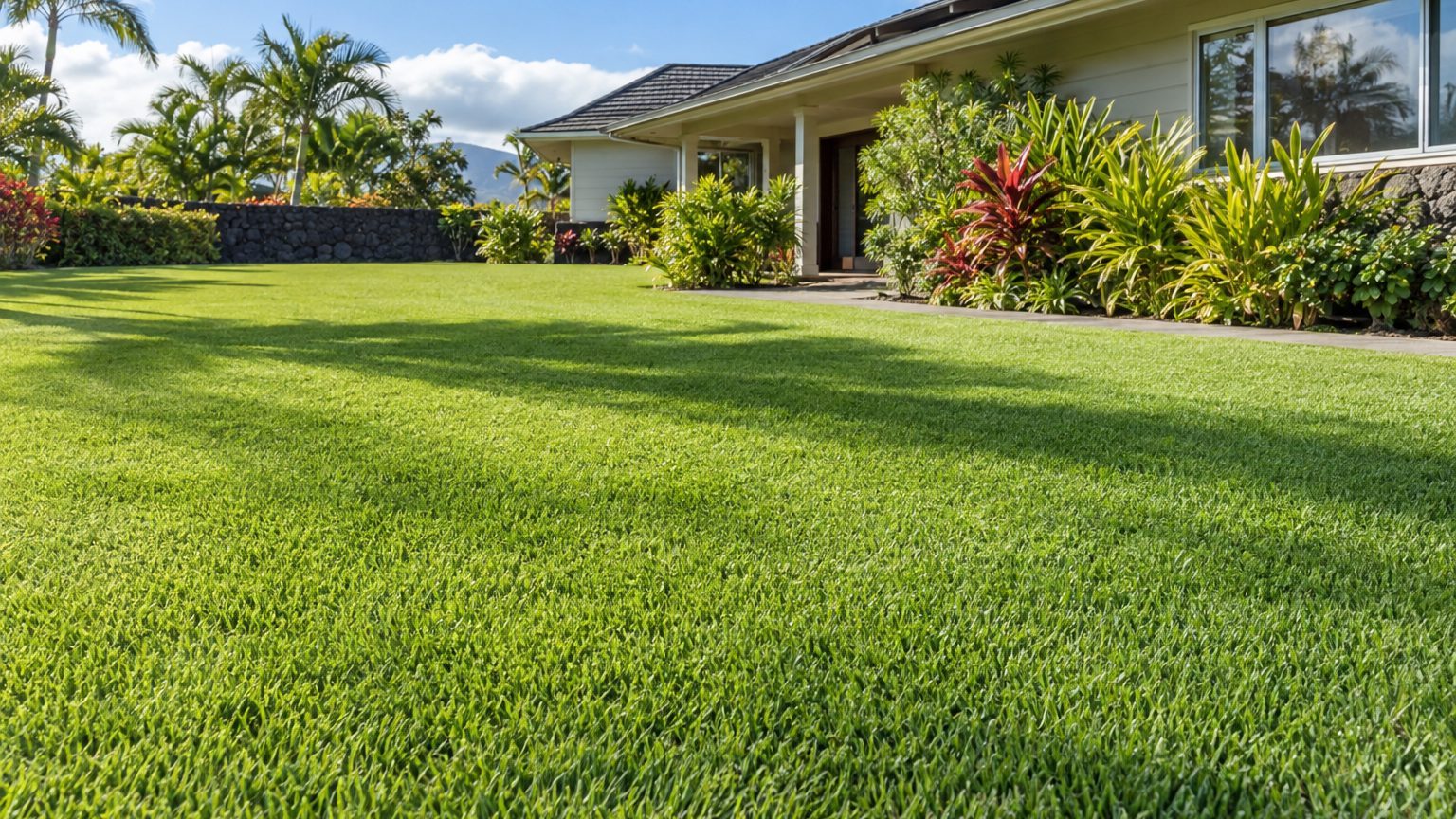
In Hawaii the mower comes out in January and again in July, because the grass never really stops. A Hawaii lawn care schedule runs on rainfall, elevation and which side of the island you live on, not on frost. Most tasks stay open all year, while feeding simply asks for a little restraint in the wetter, cooler months.
What to Do Each Month in a Hawaii Lawn
Mowing and watering stay on the calendar every month. Feeding is the task that speeds up and slows down, and seeding is limited by what the market sells.
| Month | In the lawn |
|---|---|
| January | Mow as the grass grows and water when rain falls short. A light feeding works now, but on the windward side skip it because the ground is already wet. |
| February | Keep mowing and watering. If the lawn looks pale, a light feeding still works, except on rainy windward lots where nutrients wash away. |
| March | Feeding begins in earnest as days lengthen and growth picks up. Mow regularly and water dry spells. Sod, plugs or sprigs settle in well. |
| April | Feed monthly and keep the mower on a steady rhythm. Laying sod or planting plugs works fine as long as you water them in. |
| May | Warm soil keeps the grass pushing, so feed monthly and mow often. Water leeward lawns deeply when the trade winds dry the surface. |
| June | Growth is strong. Keep feeding and mowing, and water deeply on dry leeward lawns rather than lightly every day. |
| July | Peak growing weather. Feed, mow and water, and plant plugs or sprigs if you want to fill a bare patch. |
| August | Heat and dry spells on leeward coasts call for deeper watering. Feeding continues monthly, and mowing stays frequent. |
| September | Keep feeding and mowing. Sod and plugs root quickly in the warm ground, so this is a good time to repair thin areas. |
| October | The last month of the main feeding stretch. If you missed a bare spot in September, October still works for patching it. |
| November | Slow the feeding to a light touch, and skip it on wet windward lawns. Mowing continues, and rain often covers the watering. |
| December | Mow when the grass needs it and water only if rain stays away. A light feeding is optional, and windward lawns can go without. |
Only common bermudagrass is sold as seed in Hawaii, so seeding is an option in any month but covers just that one grass. Zoysia and St. Augustine are planted as plugs, sprigs or sod.
Hawaii — the year and the numbers
- State
- Hawaii
- USDA zones
- 9a-13a
- Frost
- none in an average year
- Annual rain
- 16 in
- Lawn type
- warm-season
- Source
- NOAA NCEI 1991-2020 Climate Normals: not-computable flag for every freeze percentile at 32F and 36F, zero days per year at or below 32F, station USW00022521 — https://www.ncei.noaa.gov/access/services/data/v1?dataset=normals-annualseasonal&stations=USW00022521 · Honolulu
When Does the Lawn Season Start and End in Hawaii?
It does not start or end. Lowland Hawaii has no freeze in the places where people live, so there is no frost date to wait for and no spring wake-up. Frost shows up only on the high volcanic summits of Mauna Kea, Mauna Loa and Haleakala, far from any yard.
What changes through the year is the pace. Warm, long summer days push growth hard, while the cooler, wetter winter months slow it without stopping it. Grass germinates best when soil sits at 65 to 70 °F and rising, and in the lowlands that condition is met nearly all year, which is why planting windows are so wide.
The USDA hardiness zones across the islands run from 9a to 13a, a reminder that the highest elevations get genuinely cool. For a lawn at sea level, though, rainfall and exposure decide the calendar, not cold.
How the Lawn Calendar Shifts Across Hawaii
The same month asks for different care depending on which part of an island you stand on.
- Windward coasts, such as Hilo or Kaneohe: Frequent rain keeps the grass growing and washes nutrients out of the soil, so cut back or skip winter feeding and expect to water less.
- Leeward coasts, such as Kona or the Waianae side of Oahu: Sunnier and drier, so watering matters more, especially in summer, and the full feeding schedule suits these lawns well.
- Upcountry and higher elevations, such as Kula on Maui: Cooler air slows growth, so mowing and feeding run at a gentler pace than at the shore.
Check your own spot against these patterns, because a lawn farther inland can behave like a different climate.
Lawn Care Timing Mistakes to Avoid in Hawaii
Feeding Through Winter Rain
Monthly feeding is right for March through October, but on windward lawns the same habit in winter sends fertilizer into runoff. Reduce it or skip it from November to February, and feed lightly on leeward lawns if the grass looks pale.
Shallow Daily Watering
Sprinkling a little every day is easy to fall into during dry leeward summers. It keeps roots near the surface, so the lawn browns fast in the next dry spell. Water deeply when the soil dries out, and let the rain do the rest on wetter days.
Waiting for the Right Season
Holding off on sod or plugs until some imagined planting season costs you months of growth. Vegetative planting works in any month as long as you can water, so fix bare patches when you notice them. For seed, remember that only common bermudagrass is sold that way.
Where to Get Lawn Advice in Hawaii
Island conditions vary enough that local advice is worth a call. Local extension offices can help with questions about grass choice, soil and pests.
- The University of Hawaii CTAHR Extension offers publications on lawn grasses and can point you to an agent on your island, so start there before choosing a grass.
- Your county extension or agriculture office can speak to local rainfall, soil and pest issues, and it is the right stop when a patch looks wrong and you cannot tell why.
Common Questions
Can You Grow a Lawn from Seed in Hawaii?
Yes, but only with common bermudagrass, the one lawn grass sold as seed here. Zoysia and St. Augustine come as plugs, sprigs or sod, and those can go in during any month with water.
Does a Hawaii Lawn Go Dormant in Winter?
Not in the lowlands. Growth slows in the cooler, wetter months but keeps going, so mowing stays on the list all year. Higher elevations grow more slowly still.
Is Fertilizer Needed All Year in Hawaii?
Monthly feeding fits March through October. From November to February, a light feeding is optional, and windward lawns can skip it because heavy rain washes it away.