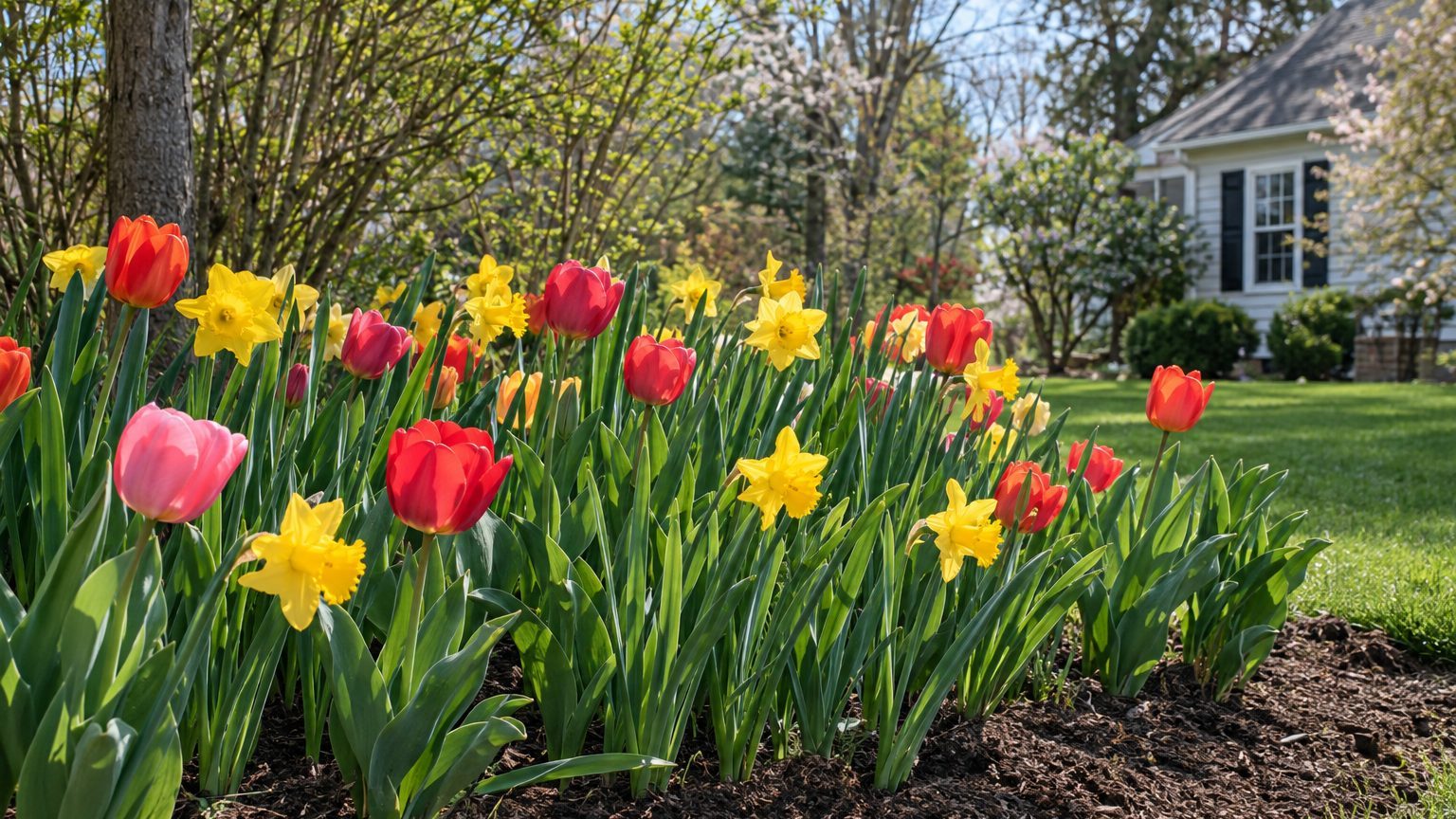
Daffodils pushing through leaf litter and tulip cups opening on a warm afternoon are what Georgia yards look like once winter loosens its grip. Both bulbs flower in spring, and the exact week shifts from year to year and from one corner of the state to another.
When Do Tulips and Daffodils Bloom in Georgia?

Tulips and daffodils bloom in spring in Georgia, once the weather turns reliably warm. No fixed month holds from year to year, because the flowers follow the warming of the soil and air rather than the calendar.
What stays steady is the chain of events behind the bloom. Bulbs go in during fall, spend the winter getting their cold, then flower when spring warmth arrives.
| Bulb | When it blooms in Georgia | What sets the timing |
|---|---|---|
| Daffodils | In spring, as the weather warms | Winter cold followed by spring warmth. Daffodils last longer than tulips and return as dependable perennials. |
| Tulips | In spring, as the weather warms | About 12 to 16 weeks of cold. Where winter is too mild, chilling the bulbs in the refrigerator before planting makes up the difference. |
| Hyacinths | In spring, as the weather warms | Like tulips, they are chilled in the refrigerator when winter cold falls short. |
| Alliums | Toward the end of the spring bulb season | Needs winter cold to bloom, like other spring bulbs. |
Crocus and daffodils belong to the early stretch of the spring parade, while ornamental onions close it. Planting time shapes the show too. The best months for planting are November and December, with October and January also working, and refrigerated bulbs can even go in during early January. Georgia gardeners get the best results when roots have time to form before the bulbs wake up.
Georgia — the year and the numbers
- State
- Georgia
- USDA zones
- 6a-9b
- Last spring frost
- March 11 to March 29
- First fall frost
- November 13 to December 1
- Annual rain
- 50 in
- Lawn zone
- transition-season
- Source
- NOAA NCEI 1991-2020 Climate Normals, 32F freeze probabilities · Atlanta
How to Tell Your Bulbs Are About to Bloom
The bulbs themselves announce the show well before the first petal opens, so a daily look along the bed tells you more than any date.
- Green tips poking through the soil mean the bulb has broken dormancy and roots are working below.
- Leaves that stretch upward and thicken show the plant is gathering the energy the flower will use.
- A bud rising from the center of the leaves means the flower is only a short wait away.
- Buds that begin to show color, whether yellow on a daffodil or red on a tulip, tell you the flower is nearly ready to open.
- Bare spots where nothing has emerged call for a gentle probe with a trowel to check whether the bulb is still firm, or whether voles or squirrels have taken it.
A late cold snap after the tips appear rarely does lasting harm to a bulb, but it can slow the opening, so patience pays.
What to Do After Tulips and Daffodils Bloom in Georgia
Once the petals fade, pinch off only the spent flowers. That keeps the plant from putting energy into seed and leaves the foliage doing its real work.
Leave the leaves alone until they turn brown. They feed the bulb for next year’s flowers, so cutting them green or tying them into neat knots starves the bulb. If the fading foliage bothers you, plant perennials nearby that will grow up and hide it.
Expect different staying power from each bulb. Many tulips are not persistent in the South and usually decline after the first year, so plan on replacing them. Daffodils last longer and are the more reliable perennial bulb. In Georgia, daffodils grow reliably, especially jonquil hybrids, tazetta hybrids, poeticus and species types. The same advice names Single Late tulips and some species tulips as better suited to warm climates.
How Bloom Time Shifts Across Georgia
Georgia runs from USDA zone 6a to 9b, so bloom does not happen everywhere at once. The direction of the shift is easy to follow.
- The North Georgia mountains: Winters are colder and spring arrives later, so bulbs here generally flower later than those farther south. They also get plenty of cold, which tulips and hyacinths need.
- Atlanta: The city is a heat island, so beds here warm sooner than the surrounding countryside and flowers can open a little ahead of suburbs just beyond the city.
- The coastal plain: Winters run milder, so bulbs tend to bloom earlier here. Tulips and hyacinths may need refrigerator chilling to get enough cold, and coastal gardeners usually plant on the later side.
Your own yard adds its own twist, since a south-facing wall warms sooner than a shaded north bed.
Where to Get Bulb Advice in Georgia
Local advice beats general rules for a state this varied, and your county extension office is close at hand for most homeowners.
- University of Georgia Extension publishes guidance on flowering bulbs for Georgia gardens, handy before planting season.
- Your county extension office can answer questions about your soil and your area, and a call in early fall gives you time to act on the answer.
Common Questions
Do Squirrels and Deer Eat Daffodils?
Daffodils are left alone. Voles, squirrels, rabbits and deer do eat tulips and crocus, so daffodils make the safer choice where animals visit.
Can You Still Plant Bulbs That Stayed in the Bag?
Yes. A bulb left in the bag is better planted late than stored over the winter, so plant for as long as the ground can be dug.
How Cool Should the Soil Be Before Planting?
Wait until the soil has cooled below about 60°F. That gives roots time to form before the cold, yet keeps bulbs from sprouting in fall.