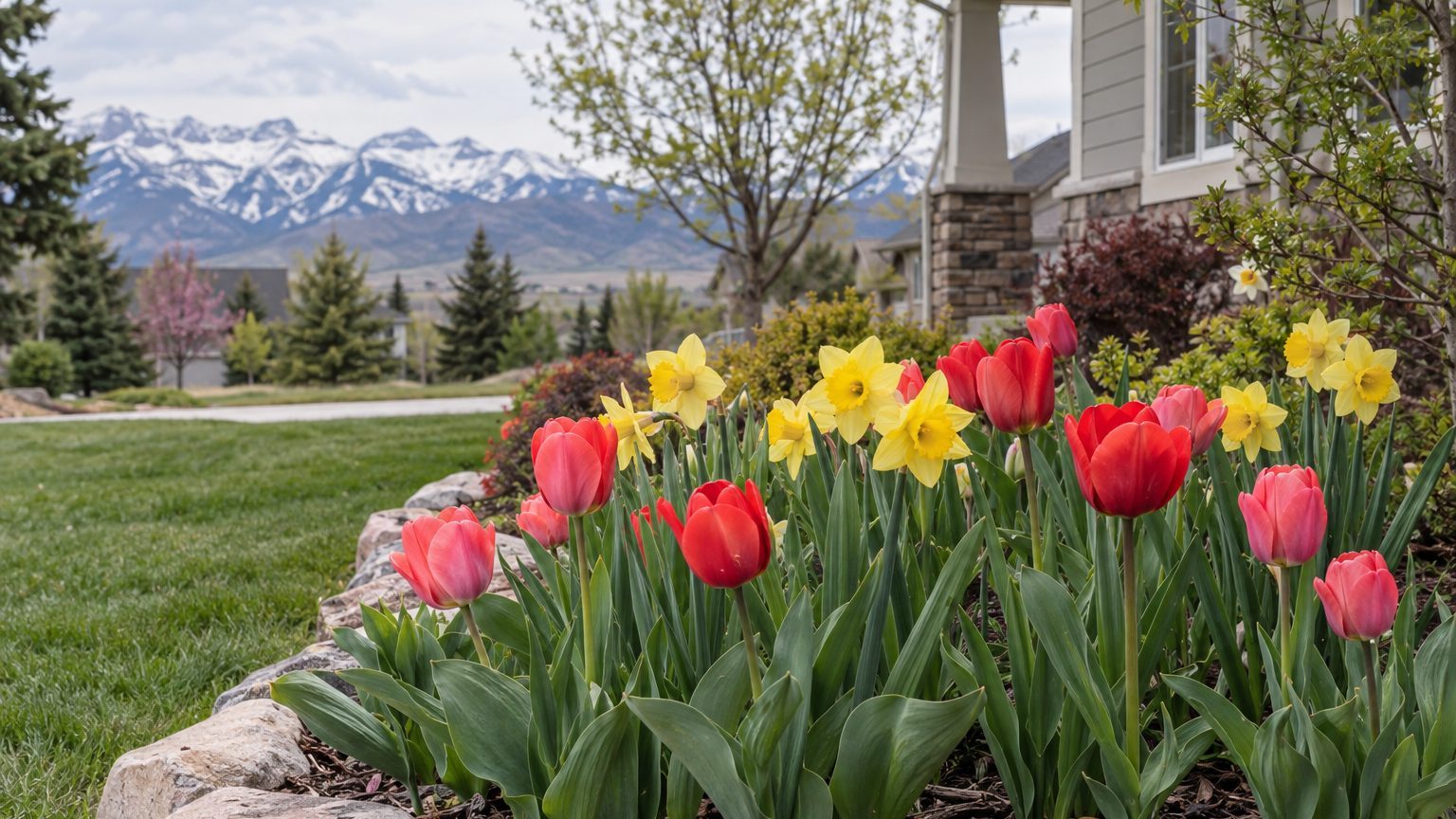
A tulip bulb pushed into cold Wyoming soil in autumn spends the winter doing quiet work, sending out roots under the snow before it ever shows a green tip. Timing matters for tulips and daffodils in Wyoming, as do the choice of spring bulbs that cope with the dry, cold conditions and the way the planting calendar shifts from one part of the state to another.
When to Plant Tulips and Daffodils in Wyoming

Plant them in September and October, so the bulbs root before the ground freezes. Here is how a bulb’s autumn and winter run in most Wyoming yards.
- In early September, buy your tulips, daffodils, crocus, alliums and hyacinths while the selection is full, and keep them somewhere cool and dry until the soil is ready.
- Through September and into October, wait for the soil to cool below about 60°F, which keeps the bulbs from sprouting in fall while still giving roots time to form.
- Once the soil has cooled, dig the bed, set the bulbs in and water them in. Wyoming winters supply the cold these bulbs need, so no refrigerator chilling is required here.
- After the first hard freeze in late fall, spread a layer of mulch over the bed to even out thawing and refreezing during winter.
- In early spring, the first green shoots push through the mulch as the ground warms.
Fall frost typically arrives between September 24 and October 5 at the reference city, with hardiness zones in the state running from 3a to 6a on the USDA system, so the right week for your yard depends on where you live. A bulb still in the bag in late fall is better planted late than saved, and it can go in as long as the ground can be dug.
Wyoming — the year and the numbers
- State
- Wyoming
- USDA zones
- 3a-6a
- Last spring frost
- May 7 to May 18
- First fall frost
- September 24 to October 5
- Annual rain
- 15 in
- Lawn zone
- cool-season
- Source
- NOAA NCEI 1991-2020 Climate Normals, 32F freeze probabilities · Cheyenne
Which Spring Bulbs Do Best in Wyoming?
Wyoming gives bulbs plenty of winter cold, which tulips, daffodils and hyacinths all want. The harder part is dry soil and hungry wildlife. Bulbs that tolerate drought and that critters leave alone tend to settle in and return.
Species tulips, snow iris and crocus are among the bulbs best adapted to the state’s droughty conditions. Daffodils add a different advantage, since deer and other animals pass them by.
| Bulb type | How it does in Wyoming | Why |
|---|---|---|
| Species tulips | Well adapted | Handle droughty conditions |
| Hybrid tulips | Lovely but often short-lived | Voles, squirrels, rabbits and deer eat them |
| Daffodils | Reliable year after year | Animals leave them alone |
| Crocus | Well adapted | Suited to dry conditions, though animals do eat them |
| Alliums | Dependable | Need winter chill period to bloom |
Snow iris is another good fit for dry ground. Hyacinths are worth trying where winter cold is steady, though the heavy-feeding critters may pay them a visit. Where deer or voles are a problem, lean on daffodils and alliums and treat hybrid tulips as a bonus.
When to Plant, Chill and Care for Spring Bulbs in Wyoming
Planting is the main job, and fall does the rest. Winters here are cold enough to give bulbs the 12 to 16 weeks of chilling that most spring bloomers need, so the refrigerator step stays in the closet.
Care after bloom is simple, but it matters for next year’s flowers.
| Task | Best timing in Wyoming | Why then |
|---|---|---|
| Plant | September to October | Roots form before the ground freezes |
| Chill | Not needed, winter does it | Natural cold supplies the chill the bulbs need |
| Mulch | After the ground has frozen | Smooths out winter thaw and refreeze |
| Leave the foliage | Until the leaves turn brown | Leaves feed the bulb for next year |
After bloom, remove only the faded flowers and let the leaves stay until they turn brown. Cutting or tying green leaves starves the bulb and weakens next spring’s show.
How Bulb Planting Time Changes Across Wyoming
Wyoming’s elevation swings are large, and altitude does more to set your planting week than latitude. The rule is to wait for cool soil, and cool soil arrives at different times across the state.
- High country such as the Snowy Range and the Bighorn Mountains: Frost is possible in any month at higher elevations, so soil cools sooner. Plant in early September and expect a short season in spring.
- Laramie and Cheyenne: At around 6,000 feet, these high plains towns have a short growing season and cold winters. Plant from September into early October, once the soil has cooled.
- Lower basins such as the Bighorn Basin and Powell: Warmer sites cool later, so October is often the safer month, still ahead of a frozen ground.
Whichever part of the state you garden in, let the soil temperature guide you rather than the calendar alone.
Where to Get Bulb Advice in Wyoming
Local conditions vary enough that a quick conversation with a nearby expert can save a season. University of Wyoming Extension and your county office can help with planting questions, wildlife trouble and soil tests.
- The state extension site offers planting guidance written for Wyoming conditions, useful any time before the ground freezes.
- Your county extension office can look at a struggling planting or help you arrange a soil test, ideally before you dig the bed in September.
Common Questions
Can You Plant Tulips in Spring in Wyoming?
Bulbs bought in spring will not bloom that year, because they need winter cold first. Tulips and daffodils belong in the ground in fall, and a potted spring bulb is best treated as a short-term display.
Do Wyoming Winters Kill Tulip Bulbs?
Cold itself is rarely the problem, since these bulbs need it to flower. Losses more often come from animals digging them up or from soil that stays soggy, so well-drained ground and daffodils in vulnerable beds help.
Should You Water Bulbs After Planting in Wyoming?
A good soaking after planting settles the soil around the bulb and starts root growth. In a dry autumn, water again if the ground stays parched, since roots need moisture to form before the freeze.