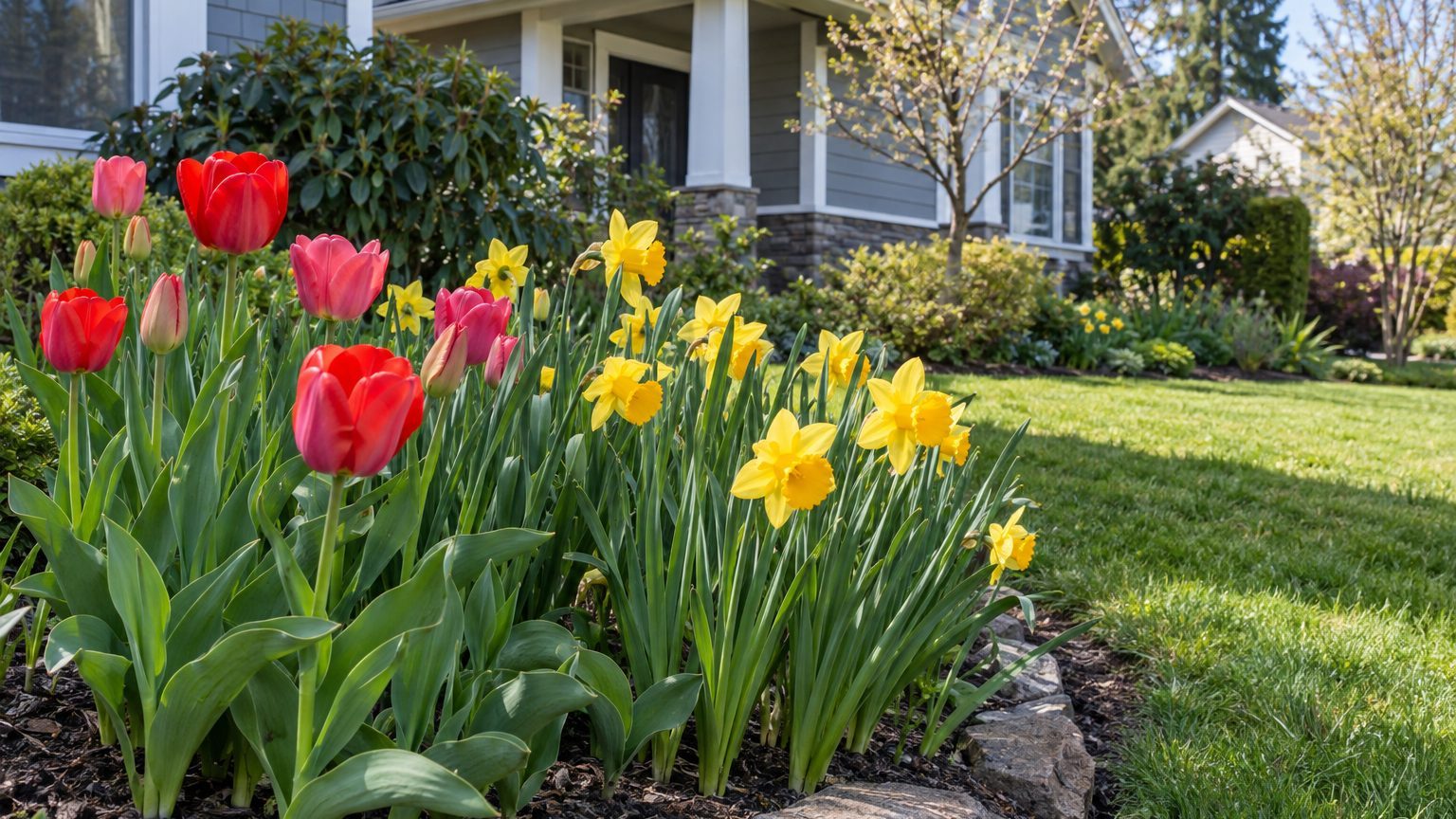
Tulip and daffodil shoots push through Washington soil in late winter, months after the bulbs went in the ground. Fall is when the work happens, and the exact window shifts between the mild, wet west side and the colder interior.
When to Plant Tulips and Daffodils in Washington

Plant tulips and daffodils in Washington in October and November, which gives roots the time they need before winter, and treat September and December as backup months when the ground allows. A bulb’s year here runs like this.
- In September, buy your bulbs while the selection is full, choosing ones that feel firm and heavy for their size, and keep them somewhere cool and dry until planting.
- In October, planting begins as the soil cools, and this is the month to go ahead in colder parts of the state, where bulbs need a head start on the freeze.
- In November, planting carries on in the west side’s mild weather, and Seattle’s first fall frost typically falls between November 13 and November 30, so roots still have time to settle before real cold.
- After planting, through late fall, a loose layer of mulch over the bed keeps the soil from swinging between soggy and cold.
- In December, any bulbs still in the bag can go in as long as the ground can be dug, and it can be done into mid-December in many yards.
- In late winter, green tips appear, and hybrid tulips open from late March to early May.
Washington spans USDA hardiness zones 4a to 9a, so the mild western side and the high interior treat bulbs very differently.
Washington — the year and the numbers
- State
- Washington
- USDA zones
- 4a-9a
- Last spring frost
- February 27 to March 18
- First fall frost
- November 13 to November 30
- Annual rain
- 39 in
- Lawn zone
- transition-season
- Source
- NOAA NCEI 1991-2020 Climate Normals, 32F freeze probabilities · Seattle
Which Spring Bulbs Do Best in Washington?
Daffodils, species tulips and the long-lived hybrid tulips do best here, with crocus, hyacinths and alliums filling in around them. Winters supply the cold bulbs need, the soil suits fall planting, and the main trouble comes from hungry animals more than from the climate.
Choosing the right kind of tulip matters more than choosing tulips at all, because many hybrids fade after a season or two.
| Bulb type | How it does in Washington | Why |
|---|---|---|
| Darwin hybrid and Emperor tulips | Return for several years | Bred to come back instead of fading after one show |
| Species tulips | Very hardy, good for naturalizing | Less showy than the big hybrids, but more likely to return |
| Daffodils | Reliable perennial bulb | They last longer than tulips, which are often short-lived |
Crocus and hyacinths go in during the same fall window as the rest. According to Iowa State University Extension, alliums need the cold of winter to bloom, and they can be tucked in among other bulbs.
When to Plant, Chill and Care for Spring Bulbs in Washington
Spring bulbs ask for very little care, but a few of the gestures depend on timing. Planting is the big one, and the soil’s temperature is a better guide than the calendar when the weather runs warm or cold.
| Task | Best timing in Washington | Why then |
|---|---|---|
| Plant tulips, daffodils, crocus, hyacinths and alliums | October and November, once the soil is below about 60°F | Roots form before the ground freezes, and the bulbs do not sprout early in fall |
| Plant bulbs that are still in the bag | As long as the ground can be dug, even into December | A late planting beats a bulb stored over winter |
| Leave the leaves after bloom | Until they turn yellow and then brown | The leaves feed the bulb for next year’s flowers |
Along the way, remove only the faded flowers and leave the foliage standing, even when it looks untidy. The leaves are doing the work that sets next spring’s buds.
How Bulb Planting Time Changes Across Washington
The Cascades split the state into two very different gardens, and elevation, water and distance from the coast move the planting window earlier or later.
- Seattle and the Puget Sound lowlands: The mild, maritime climate keeps the soil workable for a long season, so planting runs comfortably through October and November and can stretch into December.
- Skagit Valley: Late October works well here, early enough for a good root system before the ground freezes but not so early that bulbs try to bloom before winter.
- East of the Cascades: The interior is colder, so planting moves earlier, with late September starting the window to give roots time before the soil locks up.
Higher ground anywhere in the state follows the same logic as the eastern side, with earlier planting to match an earlier freeze.
Where to Get Bulb Advice in Washington
For questions about a bed that never seems to flower or a spot where bulbs rot, local help is close at hand.
- Washington State University Extension publishes planting guides for the state, and September is a good time to read them before shopping.
- Your county extension office can look at a failing bulb or a patch of poor soil, so bring a sample in early fall.
- A soil test through the county office tells you how your bed drains and what it holds, which is worth knowing before bulbs go in.
Common Questions
Do Alliums Need to Be Chilled Before Planting?
No. According to Iowa State University Extension, alliums need the cold of winter to bloom, so they go straight into the ground in fall with the rest of your bulbs.
How Much Winter Cold Do Spring Bulbs Need to Flower?
Most spring-flowering bulbs need about 12 to 16 weeks of cold. Where winters are too mild to give it, tulips and hyacinths are chilled in the refrigerator before planting.
Will Deer, Voles and Squirrels Eat Spring Bulbs?
Tulips are the favorite snack of deer, and voles, squirrels and rabbits go after tulips and crocus too. Daffodils are left alone, because their sap contains needle-sharp crystals that burn the mouth. Crocuses are deer-resistant, though slugs still feed on them.