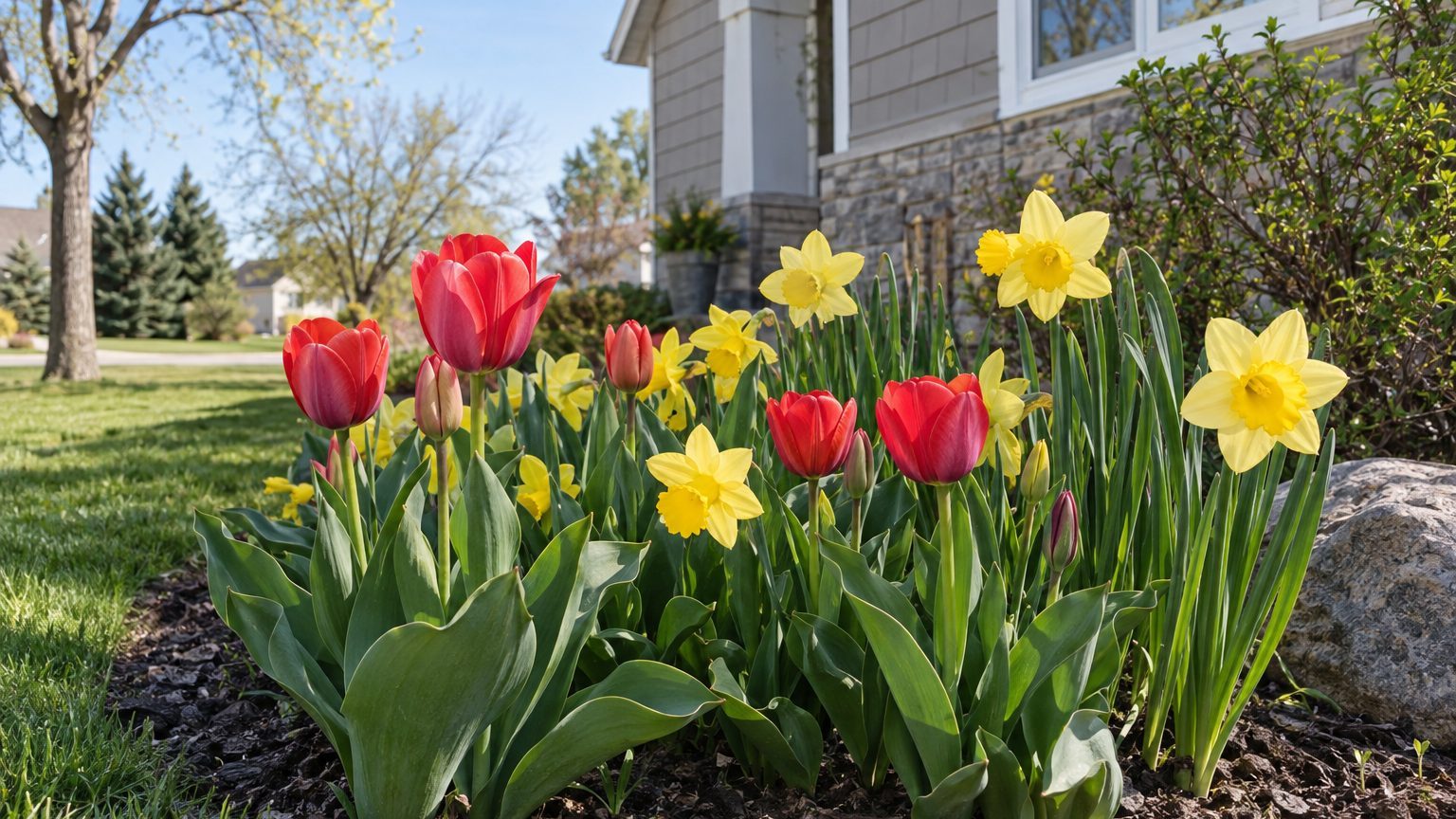
Tulip and daffodil shoots poke through cold prairie soil as the snow finally pulls back, and every one of them was planted months earlier. In Saskatchewan, spring bulbs go into the ground in fall, once the soil has cooled and before it locks up.
When to Plant Tulips and Daffodils in Saskatchewan

Plant tulips and daffodils from mid-September through mid-October, so the roots settle in before the ground freezes. The bulb’s year follows the seasons.
- In late summer, buy bulbs while garden centres still have a full selection, and keep them somewhere cool and dry until planting day.
- Winters here supply all the cold that tulips and daffodils need, so no refrigerator chilling is required before planting.
- From mid-September through mid-October, plant the bulbs, ideally four to six weeks before the ground freezes, so roots can form without top growth starting.
- Once the surface of the soil begins to freeze, spread a layer of mulch to keep the ground from heaving and thawing through winter.
- In April, the first green tips appear, and tulips and daffodils flower through April and May.
At Saskatoon, the first fall frost arrives on average September 18, a midpoint, so frost often holds off longer in a given year, while farther north it comes sooner. The Canadian hardiness zone there is 3a (a separate system from USDA zones). The dates here follow the nearest comparable climate, so confirm local timing with a garden centre, a garden society or a provincial gardening group.
Saskatchewan — the year and the numbers
- State
- Saskatchewan
- Hardiness zones
- 3a
- Last spring frost
- May 18
- First fall frost
- September 18
- Annual rain
- 14 in
- Lawn zone
- cool-season
- Source
- Environment and Climate Change Canada — Canadian Climate Normals 1981-2010, station SASKATOON SRC · Saskatoon
Which Spring Bulbs Do Best in Saskatchewan?
Daffodils and alliums are the safest picks. Winter cold is no obstacle for any of the common spring bulbs, so the question is how long they last and what eats them. Tulips bloom well in the first spring but often fade in later years.
Voles, squirrels, rabbits and deer go after tulips and crocus, while daffodils are left alone. That pressure matters as much as the soil when you choose where to plant.
| Bulb type | How it does in Saskatchewan | Why |
|---|---|---|
| Daffodils | Reliable year after year | They live longer than tulips and animals leave them alone |
| Hybrid tulips | Showy at first, often short-lived | Years of hybridizing weakened their ability to return, and animals eat them |
| Species tulips | May last better than hybrids | They are the shorter types with smaller flowers |
| Alliums | Easygoing and dependable | They are not picky and need the cold of winter to bloom |
| Crocus | Pretty but vulnerable | Voles, squirrels, rabbits and deer eat them |
Hyacinths are planted the same way as tulips and daffodils, though they have no particular advantage on the prairies. If you want tulips, treat hybrids as a short-term display and replant when they thin out, or lean toward species tulips for a longer run.
When to Plant, Chill and Care for Spring Bulbs in Saskatchewan
Three jobs shape the bulb year here, and each has its own timing. Planting rides on soil temperature as much as on the calendar. Bulbs set too early may sprout before winter, while bulbs set too late have no time to root.
Chilling is not a task on the prairies. Most spring bulbs need about 12 to 16 weeks of cold to flower, and a Saskatchewan winter easily delivers it.
| Task | Best timing in Saskatchewan | Why then |
|---|---|---|
| Plant tulips, daffodils, crocus, alliums and hyacinths | Mid-September through mid-October, once the soil has cooled below about 16°C (60°F) | Roots form before the ground freezes, and the bulbs stay below ground over the autumn |
| Chill bulbs in the refrigerator | Not needed | Winters supply the cold the bulbs require |
| Remove faded flowers | Soon after bloom in April and May | It keeps the plant from spending energy on seed |
| Leave the leaves | Until they turn brown | The leaves feed the bulb for next spring |
Take off only the spent flowers and leave the foliage standing, even when it looks untidy. Tuck other perennials around the bulbs so their leaves fade out of sight.
How Bulb Planting Time Changes Across Saskatchewan
Saskatchewan covers a lot of ground, and the bulb window slides depending on how soon the soil cools and freezes. The rule of thumb is to plant sooner where winter arrives sooner.
- Saskatoon and the central prairie: Plant across the middle of the window, in late September and early October, as the soil cools below 16°C (60°F).
- Prince Albert and the north: Winter arrives sooner, so plant early in the window, in mid-September, and give the roots time before freeze-up.
- Regina and the southern prairie: The ground often stays workable longer, so plantings can slide toward the later part of the window, into October.
- Cypress Hills: Upland ground cools sooner than the surrounding plains, so plant on the early side.
Whatever the district, watch the soil and the forecast more than the date on the calendar.
Where to Get Bulb Advice in Saskatchewan
Canada has no county extension offices, so local bulb advice comes from a few other places. The Government of Saskatchewan agriculture pages are the provincial starting point for gardening and soil questions.
- Local garden centres sell bulbs matched to your area and can tell you how a given district has behaved in recent seasons, so visit in late summer.
- Garden societies and master gardener groups can help diagnose problems and share what has survived in nearby yards, with meetings and plant sales through the growing season.
- Before planting day, push a thermometer a few inches into the bed and plant once the soil has cooled.
Common Questions
Do Tulips and Daffodils Need to Be Chilled Before Planting in Saskatchewan?
No. Winters on the prairies are cold enough on their own. Refrigerator chilling is for gardens where winters are too mild to give bulbs the cold they need.
What If Bulbs Are Still in the Bag After the Ground Starts to Freeze?
Plant them anyway, for as long as the ground can be dug. A bulb planted late has a better chance of flowering than one stored over the winter.
Can You Plant Bulbs Too Early in Saskatchewan?
Yes. Bulbs set while the soil is still warm may send up top growth in fall, and that tender growth is then exposed to winter. Waiting for cool soil keeps the bulbs dormant until spring.