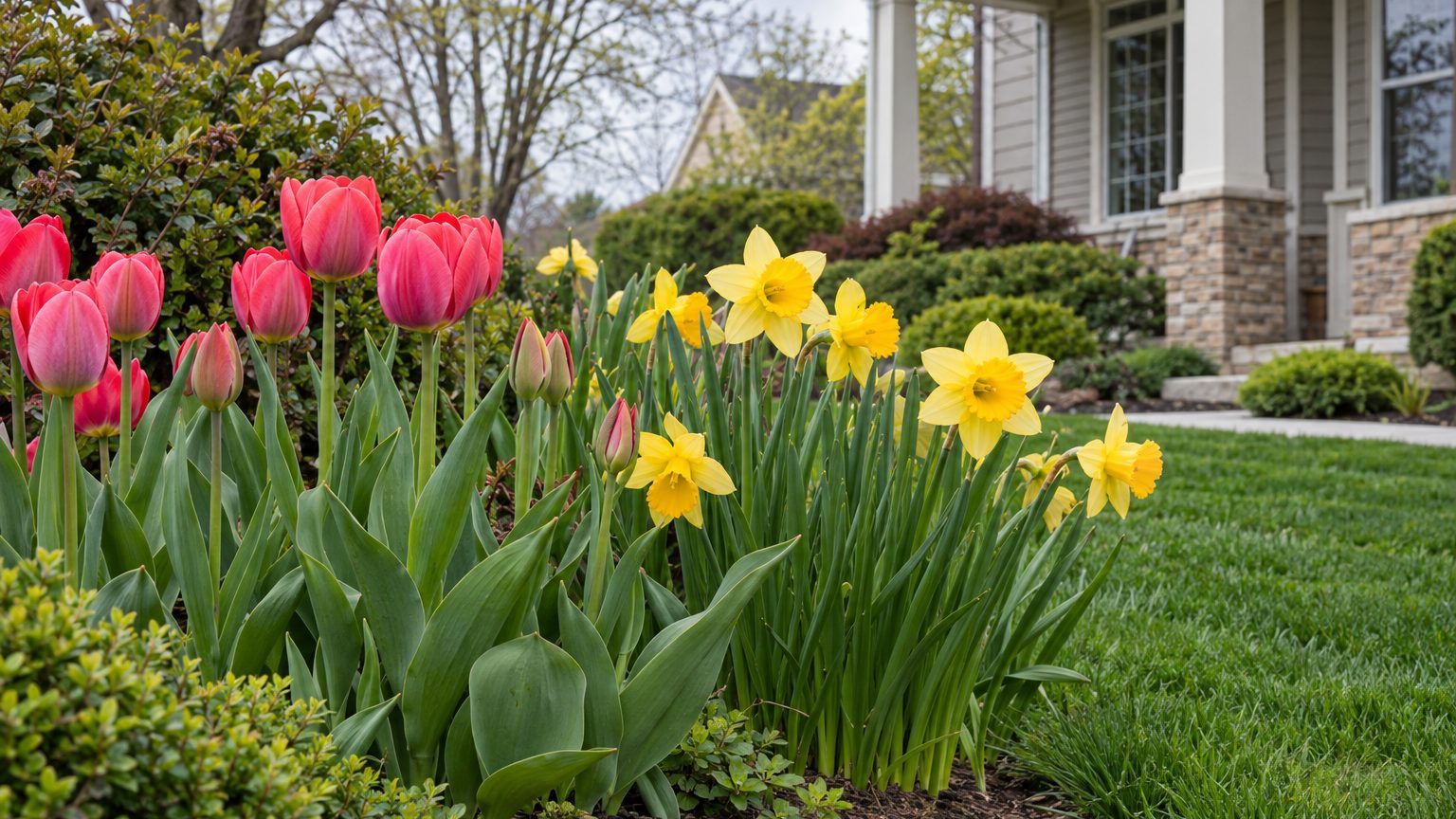
Tulip shoots and daffodil spears pushing through cold ground in early spring were planted months earlier, when the soil was cooling and the leaves were coming down. In Ontario, that planting window sits in the fall.
When to Plant Tulips and Daffodils in Ontario

Plant tulips and daffodils in September and October, and if a few bulbs are left over, November or even December still works while the ground can be dug. A bulb’s year in Ontario runs like this.
- In September, buy bulbs while garden centres have full stock, choosing firm, plump ones, and keep them somewhere cool and dry until the soil is ready.
- From late September through October, plant once the soil has cooled down noticeably from summer warmth, which gives roots time to form before the ground freezes but keeps the bulbs from sprouting in the fall.
- In late fall, after the soil turns cold, spread a layer of mulch over the bed to even out swings between thaw and freeze.
- Through winter, you have nothing to do, because Ontario’s cold does the chilling and no refrigerator step is needed.
- In March or early April, green shoots break the surface, and tulips open from April through May.
Frost typically reaches Toronto around mid-October, in Canadian hardiness zone 7a (a Canadian rating that does not match USDA zones). That date is a midpoint, and in about half of years the first frost comes later. It marks the risk of frost, not the day to start planting.
Ontario — the year and the numbers
- State
- Ontario
- Hardiness zones
- 7a
- Last spring frost
- April 30
- First fall frost
- October 16
- Annual rain
- 31 in
- Lawn zone
- cool-season
- Source
- Environment and Climate Change Canada — Canadian Climate Normals 1981-2010, station TORONTO LESTER B. PEARSON INT'L A · Toronto
Which Spring Bulbs Do Best in Ontario?
Ontario winters give spring bulbs the cold they need, so tulips, daffodils, crocus, hyacinths and alliums can all flower. The real question is what survives afterward. Squirrels, voles, rabbits and deer go after some bulbs and leave others alone.
Daffodils are the dependable pick, while tulips give a showy display that often fades after a few seasons.
| Bulb type | How it does in Ontario | Why |
|---|---|---|
| Daffodils | Reliable, and they come back year after year | More vigorous than tulips, and animals leave them alone |
| Tulips | Lovely at first, often short-lived | Voles, squirrels, rabbits and deer eat them |
| Crocus | Good, if protected from foragers | Animals target them as they do tulips |
| Alliums | Easy to grow | They need the cold of winter to bloom |
Hyacinths also suit Ontario’s cold winters, though animals tend to bother them less than tulips. Among tulips, Giant Darwin hybrids are a popular group that flowers April through May on strong stems. Where squirrels are a problem, put the daffodils in the most exposed beds and tuck tulips closer to the house.
When to Plant, Chill and Care for Spring Bulbs in Ontario
The year’s work with spring bulbs comes down to a few jobs, and only one of them needs a real date. Ontario’s winters supply the cold on their own, so fridge chilling is unnecessary for bulbs planted outdoors.
Foliage is the job most often done too soon. Leaves left standing are feeding next year’s flower inside the bulb.
| Task | Best timing in Ontario | Why then |
|---|---|---|
| Plant tulips, daffodils, crocus, hyacinths and alliums | September to October | Roots settle before the ground freezes |
| Plant leftover bulbs | November, or December if the ground is unfrozen | A bulb in the soil does better than one kept over winter |
| Leave the leaves after bloom | While they are green, until they turn brown | The foliage feeds the bulb for next year |
| Remove faded flowers | Soon after the petals drop | Only the spent flowers come off, never the leaves |
Tulips sometimes decline after a few seasons, and in that case you can replace them with fresh bulbs in the same fall window rather than waiting for a weak display.
How Bulb Planting Time Changes Across Ontario
Ontario is a large province, and the planting window slides with the local climate. The months above fit the Toronto area, and the places below shift the timing a little.
- Niagara Peninsula: The lakes keep fall air milder, so frost arrives later and planting can run toward the later part of the window.
- Ottawa Valley: Winters are colder and the ground freezes sooner, so aim for the early part of the window and finish before the soil hardens.
- Northern Ontario, around Sudbury and Thunder Bay: Frost comes well ahead of Toronto, so start planting in September and do not leave bulbs for November.
Wherever you garden, the soil temperature is a better guide than the calendar.
Where to Get Bulb Advice in Ontario
Ontario has no local extension page on bulb timing, so these dates follow the nearest comparable climate. Canada also has no county extension office, so confirm local timing with people who garden nearby.
- The Government of Ontario’s agriculture and food pages cover provincial gardening and growing resources, and they are worth a visit in late summer before you order bulbs.
- A local garden centre or garden society can tell you which bulbs hold up in your neighbourhood, and the fall buying season is the time to ask.
- A master gardener group or provincial gardening association can help with a soil test or a failed planting, so take a soil sample along before the ground freezes.
Common Questions
Can You Plant Forced Daffodils Outdoors?
Yes. Daffodils are tough enough that bulbs forced indoors can usually be saved and planted in the garden afterward, once the ground can be dug. Forced tulips rarely do as well.
Should You Wait for the First Frost Before Planting Bulbs?
No. Frost is not the signal, because bulbs go in once the soil has cooled, which often happens before the first frost. Waiting for a hard freeze only shortens the time roots have to settle.
Do Tulips Need to Be Chilled in the Refrigerator in Ontario?
Not for bulbs planted in the garden. Most spring bulbs need about 12 to 16 weeks of cold to flower, and an Ontario winter supplies it. The refrigerator step is for places where winters are too mild.