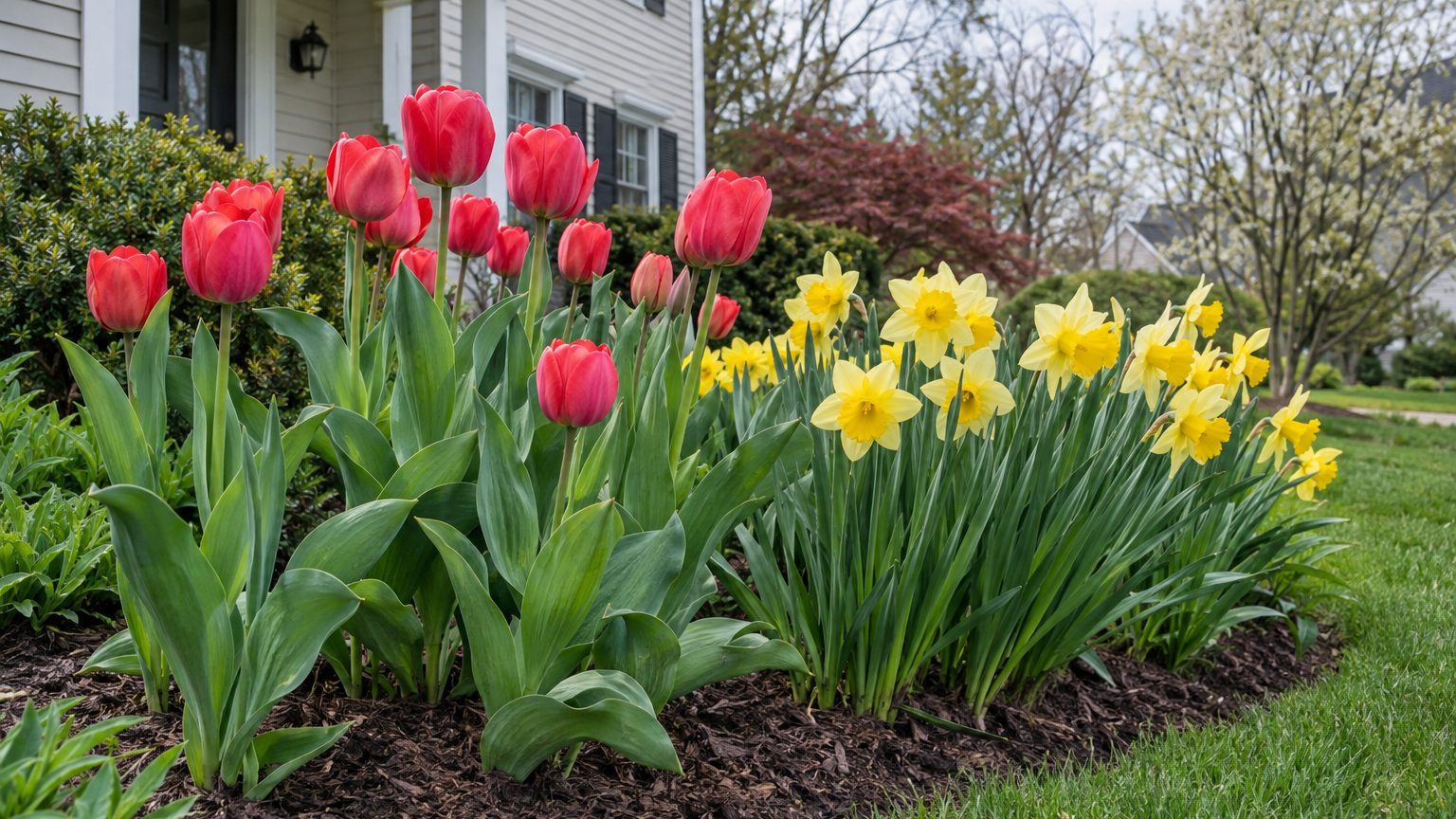
Tulip and daffodil bulbs go into Ohio ground in the fall, long before anything shows above the soil, and they flower the following spring. The page covers the planting window, the bulbs that hold up in Ohio yards, and the yearly rhythm of care that keeps them blooming.
When to Plant Tulips and Daffodils in Ohio

September and October are the months to plant, and a bulb can still go in during November or December as long as the ground can be dug. Here is the year of a bulb, step by step.
- In early fall, buy bulbs while the selection is full and keep them somewhere cool and dry until the soil is ready.
- In September and October, plant once the soil has cooled noticeably from summer warmth, which gives roots time to form before the ground freezes without pushing leaves up too soon.
- Ohio winters are cold enough to give tulips the chill they need, so no refrigerator step is required.
- In November or even December, any bulbs left in the bag still go into the ground if the soil is unfrozen, since a late bulb beats one stored over the winter.
- In March or early April, the first shoots break the surface, and tulips and daffodils flower from April into May.
In Columbus, the first fall frost usually arrives between October 5 and October 15 in zone 6a, and Ohio spans USDA zones 5b to 6b, so your own yard may run a little earlier or later than that.
Ohio — the year and the numbers
- State
- Ohio
- USDA zones
- 5b-6b
- Last spring frost
- May 5 to May 15
- First fall frost
- October 5 to October 15
- Annual rain
- 42 in
- Lawn zone
- cool-season
- Source
- Ohio State University Extension — Ohio Gardening Calendar · Columbus
Which Spring Bulbs Do Best in Ohio?
Ohio gives spring bulbs the winter cold they need, so tulips, daffodils, crocus, hyacinths and alliums can all be grown here. The real difference is how long they last and what eats them. Daffodils are the dependable ones, while tulips and crocus tend to attract hungry wildlife.
| Bulb type | How it does in Ohio | Why |
|---|---|---|
| Daffodils | Reliable and long-lived | More vigorous than tulips, and deer and rodents leave them alone |
| Tulips | Lovely but often short-lived | Voles, squirrels, rabbits and deer eat them |
| Crocus | Good where animals are controlled | Rodents and rabbits go after them |
| Alliums | Easy to grow | They need a chill period to bloom |
Hyacinths also do well in Ohio gardens, though they get the same careful planting as the rest. If tulips keep disappearing, treat them like annuals and lift them in late spring to make room for other plantings, as some gardeners do. Daffodils forced indoors can go out into the garden later and usually settle in well.
When to Plant, Chill and Care for Spring Bulbs in Ohio
Ohio winters do the chilling for you, so the year comes down to planting at the right time and then leaving the leaves alone after bloom. Most spring bulbs need about 12 to 16 weeks of cold to flower, and a normal Ohio winter supplies it.
| Task | Best timing in Ohio | Why then |
|---|---|---|
| Plant bulbs | September to October, or November and December if the ground is unfrozen | Roots form before the freeze, and cool soil keeps bulbs from sprouting early |
| Chill bulbs | Not needed outdoors | The winter provides the cold that tulips and daffodils need to flower |
| Enjoy bloom | April to May | Daffodils can open as early as late February, and tulips follow into May |
| Leave the foliage | Until the leaves turn brown | The leaves feed the bulb for next year |
After the flowers fade, remove only the spent blooms and let the leaves stay. Cutting or tying green foliage starves the bulb, and next spring’s show suffers for it.
How Bulb Planting Time Changes Across Ohio
Ohio’s zones run from 5b to 6b, so planting leans earlier in the colder parts of the state and later where fall lingers.
- Northern Ohio along Lake Erie: The lake can keep the shoreline milder into fall, so planting can slide a bit later there than on cold inland ground, though the soil still has to cool noticeably first.
- Northwest and higher inland ground: These colder spots tend to cool sooner, so plant early in the window, in September, to give roots time before the freeze.
- Southern Ohio and the Ohio River valley: Fall stays warm longer, so wait until October for the soil to cool, and plant into November if the ground is still workable.
Whatever your corner of the state, let the soil temperature guide the shovel more than the calendar page.
Where to Get Bulb Advice in Ohio
Ohio State University Extension answers planting questions for the whole state, and each county has its own office with local horticulture help. Both are good places to turn when bulbs fail to come up or the soil seems wrong.
- Browse Ohio State University Extension for bulb planting guides and fall garden advice before you buy.
- Call your county extension office for a soil test or a diagnosis when bulbs rot, fail to bloom or get eaten.
- Plant any bulbs still in the bag as soon as the ground can be dug.
Common Questions
How Deep Should You Plant Tulip and Daffodil Bulbs?
Set each bulb with its pointed end up, and plant larger bulbs deeper than small ones. A hole a few times as deep as the bulb is tall is a common guide. Water once after planting so roots start growing.
Can You Plant Bulbs After the Ground Starts to Freeze?
You can plant as long as the ground can still be dug. In Ohio that can stretch into December, and a late bulb in the soil is better than one kept in the bag.
Why Did Tulips Disappear After a Year or Two?
Tulips are often short-lived in the garden, and voles, squirrels, rabbits and deer will eat them. Daffodils are left alone and return reliably, so they make a good choice where animals visit.