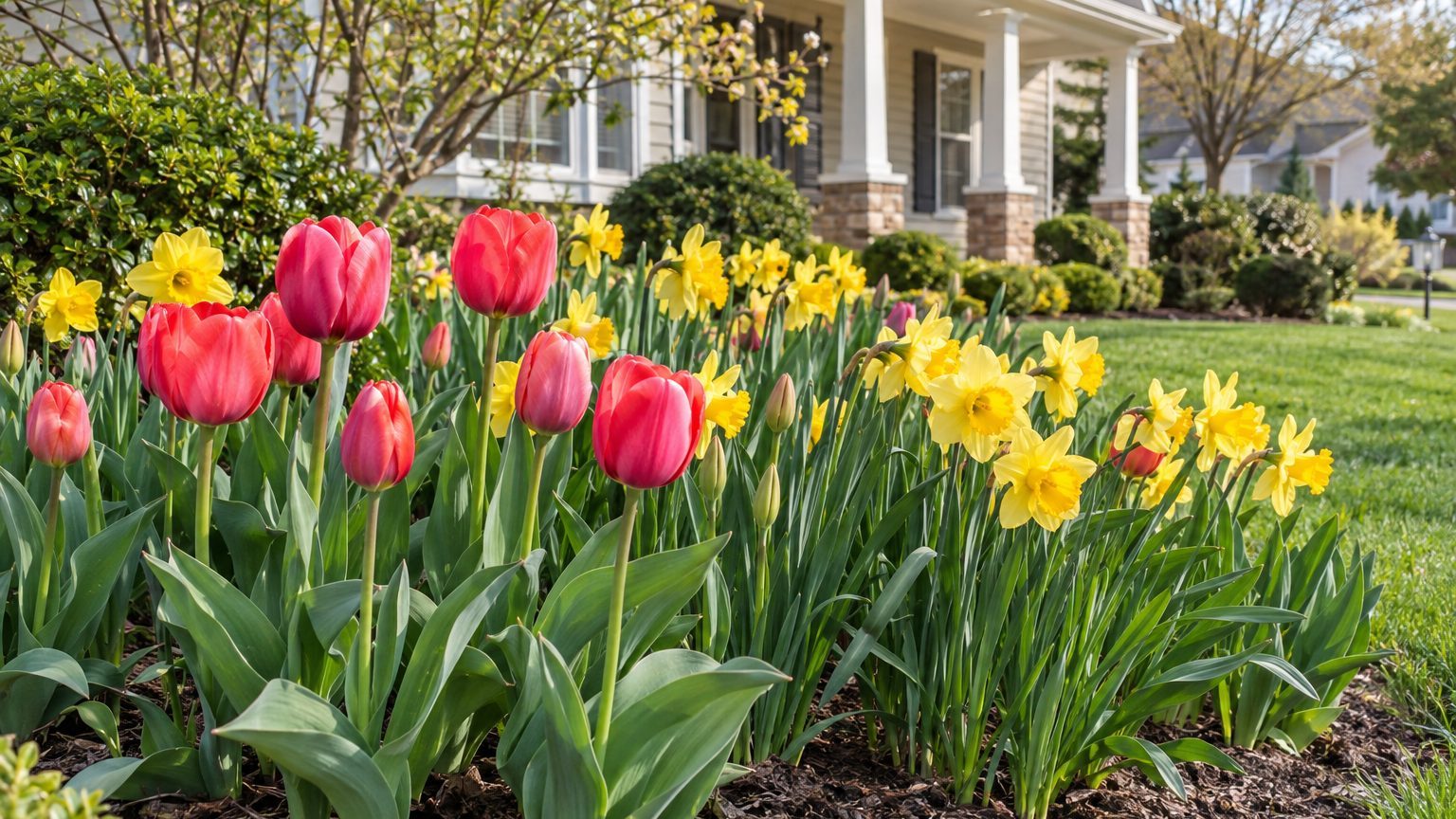
Daffodil leaves poking through cold ground in late winter are a familiar sight across North Carolina, and tulips follow soon after. Both are planted in autumn, and the timing depends on soil temperature more than on the calendar.
When to Plant Tulips and Daffodils in North Carolina

November is the month to plant, and it can also be done in October or December. Let the soil, not the date, make the final call, since it needs to cool below 60°F before bulbs go in. Here is how a bulb’s year runs in the state.
- In early fall, buy daffodils, alliums, crocus and hyacinths while the selection is full, and keep them somewhere cool and dry until the soil is ready. Tulips need one more step, because winters here often fall short of the cold they need.
- Through autumn, tulips and hyacinths go into the refrigerator, away from ripening fruit, unless you bought them pre-chilled. Daffodils and alliums skip this step entirely.
- In October, planting can begin in the cooler parts of the state, as long as the soil has dropped below 60°F. Planting too early invites sprouting before winter, which wastes the bulb’s energy.
- In November, when the soil has cooled, is the main planting window. Roots have time to settle in before the coldest weather, and the tops stay dormant.
- In December, chilled tulips go into the ground, and any bulbs left over from earlier plantings can still be planted. A light layer of mulch after planting keeps soil moisture steady through winter.
- From February onward, the first shoots push up and the flowering season begins, running through April as early, mid and late varieties take their turns.
In Charlotte, in the Piedmont, the first fall frost typically arrives between October 30 and November 8, which is a useful marker for when the ground is cooling down. North Carolina spans USDA hardiness zones 5b to 8b, so mountain and coastal yards can differ from that Piedmont picture.
North Carolina — the year and the numbers
- State
- North Carolina
- USDA zones
- 5b-8b
- Last spring frost
- March 23 to April 5
- First fall frost
- October 30 to November 8
- Annual rain
- 44 in
- Lawn zone
- transition-season
- Source
- NOAA NCEI U.S. Climate Normals 1991-2020, 32F freeze probabilities · Charlotte
Which Spring Bulbs Do Best in North Carolina?
Daffodils are the dependable choice, since they come back and multiply without any special treatment. Tulips are harder, because the climate and soil here tend to stay too warm for them to return year after year. Alliums, crocus and hyacinths fall in between.
In eastern North Carolina especially, tulips are best treated as annuals that get replanted each year.
| Bulb type | How it does in North Carolina | Why |
|---|---|---|
| Daffodils | Reliable, returns and multiplies | No chilling needed, and deer and rodents leave them alone |
| Tulips | Tricky, often short-lived | They need a longer chill than local soil usually gives |
| Alliums | Good choice for the state | They need the cold of winter to bloom |
| Crocus | Pretty but often eaten | Voles, squirrels, rabbits and deer go after them |
Hyacinths behave like tulips here, so chilling them in the refrigerator before planting makes sense wherever winters are mild. Where wildlife is a problem, daffodils and alliums are the safer bets, while tulips and crocus tend to disappear into someone’s dinner.
When to Plant, Chill and Care for Spring Bulbs in North Carolina
Three jobs shape a bulb’s year here: planting, chilling for tulips and hyacinths, and leaving the leaves alone after flowering. Each has its own cue, and following the cue matters more than hitting an exact day.
| Task | Best timing in North Carolina | Why then |
|---|---|---|
| Plant bulbs | November, or October and December | The soil has cooled below 60°F, so roots form without top growth starting too soon |
| Chill tulips and hyacinths | In the refrigerator, 8 to 10 weeks, before planting in December | Most spring bulbs need 12 to 16 weeks of cold, and mild winters here do not always supply it |
| Leave the foliage | After bloom, until the leaves turn brown | The leaves feed the bulb for next year’s flowers |
Remove only the faded flowers after bloom, and leave the leaves in place. Cutting or tying green foliage starves the bulb. According to Iowa State University Extension, alliums need the cold of winter to bloom.
How Bulb Planting Time Changes Across North Carolina
North Carolina stretches from mountains to coast, and soil cools on a different schedule in each part. The November window holds across the state, but the edges shift.
- Blue Ridge Mountains: Ground cools sooner at elevation and spring comes several weeks later than in the Piedmont. Planting in October makes sense here, so roots get established before the soil freezes hard.
- Piedmont: Charlotte and the surrounding region sit in the middle of the state, and November suits them well. Tulips can work here with chilled bulbs, though they remain short-lived.
- Eastern North Carolina and the coast: Soil stays warm longer, so planting leans toward late November and December. Tulips are best treated as annuals, with daffodils and alliums carrying the perennial display.
If you are unsure where your yard falls, wait for the soil to cool and plant when it feels cool in the hand and the thermometer agrees.
Where to Get Bulb Advice in North Carolina
Local questions about bulbs, soil and pests are best answered by people who know your county. The state’s extension service connects you to them.
- NC State Extension publishes planting guidance written for North Carolina yards, and its pages are worth a look before you buy bulbs.
- Your county extension center can answer questions about soil, diagnose a failed planting, and arrange a soil test, so call before the planting season starts.
- Once the soil has cooled, get the bulbs in the ground as soon as you can.
Common Questions
Can You Still Plant Bulbs in January in North Carolina?
Yes, as long as the ground can be dug. A bulb still in the bag does better planted late than stored through winter, because it will dry out and lose strength. Late planting may mean smaller or later blooms, but most bulbs recover.
Which Daffodil Returns Year After Year in North Carolina?
‘St. Keverne’ is a classic large yellow daffodil that comes back and multiplies for years in southern landscapes. Daffodils in general settle in well here, so a planting tends to get thicker over time instead of fading.
Can You Mix Early, Mid and Late Bulbs for a Longer Show?
Yes. Choosing early, mid and late-season varieties lets flowers follow one another from February through April. Mixing tulips and daffodils of different types in the same bed stretches the season further.