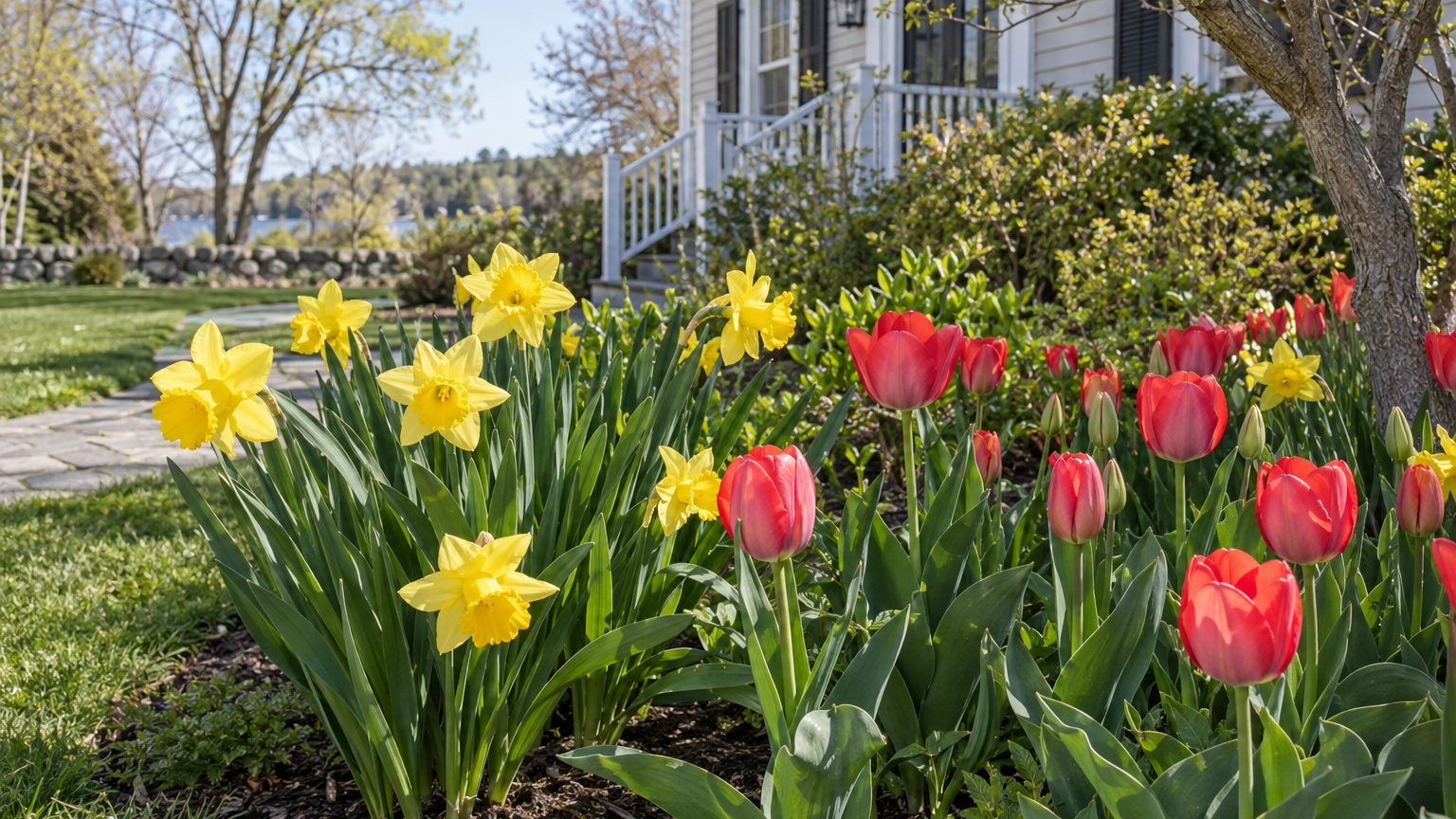
When the maples turn and the first frosty mornings arrive, Maine yards are ready for a different kind of planting: bulbs that sit underground all winter and surprise you in spring. Tulips and daffodils go in during autumn, and the timing matters more here than in milder states because the ground freezes hard.
When to Plant Tulips and Daffodils in Maine

In Maine, plant tulips and daffodils in October, so the roots form before the ground freezes, with November and December as a fallback while the soil can still be dug. Here is how a bulb’s year runs, with first fall frost at coastal Portland arriving around October 9 to October 21 and the state spanning zones 3b to 6a on the USDA system.
- In early fall, buy your bulbs while the selection is full, and keep them somewhere cool and airy until the soil is ready.
- Winter cold does the chilling for you in Maine, so no refrigerator step is needed for tulips or daffodils.
- In October, plant once the soil has cooled below about 60°F, early enough for roots to settle yet late enough that the bulbs do not sprout before winter.
- In late fall, after the first hard frosts, spread a layer of mulch over the planting bed to keep the soil temperature steady.
- In March, the earliest hardy bulbs begin to push green shoots, and tulips and daffodils flower from April into May.
Coastal Portland is the mild end of the state, so inland and northern gardens reach frost sooner and should lean toward the start of the window. A bag of bulbs left over in November still belongs in the ground as long as a trowel can break the soil.
Maine — the year and the numbers
- State
- Maine
- USDA zones
- 3b-6a
- Last spring frost
- April 22 to May 1
- First fall frost
- October 9 to October 21
- Annual rain
- 48 in
- Lawn zone
- cool-season
- Source
- NOAA NCEI 1991-2020 Climate Normals, 32F freeze probabilities · Portland
Which Spring Bulbs Do Best in Maine?
Daffodils are the dependable choice here, since a majority are hardy to zone 3 and Maine winters give them all the cold they need. Tulips grow well too, but they are often short-lived and attract hungry animals. Alliums, like other spring bulbs, need the cold of winter to bloom.
| Bulb type | How it does in Maine | Why |
|---|---|---|
| Daffodils | Reliable year after year | Hardy to zone 3 and left alone by deer and rodents |
| Tulips | Bloom well but often fade after a few seasons | Voles, squirrels, rabbits and deer eat them |
| Fosteriana tulips | Come back better than most tulips | They perennialize well |
| Crocus | Grow well, but need protection | Animals dig and eat them, much like tulips |
| Alliums | Bloom without trouble | Requires winter chill |
Daffodils also naturalize well, especially in partly shady spots, and they can serve as deer training plants beside more tempting neighbors. Hyacinths are worth trying too, though they are best treated as an experiment.
When to Plant, Chill and Care for Spring Bulbs in Maine
Maine winters supply the chilling, so the year comes down to planting at the right time and leaving the foliage alone afterward. Most spring bulbs need about 12 to 16 weeks of cold to flower, which a Maine winter delivers without help.
| Task | Best timing in Maine | Why then |
|---|---|---|
| Plant tulips, daffodils, crocus, alliums and hyacinths | October, with November and December as a fallback | Roots form before the ground freezes |
| Wait to plant | When the soil is below about 60°F | Bulbs stay asleep instead of sprouting in fall |
| Chill in the refrigerator | Not needed | Winter cold is plenty |
| Enjoy bloom | April and May, from March for the earliest bulbs | Hardy bulbs open as the soil warms |
| Leave the foliage | As long as the leaves are green | Leaves feed the bulb for next year |
After bloom, remove only the faded flowers and let the leaves turn brown on their own. Folding or cutting them early starves the bulb, and next spring shows it.
How Bulb Planting Time Changes Across Maine
Maine stretches from a mild shoreline to a cold north, and the planting window shifts with it. Aim for the early part of October wherever winter arrives sooner.
- Portland and the southern coast: The ocean softens the cold, so the ground stays workable longer and the later part of the window is usable.
- Western foothills and mountains: Frost comes sooner and soil cools faster, so plant at the start of October and mulch promptly.
- Aroostook County and the north: Winter settles in earlier here than in the southern parts of the state, so plant as soon as the soil drops below about 60°F, and do not count on a November rescue.
Wherever you garden, the soil temperature is a better guide than the calendar when a cold snap or a warm spell arrives.
Where to Get Bulb Advice in Maine
University of Maine Cooperative Extension can help with questions about bulbs, soil and the animals that dig them up.
- The extension website has gardening guidance, worth a look before you buy bulbs in early fall.
- Your county extension office can advise on soil testing and on problems with drainage or pests, ideally before planting.
Common Questions
Can You Plant Tulips in Maine After the Ground Starts to Freeze?
Only while you can still dig. Once a trowel will not break the soil, the window has closed. Until then, bulbs planted in November or December can still root and flower in spring.
How Do You Keep Squirrels and Voles from Eating Bulbs in Maine?
Choose daffodils, which animals leave alone. For tulips and crocus, which voles, squirrels, rabbits and deer eat, plant daffodils nearby as a deterrent.
Should You Fertilize Spring Bulbs in Maine?
A soil test through your county extension office will show whether the bed needs anything. Without one, mulch in late fall and leave the foliage in place after bloom, since the leaves feed the bulb.