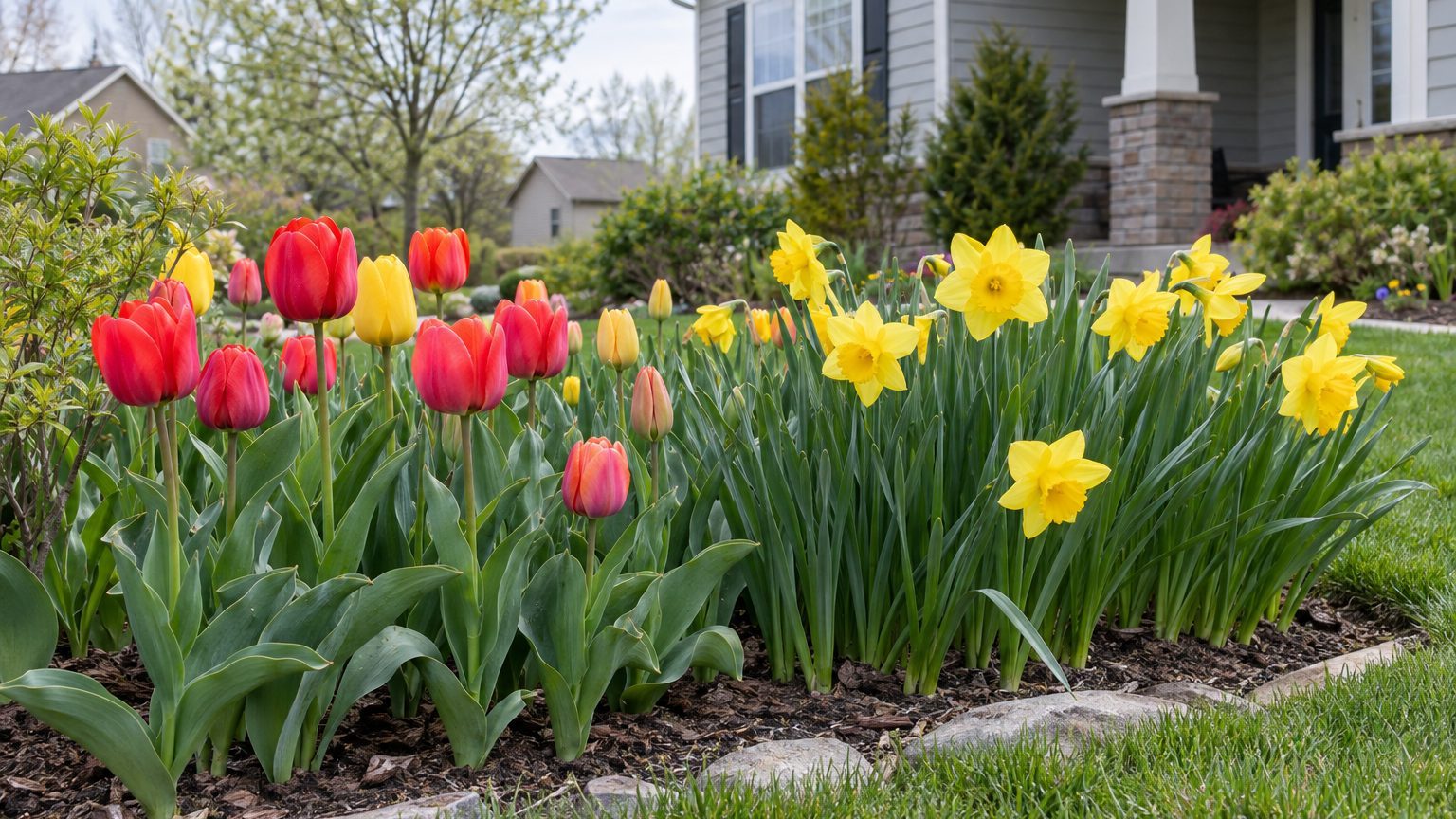
Spring bulbs go into cool fall soil, and the show they put on after a long Idaho winter depends on the roots they grow before the ground locks up. Tulips and daffodils share the same planting window here.
When to Plant Tulips and Daffodils in Idaho

Plant tulips and daffodils in September and October, so the bulbs root well before the ground freezes. Here is how a bulb’s year unfolds in an Idaho yard.
- In late summer, shop for bulbs while the selection is full, and choose firm ones with no soft spots or mold.
- In September, start planting once the soil has cooled below about 60°F, which is early enough for roots to form and late enough that the bulbs do not sprout in the fall.
- Through October, keep planting, then water the bed once so the roots settle in.
- After the ground turns cold in late fall, spread a layer of mulch over the bed to even out the freezing and thawing.
- In early spring, the first green shoots push through the mulch, and the bulbs have already had their winter cold without any help from you.
In Boise, the first fall frost usually arrives between October 7 and October 21, which is why a September start gives the roots a comfortable head start. Idaho covers a wide spread of USDA hardiness zones, from 3b to 7b, so the colder your zone, the more closely you should stay to the early part of the window.
Idaho — the year and the numbers
- State
- Idaho
- USDA zones
- 3b-7b
- Last spring frost
- April 23 to May 7
- First fall frost
- October 7 to October 21
- Annual rain
- 12 in
- Lawn zone
- transition-season
- Source
- NOAA NCEI 1991-2020 Climate Normals, 32F freeze probabilities · Boise
Which Spring Bulbs Do Best in Idaho?
Nearly all the familiar spring bulbs succeed in Idaho: tulips, daffodils, crocus, alliums and hyacinths. Winters here supply plenty of cold, and the dry soil suits bulbs that dislike wet feet. The real question is who else is going to eat them.
Voles, squirrels, rabbits and deer treat some bulbs as a buffet and skip others, so the right choice often depends on the critters in your neighborhood.
| Bulb type | How it does in Idaho | Why |
|---|---|---|
| Daffodils | Dependable perennial that lasts for years | Deer and other animals leave them alone |
| Tulips | Bloom well but often fade after a few seasons | Voles, squirrels, rabbits and deer eat them |
| Darwin hybrid and Emperor tulips | Return more reliably than standard tulips | Bred to come back for several years |
| Alliums | Easy to grow and flower without fuss | They need the cold of winter to bloom |
| Crocus | Do well but need protection from animals | Voles, squirrels, rabbits and deer eat them |
Hyacinths also belong in an Idaho bed, and like tulips they take full advantage of the winter cold. If animals are a constant problem in your yard, make daffodils the backbone of the planting and tuck tulips into spots you can watch or protect.
When to Plant, Chill and Care for Spring Bulbs in Idaho
The bulb year is short on tasks. Planting happens in fall, the winter handles the chilling, and the only spring job is to leave the foliage alone.
| Task | Best timing in Idaho | Why then |
|---|---|---|
| Plant tulips, daffodils, crocus, alliums and hyacinths | September to October, once the soil has cooled | Roots need time to establish before the ground freezes |
| Chill the bulbs | Nothing to do, since winter in the ground does it | Idaho winters are cold enough that the refrigerator step is unnecessary |
| Remove faded flowers | Right after bloom ends | Spent flowers waste energy that the bulb should save |
| Cut back the foliage | Only after the leaves have turned brown | Green leaves are still feeding the bulb for next year |
Fridge chilling is for places where winters are too mild, and Idaho gardeners can skip it. If the leaves look untidy in late spring, plant perennials or annuals nearby to hide them rather than tying or cutting them.
How Bulb Planting Time Changes Across Idaho
Idaho runs from low river valleys to high mountain towns, and the right moment within the planting window shifts with the elevation.
- Treasure Valley: Boise and the surrounding valley settle in the middle of the window, with soil that cools more slowly than in the mountains, so late September into October works well.
- Lewiston and the Clearwater canyon: This low, mild spot stays warm into fall, so lean toward October so the bulbs do not sprout early.
- Coeur d’Alene and the Panhandle: Cooler air and earlier cold nights favor planting in September.
- McCall and the Wood River Valley around Sun Valley: At these higher elevations, the ground freezes sooner, so get bulbs in early in the window and mulch promptly.
Wherever you garden, let the soil temperature guide you. A bed that has cooled below about 60°F is ready, whatever the calendar says.
Where to Get Bulb Advice in Idaho
Idaho’s soils and elevations vary a great deal from one valley to the next, so local advice pays off. University of Idaho Extension and your county office can help with the details of your own yard.
- The University of Idaho Extension website carries research-based guidance on bulbs and fall planting, and it is a good first stop before you shop.
- Your county extension office can run a soil test, which is worth doing in late summer before you dig the beds.
- Master gardeners connected to the county office can look at a struggling bed and help work out why bulbs failed to bloom.
Common Questions
What If the Bulbs Are Still in the Bag After October?
Plant them anyway. A bulb that is still in the bag does better in the ground, late, than stored over the winter, so keep planting for as long as you can dig.
Do Spring Bulbs Need a Freeze to Bloom in Idaho?
Yes. Most spring-flowering bulbs need about 12 to 16 weeks of cold to flower, and an Idaho winter in the ground supplies it. According to Iowa State University Extension, alliums, like other spring bulbs, need the cold of winter to bloom.
Which Bulbs Suit Dry, Sunny Beds in Idaho?
Species tulips, snow iris and crocus are well adapted to droughty conditions, and they handle the dry soil that many Idaho yards have. Alliums are another easy choice for a sunny, well-drained spot.