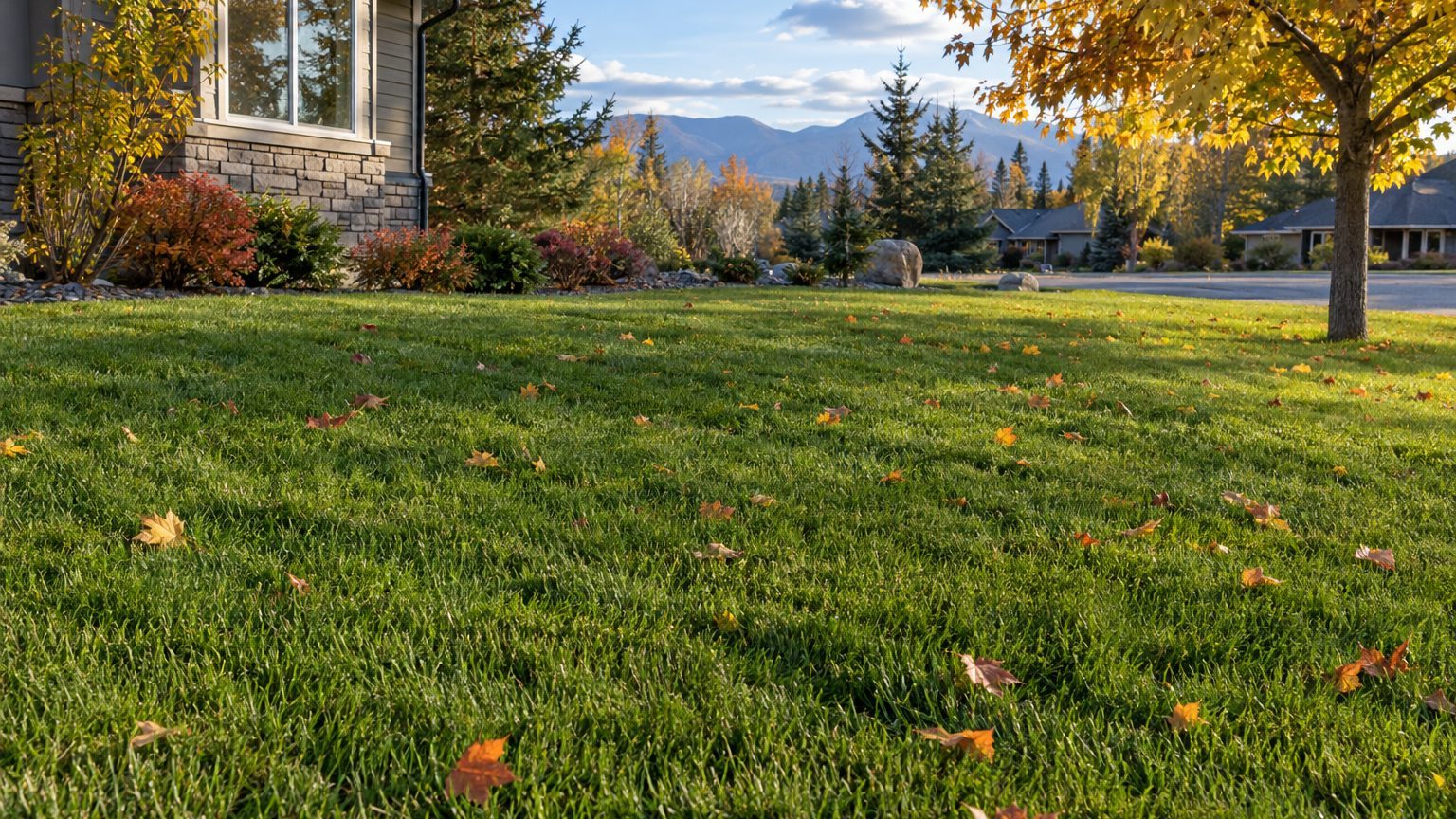
When the snow pulls back from a Yukon yard, it leaves flattened, straw-colored grass that looks beyond saving. It usually isn’t. The lawn year here is short and tightly packed into the warm months, so matching each task to the right month matters.
What to Do Each Month in a Yukon Lawn

Most of the work lands between June and September, while the cold months mainly call for leaving dormant turf undisturbed. Seeding, feeding, mowing and watering each have a narrow window, so the months below are worth keeping close.
| Month | In the lawn |
|---|---|
| January | Rest. The grass is dormant under snow and frozen ground. |
| February | Rest. Nothing is growing, so keep heavy traffic and piled snow off the turf. |
| March | Rest. Snow still covers most lawns, and the grass has not stirred. |
| April | Melt begins. Stay off soggy ground and watch for matted patches where snow lingered. |
| May | The ground thaws and the grass slowly wakes. Hold off on seed and fertilizer, because the roots are not yet working. |
| June | The busiest month. Seed bare spots now, give the first feeding once the grass is clearly growing, start mowing, and water as the soil dries. |
| July | Mow and water through the long days. If you missed June, seeding still works in July. |
| August | Keep mowing and watering. A late feeding also works this month, before growth slows. |
| September | Mow as long as the grass keeps growing. Watering can ease off as the days cool. |
| October | Rest. The grass is going dormant, so put the mower away. |
| November | Rest. The lawn is dormant and frozen. |
| December | Rest. Snow cover protects the crowns of the grass. |
Seeding belongs to spring and early summer here. The season is too short for fall seeding, because seedlings need warm weeks to root before the ground freezes.
Yukon — the year and the numbers
- State
- Yukon
- Hardiness zones
- 1b
- Last spring frost
- June 5
- First fall frost
- August 25
- Annual rain
- 10 in
- Lawn type
- cool-season
- Source
- Environment and Climate Change Canada — Canadian Climate Normals 1981-2010, station WHITEHORSE A · Whitehorse
When Does the Lawn Season Start and End in Yukon?
Grass starts growing when the soil warms, not when the calendar says so. Most lawn seed wakes up when the soil reaches 10 to 18 °C (50 to 65 °F), and in Yukon that happens late. A sunny April afternoon feels like spring, but the ground underneath is still cold and often still frozen.
Frost dates tell you about risk to young seedlings, nothing more. In Whitehorse, the average date of the last spring frost is June 5, so in half of all years frost arrives later than that. Treat that date as the middle of a window, not a safe date, and expect colder or higher districts to run later still.
In Whitehorse, the average date of the first fall frost is August 25. That is early, and it explains why the growing season feels so compressed. Established grass shrugs off a light frost, but a seedling sown in July has less time to toughen up than you might hope. Mowing keeps going into September because frost-tolerant lawn grasses keep growing in cool weather.
How the Lawn Calendar Shifts Across Yukon
Yukon is a big territory with real differences in elevation and cold, so your own yard may run ahead of or behind the usual pattern.
- Whitehorse: The Yukon River valley here is the reference for most timing advice, with a thaw that comes earlier than in the northern and upland communities.
- Southern Lakes (Carcross and Marsh Lake): Large bodies of water slow the spring warm-up and soften the first autumn cold, so the lawn wakes a little later but may stay green a little longer.
- Haines Junction: Closer to the St. Elias Mountains, with higher ground and cooler air, so seeding and the first feeding usually wait toward the end of the June window.
- Dawson City: Farther north, with a deep winter and a late thaw, so everything shifts later and the season is shorter still.
If your yard sits on a slope facing south, it will thaw sooner than a shaded hollow just down the road, so trust what your own ground is doing.
Lawn Care Timing Mistakes to Avoid in Yukon
Seeding in the Fall
Fall seeding is routine in much of the contiguous United States, but it fails here. Seedlings that sprout in late summer have no time to root before the ground freezes, and the thin stand is lost over winter. Sow in June, with July as the fallback.
Feeding Before the Grass Grows
A spring feeding on thawed but cold soil mostly runs off or sits unused, because the grass is not drawing nutrients yet. It wastes fertilizer and money. Wait until June, when the lawn is clearly growing, and consider a late feeding in August.
Trusting the Frost Date
In Whitehorse, sowing seed on June 5 because it is the average last frost date is a gamble, since half of all years bring a frost after it. A frost after germination can set young grass back. Seed once the soil has truly warmed, and keep an eye on the forecast after germination.
Where to Get Lawn Advice in Yukon
Yukon has no county extension offices. Local growers and the federal agriculture department can fill that gap, and the best questions are about your own soil and slope.
- Agriculture and Agri-Food Canada publishes general guidance on turf, soil and cold-climate growing, and is the place to start before spring.
- Territorial agriculture staff can tell you what grows near your community, so ask them in late spring before you sow.
- Local garden centres and master gardener groups know which seed mixes have worked nearby, so visit them before you buy seed for June.
Common Questions
Is Yukon in a USDA Hardiness Zone?
No. Canada uses its own system, and Whitehorse sits in Canadian zone 1b. That system uses seven climate variables, so it does not convert to a USDA zone.
What Should You Do About Matted Patches After the Snow Melts?
Look at the patch and test how the grass responds. Grayish, crusty patches that sit where snow lay longest are often snow mold, and flattened grass that springs back is simply pressed down. Rake gently once the ground is dry, and leave soggy areas alone until they firm up.
Can You Grow a Lawn in the North of the Territory?
Yes, though the season is shorter and the thaw later. Plan around the June window, protect young grass from late frost, and check with a local garden centre about what has done well in your community.