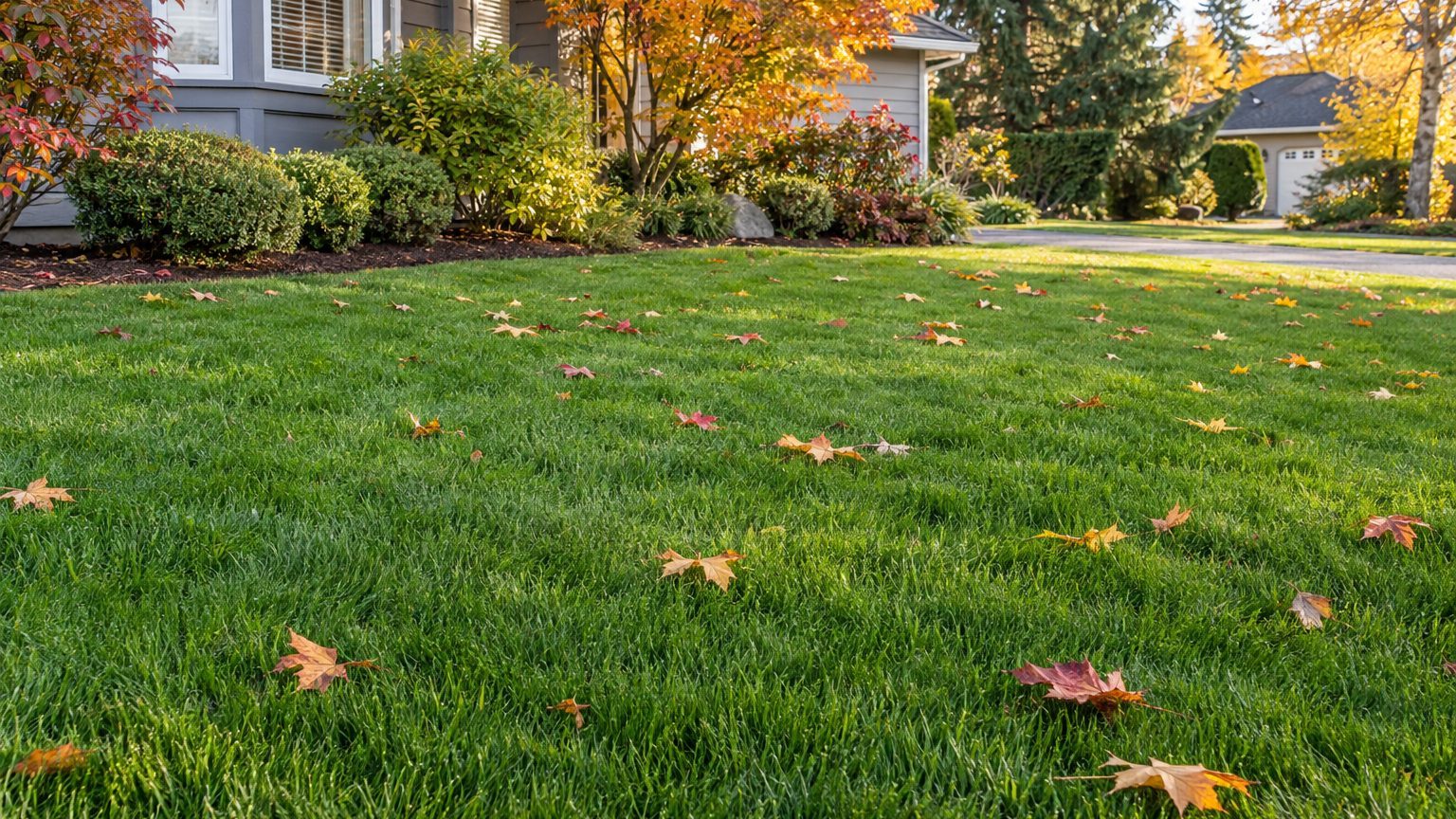
Moss greening up in a soggy March lawn and brown patches in an August dry spell frame Washington’s lawn year. Between them, the work follows a clear order of mowing, feeding, seeding and watering, and timing matters more than most homeowners expect, especially on either side of the Cascades.
What to Do Each Month in a Washington Lawn
For a western Washington baseline, most of the work clusters from April through May and again from August through September. The months in between are mostly about mowing and, in summer, keeping the grass watered.
| Month | In the lawn |
|---|---|
| January | Rest. The grass is dormant or barely growing, so stay off soggy turf and let it be. |
| February | Rest. Nothing to apply yet. Watch for standing water and moss, which tell you where drainage is poor. |
| March | Still waiting. Soil is cold and wet, so leave seeding and fertilizing for their recommended months. Clear fallen branches and plan the spring jobs. |
| April | Start mowing as growth picks up. Put down crabgrass preventer now, before weed seed sprouts. Aeration, dethatching and seeding also work this month. |
| May | Keep mowing. If you missed April, crabgrass preventer still works now, and so does a light feeding. Aeration and seeding are still open too. |
| June | Mow regularly and begin watering as the dry season sets in, since roots need moisture before heat arrives. |
| July | Mow and water deeply. Keep watering deeply through this dry stretch, especially east of the Cascades. |
| August | Keep watering and mowing. Dethatching and seeding begin, so bare spots can be repaired while the soil is warm. |
| September | The big month. Core aerate, dethatch, seed and fertilize while soil warmth and fall moisture help new grass root. Washington law bars phosphorus lawn fertilizer except on a new lawn or when a soil test shows a shortage, and never on frozen ground. |
| October | Mow as long as the grass grows and rake leaves so they do not smother it. Seeding season has closed. |
| November | Fertilize to feed roots through winter, then make the last cuts as growth slows. |
| December | Rest. Growth is slow, so put the mower away and keep foot traffic light. |
If a month feels empty, that is intentional. Winter and early spring are quiet periods, so wait for the listed work windows.
Washington — the year and the numbers
- State
- Washington
- USDA zones
- 4a-9a
- Last spring frost
- February 27 to March 18
- First fall frost
- November 13 to November 30
- Annual rain
- 39 in
- Lawn type
- cool-season
- Source
- NOAA NCEI 1991-2020 Climate Normals, 32F freeze probabilities · Seattle
When Does the Lawn Season Start and End in Washington?
Grass starts growing when the soil warms, not when the last frost passes. Cool-season seed germinates once soil sits at 50 to 65 °F, which is why seed spread in a cold, wet March often just sits there. In the Seattle area, the last freeze usually falls between February 27 and March 18.
That window mainly tells you when a young seedling might still get nipped. By April, frost risk is mostly behind a Seattle-area lawn, and warming soil is what sets the pace for mowing and seeding.
The season closes in the same quiet way. The first fall freeze in the Seattle area typically arrives between November 13 and November 30, so seed sown in August or September has plenty of time to root first. Mowing and feeding wind down as growth slows, not on a fixed date.
How the Lawn Calendar Shifts Across Washington
Washington spans sharply different climates, and the calendar bends with each place.
- Puget Sound lowlands: Seattle, Tacoma and Olympia have mild, damp conditions, so mowing starts early and runs late. Moss pressure is high in shady, soggy spots.
- Coast and Olympic Peninsula: Cooler, wetter and cloudier, so growth wakes a little later and moss gets a stronger hold. Drainage and sunlight matter more than watering.
- Spokane and the Inland Northwest: Colder winters push the start of spring work later and hurry the fall. Aim for the early part of the seeding window so seedlings root before hard cold.
- Yakima Valley and Tri-Cities: Hot, dry summers make watering the main summer job, and the lawn needs steady moisture through the heat. Spring comes sooner here than in Spokane.
Treat the calendar above as a western Washington baseline and nudge it later or earlier from there.
Lawn Care Timing Mistakes to Avoid in Washington
Seeding Too Early in Spring
A mild frost date tempts people to seed in March, but the soil is still cold and soaked. The seed may rot or wash away, and seedlings that appear grow slowly under low light.
Wait for April or May if you must seed in spring. August and September give far better results.
Crabgrass Preventer Too Late
Preventer works only before weed seed sprouts. Applied after crabgrass is up, it does nothing to those plants, and you spend a summer pulling weeds from thin turf.
Put it down in April, or in May if you fall behind. It also blocks grass seed, so skip it where you plan to seed.
Waiting for Brown Grass to Water
Washington summers turn dry quickly, and a lawn that waits until it browns may already be dormant and under stress. Recovery is slow, and weeds fill the gaps.
Start watering in June, before stress shows, and keep going through August. Deep soaking encourages deeper roots than light sprinkles.
Where to Get Lawn Advice in Washington
Local conditions vary enough that a nearby source is worth a call. Washington State University Extension covers the whole state, and your county office can speak to your soil and microclimate.
- Its research-based guidance on grass types, fertilizer rules and common lawn problems is useful before you buy seed or product.
- Your county extension office can help with soil testing questions and local timing, so contact it before the September work begins.
Common Questions
Is October Too Late to Seed a Lawn in Washington?
October falls outside the seeding months. Seed sown then has little warm soil left to root in. If September passes, wait for April.
Do You Need a Soil Test Before Fertilizing in Washington?
A soil test is worth doing before any phosphorus is added to an established lawn, since the state limits it. The results also show whether pH or other nutrients need attention.
Does a Lawn Need Watering in Spring in Western Washington?
Spring rain usually covers established grass. New seed sown in April or May is the exception and needs steady moisture to germinate and root.