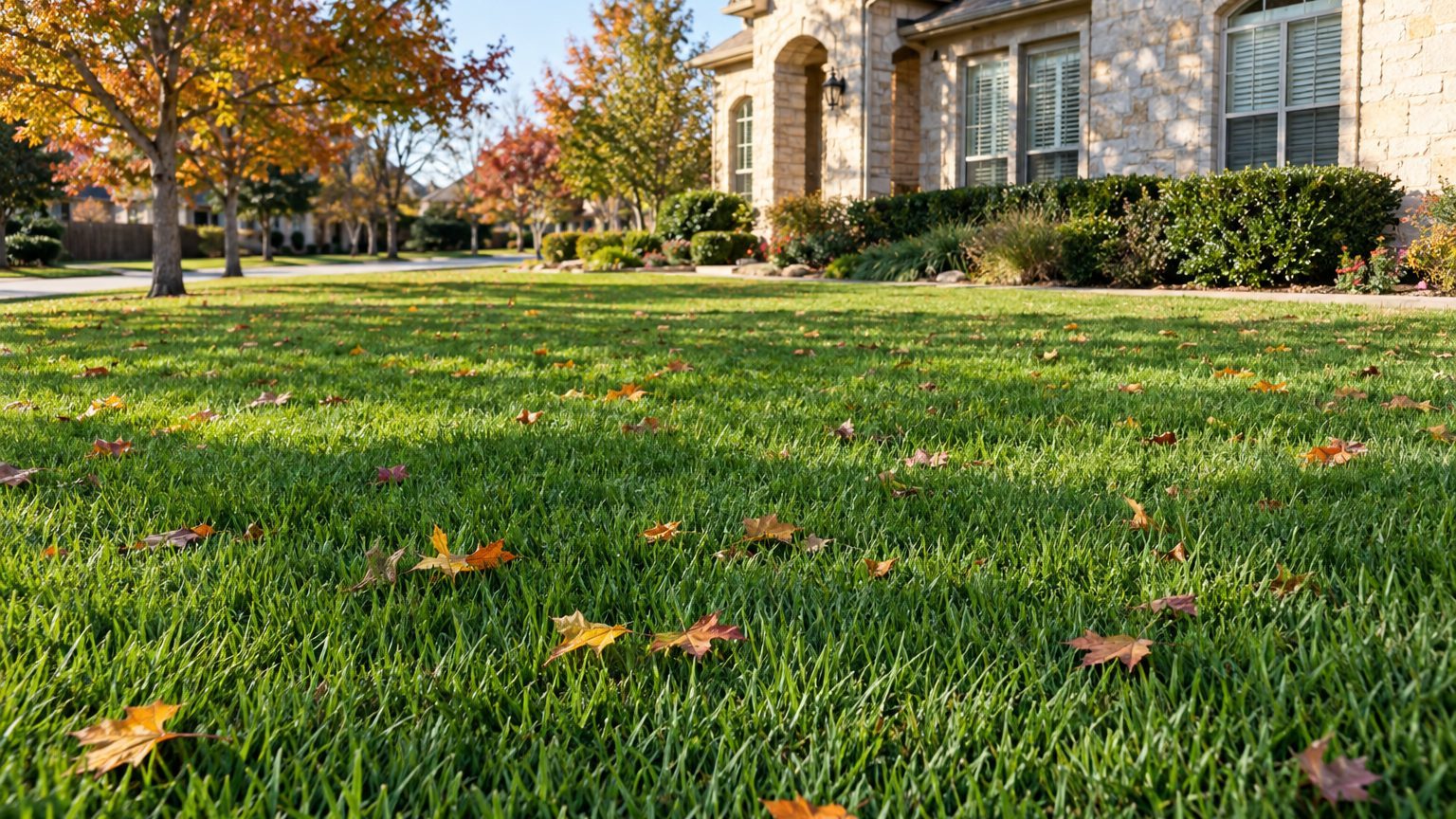
Warm-season grass in Texas wakes slowly in spring, grows hard through the heat, and slips into a tan dormancy after the first real freezes. The lawn year follows that rhythm: pre-emergent in late winter, feeding and sod work in late spring, steady mowing through fall, and rest when the grass stops growing.
What to Do Each Month in a Texas Lawn

For warm-season grasses such as bermudagrass, the big jobs cluster in late spring when the soil is warm and the grass is growing fast. Here is how the year runs.
| Month | In the lawn |
|---|---|
| January | Rest. The grass is dormant, so keep foot traffic light and pull winter weeds by hand. |
| February | Apply crabgrass preventer before the soil warms, because it only works ahead of germination. |
| March | Preventer still works this month if February slipped by. The grass is just starting to green, so hold off on feeding. |
| April | Start mowing as growth picks up. Feeding is fine once the lawn is fully green, and sod laid now will root well. |
| May | The busiest month. Seed, lay sod, dethatch and fertilize while warm soil gets roots moving fast. |
| June | Dethatching and fertilizing still work, and seed or sod laid now will establish. Start watering deeply as heat builds. |
| July | Mow regularly and water deeply. Skip fertilizer, since hot, dry weather stresses fed grass. |
| August | Keep mowing and watering through the heat. Watch for brown patches that may come from drought, grubs, or another problem. |
| September | Mowing continues. A light feeding works early in the month while the grass is still growing well. |
| October | Mow as growth slows, then stop when the blades quit growing. Skip fertilizer, which would push tender growth before frost. |
| November | Rest. The grass is heading into dormancy, so rake leaves off and leave the lawn alone. |
| December | Rest. The lawn is dormant and tan, and needs nothing but a leaf rake. |
Fertilizer timing is easy to get wrong. Feed only after the lawn has fully greened up, never in hot, dry late summer and never in late fall.
Texas — the year and the numbers
- State
- Texas
- USDA zones
- 6a-10a
- Last spring frost
- February 4 to March 1
- First fall frost
- December 1 to December 19
- Annual rain
- 52 in
- Lawn type
- warm-season
- Source
- NOAA NCEI 1991-2020 Climate Normals, 32F freeze probabilities · Houston
When Does the Lawn Season Start and End in Texas?
Growth starts when the soil warms, not when the last frost passes. Warm-season grasses take off once soil sits at 65 to 70 °F and keeps rising, which is why seed and sod go down in May rather than at the first mild week of spring.
Frost dates only tell you how risky a young planting is. Around Houston, the last spring freeze usually falls between February 4 and March 1, and the first fall freeze between December 1 and December 19. That is the mild Gulf end of the state, so do not borrow it for other regions.
The season ends when cooling soil slows the grass, usually well before a hard freeze. Mowing runs from April through October, then the lawn rests until spring warmth wakes it again.
How the Lawn Calendar Shifts Across Texas
Texas stretches across USDA hardiness zones 6a to 10a, so the same job lands on different weeks depending on where you live.
- The Panhandle: Winters are colder and freezes come earlier in fall and linger later in spring. Wait longer in spring before seeding or laying sod, and expect a shorter growing season.
- North Texas: Cold snaps can still hit after green-up begins, so be patient with feeding and new plantings until the lawn is clearly growing.
- The Hill Country: Thin soils and hot, dry summers make deep, infrequent watering matter more, and the schedule runs a bit behind the coast in spring.
- The Gulf Coast: Warmth arrives earliest and lingers latest, so green-up comes sooner and dormancy is shorter and milder.
Treat the monthly guide as a starting point and nudge each task earlier on the coast or later toward the north.
Lawn Care Timing Mistakes to Avoid in Texas
Fertilizing Too Early
A warm spell in March tempts many people to feed, but the grass is only waking up and its roots cannot use much yet. The nutrients wash away, and weeds benefit instead. Wait until the lawn is fully green, then feed in April through June.
Seeding at the Wrong Time
Seed scattered in fall or winter sits in cool soil and either rots or sprouts weakly. Warm-season grass needs heat to germinate. Plant in May, and June still works if spring gets away from you.
Skipping the Preventer Window
Crabgrass preventer applied after the weed has sprouted does almost nothing. It must be down before the soil warms. Put it out in February or March, and if you miss both, switch to pulling weeds by hand.
Where to Get Lawn Advice in Texas
Local conditions vary so much here that useful advice comes from people who know your soil and grass type. For local help, start here.
- Texas A&M AgriLife Extension offers lawn calendars and grass guides, and is a good first stop before spring work begins.
- Your county extension office can test your soil and identify problem weeds or pests, so call or visit when something looks off.
Common Questions
Can You Plant a Texas Lawn in Fall?
Warm-season grasses are best started in May, with June as a fallback. Fall soil is cooling, so seed and sod have little time to root before dormancy.
Why Is My Lawn Still Brown in Spring?
Brown grass in early spring is usually dormant, not dead. Pull gently on the grass, and if the blades resist and the roots look firm, the lawn will green up as the soil warms.
Is Dethatching Worth Doing Every Year?
Not always. Dethatch only when the spongy layer of old stems and roots has built up thick, and do it in May or June when the grass can recover quickly.