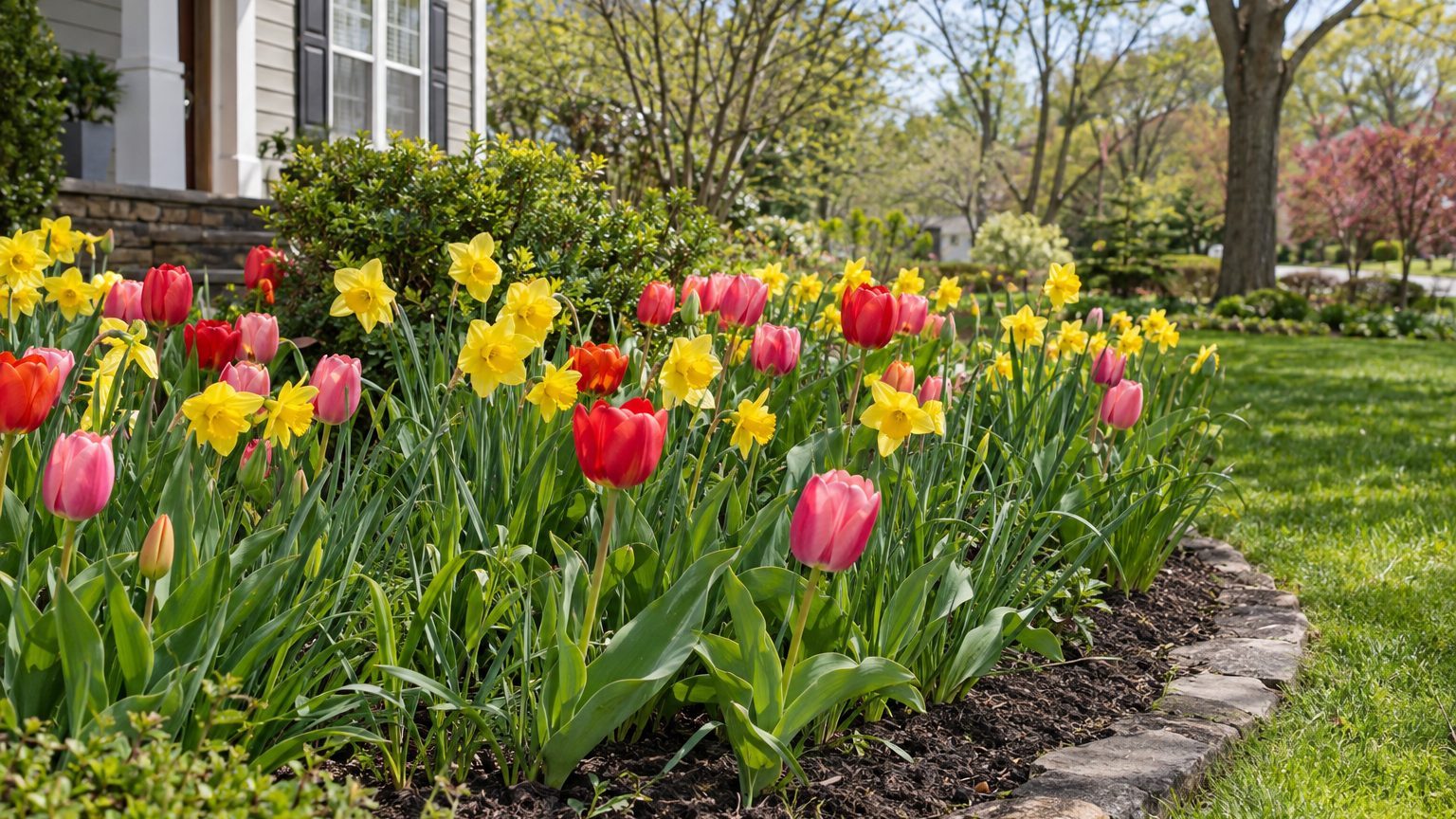
Daffodil leaves pushing through cold ground and tulip buds loosening on a sunny day tell you spring has arrived in a Texas yard. The timing depends on where you live, because Texas runs from Gulf Coast mildness to Panhandle cold.
When Do Tulips and Daffodils Bloom in Texas?

Tulips and daffodils flower when spring warms the ground, and no fixed month applies to the whole state. A bulb planted in the fall opens as the weather turns, which comes sooner on the Gulf Coast and later toward the Panhandle.
Texas spans USDA hardiness zones 6a to 10a, while bloom time varies from one yard to the next. What changes with location is how much natural cold the bulbs receive. In mild-winter areas, chilling can decide whether a bulb flowers well.
| Bulb | When it blooms in Texas | What sets the timing |
|---|---|---|
| Crocus | Early spring, as the ground warms | Needs 6 to 10 weeks of chilling before planting |
| Daffodils (narcissus) | Spring, as the weather warms | Some types need chilling and can return in a suitable spot |
| Tulips | Spring, after the chilled bulbs settle in | Need 6 to 10 weeks of chilling, given in the refrigerator |
| Hyacinths (Dutch) | Spring, as the weather warms | Need the same chilling as tulips |
| Alliums | Spring, with the warming days | Needs the cold of winter to bloom |
Early, midseason and late tulips open in that order, each on its own schedule, so planting a mix stretches the show. According to Iowa State University Extension, alliums need the cold of winter to bloom.
Texas — the year and the numbers
- State
- Texas
- USDA zones
- 6a-10a
- Last spring frost
- February 4 to March 1
- First fall frost
- December 1 to December 19
- Annual rain
- 52 in
- Lawn zone
- warm-season
- Source
- NOAA NCEI 1991-2020 Climate Normals, 32F freeze probabilities · Houston
How to Tell Your Bulbs Are About to Bloom
Because no single month fits every yard, the bulbs themselves provide useful clues. Watch for these changes.
- Green tips poking through the soil mean roots are working and the bulb has woken, so keep mulch light and let them come.
- As the leaves grow, watch the forecast for a late freeze.
- A bud rising out of the leaves shows the flower is set, and a cold night can still nip it.
- Buds that show color but have not opened will usually open within a spell of warm days.
- Squirrel digging near tulips and crocus is a warning, because these animals go after those bulbs and leave daffodils alone.
A bud that colors up and then stalls may resume opening when the weather warms.
What to Do After Tulips and Daffodils Bloom in Texas
When the petals fade, snip off only the spent flowers. The leaves stay, because they feed the bulb for next year’s blooms. Let them turn yellow and then brown before you remove them, and do not tie or braid them, since that cuts down the surface that gathers light.
Expect different results from each bulb. Tulips are often short-lived in the garden. Daffodils last longer and are the more reliable perennial bulb, so they are the better choice for a bed you want to leave alone.
In mild-winter areas, fresh tulip bulbs may need refrigerator chilling before planting. Daffodils are more likely than tulips to return.
How Bloom Time Shifts Across Texas
Bloom follows the local warming, so the same bulb opens on different dates around the state.
- Texas Panhandle: Winter cold lasts longer here and spring comes later, so bulbs open after those farther south.
- North Texas: Winters are cold enough that bulbs get more natural chill, though spring still arrives later than near the coast.
- Hill Country: Seasons fall between the cooler north and the Gulf side, and bloom follows the local warming.
- Houston and the Gulf Coast: Winters are mild, so spring comes early. Tulips and hyacinths here depend on refrigerator chilling to flower at all.
Your own yard can differ again. A sheltered south wall warms sooner than an open lawn, and bulbs there open ahead of the same variety in a cold corner.
Where to Get Bulb Advice in Texas
Local people know the local chill and the local bloom dates. Reach them through the state extension service and your county office.
- Texas A&M AgriLife Extension has gardening guides written for Texas conditions, and fall is the time to read them before you buy bulbs.
- Your county extension office can tell you what has done well in nearby yards, so call in late summer, before bulb season starts.
Common Questions
When Should You Buy and Plant Spring Bulbs in Texas?
For bulbs that need no chilling, December is the main planting month, though October and November can work. Wait until the soil has cooled below about 60°F so the bulbs root without sprouting too soon. For tulips and hyacinths that need chilling, December is the month to plant, and October and November also work for bulbs that don’t need the refrigerator.
How Do You Chill Tulip Bulbs in a Refrigerator?
Store the bulbs in a refrigerator or other cool place until about the first part of December. Then plant them in the cooler soil of early to mid-December, so roots can establish before spring.
Do Daffodils Need Chilling in Texas?
Some narcissus do need chilling in Texas, while others need none. Check the label on the bulbs you buy, or ask your county extension office which types do well in your area.