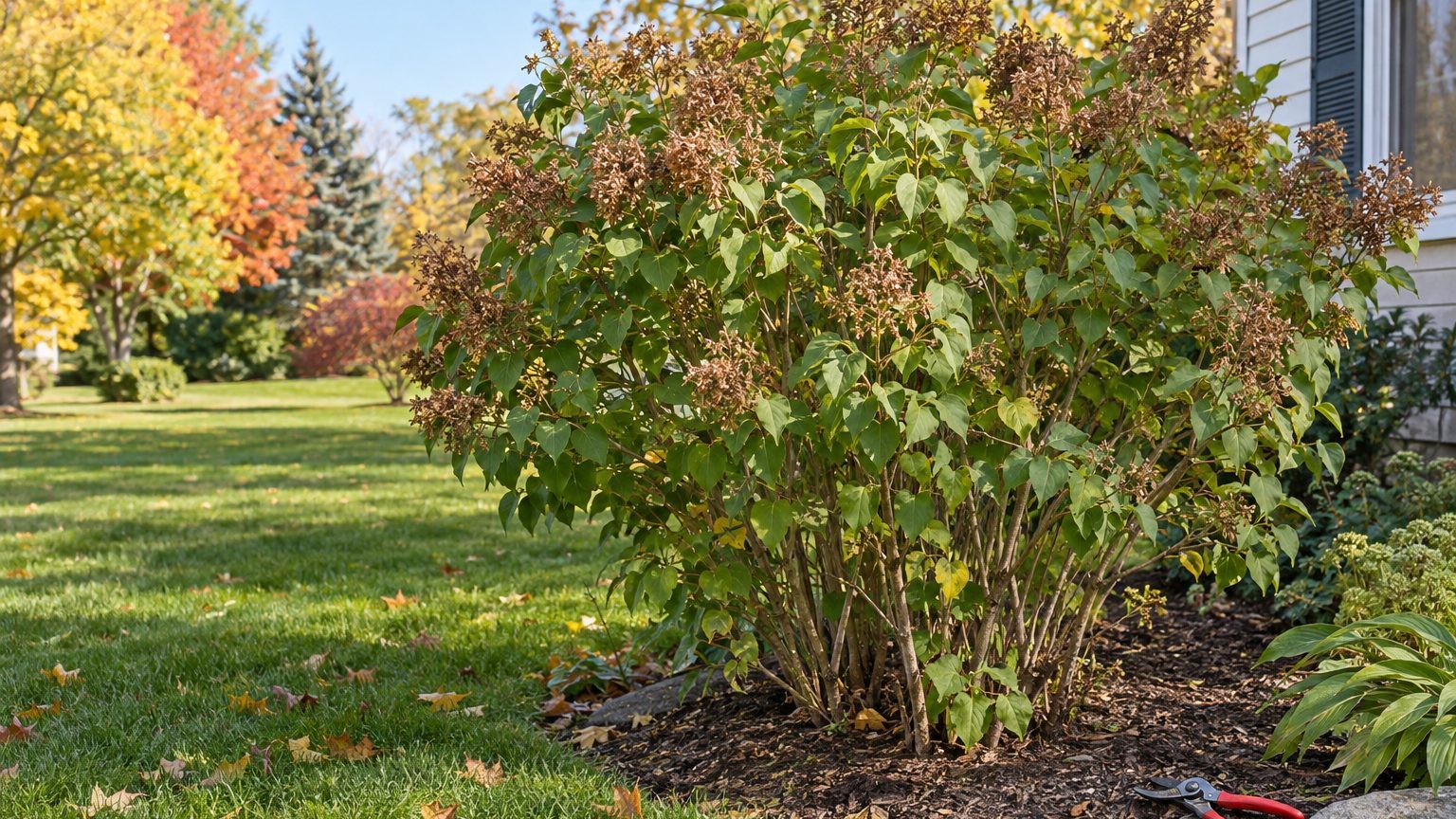
Brown, shriveled flower clusters hanging on a lilac signal that the pruning window has opened. In Texas, mild winters can limit bloom because the buds may not get enough cold rest. Timing here follows the bloom, not the calendar.
When to Prune Lilacs in Texas

Prune once-blooming lilacs right after their flowers fade. Texas lilacs bloom with the local spring, so that moment arrives earlier on the Gulf side of the state and later in the colder north, and the fading blooms tell you when it has come.
The reason is simple. A lilac flowers on last year’s wood and sets next spring’s flower buds in summer, soon after it finishes blooming. Cutting early gives the shrub the whole season to form them.
| Type of pruning | When in Texas | Why |
|---|---|---|
| Routine upkeep: spent clusters, crossing or weak stems | Right after the flowers fade | Pruning promptly avoids cutting off next spring’s flower buds |
| Routine pruning | Not in late summer, fall or winter | The buds for next spring are already on the stems and come off with the wood |
Thinning an old, crowded lilac follows the same rule, so do it in that post-bloom window and expect it to take some bloom with it. Prune reblooming lilacs after their main spring flush, since later pruning removes flower buds. Lilacs also need a cold winter rest to mature their flower buds, so in much of Texas they may flower poorly whatever the pruning.
Texas — the year and the numbers
- State
- Texas
- USDA zones
- 6a-10a
- Last spring frost
- February 4 to March 1
- First fall frost
- December 1 to December 19
- Annual rain
- 52 in
- Lawn zone
- warm-season
- Source
- NOAA NCEI 1991-2020 Climate Normals, 32F freeze probabilities · Houston
How to Tell When Your Lilacs Are Ready to Prune
Let the shrub set the date, because it reads the weather more accurately than any schedule can.
- Flower clusters turning brown and papery tell you the bloom is finished and cutting can begin.
- Petals dropping from most of the panicles means the show is over, even if a few late clusters hold on at the top.
- Small green seed pods forming where flowers were mean the plant has started spending energy on seed, so snip those clusters off.
- Fresh green shoots pushing from the base and the leaf axils show that new wood is growing, and that new wood will carry next spring’s buds.
- A shrub that has stopped blooming but is still in leaf is ready, while one that has dropped its leaves is already past the window.
Once these signs line up, the cutting is quick, and the sooner you finish, the more time the shrub has to set buds.
Should You Prune Lilacs in Fall or Winter in Texas?
No. Cutting in fall or winter removes the buds that would open the following spring. The stems look bare and dormant, but the flower buds are already sitting on them, so each cut takes a handful of blooms with it.
Avoid hard reshaping in late winter because it removes spring flower buds.
Dead or broken wood is a different matter. A cracked branch can come out whenever you spot it, since it carries no flowers worth saving.
How Lilac Pruning Time Shifts Across Texas
Texas spans USDA zones 6a to 10a, so lilacs behave very differently depending on where you live, and the pruning moment moves with the bloom.
- Panhandle: Winters are colder here, which gives lilacs the chilling they want. Spring arrives later, so the flowers fade and the pruning window opens later than elsewhere in the state.
- North Texas: Winters are milder than in the Panhandle, so lilacs bloom earlier and flower less reliably. Prune as soon as the last clusters fade, and expect common lilacs to struggle in the long, hot summers.
- Hill Country: Spring comes earlier and summers run hot, so a lilac here may bloom lightly. Prune right after the flowers go, and try the low-chill types sold as Southern lilacs.
- Gulf Coast: Winters are mild and summers are humid, so common lilacs seldom flower well. Where one does bloom, the window comes early, and heat and humidity invite powdery mildew.
Wherever you garden, the fading flowers set the date, and the choice of cultivar matters as much as the timing.
Where to Get Lilac Advice in Texas
Texas is large enough that advice for one region can mislead in another. Texas A&M AgriLife Extension and your county office can tell you which lilacs have done well near you.
- The state extension service offers guidance on shrubs for Texas conditions, and checking it before you buy can save you from a poor choice.
- Ask your county extension office which low-chill lilacs have performed well nearby.
- Call or visit just after your lilac finishes blooming, with a photo of the shrub, and ask what to cut.
Common Questions
Which Lilacs Grow Best in Texas?
Low-chill types do better than the common lilac. Look for those sold as Southern lilacs, and for the Descanso hybrids Angel White and Blue Boy. They tend to be less fragrant than the lilacs of colder places, but they grow and bloom with less winter cold.
Why Is a Texas Lilac Not Blooming?
Check the essentials first. First, look at the stems. Healthy green growth without flower buds can point to a mild winter that did not give the shrub enough chilling. Second, think back to when it was last cut. If the pruning came in late summer, fall or winter, the buds were removed with the wood.
Do Lilacs Get Powdery Mildew in Texas?
They can. Common lilacs struggle through hot, humid summers, and a white, dusty film on the leaves is the usual sign. Thinning crowded stems right after bloom lets air move through the shrub, and choosing a heat-adapted variety can help.