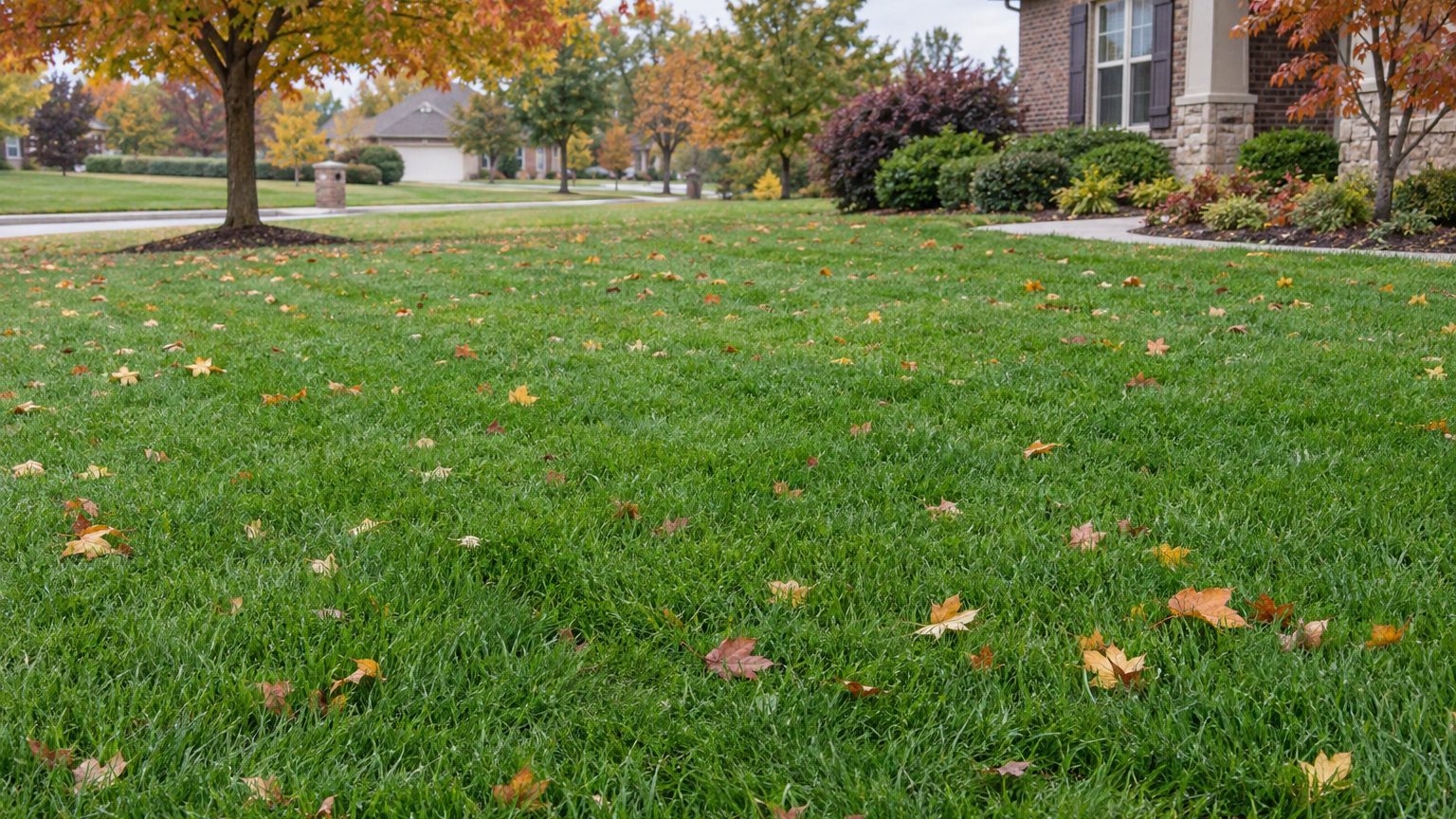
Bermuda turns tan after the first hard freeze, while tall fescue can stay green during an Oklahoma winter. That difference between warm-season and cool-season grass shapes an Oklahoma lawn care schedule, from seeding and feeding to the final mow.
What to Do Each Month in an Oklahoma Lawn

Oklahoma lawns commonly use bermuda or zoysia, with tall fescue in shadier yards. Each month below notes the work for both groups, and says so where they differ.
| Month | In the lawn |
|---|---|
| January | Rest. The grass is dormant or slow, so keep traffic light and let the lawn sleep. |
| February | Rest, with one early move: crabgrass preventer can go down now if spring turns warm early. |
| March | Apply crabgrass preventer before the weeds sprout, and feed tall fescue as it wakes up. Mowing starts for cool-season grass. |
| April | Mow bermuda and zoysia as they green up. Preventer and tall fescue fertilizer still work this month if March slipped by, and warm-season dethatching can begin. |
| May | Seed bermuda or zoysia, or lay sod, while the soil is warming. Dethatch and start feeding warm-season lawns. Preventer still works now. |
| June | Water deeply as heat builds and keep feeding warm-season grass. Seeding and sod still work this month, and so does dethatching. |
| July | Heat is the main stress. Water regularly, keep mowing, and feed bermuda and zoysia. Sod can still go down if you are late. |
| August | Core aerate and seed tall fescue, and dethatch where thatch has built up. Keep watering through the heat. |
| September | Fertilize cool-season lawns. If you missed August, aeration, seeding and dethatching still work now. |
| October | Feed tall fescue again as growth slows, and keep mowing until the grass stops. Watch for the first frost. |
| November | Mow tall fescue as needed while bermuda and zoysia go dormant. Little else is needed. |
| December | Rest. Warm-season grass is dormant, so just clear fallen leaves off the turf. |
Tall fescue should never be fed in summer. Warm-season grasses take their feeding in the heat, which is the opposite of what cool-season grass wants.
Oklahoma — the year and the numbers
- State
- Oklahoma
- USDA zones
- 6a-8a
- Last spring frost
- March 28 to April 10
- First fall frost
- October 29 to November 8
- Annual rain
- 36 in
- Lawn type
- cool- and warm-season
- Source
- NOAA NCEI U.S. Climate Normals 1991-2020, 32F freeze probabilities · Oklahoma City
When Does the Lawn Season Start and End in Oklahoma?
Grass wakes up when the soil warms, not when the calendar flips. Cool-season seed such as tall fescue germinates in soil at 50 to 65 °F, while bermuda and zoysia want 65 to 70 °F. That is why fescue is seeded in late summer and warm-season grass in late spring.
Frost dates only tell you how risky it is for young seedlings. In Oklahoma City, the last spring freeze usually falls between March 28 and April 10, and gardens outside the city often see it later. Check your own county before you seed.
In fall, the first freeze in Oklahoma City usually arrives between October 29 and November 8, and rural yards often see it sooner. Bermuda slows well before that and browns after a hard freeze, while fescue keeps growing into November.
How the Lawn Calendar Shifts Across Oklahoma
Oklahoma spans USDA hardiness zones 6a to 8a, a range based on average annual extreme minimum temperatures. Lawn-care timing still shifts across the state with local conditions.
- The Panhandle: Higher, drier and colder in winter, so spring green-up comes later and fall dormancy earlier. Wait for warm soil before seeding bermuda.
- Tulsa and the northeast: Cooler winters than the south favor tall fescue, and late-summer seeding fits well here.
- Southern Oklahoma near the Red River: Warmer soil arrives sooner, so warm-season work can start at the early end of its window and bermuda stays active longer into fall.
Within any of these areas, a low spot or a north-facing yard can run behind a sunny slope.
Lawn Care Timing Mistakes to Avoid in Oklahoma
Seeding Bermuda Too Early
Seed put down in cool soil germinates poorly and can leave the stand thin. Wait for May, when the soil has warmed, and June still works if you miss it.
Feeding Fescue in Summer
Fertilizer on stressed cool-season grass in July feeds disease and weeds rather than roots. Feed tall fescue in early spring and again in September and October, and leave summer alone.
Applying Preventer Too Late
Crabgrass preventer works before seeds sprout, so a bag spread after the weeds appear does little. March is the target, with February or April as backups if the weather runs early or late.
Where to Get Lawn Advice in Oklahoma
Local conditions vary enough that a quick check with the people who study Oklahoma turf saves guesswork, especially for soil and grass choice.
- Oklahoma State University Extension offers turfgrass guidance written for Oklahoma, so look there before choosing a grass or a fertilizer plan.
- Your county extension office can answer questions about your own soil and local frost timing, and it is worth a call before seeding season.
Common Questions
Can You Plant Tall Fescue in Oklahoma, or Is It Too Hot?
It can work, especially in shade and in the cooler northeast. Seed in late summer and expect it to need more water in July and August than bermuda does.
Why Is the Lawn Still Brown in April When the Trees Have Leafed Out?
Bermuda and zoysia wait for warm soil, not warm air. If the grass is evenly brown but the crowns remain firm, it is probably still dormant, so give it time before reseeding.
Should You Mow Dormant Bermuda in Winter?
No mowing is needed once it has stopped growing. Mowing picks up again in April as the grass greens.