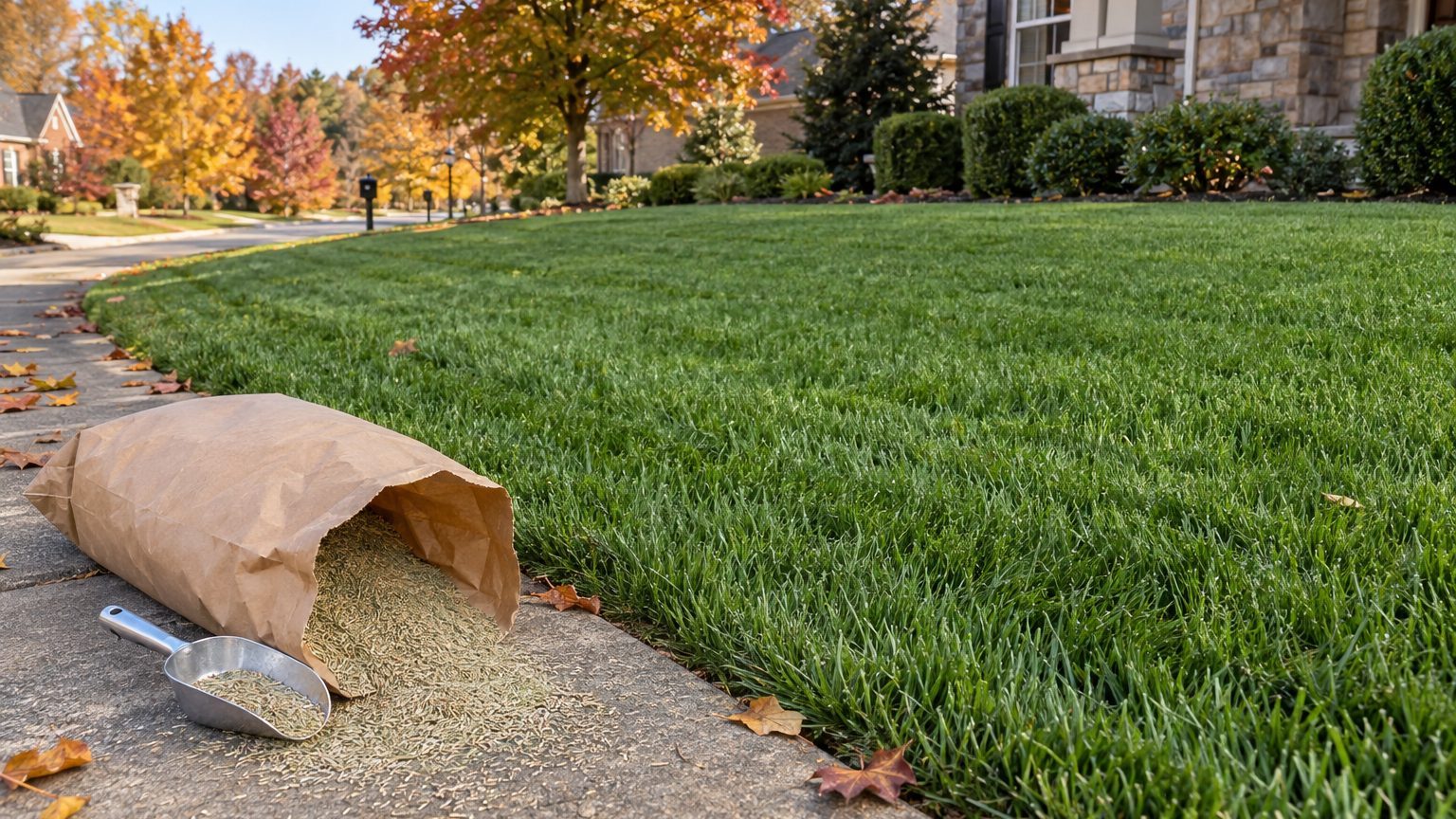
In Tennessee, tall fescue usually stays green through winter, while bermudagrass and zoysiagrass usually turn golden after the first frost. Both can work here, because the state sits where cool-season and warm-season grasses overlap. Which one suits your yard depends on sun, traffic and how much you want to water and mow.
Which Grass Grows Best in Tennessee?
Tennessee sits in the transition zone, so both cool-season and warm-season grasses can grow here, and each has a different weak spot. Cool-season grasses struggle in the hottest stretch of summer, while warm-season grasses turn tan once cold weather arrives. The grasses below have different strengths and care needs.
Tall Fescue
Tall fescue is a practical choice for Tennessee yards. It is a cool-season grass with deep roots, so it handles summer heat and some shade better than bluegrass does. It stays green through winter, and it is seeded in late summer, with August the best month and September a fallback.
Bermudagrass
Bermudagrass loves full sun and takes foot traffic, but it goes dormant and brown in cold weather. It can be grown from seed or sod. Seeding works best in May, and June still works if spring gets away from you.
Zoysiagrass
Zoysiagrass forms a dense, soft turf that crowds out weeds, and it tolerates some shade. It is mostly planted as sod or plugs rather than seed. Expect it to be slow to fill in and to turn straw-colored in winter.
Kentucky Bluegrass
Kentucky bluegrass is a specialized choice for the cooler, higher parts of Tennessee. It does best on cooler, higher ground, where summers are milder. In the warmer low country it tends to thin and brown in summer heat, so it is better as a small part of a mix than as the whole lawn.
Tennessee — the year and the numbers
- State
- Tennessee
- USDA zones
- 5b-8a
- Last spring frost
- March 31 to April 12
- First fall frost
- October 28 to November 8
- Annual rain
- 51 in
- Lawn type
- cool- and warm-season
- Source
- NOAA NCEI 1991-2020 Climate Normals, 32F freeze probabilities · Nashville
How to Choose Grass Seed for a Tennessee Yard
Start with the sun your yard actually gets and how the lawn is used. Then decide how much watering and mowing you are willing to do. The USDA hardiness range across Tennessee runs from zone 5b to 8a, but the range alone does not show which grass will suit a particular yard. Summer heat and shade usually decide it.
| Your yard | Grass | Why |
|---|---|---|
| Part shade, trees nearby | Tall fescue | Tolerates shade and stays green in cool weather |
| Full sun, heavy foot traffic | Bermudagrass | Tough, spreads quickly, handles heat |
| Full sun, dense look wanted | Zoysiagrass | Thick turf, but planted as sod or plugs |
| Cooler, higher ground | Kentucky bluegrass | Cooler summers suit it |
| Little watering possible | Bermudagrass | Recovers from drought by going dormant |
If you want a green lawn in winter and are fine with watering in summer, tall fescue is the practical pick. If you would rather accept a brown winter in exchange for a lawn that loves heat, go with a warm-season grass. Mowing needs vary with the grass and how quickly it grows.
Which Grasses Grow Where in Tennessee
Tennessee stretches from the Mississippi River to the Appalachians, and the lawn picture shifts along the way.
- Nashville and Middle Tennessee: Tall fescue is the common lawn, with bermudagrass and zoysiagrass in sunny, high-traffic spots. Spring comes earlier here than in the east.
- East Tennessee and the Great Smoky Mountains foothills: Cooler weather and later spring warmth favor tall fescue and make Kentucky bluegrass more realistic.
- The Cumberland Plateau: Higher and cooler, so bluegrass and fescue hold up better, while warm-season grasses green up late.
- Memphis and West Tennessee: Summers are hotter, which gives bermudagrass and zoysiagrass an edge and makes fescue work harder to survive.
Spring frost can linger into April in the cooler parts of the state, so hold off on warm-season seeding there until the soil has truly warmed.
Grass Seed Mistakes to Avoid in Tennessee
Picking the Wrong Grass
Buying seed for a cool-season grass in a hot, sunny yard sets you up for summer thinning. Match the grass to your sun and traffic first. Zoysiagrass is rarely sold as seed that performs well, so plan on sod or plugs for it.
Seeding at the Wrong Time
Tall fescue seeded in spring struggles once summer heat arrives. Seed it in late summer instead, with August best and September as a fallback, ideally paired with core aeration. Warm-season seed goes down in May, when the soil is warm.
Burying or Skimping on Seed
Seed buried too deep may never come up, and seed left on top of hard ground dries out. Cover it with no more than 0.25 inch of soil, and press it firmly so it touches the ground. Follow the rate on the bag, since thin seeding invites weeds and heavy seeding crowds seedlings.
Where to Get Lawn Advice in Tennessee
Local help can confirm which grass and which month fit your part of the state, since conditions vary from Memphis to the mountains.
- University of Tennessee Extension offers lawn calendars and grass guides, worth reading before you buy seed.
- Your county extension office can talk through your soil and shade, and it is a good stop before late-summer seeding.
- Ask about a soil test early, so the results are in hand before you fertilize or seed.
Common Questions
Can You Plant Tall Fescue and Bermudagrass Together?
It is not a good idea. They grow in different seasons and look different, so the lawn ends up patchy, with brown bermudagrass beside green fescue in winter.
When Should You Fertilize a Tall Fescue Lawn in Tennessee?
Early spring and fall are the right times, with March, September and October the best months. Skip summer, when fescue is under heat stress.
When Should You Fertilize Bermudagrass or Zoysiagrass?
Feed warm-season lawns in May, June and July, when they are actively growing. Do not fertilize warm-season grass in cool weather, when it is not actively growing.