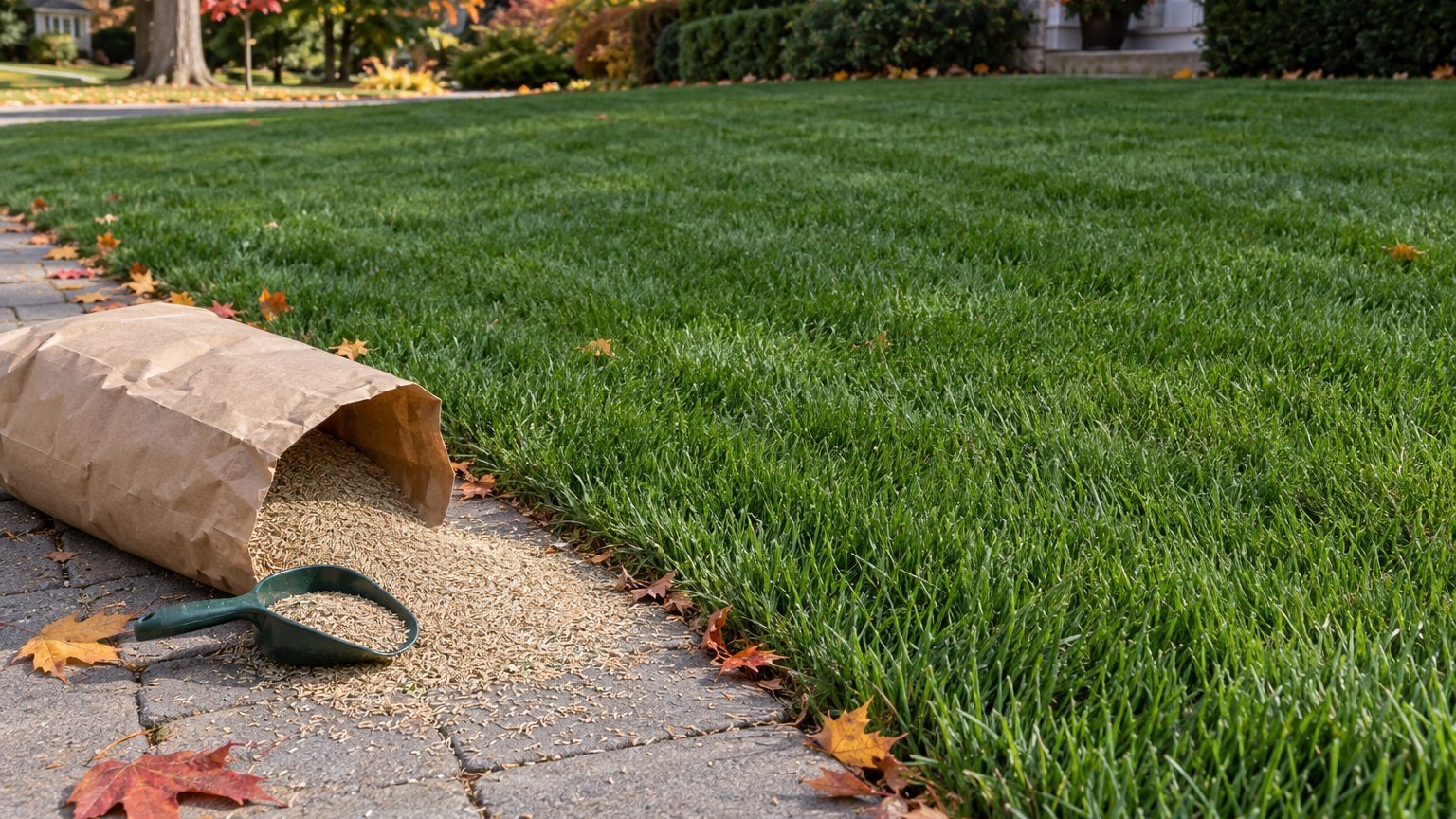
A Pennsylvania lawn that stays green through July heat and still greets you in April is almost always built on cool-season grass. Kentucky bluegrass, fine fescues, perennial ryegrass and tall fescue are the main grass groups for the state, and good seed choices come from that short list.
Which Grass Grows Best in Pennsylvania?
Cool-season grasses fit Pennsylvania, because they grow hardest in spring and fall and slow down, rather than quit, when winter arrives. Warm-season lawn grasses go brown for much of the year here, and hardiness zones from 5a to 7b mean winter lows differ widely across the state. The grass groups below suit different combinations of sun, shade, traffic and water.
Tall Fescue
Tall fescue has deep roots, so it rides out dry July stretches better than bluegrass does. It forms a coarse, upright turf that tolerates foot traffic and some shade.
It grows in clumps rather than spreading, so bare spots need reseeding instead of waiting for it to fill in.
Kentucky Bluegrass
Kentucky bluegrass is the classic Pennsylvania lawn, dense and soft, and it spreads by underground stems to heal small wear spots. It handles cold winters easily, including in the colder north.
It wants full sun and regular water in summer, and it is slow to germinate, so give it patience after seeding.
Fine Fescues
Creeping red, chewings and hard fescue are the answer for shade and poor, dry soil. They make a fine-textured lawn that needs less fertilizer and water than bluegrass.
They dislike heavy foot traffic and constant wet, so keep them for the quieter corners of the yard.
Perennial Ryegrass

Perennial ryegrass sprouts fast, which makes it handy for quick cover and in blends with slower species. It wears well under play.
In the colder north, use perennial ryegrass as a partner in a mix rather than the whole lawn.
Pennsylvania — the year and the numbers
- State
- Pennsylvania
- USDA zones
- 5a-7b
- Last spring frost
- March 29 to April 6
- First fall frost
- November 5 to November 16
- Annual rain
- 44 in
- Lawn type
- cool-season
- Source
- NOAA NCEI U.S. Climate Normals 1991-2020, 32F freeze probabilities · Philadelphia
How to Choose Grass Seed for a Pennsylvania Yard
Start with the light your yard gets, then think about traffic, water and how much mowing you want to do. A blend can suit changing conditions across a Pennsylvania lawn because the grasses balance each other’s weaknesses.
Seeding goes best in August and September, when the soil is warm and the cold is still a ways off. If you miss that window, April and May also work.
| Your yard | Grass to lean on | Why |
|---|---|---|
| Full sun, regular watering | Kentucky bluegrass | Dense turf that spreads and repairs itself |
| Full sun, dry spells, no irrigation | Tall fescue | Deep roots hold up in summer drought |
| Shade under trees | Fine fescues | Cope with low light better than bluegrass |
| Kids and pets playing | Tall fescue with ryegrass | Tough, and ryegrass fills in fast |
| Low mowing and feeding | Fine fescues | Slow, fine growth with modest needs |
When you buy, read the tag and choose seed that clearly identifies every grass species it contains. Whatever you choose, cover the seed with no more than 0.25 inch of soil and press it down so it touches the ground firmly.
Which Grasses Grow Where in Pennsylvania
Winters and growing seasons change a lot from one corner of the state to another, and that shifts which species you can lean on.
- Philadelphia and the southeast: This is the mildest part of the state, where spring frost ends between March 29 and April 6. Tall fescue does well here, and the long season suits fall seeding.
- The northern tier: Winters are colder and spring arrives later, so Kentucky bluegrass and fine fescues are the steady choices. Ryegrass can be included in a blend.
- The Allegheny Mountains: Cold and a short season favor fine fescues and bluegrass. Seed a little earlier in late summer so roots form before cold sets in.
Before you shop, note your own yard’s sun and shade.
Grass Seed Mistakes to Avoid in Pennsylvania
Picking the Wrong Species
Sun-loving bluegrass sown under a maple can thin out. Match the species to the light and the water you can really give, using the choices above.
Seeding at the Wrong Time
Spring seed has to fight crabgrass and summer heat before it matures. August and September give seedlings warm soil and cooler air. If you miss September, October still works for laying sod, though seed has less time to root.
Burying or Skimping on Seed
Deep covering smothers seed, and a thin scatter leaves room for weeds. Rake lightly, press it in, and follow the rate on the bag. If you fertilize while establishing the lawn, Pennsylvania law (Act 83 of 2022) bans lawn fertilizer from December 15 to March 1, on ground frozen 2 inches deep, or on snow-covered ground.
Where to Get Lawn Advice in Pennsylvania
Local help can settle questions about soil, shade and the seed that suits your exact corner of the state.
- Penn State Extension publishes lawn establishment and seasonal care guidance, useful before you buy seed in late summer.
- Your county extension office can answer questions about your area and help with a soil test, ideally before seeding.
Common Questions
Is It Okay to Mix Grass Seed Types in Pennsylvania?
Yes. A blend of bluegrass with fine fescue or ryegrass spreads the risk across sun, shade and wear, so different parts of the yard each find a species that suits them.
Can You Grow Warm-Season Grass in Pennsylvania?
It is not a good fit. Warm-season grasses turn brown for much of the year in Pennsylvania, making them a poor fit for lawns here.
Should You Dethatch Before Seeding?
Only when thatch is thicker than about an inch. Late summer, in August or September, is the best time, and April or May also works.