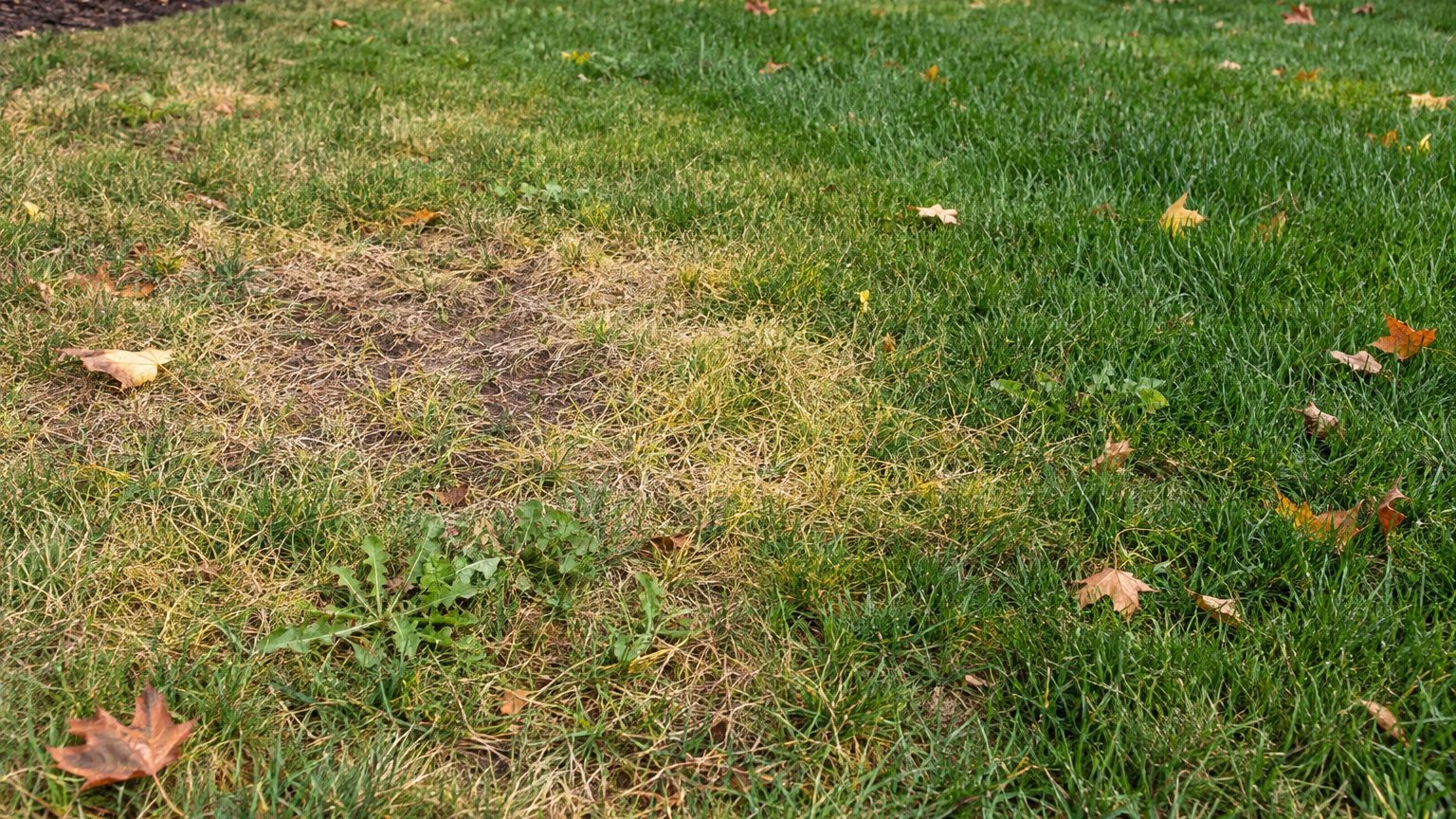
Tan, thinning patches in midsummer and ragged clumps of crabgrass along the driveway are the sights that send Ohio homeowners looking for answers. Most lawn trouble in the state traces back to a handful of causes: warm humid summers, heavy clay in many yards, and mowing, watering and feeding habits that do not match the season.
Lawn Pests and Diseases in Ohio
Crabgrass in Thin Spots

Crabgrass shows up as coarse, light green blades sprawling flat from a central point, usually where turf is thin or beside hot pavement. It sprouts as soil warms in spring and dies with fall cold, leaving bare patches behind.
A pre-emergence preventer works only before seeds sprout, so April is the target in Ohio, and May still helps if spring got away from you.
Dollar Spot on Dry Lawns
Dollar spot leaves small, straw-colored spots, often about the size of a silver dollar, that can merge into larger blotches. Early morning dew makes the grass look cobwebbed. It tends to follow nitrogen-starved turf and long stretches of dry soil with humid nights.
Regular feeding in the right months and deep watering during dry spells usually calm it.
Brown Patch in Midsummer
Brown patch makes roughly circular tan areas, sometimes with a darker, smoky edge in the morning. Tall fescue and ryegrass lawns suffer most when nights stay warm and the blades stay wet. Water earlier in the day so the grass dries quickly, and hold back on heavy feeding while the heat lasts.
White Grubs in Late Summer
Grubs are plump, white, C-shaped larvae that chew roots just under the surface. The turf goes drought-looking, then lifts like a loose carpet when you tug it. Raccoons, skunks and crows tearing up the lawn are another clue.
Confirm by peeling back a square of sod before treating anything, then reseed the damaged area.
Thin Grass Under Trees
Under maples and oaks, sun-loving grass fades, and moss moves into the gaps. Roots compete with the tree, and leaf cover blocks light in fall. Rake leaves promptly, choose a shade-tolerant mix when you overseed, and accept that a mulched bed may suit the deepest shade better than grass.
Ohio — the year and the numbers
- State
- Ohio
- USDA zones
- 5b-6b
- Last spring frost
- May 5 to May 15
- First fall frost
- October 5 to October 15
- Annual rain
- 42 in
- Lawn type
- cool-season
- Source
- Ohio State University Extension — Ohio Gardening Calendar · Columbus
How to Tell Which Lawn Problem You Have
Symptoms rarely identify the cause on their own. Pair what the patch looks like with when it appeared and whether it sits in sun or shade. Tug on the grass, too. Grass that lifts like a loose carpet suggests root-feeding insects, while grass that holds fast calls for a closer look at disease or drought.
| What you see | When and where | Likely cause |
|---|---|---|
| Turf peels back like carpet | Late summer into fall, irregular patches | White grubs |
| Round tan patches, darker rim | Hot, humid stretches, often in tall fescue | Brown patch |
| Small straw-colored spots that merge | Dry soil, humid nights, hungry lawn | Dollar spot |
| Coarse, light green clumps | Summer, thin sunny spots near pavement | Crabgrass |
| Thin grass, moss creeping in | Beneath trees, shaded most of the day | Shade stress |
Spongy turf that feels like a mattress underfoot is a different problem. A thatch layer up to 1/2 inch thick is healthy, and anything thicker calls for dethatching or core aeration. Dethatch in August or September in Ohio, and April works if you missed fall.
Where Lawn Problems Are Worst in Ohio
The state sits in USDA hardiness zones 5b to 6b, and lawns behave differently from one end of Ohio to the other.
- Lake Erie shore: Cleveland and Toledo lawns get cooler summers but frequent humidity and morning dew, which keeps leaf diseases in play on tall fescue and bluegrass.
- Northwest Ohio: Flat ground and heavy clay hold water, so compaction and soggy spots can be recurring problems.
- Cincinnati and the Ohio River valley: Hotter, longer summers push brown patch and crabgrass harder, and cool-season grass runs out of steam by August.
- Appalachian foothills of southeast Ohio: Slopes and thinner soil dry out quickly, so drought stress and thin turf show up before disease does.
Your own yard’s soil and shade often matter more than your county.
Lawn Care Mistakes That Invite Problems in Ohio
Mowing Too Short
Scalped grass has shallow roots, lets sunlight reach weed seeds, and wilts fast in July heat. Raise the mower deck, keep blades sharp, and mow regularly from April through November rather than waiting until the lawn is shaggy and cutting it hard.
Watering Lightly Every Day
A quick daily sprinkle keeps the surface wet, which favors brown patch and encourages shallow roots. Water deeply when the grass needs it, ideally in the morning, with most irrigation falling in June, July and August.
Feeding at the Wrong Time
A heavy summer feeding pushes soft, lush growth that diseases love. Feed in September and November, when cool-season grass builds roots, and use May as the fallback if you missed those windows.
Where to Get Lawn Advice in Ohio
Local advice beats general rules, because soil, shade and microclimate vary even between neighboring towns. Local extension resources cover most questions about Ohio turf.
- Ohio State University Extension publishes lawn guides and a gardening calendar, useful when a patch looks unfamiliar.
- Your county extension office can help identify a sample or arrange a soil test, so call before you buy treatments.
Common Questions
Can You Fix Bare Spots in Spring?
Yes. Seeding in April or May works, though young grass has to compete with crabgrass and summer heat. August and September give seedlings far friendlier conditions.
Does Ohio Clay Cause Lawn Problems?
Often. Compacted clay drains slowly and starves roots of air. Core aeration in September is the best fit, and April or May also works.
Is November Too Late to Fertilize?
No. November is one of the recommended months for Ohio lawns, because the grass keeps storing energy even as top growth slows.