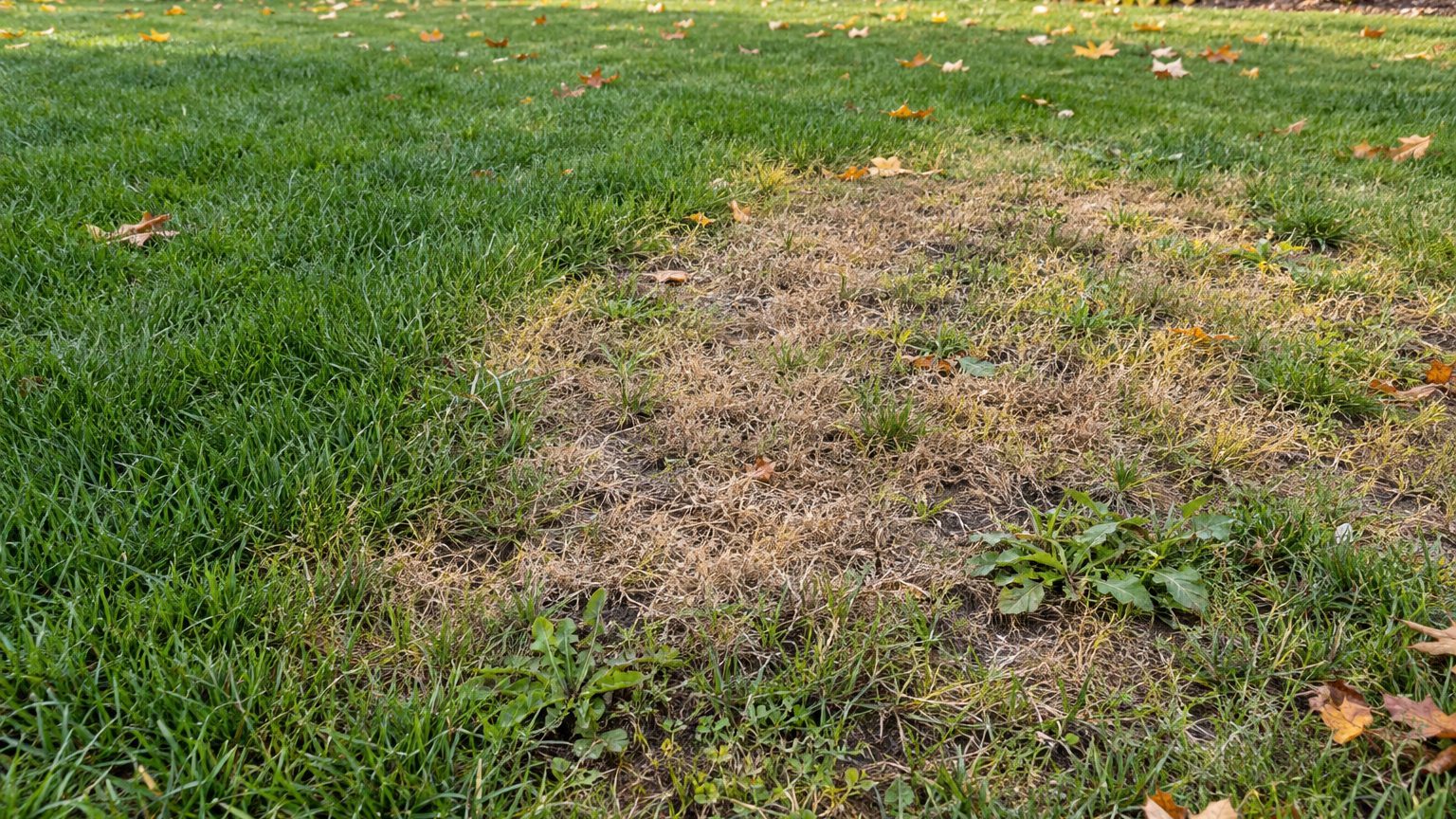
A lawn in the Northwest Territories wakes up late, grows fast through the bright summer, and goes dormant again within a few months. Most problems here come from that short season and the long winter, not from the pests that trouble southern yards.
Lawn Pests and Diseases in Northwest Territories
Around Yellowknife, the average last spring frost falls in late May. The average first fall frost arrives in mid-September. The ground stays cold and wet for much of that time, so the troubles below are mostly about cold, moisture and compaction. Northern and upland districts run weeks behind Yellowknife.
Snow Mold Patches

As the snow melts you may find circular, matted patches of gray or pinkish grass, sometimes with a web-like crust. It develops under long snow cover on unfrozen ground. Rake the patches gently to lift the mats and let air in, and the grass usually grows back from the crowns.
Winter Kill and Bare Spots
Tan, dead-looking areas in spring often come from ice sheets, drying winds or exposed ground without snow cover. Yellowknife sits in Canadian hardiness zone 1b, so winter hardiness matters when choosing turf. Scratch the soil, rake out dead blades, and reseed in June once the ground has thawed. July also works.
Thick Thatch
Cold soil slows the breakdown of clippings and old stems, so a spongy layer can build at the base of the grass. A layer up to 1.3 cm (1/2 inch) is healthy. Above that, dethatch or core aerate, which lets water and air reach the roots.
Dandelions and Other Broadleaf Weeds
Dandelions and similar weeds move into thin turf and bare patches once the soil warms in June. Their taproots and flat rosettes crowd out grass. Dig them out while the soil is moist, then thicken the lawn with seed so fewer gaps stay open.
Compacted, Mossy Ground
Low, damp or shaded spots often show a green carpet of moss with weak grass beneath. It often accompanies compacted or wet soil and heavy shade. Aerate, open up the shade where you can, and overseed the area so grass outcompetes the moss.
Northwest Territories — the year and the numbers
- State
- Northwest Territories
- Hardiness zones
- 1b
- Last spring frost
- May 25
- First fall frost
- September 18
- Annual rain
- 11 in
- Lawn type
- cool-season
- Source
- Environment and Climate Change Canada — Canadian Climate Normals 1981-2010, station YELLOWKNIFE A · Yellowknife
How to Tell Which Lawn Problem You Have
The shape of a patch, the time of year and the light on it narrow things down quickly. Compare the patch’s appearance with when it showed up before you decide.
Then try a simple test: tug on the grass. Use that result to guide your next step: loose turf points to root damage, while anchored turf calls for a closer look at the blades and soil.
| Sign | When you see it | Likely problem |
|---|---|---|
| Round, matted gray or pink patches | Right after snowmelt | Snow mold |
| Large tan areas, roots dead and dry | Spring, after exposed winters | Winter kill |
| Spongy turf, hard to push a finger into | Summer | Thick thatch |
| Green mat over thin grass in shade | Through the growing season | Moss from wet, compacted soil |
| Rosettes with deep taproots in thin turf | June through August | Broadleaf weeds |
A patch that sits in full sun and stays brown through summer points toward dry soil or compaction. A patch that stays soggy points toward drainage or moss.
Where Lawn Problems Are Worst in Northwest Territories
Conditions shift across the territory, mostly with latitude and drainage.
- Yellowknife: Rocky ground and thin soil over bedrock dry out fast in summer, and bare spots are common where soil is shallow.
- Hay River and the Great Slave Lake shore: The lake keeps spring cooler and slower, so snow mold and late greening show up more often.
- Inuvik and the Mackenzie Delta: Permafrost and a shorter season leave lawns patchy, and seeding has even less time to establish.
Wherever you live, low spots that hold meltwater can be prone to damage.
Lawn Care Mistakes That Invite Problems in Northwest Territories
Mowing Too Short
Scalped grass has fewer leaves to feed roots, and weeds fill the gaps quickly. Mow from June through September, and keep the blades tall enough to shade the soil. Cut a little at a time so the grass is never stressed.
Watering Too Often
Frequent light sprinkling keeps roots shallow and the surface damp, which favors moss and disease. Water from June through August, and soak deeply when the soil feels dry. Let the top layer dry between waterings.
Feeding at the Wrong Time
Fertilizer put down before the grass is growing runs off or feeds weeds. June is when the first feeding works, once growth is underway, and August also works. Late feeding pushes soft growth that winter can damage.
Where to Get Lawn Advice in Northwest Territories
The territory has no county extension offices. Help comes from the territorial agriculture program, local gardening groups and garden centers that know northern soils.
- The Government of the Northwest Territories agriculture services can point you to northern growing guidance, best checked in spring before seeding.
- A local garden club or master gardener group can tell you how your own neighborhood’s soil behaves, so ask before you buy seed.
- A garden center can help match seed to your yard and recommend a soil test when bare patches keep coming back.
Common Questions
Can You Seed a Lawn in the Fall in the Northwest Territories?
The season is too short for fall seeding. Seed in June once the ground has thawed, with July as a fallback.
Why Does My Lawn Stay Brown After the Snow Melts?
Grass that stays tan with dry, dead crowns usually suffered winter kill, while matted gray patches suggest snow mold. Scratch the soil and look for green at the base of the plants before reseeding.
Is the Frost Date a Safe Time to Plant?
No. In Yellowknife, the average last spring frost is May 25, which means frost comes later than that in one year out of two. Treat it as the middle of a window, and wait for warm soil.