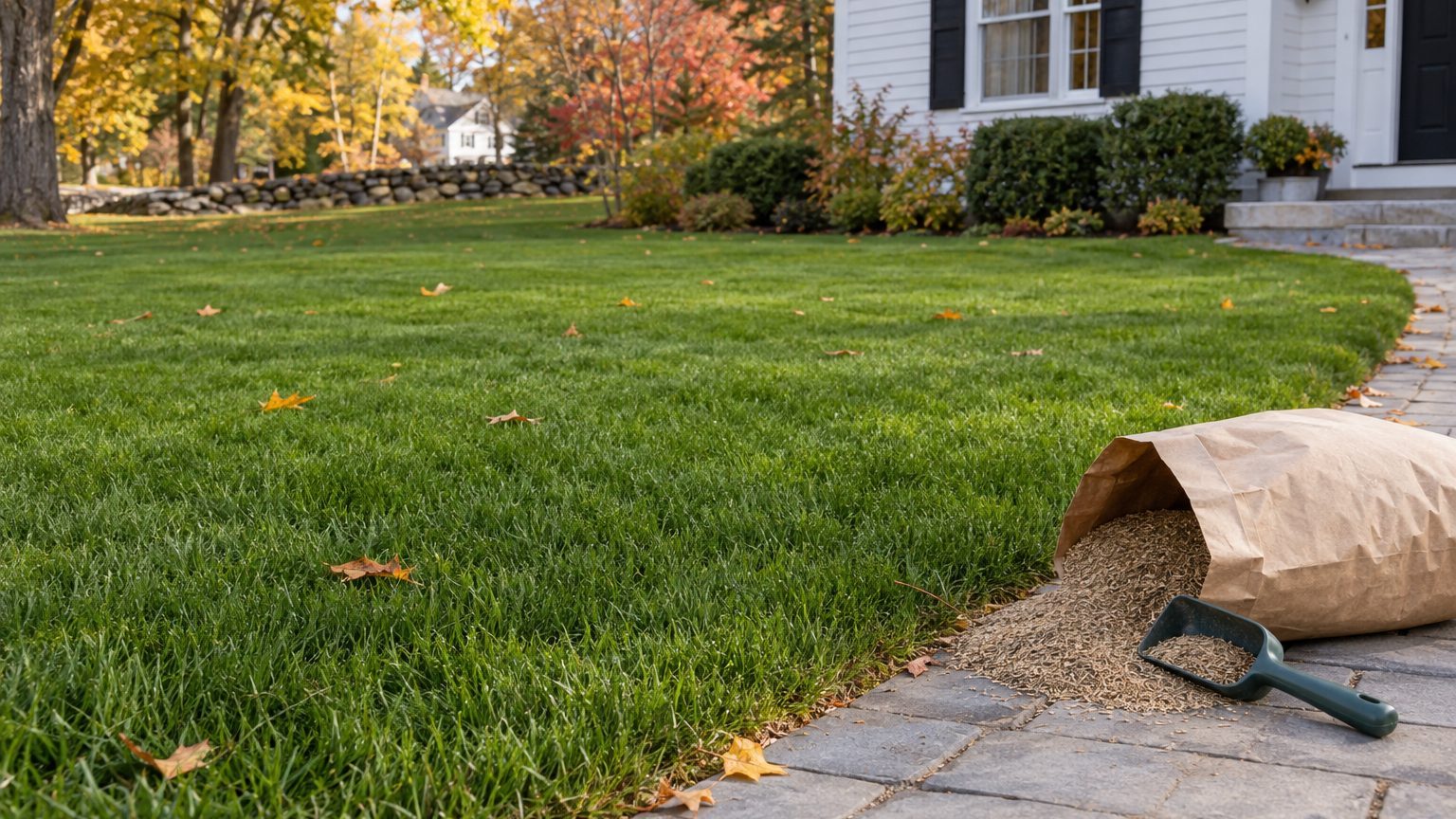
Cool, damp spring mornings and cold winters shape New Hampshire lawns. Cool-season grasses suit the state, and a mix of Kentucky bluegrass, fine fescues, and perennial ryegrass is a practical starting point for many yards. Tall fescue fits the sunny, tougher spots. Seeding in late summer gives any of them the best start.
Which Grass Grows Best in New Hampshire?
Cool-season grasses, with no real argument. Winters here fall in USDA zones 3b to 6a, which means the grass has to sit through serious cold and still green up when spring arrives. Warm-season lawn grasses are not a realistic option, and regional recommendations focus on cool-season types.
Kentucky Bluegrass
Bluegrass is the classic New England lawn. It handles the cold well, and it spreads by underground stems, so thin spots slowly fill in on their own.
It wants full sun and some patience, since seed is slow to sprout. Give it a sunny yard and it rewards you with a dense, even carpet.
Fine Fescues
Creeping red, chewings and hard fescue are the ones to look at if your yard has shade from maples and pines. They tolerate low light, poor soil and light feeding better than bluegrass does.
They make a softer, finer lawn that needs less fertilizer and less water. Fine fescues are a practical choice for shady yards in the state.
Perennial Ryegrass

Ryegrass sprouts fast, which is why it shows up in so many mixes. It gives you green quickly while slower grasses catch up.
Cold is its weak point. A harsh winter can thin it out, so treat it as a partner in a blend rather than the whole lawn.
Tall Fescue
Tall fescue has deep roots and copes with dry spells and foot traffic. It earns a place in sunny, busy yards where bluegrass might struggle in a dry summer.
It grows in clumps rather than spreading, so it fills gaps less well. Follow the rate on the bag and plan to overseed as gaps appear. In the coldest corners of the state, tall fescue can suffer winter damage.
New Hampshire — the year and the numbers
- State
- New Hampshire
- USDA zones
- 3b-6a
- Last spring frost
- April 16 to April 27
- First fall frost
- October 13 to October 26
- Annual rain
- 40 in
- Lawn type
- cool-season
- Source
- NOAA NCEI U.S. Climate Normals 1991-2020, 32F freeze probabilities · Manchester
How to Choose Grass Seed for a New Hampshire Yard
Start with the light your yard gets, then think about how it is used and how much work you want to do. Mixed-species seed can suit yards where growing conditions vary.
Water matters too. Summer watering is most useful in June, July and August, so a lawn that never gets irrigation should lean toward deep-rooted types.
| Your yard | Grass to favor | Why |
|---|---|---|
| Full sun, tidy look | Kentucky bluegrass | Dense, self-repairing turf |
| Shade under trees | Fine fescues | Tolerate low light and poor soil |
| Heavy foot traffic | Tall fescue with bluegrass | Tough, deep roots |
| No irrigation | Tall fescue or fine fescues | Handle dry stretches |
| Infrequent mowing, light feeding | Fine fescues | Slow, fine growth |
| Quick green-up | Perennial ryegrass in a blend | Sprouts fast |
If you like mowing often and want a manicured lawn, bluegrass-dominant blends fit that habit. If you would rather mow less, fine fescues grow more slowly and forgive neglect.
Which Grasses Grow Where in New Hampshire
The state stretches from the seacoast to the North Country, and the grass mix shifts a little along the way.
- Seacoast and Portsmouth: Winters are milder here, so bluegrass and ryegrass blends hold up well. Sandy soil dries out faster, which favors fescues in thin spots.
- Merrimack Valley and Manchester: Sunny lawns do well with bluegrass and tall fescue blends, and the spring thaw comes earlier than in the hills.
- Lakes Region and White Mountains: Cold snaps come harder and frost lingers, so winter-hardy bluegrass and fine fescues are the safer bets. Ryegrass is the one to keep to a small share.
- North Country: Short seasons and deep cold make fine fescues and bluegrass the dependable choices, and seeding early in the window matters more.
Frost dates run later in spring and earlier in fall as you climb or move inland, so check what your own county sees before you plan.
Grass Seed Mistakes to Avoid in New Hampshire
Choosing Sun Grass for a Shady Yard
Bluegrass or ryegrass under tall maples can thin out as shade limits growth. The shade wins every time.
Pick a fine fescue blend for those spots, and save the sun mixes for the open lawn.
Seeding at the Wrong Time
August and September are the months to seed, when the soil is still warm and cool nights help roots settle before winter. If you miss that window, May also works. Seed in the heat of July or very late in fall and young grass struggles.
Fall seeding also means fewer weeds competing with the new seedlings.
Burying the Seed or Spreading It Too Thin
Good seed-to-soil contact matters for germination. Cover it with no more than 0.25 inch of soil, and press it down so it touches the ground firmly.
Follow the rate on the bag rather than guessing. Too little leaves gaps for weeds, and too much crowds seedlings so they fail.
Where to Get Lawn Advice in New Hampshire
Local help can confirm which grass suits your soil and your town. Both of these are worth a call or a visit before you buy seed.
- University of New Hampshire Extension offers lawn guidance and soil testing information, and it is worth checking before late summer seeding.
- Your county extension office can speak to local conditions, so reach out in spring while you are planning the work.
Common Questions
Can You Plant Grass Seed in New Hampshire in May?
Yes, May works as a fallback if you missed the late summer window. Keep the seedbed watered as the weather warms, and expect more weed pressure than in fall.
Do You Need to Fertilize New Grass Seed in New Hampshire?
Fertilizing fits best in May and September, with October and November as later options. Seeding in September pairs naturally with a fall feeding.
Should You Aerate Before Seeding a New Hampshire Lawn?
Core aeration works best in September, and May also suits it. Aerating just before overseeding opens the soil so seed reaches the ground.