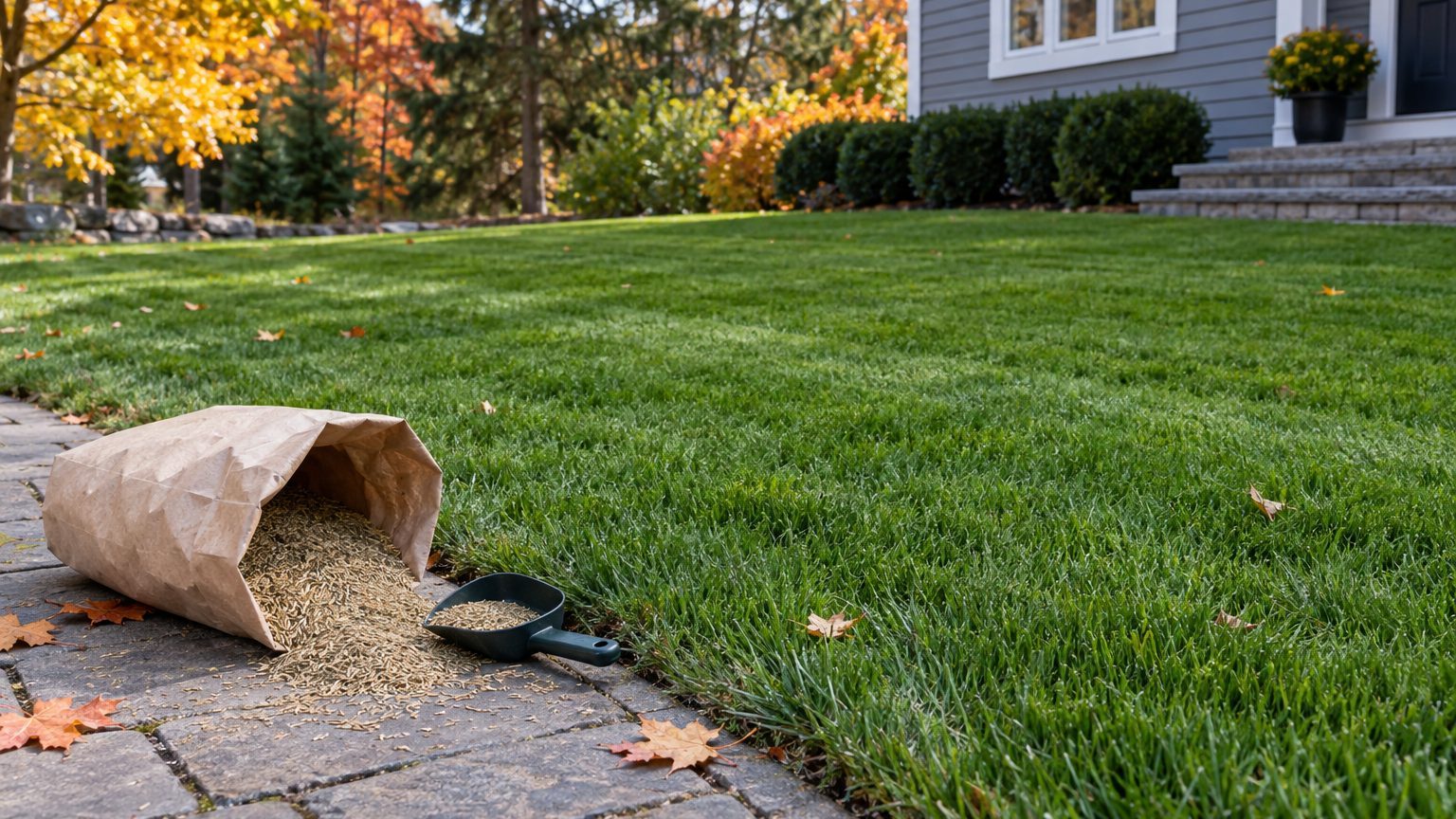
Fine fescue and Kentucky bluegrass both settle in well where summers stay mild and fog rolls in off the water. Seed choice here comes down to cool-season grasses, a shady or windy yard, and a seeding window in late summer.
Which Grass Grows Best in Newfoundland and Labrador?
Cool-season grasses suit the province, because they grow in mild, damp weather and rest through long winters. Heat-loving grasses have no place here. St. John’s sits in Canadian hardiness zone 6a (a Canadian rating, not a USDA zone), and inland and northern districts are colder. The cool-season grasses below offer different strengths and tradeoffs.
Fine Fescues
Creeping red, chewings and hard fescue are the workhorses for a cool, foggy coast. They tolerate shade, thin soil and low fertility better than bluegrass, and they stay fine-leaved with little mowing.
Choose them for yards under spruce or birch, and for exposed spots where you would rather not feed the lawn often.
Kentucky Bluegrass
Bluegrass handles cold winters well and spreads by underground runners, so it fills small bare patches on its own. It wants full sun and regular feeding to look its best.
It is slow to sprout, so give it patience and keep the seedbed damp. It pairs well with fine fescue in a mix.
Perennial Ryegrass
Ryegrass sprouts fast, which is handy for patching a worn path or holding soil on a new slope. It is less hardy than bluegrass or fine fescue, and a hard, open winter can thin it.
Use it as a minor part of a mix rather than the whole lawn.
Tall Fescue
Tall fescue makes a tough, deep-rooted lawn that stands up to foot traffic, with a coarser leaf than the others. Its cold tolerance in the north of the province is the open question.
It suits the milder, sheltered gardens of the Avalon better than exposed or upland ground. Seed it in a clump-resistant blend and expect a rougher look.
Newfoundland and Labrador — the year and the numbers
- State
- Newfoundland and Labrador
- Hardiness zones
- 6a
- Last spring frost
- May 30
- First fall frost
- October 17
- Annual rain
- 60 in
- Lawn type
- cool-season
- Source
- Environment and Climate Change Canada — Canadian Climate Normals 1981-2010, station ST JOHN'S A · St. John's
How to Choose Grass Seed for a Newfoundland and Labrador Yard
Start with the light your yard gets, then think about how it is used. A play area and a shady side yard call for different grasses, and so does a lawn you water regularly versus one left to the rain.
Even in a damp climate, a dry stretch in June, July or August is when a hose pays off.
| Your yard | Grass | Why |
|---|---|---|
| Shade under trees | Fine fescues | They keep growing in low light |
| Full sun, tidy look | Kentucky bluegrass | Dense turf that repairs itself |
| Heavy foot traffic | Tall fescue | Sturdy blades and deep roots |
| Quick cover on bare soil | Perennial ryegrass | Sprouts faster than the rest |
| Little mowing or watering | Fine fescues | Slow growth and modest needs |
A yard may have sun in one corner and shade in another, so a blend of fine fescue and bluegrass can cover both. Read the tag and pick a blend named for the light you have rather than one that promises everything.
Which Grasses Grow Where in Newfoundland and Labrador
The island and the mainland feel very different, and the gap changes which grass you lean on and when you sow.
- Avalon Peninsula: St. John’s and nearby towns have cool summers and a lot of fog, which suits fine fescue and bluegrass. Spring comes slowly, so wait for the soil to warm before spring seeding.
- Central Newfoundland: Gander and the interior run colder in winter and warmer in summer. Choose bluegrass and fine fescue blends and expect later spring growth than on the coast.
- West coast around Corner Brook: Winters bring deep snow and summers are milder, so lawns are slow to green but well insulated. Snow mold can show in spring, so check which grass has recovered before reseeding.
- Labrador: Happy Valley-Goose Bay and Labrador City have a much shorter growing season. Fine fescue is the dependable pick, and seeding should start in the warmest part of summer.
Anywhere in the province, a hill facing the wind dries and cools faster than a sheltered hollow, so match the grass to your own corner.
Grass Seed Mistakes to Avoid in Newfoundland and Labrador
Seeding at the Wrong Time
August and September are the months to sow, when soil is warm and the seed has time to root before winter. Seeding also works in May, though weeds compete harder and frost can still come after May 30 in about half of years at St. John’s.
If you miss the window, November seed laid on cold soil sprouts in spring.
Burying the Seed Too Deep
Grass seed needs firm contact with the soil to establish. Cover it with no more than 6 mm (0.25 inch) of soil, or rake it in lightly, then press it down so it touches the ground. Seed buried too deeply may fail to emerge.
Buying a Mix That Does Not Fit
Bags labeled for hot, dry regions often hold grasses that struggle here. Look for the cool-season species above on the label, and skip mixes heavy in ryegrass if your yard is exposed.
Seed rates on the bag are a sound guide. Sowing thicker does not hurry the lawn, it just crowds the seedlings.
Where to Get Lawn Advice in Newfoundland and Labrador
Canada has no county extension offices. Instead, you can turn to the provincial agriculture department, local master gardener groups and garden centres. Each can speak to local soil and weather.
- The provincial agriculture department offers general guidance on growing and soil, useful before you buy seed.
- A master gardener group near you can answer questions about your own soil and which blends have worked on your street, so ask in spring.
- A local garden centre can show you the blends in stock, so bring a photo of your yard when you go in August.
Common Questions
Is October Too Late to Seed in Newfoundland and Labrador?
Seed sown after September has little time to root before winter. Wait until the soil is cold in November and seed then, so it stays dormant and sprouts in spring.
Should You Fertilize When Seeding a Lawn Here?
September is the best month to feed a lawn, and May and October also work. Use fertilizer at seeding only if a soil test calls for it; too much can burn young seedlings.
What Should You Do Before Seeding an Old Lawn?
Dethatch in August or September to clear the dead layer that blocks seed from the soil. Core aeration works in September, or in May for a spring job. Both open the ground so seed touches soil.