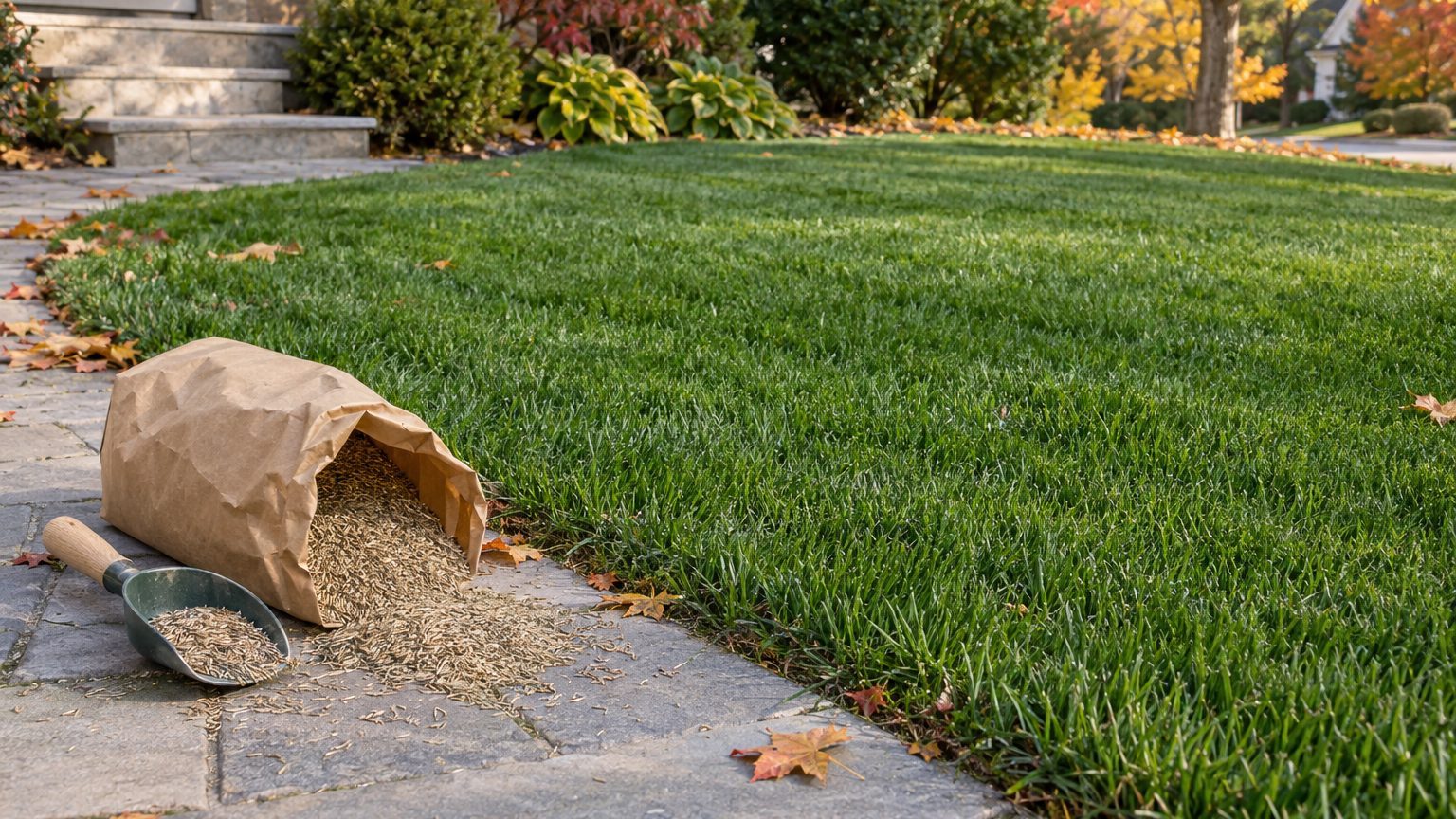
A Quebec lawn that greens up fast in May and still looks tidy after a snowy winter relies on cool-season grass. Kentucky bluegrass, fine fescues, perennial ryegrass and tall fescue are the species that suit the province, and the right pick depends on how much sun, foot traffic and mowing your yard sees.
Which Grass Grows Best in Quebec?
Cool-season grasses grow best in Quebec, because winters are long and cold and these species grow actively in spring and fall, then rest through hard freezes. Warm-season grasses are not an option here. Around Montreal, the Canadian hardiness zone is 5b (a Canadian rating that does not convert to a USDA zone), and colder districts run lower.
Kentucky Bluegrass
Kentucky bluegrass is the dependable choice for sunny front yards. It handles deep freezes well and spreads by underground stems, so it slowly fills in thin spots on its own.
It wants full sun and regular watering in summer. Seed it alone or blend it with fine fescue if part of the yard gets shade.
Fine Fescues
Creeping red, Chewings and hard fescue are the grasses to choose for shade, dry soil and low-maintenance lawns. They stay fine-textured and need less mowing and feeding than bluegrass.
They cope with cold easily. Their weak point is heavy foot traffic, where they wear faster than bluegrass or ryegrass.
Perennial Ryegrass

Perennial ryegrass sprouts quickly, which makes it handy for patching and for blends that need fast cover. It can suffer winter damage, so it does best mixed into a blend rather than sown alone.
In a harsh winter with little snow cover, pure ryegrass patches can thin out by spring. Keep it as a minor partner in the mix.
Tall Fescue
Tall fescue has deep roots and stands up to summer heat and drought better than bluegrass. That is useful on dry, sunny slopes and busy play areas.
It grows in clumps and does not spread well, and it can struggle in the coldest districts. Plant it in milder southern areas and overseed gaps when they appear.
Quebec — the year and the numbers
- State
- Quebec
- Hardiness zones
- 5b
- Last spring frost
- May 6
- First fall frost
- October 5
- Annual rain
- 39 in
- Lawn type
- cool-season
- Source
- Environment and Climate Change Canada — Canadian Climate Normals 1981-2010, station MONTREAL/ST-HUBERT A · Montreal
How to Choose Grass Seed for a Quebec Yard
Start with the light, because sun versus shade quickly narrows the field. Then think about how much the lawn gets walked on, whether you can water through summer, and how often you are willing to mow.
Many yards do well with a blend, since the grasses can cover one another’s weak spots. Read the seed label for the species names, and skip bags that list only generic “lawn mixture.”
| Your yard | Grass that fits | Why |
|---|---|---|
| Full sun, regular watering | Kentucky bluegrass | Dense, self-repairing turf |
| Shade under trees | Fine fescues | Tolerate low light and dry roots |
| Heavy foot traffic | Bluegrass with ryegrass | Ryegrass fills in fast, bluegrass recovers |
| Little watering | Tall fescue or fine fescues | Deep roots or low water needs |
| Minimal mowing | Fine fescues | Slow growth, fewer cuts |
Whatever you choose, press the seed lightly onto bare soil and cover it with no more than 6 mm (0.25 inch) of soil. Seed buried deeper struggles to reach daylight.
Which Grasses Grow Where in Quebec
Quebec is large, and the lawn grass that thrives in one corner may struggle in another.
- Montreal and the St. Lawrence Lowlands: This part of the province has an earlier spring than colder and higher districts. Bluegrass blends, ryegrass mixes and tall fescue all have a fair chance here. Around Montreal, May 6 is the average last spring frost, and frost arrives later in roughly half of years.
- Quebec City and the Laurentians: Winters are colder and snow lasts longer, so bluegrass and fine fescue blends are safer than tall fescue or ryegrass.
- Saguenay and the north: Seasons are short and frost arrives early. Choose a cold-hardy fine fescue and bluegrass mix, and plan for a late start in spring.
Expect your own yard to run earlier or later than Montreal depending on elevation and distance from the river.
Grass Seed Mistakes to Avoid in Quebec
Picking a Grass That Cannot Take the Winter
Warm-season grasses and unlabeled cheap mixes can fail in a hard winter. Check that the bag names Kentucky bluegrass, fine fescues, perennial ryegrass or tall fescue, and match the species to your sun and shade.
Sowing at the Wrong Time
August and September are the main seeding months, when warm soil and cool air help seedlings root before winter. May also works if you missed the fall window. Frost arrives on average around October 5 near Montreal, and that is a midpoint, so frost can come earlier. Seed sown too late will not root well.
If winter arrives before you have sown, dormant seeding in November is a fallback. The seed sits through the cold and sprouts in spring.
Sowing Too Thick or Too Thin
Thin seeding leaves gaps for weeds, while heavy seeding crowds seedlings that then fight each other and fall to disease. Follow the rate printed on the bag and spread it evenly in crossing passes. For seed sown into warm soil, keep the seedbed evenly moist until the grass is established.
Where to Get Lawn Advice in Quebec
Canada has no county extension offices, so local help comes from other places. Start with the provincial agriculture ministry, then look closer to home.
- The Ministère de l’Agriculture, des Pêcheries et de l’Alimentation du Québec offers provincial agricultural guidance, useful before you plan a large seeding.
- Local master gardener groups answer questions about your soil and neighborhood, and are worth a visit in early spring.
- A nearby garden center can tell you which blends sell well for your district, so ask before you buy seed in August.
Common Questions
Can You Plant Grass Seed in Spring in Quebec?
Yes. May also works once the soil has warmed, though weeds compete harder than in late summer. Use a starter feed, keep the seedbed moist, and hold off on crabgrass preventer where you have seeded, since it blocks grass seed too.
Is Clover a Good Addition to a Quebec Lawn?
Clover stays green in dry spells and feeds the soil, so some homeowners mix it with fine fescue. It spreads where it likes, so add it only if you accept a mixed look.
When Should You Fertilize a New Lawn in Quebec?
September is the main month for fertilizing, but May and October also work. A fall feeding helps roots build up before winter.