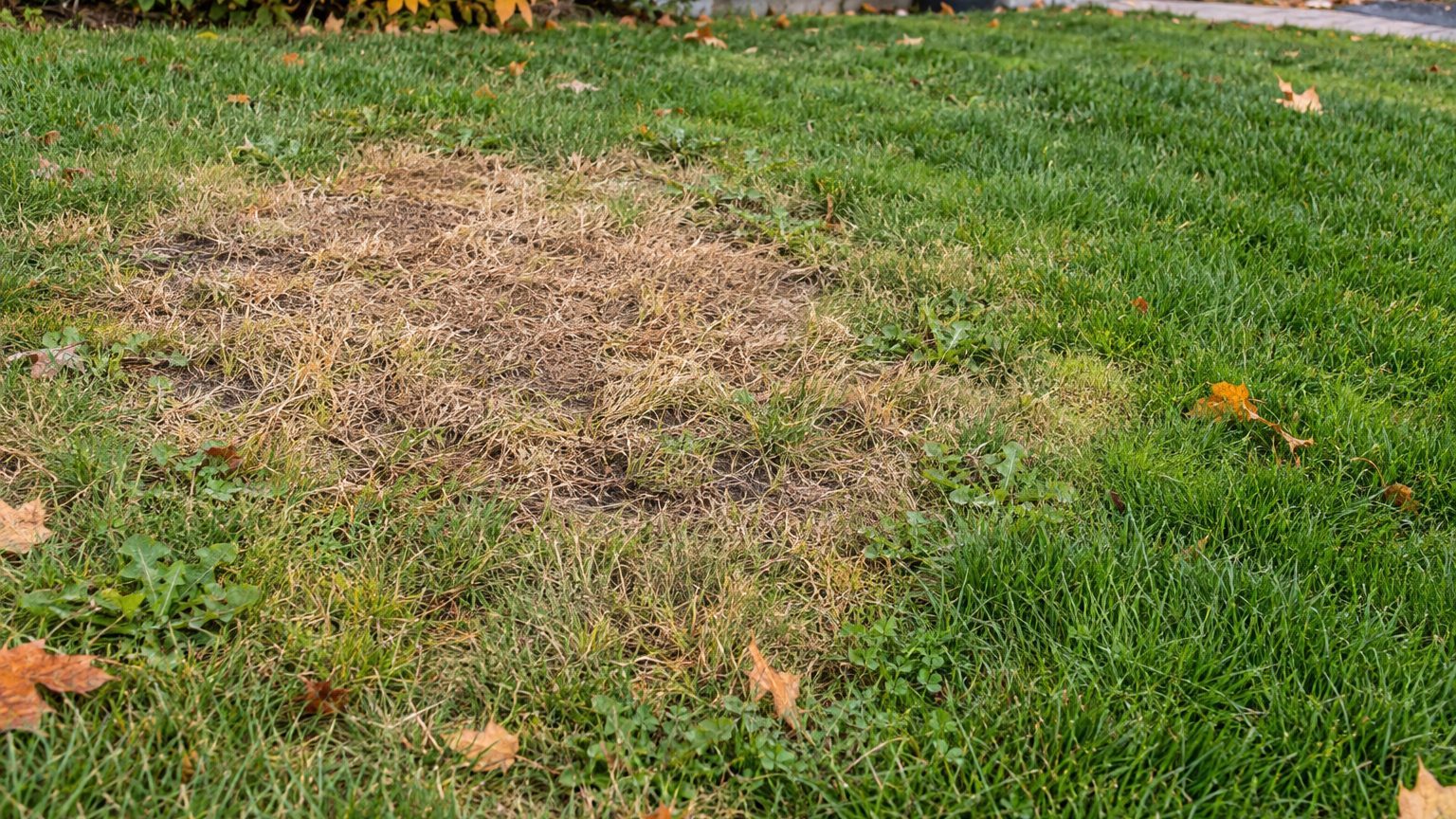
Pale, matted circles after the snow melts, a spongy green carpet in the shady corner, bare patches by August: these show up on Newfoundland and Labrador lawns year after year. Cool, damp stretches can favor snow mold and moss, while thatch builds when dead stems and roots accumulate faster than they break down. Most fixes come down to mowing, watering and feeding at the right moments.
Lawn Pests and Diseases in Newfoundland and Labrador
Snow Mold After Melt

Snow mold shows up as gray or pinkish, matted rings where snow sat on unfrozen ground for a long stretch. Long snow cover makes it common here. Once the lawn dries, rake the flattened blades gently to let air in. Most lawns recover on their own as new growth fills in.
Moss in Damp Shade
Moss forms a soft, dense green mat where grass has thinned in shade, on compacted soil or in spots that stay wet. It is a symptom, not the cause. Moss does not kill grass, it moves into places where grass was already struggling. Open the canopy for light, improve drainage and reseed the bare ground.
Crabgrass in Summer
Crabgrass is a coarse, pale green annual that spreads flat from a center in sunny, thin turf. A preventer applied in May stops the seeds from sprouting. Timing matters because the preventer must be in place before crabgrass seeds begin to sprout.
A thick lawn also helps with long-term control, since crabgrass needs bare soil and light to get started.
Grubs in Late Summer
White grubs are fat, C-shaped larvae that chew grass roots. Turf with damaged roots lifts like a loose carpet, and birds or other animals may tear at the lawn looking for them. Confirm by pulling back a patch of sod and checking the soil. Healthy, well-rooted turf can sometimes tolerate limited grub feeding without visible damage.
Thatch Buildup
Thatch is the tangle of dead stems and roots between the green blades and the soil. It feels springy underfoot. A layer up to 1.3 cm (1/2 inch) is healthy, but beyond that, water and air struggle to reach the roots. Dethatching works best in August and September, when the grass can recover quickly.
Newfoundland and Labrador — the year and the numbers
- State
- Newfoundland and Labrador
- Hardiness zones
- 6a
- Last spring frost
- May 30
- First fall frost
- October 17
- Annual rain
- 60 in
- Lawn type
- cool-season
- Source
- Environment and Climate Change Canada — Canadian Climate Normals 1981-2010, station ST JOHN'S A · St. John's
How to Tell Which Lawn Problem You Have
Appearance alone rarely settles it. Pair what the patch looks like with where it sits and when it appeared. A tug test helps too: grab a handful of the damaged grass and see whether it stays rooted or comes up easily.
Sun, shade and drainage matter as much as appearance, so walk the yard after rain and note which spots stay wet.
| What you see | Where and when | Likely problem |
|---|---|---|
| Gray or pink matted rings | Right after snowmelt | Snow mold |
| Soft green mat, grass thinning | Shade or soggy ground, any season | Moss |
| Coarse pale clumps in bare spots | Sunny areas, summer | Crabgrass |
| Turf peels back, roots missing | Late summer, animals digging | Grubs |
| Spongy, bouncy feel underfoot | Older, heavily fed lawns | Thatch |
If grass is brown but still firmly rooted, suspect dry weather or a lawn mowed too short before you suspect disease. When symptoms overlap, start with the cause that best fits the patch’s appearance and location.
Where Lawn Problems Are Worst in Newfoundland and Labrador
The province covers a big island and a mainland region, and the problems shift with fog, snow depth and the length of the growing season.
- Avalon Peninsula: Fog and slow-drying air around St. John’s keep lawns damp, so shaded yards may be prone to moss and snow mold.
- Western Newfoundland: Around Corner Brook and the Humber Valley, heavy snow can linger on the ground, which raises the odds of snow mold and a slow spring start.
- Central Newfoundland: Inland towns such as Gander and Grand Falls-Windsor run colder in winter and earlier into frost, so the season for seeding and feeding is tighter.
- Labrador: Around Happy Valley-Goose Bay, the growing season is short and spring arrives weeks behind St. John’s, so lawn tasks slip later in the calendar.
When spring is slow, delay spring work until the grass and soil are ready, but keep late-summer seeding on schedule.
Lawn Care Mistakes That Invite Problems in Newfoundland and Labrador
Cutting the Grass Too Short
Mowing runs from May through October, with April and November possible when the grass is growing. Scalped turf weakens, thins and hands moss and crabgrass bare soil to colonize. Set the mower deck high and take off only a little at a time, so the blades can shade the ground.
Shallow, Frequent Watering
Watering matters most in June, July and August. A light sprinkle keeps the surface wet, which favors moss and disease while roots stay shallow. Water deeply enough to soak the root zone, then let the soil surface begin to dry before you water again.
Feeding at the Wrong Time
September is the best time to fertilize, with May and October as fallback months. Heavy feeding in midsummer pushes soft growth that invites disease and adds to thatch. In St. John’s, the average first fall frost is October 17, so feed in September to give the grass time to use it.
Where to Get Lawn Advice in Newfoundland and Labrador
Newfoundland and Labrador has no county extension offices. Lawn questions go to the province’s agriculture department, local gardening groups and garden centres that know your area’s soil and weather.
- The provincial agriculture department is the place to start for soil, pest and plant health information, and is worth checking before you buy a treatment.
- A local master gardener or gardening club can tell you how your own neighborhood differs from the province’s averages, so ask in early spring before the first mowing.
- Garden centres can help identify a damaged patch if you bring in a handful of turf with roots and soil attached.
Common Questions
When Should You Seed a Lawn in Newfoundland and Labrador?
August and September give new grass warm soil and enough time to root before winter. May also works if you missed the late-summer window. Keep the seedbed evenly moist until the grass is established.
Can You Seed in November?
Yes, as dormant seeding. Seed goes down on cold soil in November and sprouts when spring warms the ground. It is a fallback for a missed late-summer window, and it works best on bare, well-prepared patches rather than over thick turf.
When Should You Aerate a Compacted Lawn?
September is the best month for core aeration, and May also works. Compacted ground holds water on the surface and encourages moss, so aerating before overseeding helps new seed make good contact with the soil.