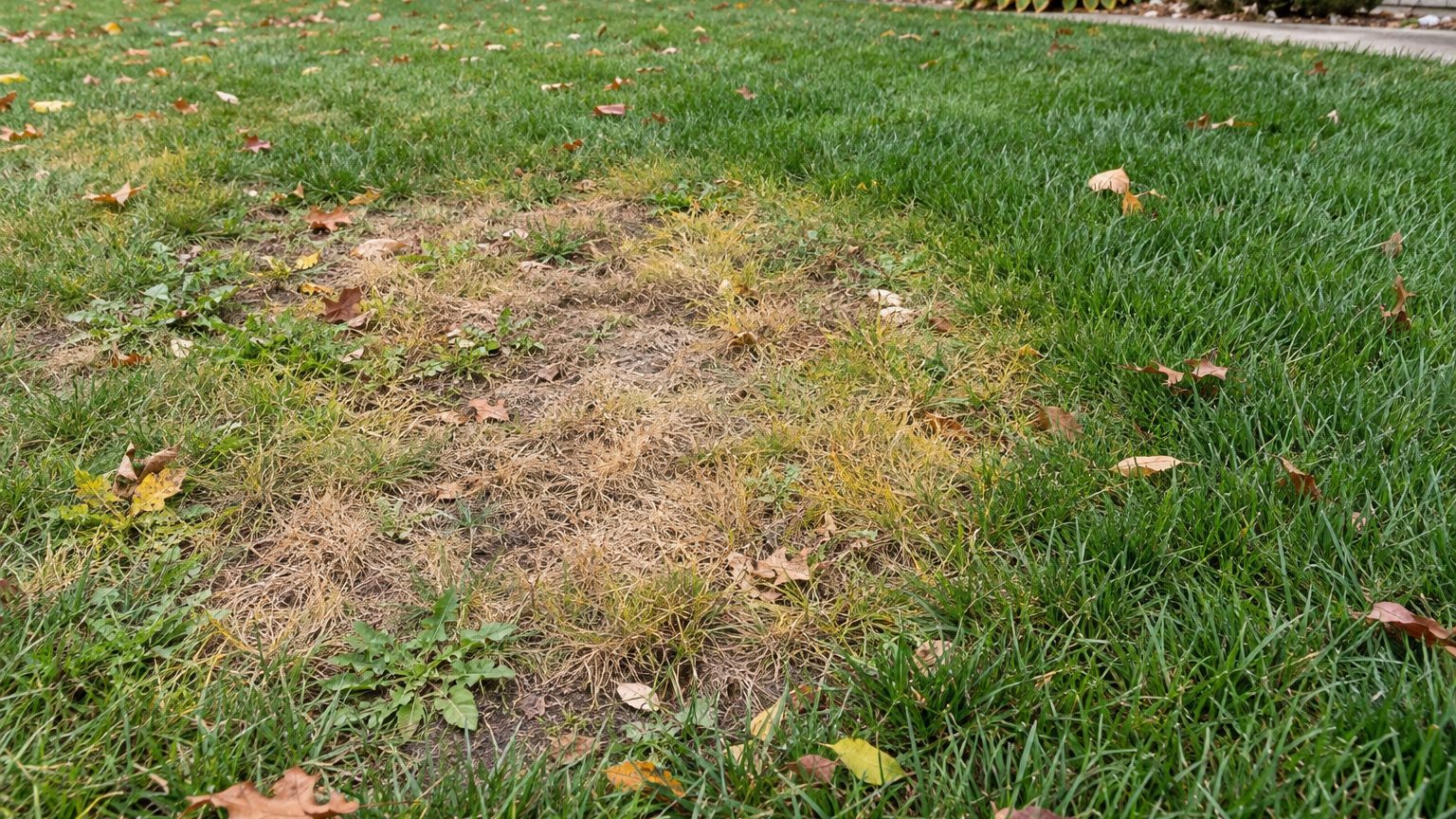
Straw-colored patches in July, crabgrass crowding the edge of the driveway, a spongy feel underfoot: Nebraska lawns show their troubles in familiar ways. These problems can come from heat, moisture, winter stress, compaction, pests, or lawn-care habits, and the visible clues help narrow the cause.
Lawn Pests and Diseases in Nebraska
Crabgrass

Crabgrass shows up as light green, coarse-bladed clumps that sprawl flat across thin spots and along hot pavement edges. It sprouts from seed as the soil warms, so the fight is won before you see it. A pre-emergence preventer goes down in April, and May still works if spring got away from you.
Thick turf shades the soil and starves crabgrass of light, which is why overseeding bare spots matters as much as any treatment.
Dandelions and Other Broadleaf Weeds
Dandelions, clover and plantain thrive wherever the grass is thin or the soil is packed. Broadleaf weeds are easy to spot against fine blades, with flat rosettes hugging the ground and taproots that snap if you pull carelessly.
Dig them out when the soil is damp so the whole root comes up. Then fill the hole with soil and reseed in August or September; April and May also work for a spring repair.
Brown Patch in Midsummer
Brown patch is a fungal disease that shows up in warm, muggy weather as roughly circular tan or straw-colored areas, sometimes with a darker ring at the edge. Tall fescue and bluegrass lawns can develop it in warm, muggy weather.
Water early in the morning so blades dry out quickly, and hold back on nitrogen during the hottest stretch. Fertilizer in summer feeds the fungus along with the grass.
White Grubs in Late Summer
Grubs are fat, cream-colored larvae with a brown head, curled in a C shape just under the sod. They chew roots, so damaged turf turns brown and then lifts like a loose carpet. Skunks and birds tearing up the lawn are another clue.
Peel back a small section of sod in a suspect spot. Finding grubs may explain the damage; ask your county extension office whether treatment is warranted.
Thatch Buildup
Thatch is the tangle of dead stems and roots between the green blades and the soil. Walk across it and the lawn feels springy, and water tends to bead and run off. A layer up to 1/2 inch thick is healthy, and anything thicker calls for dethatching or core aeration.
Cut a small wedge of turf and measure the brown layer with a ruler. Guessing leads to dethatching lawns that never needed it.
Nebraska — the year and the numbers
- State
- Nebraska
- USDA zones
- 4a-5b
- Last spring frost
- April 12 to April 23
- First fall frost
- October 15 to October 26
- Annual rain
- 32 in
- Lawn type
- cool-season
- Source
- NOAA NCEI U.S. Climate Normals 1991-2020, 32F freeze probabilities · Omaha
How to Tell Which Lawn Problem You Have
A clue rarely settles the diagnosis on its own. Pair what the patch looks like with where it sits and when it appeared, then try a simple test such as tugging the grass. A quick look up close usually beats guessing.
| What you see | Where or when | Points to |
|---|---|---|
| Turf lifts like a rug when tugged | Brown areas in late summer | White grubs |
| Tan rings that stay rooted | Humid weather in midsummer | Brown patch |
| Coarse, light green clumps | Thin spots and pavement edges | Crabgrass |
| Spongy, brown mat at the base | Anywhere the lawn feels bouncy | Thatch |
| Flat rosettes with deep taproots | Compacted or thin turf in spring | Broadleaf weeds |
| Bluish, curled blades | Sunny, dry areas in July and August | Drought stress |
Drought stress mimics disease, so push a screwdriver into the soil. If it will not go in easily, the soil may be dry or compacted, so check its moisture before choosing a treatment.
Where Lawn Problems Are Worst in Nebraska
Nebraska spans hardiness zones 4a to 5b under the USDA system, and lawn trouble shifts with moisture and winter cold from one end of the state to the other.
- Panhandle: Cold winters, dry air and wind can favor drought stress and winter dieback, so deep watering in summer deserves attention.
- Omaha and Lincoln: Warm, humid spells can favor fungal outbreaks, and compacted lawn soil can give weeds an opening.
- Platte Valley and south-central Nebraska: Hot, dry spells intensify drought stress on bluegrass, especially on shallowly watered lawns.
Check with your own county office for local timing, since frost and heat can vary between city, suburban, and rural yards.
Lawn Care Mistakes That Invite Problems in Nebraska
Mowing Too Short
Scalped grass has shallow roots, lets sunlight reach the soil and hands crabgrass a perfect nursery. Mowing runs from April through November here, so there are plenty of chances to get it right.
Set the mower high, cut only a small portion of the blade at a time, and leave the clippings to feed the lawn.
Watering Shallow and Often
Light, frequent sprinkling keeps the surface wet, which encourages brown patch and keeps roots near the top where heat bakes them. Watering matters most from June through August.
Soak the lawn deeply, let it dry between waterings, and run sprinklers in the early morning.
Feeding in the Heat
A dose of fertilizer in the middle of summer pushes soft, leafy growth that disease loves and the heat punishes. Cool-season turf takes nutrients best in September and November, with May as a fallback.
Skip summer feeding and save the bag for fall, when roots are building strength.
Where to Get Lawn Advice in Nebraska
University of Nebraska–Lincoln Extension offers research-based guidance written for Nebraska soils and weather, and its county offices put a local person within reach.
- The extension website covers weeds, diseases and grubs, so check it when a patch looks unfamiliar.
- Your county extension office can identify a sample of turf or a weed, so bring a cutting before you buy any treatment.
- Soil testing through the county office is worth doing before you fertilize or seed.
Common Questions
When Should You Seed a Lawn in Nebraska?
August and September give new grass warm soil and cooler air to root in. If you miss that window, April and May also work, though summer heat arrives sooner for spring seedlings.
When Is the Best Time to Core Aerate in Nebraska?
September suits cool-season lawns best, since the grass recovers and fills in quickly. If fall slips by, April and May are good alternatives.
When Should You Dethatch a Lawn in Nebraska?
August and September are the best months, while the grass is growing strongly enough to recover. April also works when the lawn is greening up.