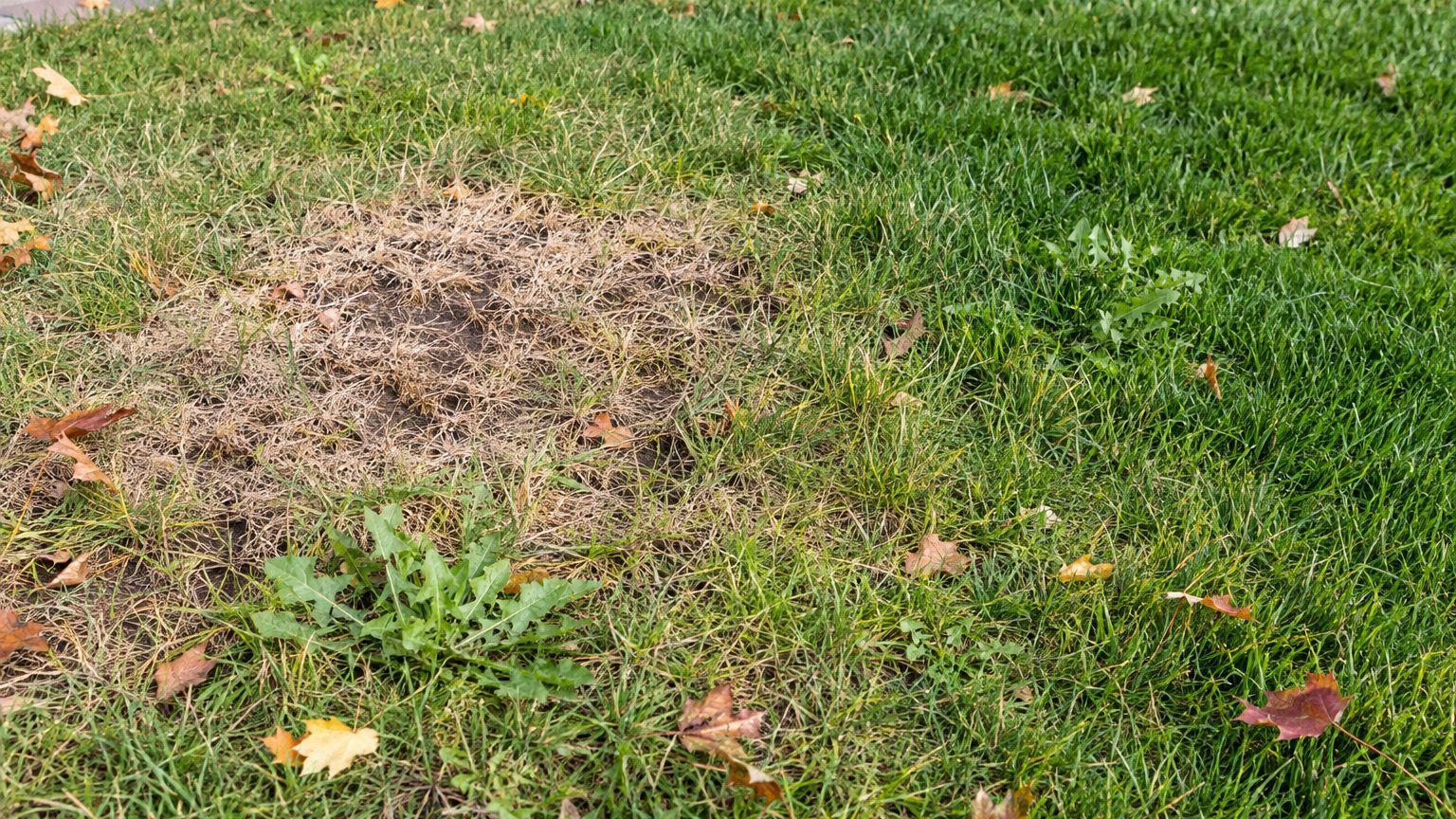
Straw-colored circles when the snow melts, a yellow haze of dandelions in spring, patches that peel up like carpet in late summer: South Dakota lawns tend to show the same few troubles in a predictable order. Most trace back to weather swings, thin turf and a few habits in mowing, watering and feeding, and each one has a fix that fits a cold-winter, hot-summer state.
Lawn Pests and Diseases in South Dakota
Snow Mold After Melt

Matted, straw-colored or grayish circles that appear as snow retreats are the mark of snow mold. It shows up where snow sat on unfrozen ground, and long snow cover is common here. Rake the flattened blades gently to let air in. Most lawns recover on their own once growth resumes.
Dandelions and Broadleaf Weeds
Dandelions, plantain and clover move into thin spots as soon as the soil warms. A dense lawn crowds them out better than any treatment, so fill bare areas with seed in the right season. Pull dandelions after rain, when the soil is soft, and get the whole taproot.
Crabgrass in Thin Turf
Crabgrass is a coarse, light green grass that sprawls outward from a center and dies at first frost, leaving bare patches behind. It thrives along driveways and in thin sunny turf. A pre-emergence preventer goes down in May, before the seed sprouts. Taller mowing shades the soil and gives it less room.
Dollar Spot in Summer
Small, tan, sunken spots that merge into larger blotches point to dollar spot, which favors warm days, humid nights and lawns short on nitrogen. Water deeply in the morning so blades dry quickly. A balanced feeding in the right month often helps the grass outgrow the damage.
White Grubs in Late Summer
Grubs are plump, white, C-shaped larvae that chew roots. Grass above them turns dry and pulls up like a loose rug, and skunks or birds may tear the turf while hunting them. Lift a square of sod and look at the roots. Healthy, deeply rooted grass tolerates a surprising number of them.
South Dakota — the year and the numbers
- State
- South Dakota
- USDA zones
- 3b-5b
- Last spring frost
- April 29 to May 9
- First fall frost
- September 24 to October 4
- Annual rain
- 28 in
- Lawn type
- cool-season
- Source
- NOAA NCEI 1991-2020 Climate Normals, 32F freeze probabilities · Sioux Falls
How to Tell Which Lawn Problem You Have
Never identify a cause from appearance alone. Pair what the grass looks like with where it is and when it appears, then do a simple test, such as tugging the blades or lifting a flap of sod.
| What You See | Where and When | Likely Problem |
|---|---|---|
| Matted, straw-colored circles | Spring, right after snowmelt | Snow mold |
| Small tan spots that merge | Warm, humid summer stretches | Dollar spot |
| Turf lifts easily, white grubs below | Late summer, often in sun | White grubs |
| Coarse, sprawling clumps | Summer, along pavement and thin areas | Crabgrass |
| Thin or bare grass | Under trees, in shade | Shade stress |
| Bluish-gray cast, footprints linger | Hot, dry spells, whole lawn | Drought stress |
A spongy feel underfoot is a separate clue. Pull out a small plug, and if the brown layer between the green blades and the soil is thicker than 1/2 inch, dethatch or core aerate. Anything under that is healthy and needs no work.
Where Lawn Problems Are Worst in South Dakota
Problems shift across the state because moisture, heat and growing season change from the humid southeast to the dry plains and the cooler hills.
- Sioux Falls and the southeast: Humidity and warm nights favor leaf spots and dollar spot, and spring frost usually ends between April 29 and May 9 in the city. Farther out in the country, it ends later.
- West River plains: Wind and dry air make drought stress the common complaint, and lawns brown quickly when watering lapses.
- Black Hills: Cooler air and higher elevation can delay spring growth, so watch local conditions within the recommended seeding and feeding months.
Check your own county, since gardens outside a city usually see frost later in spring and earlier in fall than a town airport does.
Lawn Care Mistakes That Invite Problems in South Dakota
Mowing Too Short
Scalped grass has shallow roots and leaves bare soil that weeds and crabgrass love. Mowing runs from May through October here, so keep the blade high all season and let clippings fall. Sharpen the blade, since a dull one shreds the tips and gives disease an opening.
Light, Frequent Watering
Short sprinkles keep the top layer damp, which feeds disease and keeps roots shallow when summer winds dry the soil. Water deeply and less often from May through September, early in the morning. Let a screwdriver or your footprints tell you whether the lawn really needs it.
Feeding at the Wrong Time
Heavy nitrogen in summer heat pushes soft growth that disease attacks. Feed in May and again in September, when cool-season grass is building roots. If a lawn turns pale and thin, feeding during a recommended month can help it recover and compete with weeds.
Where to Get Lawn Advice in South Dakota
Local help is easiest to find through the state’s land-grant university and the county office nearest your yard. Both know your soils, your weather and the pests moving through your area.
- South Dakota State University Extension publishes lawn guides, and its pages are the place to start when a patch appears and you cannot name it.
- Your county extension office can look at a turf sample, so bring a plug with roots and soil to it when a problem keeps spreading.
Common Questions
When Should You Seed a Lawn in South Dakota?
August and September are the usual window, because warm soil and cooler air help seedlings root before winter. May also works if you missed fall.
Can You Seed a Lawn in South Dakota in Late Fall?
Yes. Dormant seeding goes down in November on cold soil and sprouts in spring. If you want to seed earlier, October also works.
When Should You Aerate or Dethatch a Lawn in South Dakota?
August and September suit both jobs. The grass is actively growing then and fills in quickly, and overseeding right afterward lets the jobs share the same late-summer window.