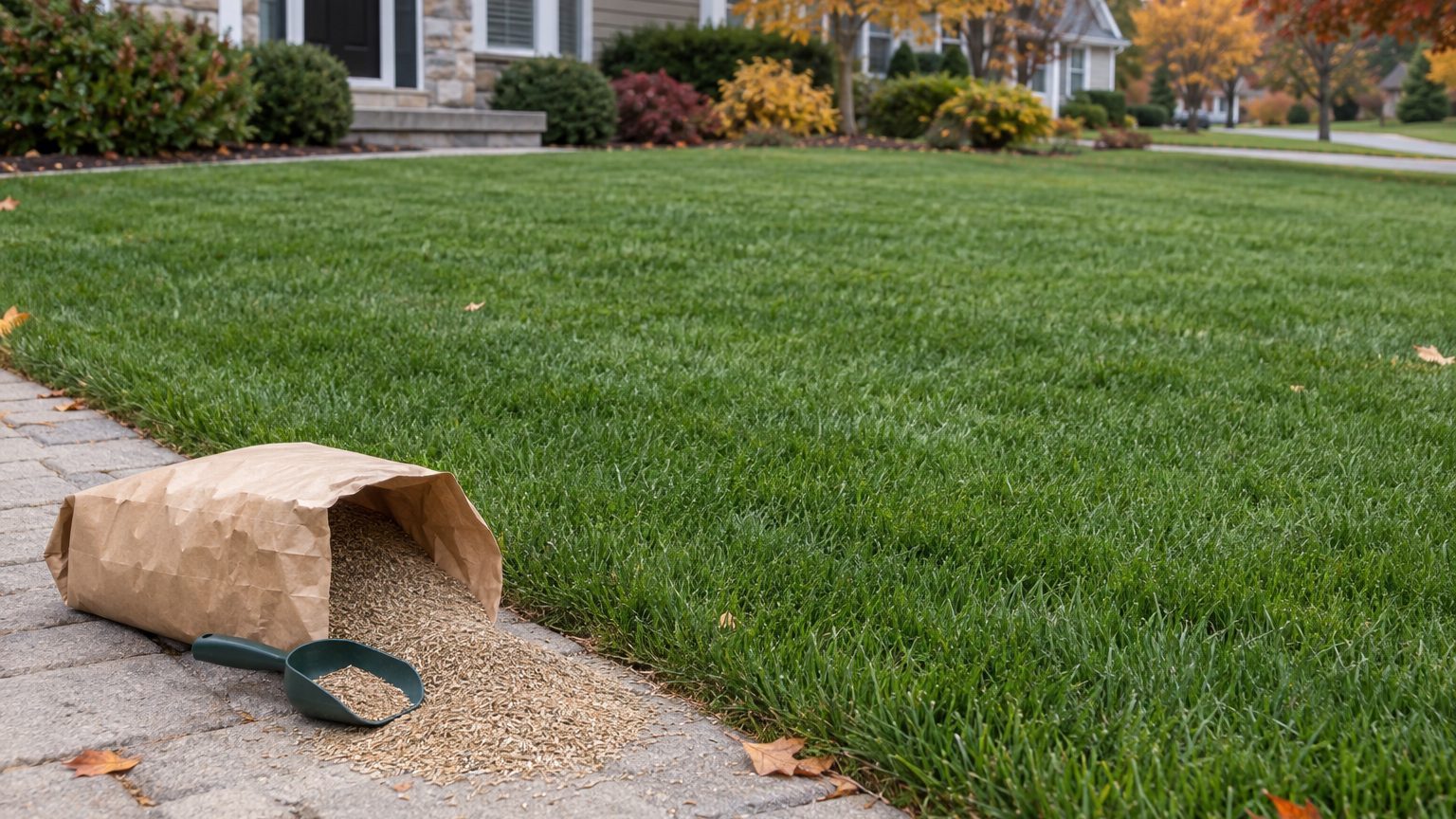
Walk a Michigan lawn in late summer and you can tell which grasses are happy: the ones staying thick and green through the cool nights. Cool-season grasses suit this state, and a practical seed choice is usually bluegrass, fine fescue, tall fescue or ryegrass, matched to your sun, shade and foot traffic.
Which Grass Grows Best in Michigan?
Cool-season grasses are well suited to Michigan because they are active in spring and fall and tolerate cold winters. Michigan spans USDA hardiness zones 4a to 6b, so winter survival matters more than summer heat. The main choices are Kentucky bluegrass, fine fescues, tall fescue and perennial ryegrass, each with different strengths.
Kentucky Bluegrass
Kentucky bluegrass is the classic Michigan lawn grass. It shrugs off hard winters and spreads by underground stems, so it slowly fills thin spots on its own.
The trade-off is patience. It germinates slowly and wants sun, so patience matters after seeding.
Fine Fescues
Creeping red, chewings and hard fescue form a fine, soft turf that handles shade, dry soil and cold better than bluegrass. They suit lawns under maples and oaks, and they need less fertilizer.
They do not love heavy foot traffic, so they fit the quiet corners of the yard more than the kids’ play area.
Tall Fescue
Tall fescue is a coarser, deep-rooted grass that stays green through dry spells and wears well under traffic. It grows in clumps rather than spreading, so bare patches need reseeding instead of filling in by themselves.
Its winter performance varies with local conditions, especially farther north.
Perennial Ryegrass

Perennial ryegrass sprouts fast, which makes it handy for quick cover and for blending into mixes. It can struggle when winters turn harsh and snow cover is thin.
Use it as a partner in a blend rather than as the whole lawn, especially as you move north.
Michigan — the year and the numbers
- State
- Michigan
- USDA zones
- 4a-6b
- Last spring frost
- April 30 in the Detroit area; early to mid May across most of the Lower Peninsula
- First fall frost
- October 6 to October 21
- Annual rain
- 34 in
- Lawn type
- cool-season
- Source
- MSU Extension — Frost-Free Dates · Detroit
How to Choose Grass Seed for a Michigan Yard
Start with the yard you actually have, not the lawn on the bag. Sun, shade, foot traffic, and how much you want to water and mow determine which grass will keep looking good over time.
Most real yards mix conditions, and that is fine. Seed each patch with what suits it, or use a blend whose grasses can adapt to different parts of the yard.
| Your yard | Grass | Why it fits |
|---|---|---|
| Full sun, regular use | Kentucky bluegrass | Dense turf that recovers and fills in |
| Shade under trees | Fine fescues | Tolerate low light and root competition |
| Heavy traffic, pets, kids | Tall fescue | Tough, deep roots that wear well |
| Little watering | Tall fescue or fine fescues | Hold up better when summer turns dry |
| Less frequent mowing | Fine fescues | Grow slowly and can be left a bit taller |
| Fast cover on bare soil | Perennial ryegrass in a blend | Sprouts quickly and shelters slower grasses |
If you like a neat, frequently mowed look and have sun, bluegrass rewards the effort. If you want a lawn that asks for less, lean on fescues.
Which Grasses Grow Where in Michigan
Michigan is long and lake-bound, so winter cold and lake influence change which grass is the safer bet from one part of the state to another.
- In Detroit, the last spring frost comes around April 30, though local lawn timing still depends on conditions in the yard. Tall fescue and bluegrass blends do well, and ryegrass is a lower risk here than elsewhere.
- Along the Lake Michigan shore: Lake air can moderate winter cold and slow spring warm-up. Bluegrass and fescue mixes settle in comfortably.
- Upper Peninsula: Winters are colder here, and snow can linger. Lean on Kentucky bluegrass and fine fescues, and keep ryegrass to a small share of any blend.
Whatever your corner, cold-hardy grasses are the safe default, and local snow cover is the thing to watch.
Grass Seed Mistakes to Avoid in Michigan
Choosing the Wrong Grass
Grass that does not match the light in a yard may thin out or struggle. Match the seed to the light in each part of the yard, and check the bag for the species names rather than the marketing.
Seeding at the Wrong Time
Late summer is the sweet spot here, with August and September giving seed warm soil and cool air. That timing lets young grass root well before the first fall frost, which arrives October 6 to October 21 in Detroit.
If you miss it, April and May still work, but crabgrass preventer applied in spring can stop new seed from sprouting, so choose one job or the other.
Burying the Seed Too Deep
Grass seed is small and needs light and moisture to sprout. Cover it with no more than 0.25 inch of soil and press it firmly so every seed touches the ground. Seed left on top of thatch or buried deeper tends to come up patchy.
Where to Get Lawn Advice in Michigan
Soil, shade and microclimate vary yard by yard, so a nearby expert can tune any of this to your lot.
- MSU Extension offers lawn guidance written for Michigan conditions, which is handy before you buy seed in late summer.
- Your county extension office can answer questions about your local soil, and a soil test taken ahead of seeding tells you what the yard needs.
Common Questions
Should You Aerate Before Seeding a Michigan Lawn?
On compacted or thatchy turf, yes. Core aeration works well in September, and April or May is a fallback. It opens the soil so seed sits in contact with ground rather than on top of the thatch.
Is a Seed Blend Better than a Single Grass?
For most yards, a blend is safer because different grasses cover different conditions, from sunny stretches to shady corners. Single-species seed makes sense when the whole yard is alike, such as an open, sunny lot.
Can Warm-Season Grass Grow in Michigan?
It is a poor match. Warm-season grasses turn brown and dormant for a long stretch in cold weather, and Michigan winters are hard on them. The cool-season grasses described above stay the dependable choice.