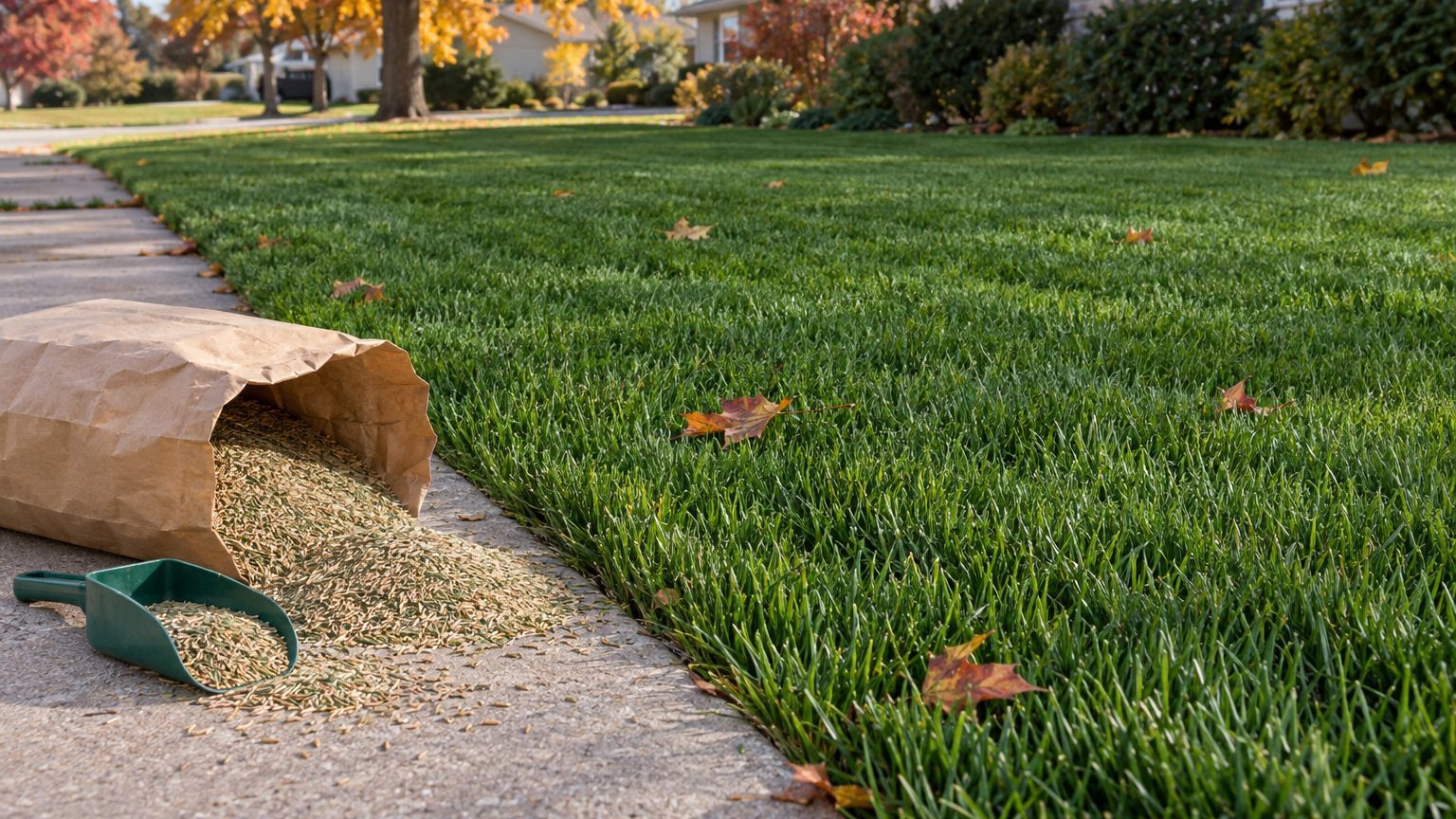
Tall fescue seeded in late summer suits many Kansas yards, while bermudagrass and zoysiagrass fit sunny sites where summers bake. Kansas sits in the transition zone, where winters bite and summers scorch, so no single seed wins everywhere.
Which Grass Grows Best in Kansas?
Kansas is transition-zone country, and both cool-season and warm-season grasses can work depending on your sun, water and tolerance for a brown winter lawn. Cool-season types stay green longer but struggle in July heat, while warm-season types love summer and go tan after frost. The USDA hardiness range runs from 5b to 7a, so winters differ a lot across the state.
Tall Fescue
Tall fescue is a dependable cool-season choice here. Its deep roots carry it through hot, dry stretches better than bluegrass, and it stays green into late fall. Seed it in late summer, ideally in August, when the soil is warm and the cold is still far off.
Bermudagrass
Bermudagrass thrives in Kansas heat and recovers fast from traffic, which suits sunny yards and play areas. It can be grown from seed or sod, and seeding works best in May. Expect it to turn straw-colored after the first hard frost and wake up again the following spring.
Zoysiagrass
Zoysiagrass makes a dense, soft lawn that handles heat and some shade better than bermudagrass. It is mostly planted as sod or plugs rather than seed. It also fills in slowly, which is a fair trade if you want something tough and tidy.
Kentucky Bluegrass
Kentucky bluegrass can work in cooler, higher ground, but it is a demanding pick for much of Kansas. It wants regular water in summer and can thin out or go dormant in heat. If you choose it, plan on irrigation and seed in late summer alongside the other cool-season grasses.
Kansas — the year and the numbers
- State
- Kansas
- USDA zones
- 5b-7a
- Last spring frost
- April 4 to April 18
- First fall frost
- October 23 to November 2
- Annual rain
- 34 in
- Lawn type
- cool- and warm-season
- Source
- NOAA NCEI 1991-2020 Climate Normals, 32F freeze probabilities · Wichita
How to Choose Grass Seed for a Kansas Yard
Start with the hours of sun and how much water you are willing to give the yard in summer. Then think about foot traffic and how often you want to mow. Those answers narrow the field quickly.
A yard that mixes sun and shade usually does best with a cool-season grass, while a full-sun yard that you can water leaves the door open for warm-season types.
| Your yard | Grass to lean toward | Why |
|---|---|---|
| Full sun, little watering | Bermudagrass | Handles heat and dry spells, goes tan in winter |
| Part shade | Tall fescue | Tolerates some shade and stays green into fall |
| Heavy foot traffic | Bermudagrass | Spreads to repair worn spots |
| Dense lawn, mow less often | Zoysiagrass | Grows slowly and forms a thick turf |
| Regular irrigation, cooler spot | Kentucky bluegrass | Lush color if kept watered |
Deep shade is hard for every lawn grass, so thin areas under mature trees may be better served by mulch or a shade-tolerant groundcover than by more seed.
Which Grasses Grow Where in Kansas
Kansas stretches from humid hills in the east to dry plains in the west, and that shift affects how each grass performs.
- Eastern Kansas, around Kansas City and Topeka: More rainfall makes tall fescue and bluegrass easier to keep green, and zoysiagrass does well in sunny yards.
- Wichita and the south: Hotter summers favor bermudagrass and zoysiagrass, while tall fescue needs extra care through July and August.
- Western Kansas, toward Garden City and Goodland: Drier air and colder winters make bermudagrass riskier in the far northwest, while cool-season lawns there depend more on irrigation.
Check conditions in your own county, since local elevation can shift what survives winter.
Grass Seed Mistakes to Avoid in Kansas
Seeding at the Wrong Time
Cool-season seed sown in spring meets summer heat before its roots are ready. Seed tall fescue in August, with September as a fallback. Warm-season seed belongs in May, and June still works, because the soil needs to be warm.
Burying the Seed Too Deep
Seed buried under a thick layer of soil struggles to emerge. Cover it with no more than 0.25 inch and press it down so it touches the soil. Aerating first and overseeding helps tall fescue lawns in late summer.
Picking Grass the Yard Cannot Support
Planting bluegrass in a hot, dry, unwatered yard sets you up for brown patches by midsummer. Match the grass to your sun and watering habits instead of chasing the greenest photo. Putting down a warm-season grass in a shady lot leads to thin, weak turf for the same reason.
Where to Get Lawn Advice in Kansas
Local experts know your soil and weather better than any general guide. Local sources can help before you buy seed.
- K-State Research and Extension offers lawn publications and soil testing guidance, handy before you choose a grass.
- Your county extension office can advise on local problems and the grasses that hold up in your area, so call before seeding season in late summer.
Common Questions
Can You Plant Bermudagrass Seed in Kansas?
Yes. Bermudagrass can be started from seed or sod, and May is the best time, with June as a fallback. The soil needs to be warm for the seed to sprout.
Is Zoysiagrass Grown from Seed?
Mostly it is planted as sod or plugs. Seed is uncommon, so budget for sod if you want a zoysiagrass lawn.
When Should You Fertilize a Tall Fescue Lawn in Kansas?
Early spring and fall suit tall fescue, with March, September and October the best months. Skip summer feeding, which stresses cool-season grass in the heat.