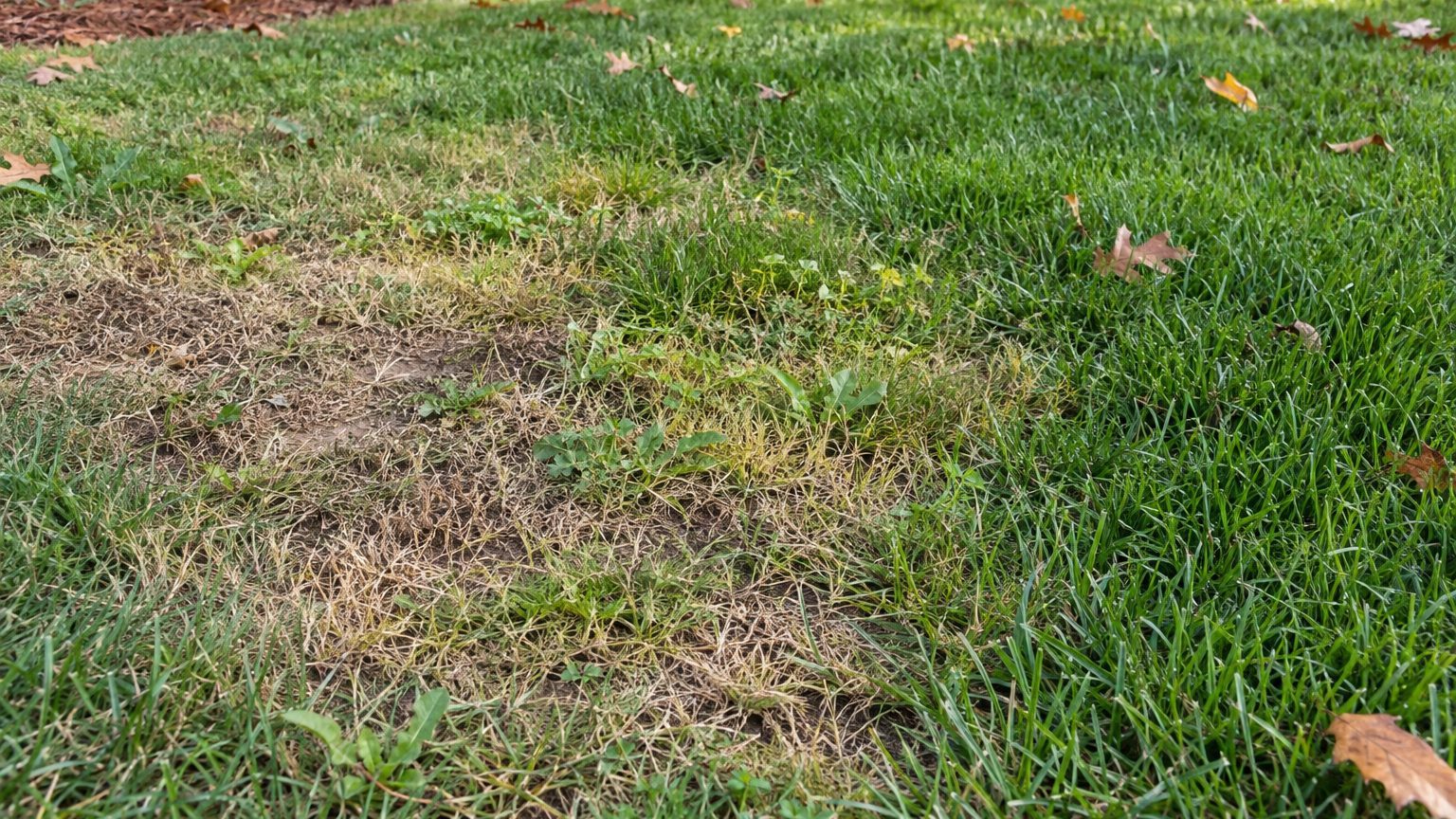
Brown circles in spring, thinning turf under oaks, and weeds that outrun the mower all show up in Georgia lawns most years. Heat, humidity, and clay soil shape many of these problems. Warm-season grasses such as bermuda, zoysia, centipede, and St. Augustine handle the summer, but they face fungus, insects, and weeds on a fairly predictable schedule.
Lawn Pests and Diseases in Georgia
Winter Weeds
Annual bluegrass and other cool-season weeds sprout in the cooler months and show up as pale green tufts and seedheads in dormant bermuda or zoysia. They die back as heat arrives.
Hand-pull small patches while the soil is soft. Mowing at a steady height helps limit the spread of seedheads.
Large Patch

Large patch is a fungus that circles up in zoysia, centipede, and St. Augustine when spring is wet and the grass is just waking. Look for rounded orange-brown rings, with leaf sheaves that pull away easily at the base.
Skip heavy nitrogen in cool, damp weather and water in the morning so the blades dry quickly.
Summer Nutsedge
Nutsedge looks like grass but grows faster and stands taller, with stiff, yellow-green blades and triangular stems you can roll between your fingers. It thrives in soggy spots where clay holds water.
Fix the drainage first, because wet soil keeps it coming back. Dig young plants out before they form underground nutlets.
Chinch Bug Damage
Chinch bugs favor St. Augustine in sunny, hot stretches. The lawn yellows and then turns straw brown in irregular patches, often along driveways and sidewalks where heat radiates.
Part the grass at the edge of a dead patch and look at the soil surface for tiny black insects with white wings. Thick thatch and drought stress make them worse.
Brown Patch in Tall Fescue
North Georgia lawns of tall fescue struggle in humid midsummer nights. Brown patch makes irregular tan areas with a dark, smoky edge in early morning dew.
Water deeply but early in the day, and do not fertilize fescue in the heat.
Grubs and Armyworms
Late summer brings the insects that chew. Grubs feed on roots, so damaged turf lifts like loose carpet and you may see white, C-shaped larvae underneath. Armyworms eat the blades and can strip a lawn quickly, leaving ragged, chewed patches.
Check suspect areas and treat only when you find the pest.
Georgia — the year and the numbers
- State
- Georgia
- USDA zones
- 6a-9b
- Last spring frost
- March 11 to March 29
- First fall frost
- November 13 to December 1
- Annual rain
- 50 in
- Lawn type
- warm-season
- Source
- NOAA NCEI 1991-2020 Climate Normals, 32F freeze probabilities · Atlanta
How to Tell Which Lawn Problem You Have
A symptom rarely settles it. A brown patch might be fungus, insects, or drought, so pair what it looks like with where it sits and when it appeared.
Tug on the grass, check the shape of the spot, and note whether sun or shade is involved. Together, those checks usually narrow the list quickly.
| What you see | Where and when | Likely problem |
|---|---|---|
| Orange-brown rings, blades slip off easily | Wet spring or cool fall, zoysia, centipede, St. Augustine | Large patch |
| Straw-colored irregular patches, tiny black insects at the edge | Hot, sunny St. Augustine in summer | Chinch bugs |
| Tan patches with a dark edge in morning dew | Humid summer nights, tall fescue | Brown patch |
| Turf lifts like a rug, white larvae below | Late summer, any grass | Grubs |
| Tall, stiff yellow-green blades with triangular stems | Soggy low spots, early summer | Nutsedge |
| Thin, weak grass, moss at the edges | Under trees, any season | Shade stress |
Thin grass under trees is usually a light problem more than a pest problem. Bermuda in particular needs full sun, so shady areas often do better with a shade-tolerant ground cover or mulch.
Where Lawn Problems Are Worst in Georgia
Georgia spans USDA zones 6a-9b, so what troubles a lawn depends on where it sits.
- North Georgia mountains: Cooler nights and earlier fall freezes favor tall fescue, and fungal disease shows up in humid summers.
- Atlanta and the Piedmont: Red clay drains slowly, which encourages large patch and nutsedge, and compacted soil makes roots shallow.
- Savannah and the coast: Warm winters keep insects active, and chinch bugs and armyworms get a long season on St. Augustine and centipede lawns.
Sandy coastal soil also dries quickly, so drought stress can look like pest damage.
Lawn Care Mistakes That Invite Problems in Georgia
Mowing Too Short
Scalping weakens the grass and opens space for weeds. Mowing runs from March through November in Georgia, so keep the blade high enough to avoid scalping.
Sharp blades matter too, since torn tips invite fungus.
Watering Shallow and Late
Short, evening sprinklings keep blades wet overnight, which is exactly what large patch and brown patch want. Water deeply in the morning from May through September, and let the top of the soil dry between rounds.
Clay soil holds water longer than it seems, so check by pushing a screwdriver into the ground.
Feeding Too Early or Too Much
Fertilizing before the last spring frost, which in Atlanta falls between March 11 and March 29, pushes tender growth that the cold can burn. Feed warm-season lawns from May through August instead.
Too much nitrogen builds thatch. A layer up to 1/2 inch is healthy, and anything thicker calls for dethatching in May or June, or core aeration in May.
Where to Get Lawn Advice in Georgia
Soil, grass type, and shade differ from one yard to the next, so local help saves guesswork. University of Georgia Extension offers local lawn guidance.
- Bring a fresh sample of the damaged turf to your county extension office when a problem first appears, so staff can identify it.
- Ask about a soil test before you fertilize or lime, since results show what your lawn actually needs.
- Look for the extension’s publications on your grass type before the growing season starts.
Common Questions
When Should You Seed a Lawn in Georgia?
Seeded warm-season grasses such as bermuda, centipede, and bahia do best when sown in May, and June still works. St. Augustine has no seed, so it must go in as sod or plugs.
When Is the Right Time to Lay Sod in Georgia?
May is the strongest month, though April, June, and July also work. Water newly laid sod regularly so the roots knit into the soil before the hottest weather.
Can You Fix a Thin Lawn Under Trees?
Often not with grass alone. Shade limits warm-season turf, so prune lower branches to let in light, or switch the area to mulch or a shade-loving ground cover.