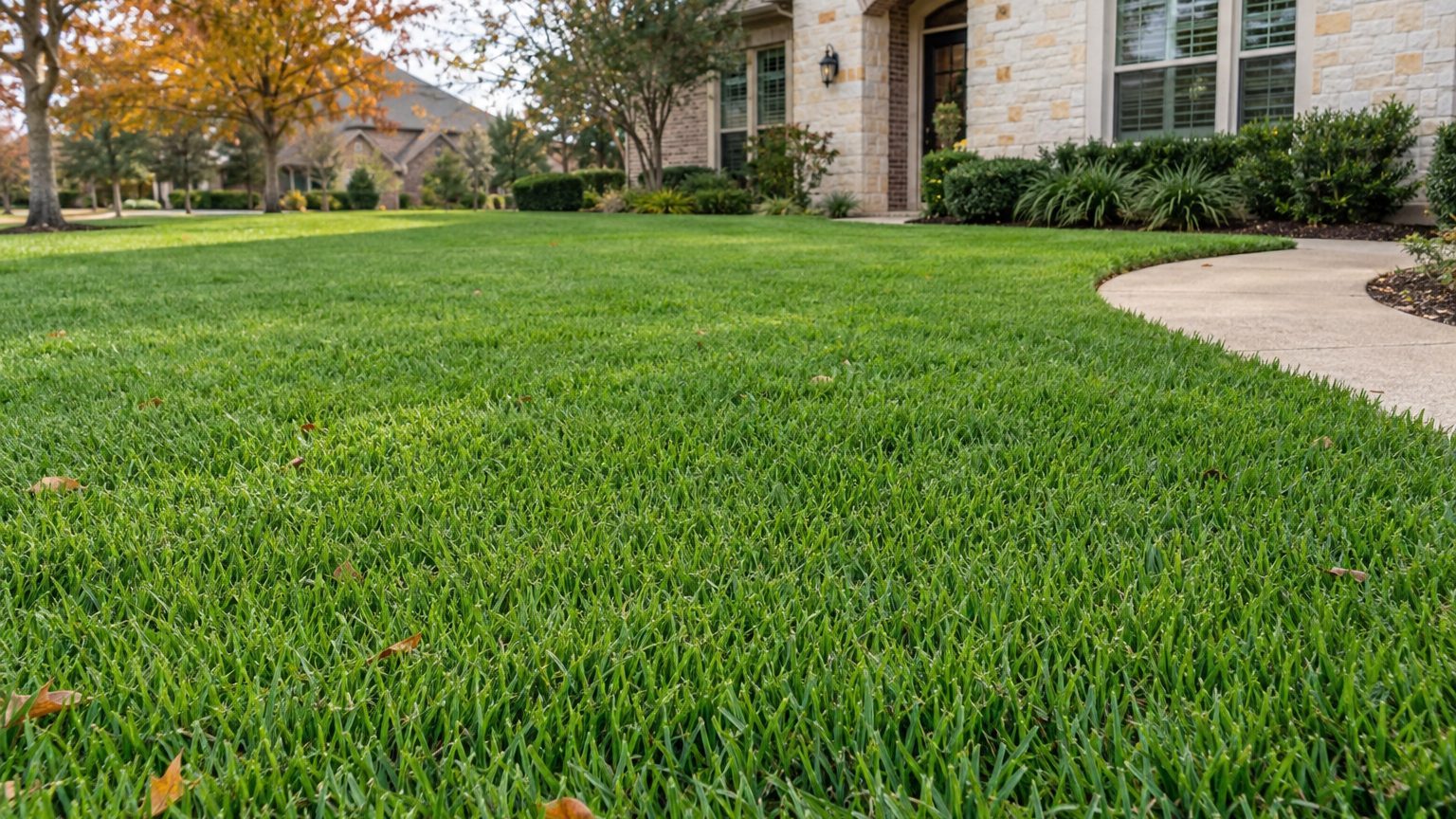
In Texas, the lawn that stays green through July is almost always a warm-season turf that wakes up when the soil warms in spring and goes tan after the first hard freeze. Bermudagrass, St. Augustinegrass, zoysiagrass and buffalograss carry most yards here.
Frost Dates and Growing Season in Texas
Texas spans USDA zones 6a to 10a, so no single frost date fits the whole state. The dates here speak of Houston, the mild Gulf end, where the last spring freeze usually lands between February 4 and March 1 and the first fall freeze between December 1 and December 19. Other regions differ, and the Panhandle freezes much earlier and later.
- In late winter, the last freeze risk is ending, so a young planting could still be nipped, and this is the time for crabgrass preventer in February and March.
- Once the soil warms in spring, warm-season grass greens up, and fertilizer waits until the lawn is fully green, with April as a fallback and May and June as the best months.
- In May, seed and sod go down with the longest stretch of warm weather ahead, so roots have all summer to establish.
- From June through August, heat and dry spells set the pace, and watering matters most in these months.
- In autumn, mowing continues through October, and the first fall freeze, which comes in December on the Gulf side, sends the grass into dormancy.
Growth follows soil warmth, not the calendar date of a frost, so a warm February does not mean it is time to seed.
Texas — the year and the numbers
- State
- Texas
- USDA zones
- 6a-10a
- Last spring frost
- February 4 to March 1
- First fall frost
- December 1 to December 19
- Annual rain
- 52 in
- Lawn type
- warm-season
- Source
- NOAA NCEI 1991-2020 Climate Normals, 32F freeze probabilities · Houston
Cool-Season or Warm-Season Grass in Texas?
Warm-season grass is the safe choice across most of Texas. Summer heat and long dry spells wear out cool-season grasses, while warm-season types go dormant in winter and come back on their own in spring.
Four grasses cover most home lawns, and they differ in how you plant them and where they fit.
| Grass | How it does in Texas | Why |
|---|---|---|
| Bermudagrass | Common across the state, thrives in full sun | Warm-season turf that handles heat and recovers well in spring |
| St. Augustinegrass | Planted as sod or plugs only | Warm-season turf, never sold as seed |
| Zoysiagrass | Grown in home lawns statewide | Warm-season turf that greens up with soil warmth |
| Buffalograss | Suited to west and central Texas | Warm-season native for drier regions |
If you want seed, bermudagrass, zoysiagrass or buffalograss are the options, since St. Augustinegrass has to go in as sod or plugs.
When to Seed, Fertilize and Aerate a Lawn in Texas
Texas lawn jobs cluster around the warm months, because the grasses here grow when the soil is warm. Timing a job to that window gives the turf the energy to fill in quickly.
Dethatching follows the same rhythm. Crabgrass preventer is the one early job, going down before the weeds sprout.
| Task | Best months in Texas | Why then |
|---|---|---|
| Crabgrass preventer | February, March | Goes down before weed seeds germinate in spring |
| Seeding | May | Warm soil helps seed sprout and root; June also works |
| Laying sod | May | Roots knit in warm weather; April and June also work |
| Dethatching | May, June | Grass is growing strongly and fills in quickly |
| Fertilizing | May, June | Fully green grass can use the nutrients; April and September also work |
| Mowing | April through October | The lawn is actively growing |
| Watering | June, July, August | Heat and dry spells put the most stress on turf |
Fertilize only after full green-up, and skip hot, dry late summer and late fall. Aeration does not appear in this schedule, so a county office can advise on it for your soil.
Lawn Problems to Watch for in Texas
Winter-Killed Brown Grass

A lawn that stays tan in spring may be dormant rather than dead. Warm-season grass turns brown after freezes and returns as the soil warms. Wait until it is warm, then check for green at the base of the plants before replanting anything.
Scorched Patches in Summer
Crispy, tan areas that appear in the hottest, driest months usually mean the turf is short of water. Watering matters most in June, July and August, so give the lawn a deep soaking when the grass starts to dull and fold, rather than frequent light sprinkles.
Thin Grass in Shade
Thinning turf under trees points to too little sun, especially if the bare area follows the shade line. Most Texas lawn grasses prefer full sun. Let the shaded spot be, or use mulch or a shade-tolerant ground cover instead of fighting for turf.
How Lawn Care Dates Change Across Texas
The dates lean toward the Gulf side, and the rest of the state shifts around them depending on how cold winters get and how dry the climate is.
- Panhandle: Winters are harsher, so spring warmth arrives later and fall freezes come sooner. Wait longer before fertilizing, seeding or laying sod.
- North Texas: Freezes come earlier in fall and last later in spring than on the coast, so the working season is shorter and cold snaps can catch young grass.
- Hill Country and central Texas: Drier conditions favor tougher grasses such as buffalograss, and timing sits between the Gulf and the Panhandle.
- Gulf Coast around Houston: Mild winters let the season start earliest and end latest, though conditions vary even within the city.
When in doubt, let the soil warmth and green-up in your own yard set the start date.
Where to Get Lawn Advice in Texas
Texas is large enough that local advice beats any statewide rule. Local help can narrow the dates and the grass choice for your yard.
- Texas A&M AgriLife Extension publishes lawn care guides for each grass type, useful before you plan the year.
- Your county extension office can run a soil test or help diagnose a patchy lawn, so visit before you spend on fertilizer or seed.
Common Questions
Is My Brown Lawn Dead or Dormant in Texas?
Check the grass closely. Dormant grass is uniformly tan after a freeze and has firm, pale crowns at the base, while dead grass pulls up easily and does not green as the soil warms.
Can You Plant St. Augustinegrass from Seed in Texas?
No. St. Augustinegrass is planted as sod or plugs only, so lay it in the spring and early summer window when roots can establish.
What Grass Works Best in West Texas?
Buffalograss suits west and central Texas, where drier conditions favor a tough native turf over thirstier grasses.