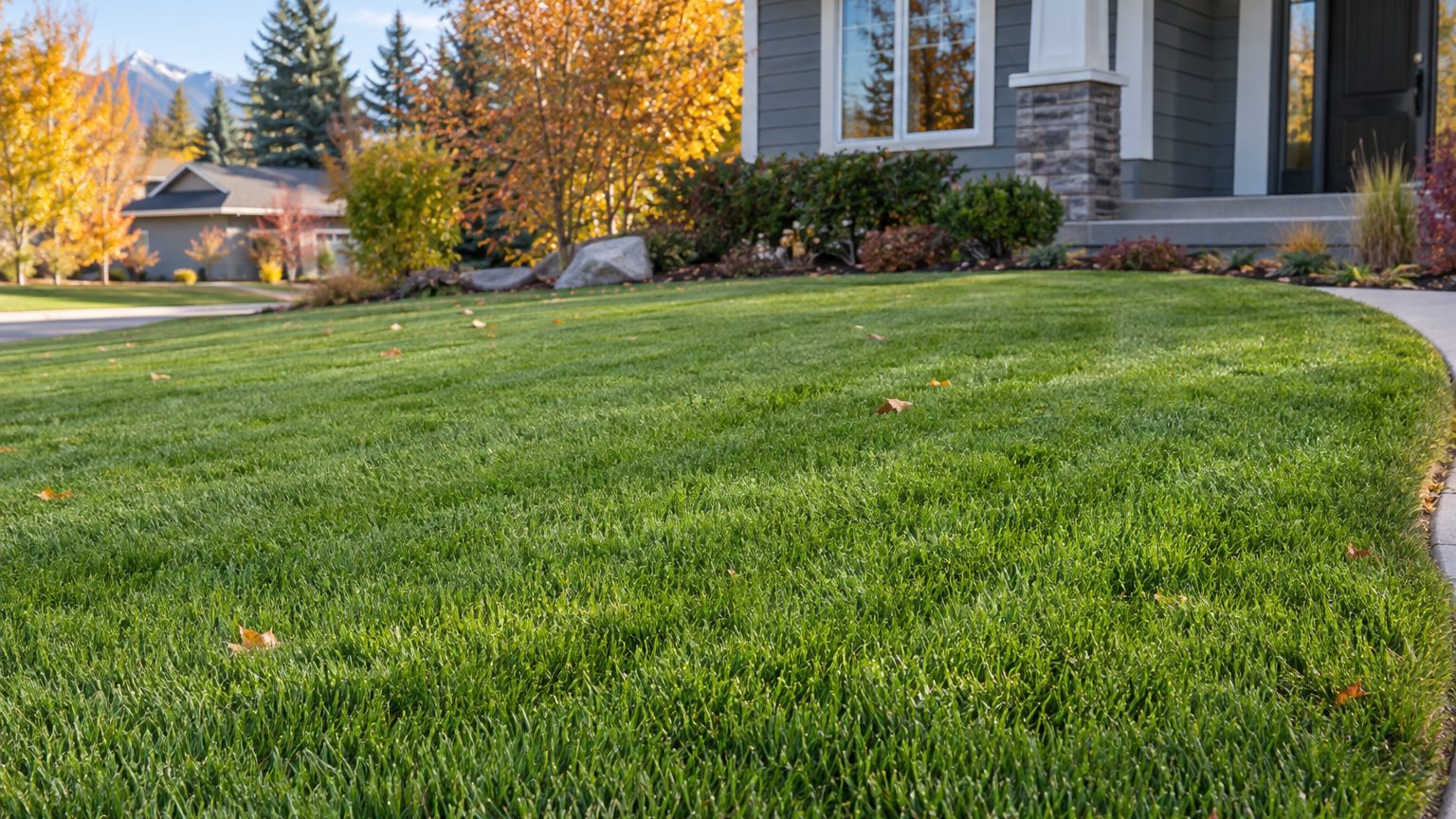
Anchorage lawns spend most of the year under snow, then green up fast once the ground thaws and the long daylight arrives. Lawns in Alaska run on a short, bright season, and the work that matters (seeding, a first feeding, steady mowing) is packed into the summer months.
Frost Dates and Growing Season in Alaska
Around Anchorage, the last spring frost usually lands between May 3 and May 12, and the first fall frost arrives between September 22 and October 1. That leaves about 143 frost-free days, which is generous for Alaska but short for a lawn, and the Interior and the north have far less.
- In early spring, snow melts and the ground stays cold and soggy, so grass sits dormant and the best move is to keep off it while it is saturated.
- Through May, a frost can still nip tender new growth, which is why seed waits until the ground has thawed and risk has eased.
- From June through August, the lawn grows hardest, helped by long summer daylight that partly makes up for the short season.
- In September, mowing continues while growth slows, and frost puts young grass at greater risk.
- As colder weather pushes the grass toward dormancy, poorly rooted seedlings are less likely to survive the winter.
Frost dates mark risk, not the day grass starts or stops growing. Growth follows soil warmth, and in Anchorage the soil warms late, so the lawn wakes up well after the snow is gone.
Alaska — the year and the numbers
- State
- Alaska
- USDA zones
- 1a-8a
- Last spring frost
- May 3 to May 12
- First fall frost
- September 22 to October 1
- Annual rain
- 16 in
- Lawn type
- cool-season
- Source
- NOAA NCEI 1991-2020 Climate Normals, 32F freeze probabilities · Anchorage
Cool-Season or Warm-Season Grass in Alaska?
Cool-season grass is the only kind that makes sense here. Winters are severe, summers are mild, and warm-season grasses cannot survive the cold, so lawns rely on grasses that tolerate hard winters and stay green in cool weather.
Summer watering can still matter in Anchorage, even when dry weather is not the main constraint. Winter kill, a short season and cold soil are, so toughness matters more than heat tolerance. Hardiness zones in the state span 1a to 8a under the USDA system, so the colder the area, the more the choice narrows.
| Grass | How it does in Alaska | Why |
|---|---|---|
| Kentucky bluegrass | Dependable lawn base | Cool-season grass that handles cold winters |
| Creeping red fescue | Does well | Fine fescue suited to cool, lean conditions |
| Chewings fescue | Does well | Fine fescue that blends with bluegrass |
| Hard fescue | Does well | Fine fescue with good cold tolerance |
| Perennial ryegrass | Short-lived in the coldest winters | Cool-season grass that struggles with deep cold |
Warm-season grasses such as St. Augustinegrass do not belong in Alaska, and St. Augustinegrass is never sold as seed in any case.
When to Seed, Fertilize and Aerate a Lawn in Alaska
Alaska flips the usual advice. The season is too short for fall seeding, so seed goes down in spring once the ground has thawed, giving seedlings the whole summer to root before the cold.
The first feeding comes once the grass is actively growing, which is late spring this far north. Dates here speak for Anchorage and shift in other parts of the state.
| Task | Best months in Alaska | Why then |
|---|---|---|
| Seeding | June (July also works) | Ground has thawed and seedlings have a full summer to root |
| Fertilizing | June (August also works) | June is when the grass is growing and ready for its first feeding |
| Mowing | June through September | Growth is steady while the soil is warm |
| Watering | June through August | Summer is when the lawn needs steady moisture |
Aeration is not tied to a window here, so treat it as optional and do it only while the grass is growing and the soil is not frozen or waterlogged.
Lawn Problems to Watch for in Alaska
Winter-Killed Patches

Straw-colored or bare patches that appear as the snow melts, often in low spots where meltwater pooled, point to winter damage. Perennial ryegrass is especially vulnerable in the coldest winters. Rake the dead grass lightly and reseed in June.
Thin Grass in Cold, Wet Soil
A lawn that looks thin and yellowish in spring, in a spot that stays soggy long after the neighbors have dried out, is reacting to cold, saturated ground. Staying off it while it is wet protects the crowns, and feeding once growth is underway helps it fill in.
Compacted Paths and Edges
Worn, hard strips where people walk or park often hold water and grow little. Keeping traffic off the lawn when the ground is soft helps, and loosening the soil while the grass is actively growing lets roots recover.
How Lawn Care Dates Change Across Alaska
The state is huge, and the season shifts with latitude, elevation and distance from the water.
- Anchorage: this is the reference for the dates above, among the milder inhabited parts of the state, with a spring that starts in May.
- Fairbanks and the Interior: winters are colder and the frost-free stretch is far shorter, so seeding happens later and fall frost arrives sooner.
- Southeast, around Juneau: the coastal climate is milder and wetter, so the ground thaws earlier and lawns face more moisture than cold.
- The far north: the season is so brief that a lawn is a real gamble, and local advice matters most.
Where you live decides how closely these dates apply, so treat them as a starting point and adjust to when your own ground thaws.
Where to Get Lawn Advice in Alaska
Alaska’s conditions vary so much that local help pays off, especially for soil and diagnosis questions.
- The University of Alaska Fairbanks Cooperative Extension Service offers lawn and soil guidance written for Alaska conditions, and it is worth a visit before spring seeding.
- Your local extension office can help with a soil test or a diagnosis of a patchy lawn, ideally once the ground has thawed and the grass is growing.
Common Questions
Can You Grow a Lawn in Alaska?
Yes, in the milder areas. Cool-season grasses such as Kentucky bluegrass and fine fescues establish well when seeded in spring and given the summer to root.
What Grass Seed Works in Alaska?
Kentucky bluegrass and fine fescues such as creeping red, chewings and hard fescue are the usual choices. Perennial ryegrass is short-lived in the coldest winters.
Why Does a Lawn in Alaska Turn Brown After Winter?
Brown, matted grass in low spots right after snowmelt usually means winter damage or standing meltwater. If the grass greens up as the soil warms, it was only dormant. If it stays brown, reseed in June.