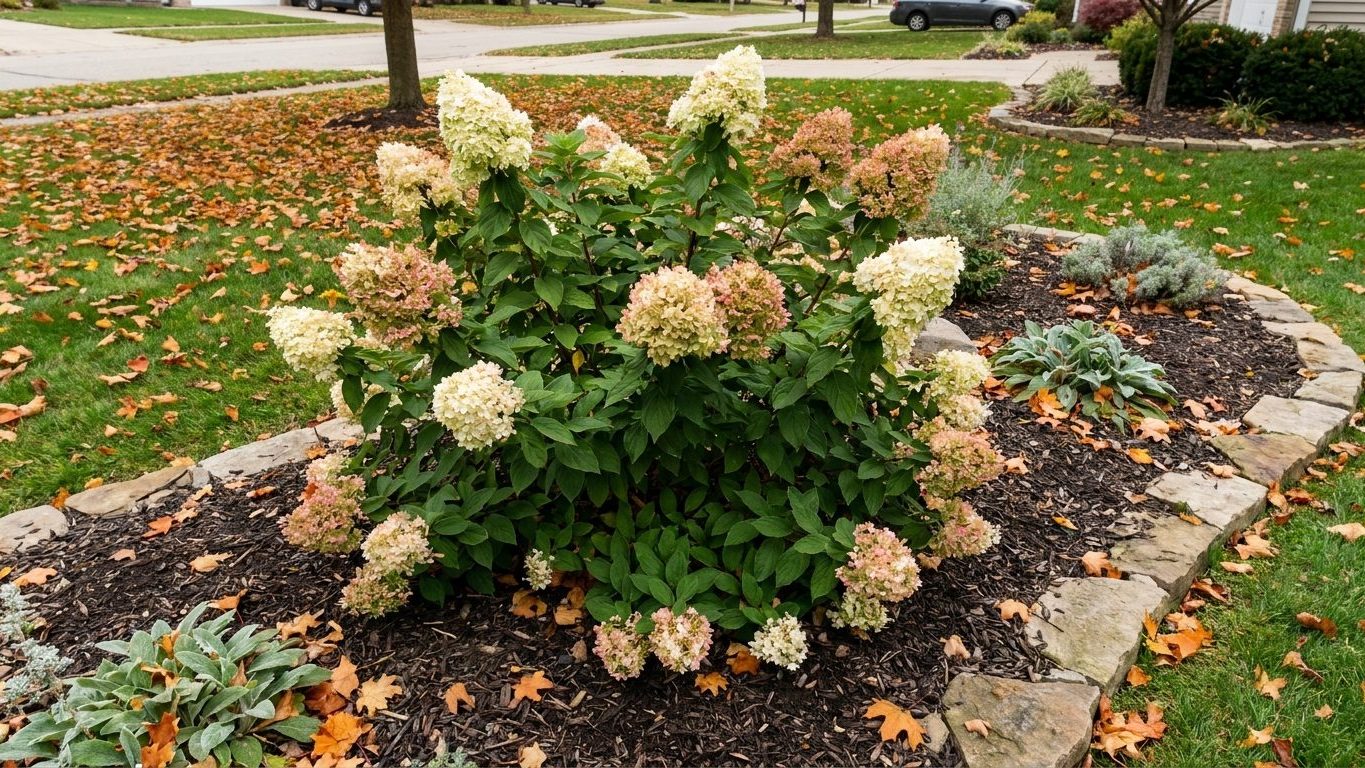
In Charleston, plant hydrangeas in April or May, or hold off until August and September. Those two windows are the ones that work on West Virginia’s calendar. Bigleaf pruning has its own slot, June and July. Get the timing right and the shrub roots, blooms and overwinters without drama. Get it wrong and you pay for it in flowers.
When to prune hydrangeas in West Virginia: The Short Answer
NOAA NCEI 1991-2020 Climate Normals puts Charleston’s last spring frost at April 9 to April 23 and its first fall frost at October 18 to November 1, and the year’s work hangs off those two windows.
- January: Leave the shrubs alone, because frozen ground is no place for a new root ball. Save the pruners for June.
- February: Order plants and note where afternoon sun lands in the yard. Planting is still weeks off, well ahead of the April 9 to April 23 last-frost window.
- March: Fertilize for the first time, before the last-frost window opens. Keep it to one light feeding, since soft new growth is what a late freeze hurts most.
- April: Plant once the April 9 to April 23 window has passed. Keep an old bedsheet handy for any late cold snap.
- May: Plant and fertilize, since both are on the calendar this month. Water the root ball before it goes in, and mulch afterward.
- June: Prune bigleaf just after the blooms fade. Take off spent flowers and dead stems, and leave healthy wood alone.
- July: Finish bigleaf pruning early in the month and fertilize one last time. A cut made much later risks taking next year’s flower buds.
- August: Planting reopens as summer heat eases. Water deeply through the first weeks, because new roots dry out fast.
- September: Finish planting so roots settle before frost arrives, due October 18 to November 1. The real cutoff falls weeks earlier, and the method is below.
- October: Stop planting. Mulch established shrubs as the first-frost window approaches.
- November: Leave the spent flower heads in place, since they give the buds some cover. Nothing else is needed once frost has come.
- December: Rest. Check that the mulch hasn’t blown off, and hold the pruners.
Charleston sits in a river valley. Yards on higher ground freeze noticeably earlier in fall, so pull the September and October steps forward if that describes yours.
West Virginia — the year and the numbers
- State
- West Virginia
- USDA zones
- 5a-7a
- Last spring frost
- April 9 to April 23
- First fall frost
- October 18 to November 1
- Annual rain
- 46 in
- Lawn zone
- cool-season
- Source
- NOAA NCEI 1991-2020 Climate Normals, 32F freeze probabilities · Charleston
How to Work Out the Dates for Your Own Yard
NOAA NCEI 1991-2020 Climate Normals gives Charleston a last spring frost of April 9 to April 23 and a first fall frost of October 18 to November 1, so everything below counts from those two windows.
- Add two weeks to the last frost: April 9 to April 23 plus two weeks gives April 23 to May 7, the range when a spring planting is safest from a late freeze.
- Subtract six weeks from the first fall frost: October 18 to November 1 minus six weeks gives September 6 to September 20. That is a common rule of thumb for giving roots time to settle before the ground cools.
- Move the fall date earlier if you live above the valley floor: Charleston is a river valley, so a hillside yard should treat September 6 to September 20 as a ceiling, not a target.
- Check which hydrangea you own before pruning: the June and July window is for bigleaf. Compare your plant with Hydrangeas That Grow Well in West Virginia first.
- Tie feeding to the same calendar: March, May and July, and no later.
Two subtractions turn a Charleston calendar into a yard calendar. Write both ranges where you will see them, then check them against your county office.
West Virginia North to South: How the Dates Shift
USDA Plant Hardiness Zone Map 2023 places West Virginia across zones 5a-7a, a USDA system built on one variable, the average annual extreme minimum temperature, so no single calendar fits the whole state.
- Ohio and Kanawha river valleys (Charleston, Huntington, Parkersburg): the dates in this article fit best here, since they come from a Charleston station.
- Eastern Panhandle (Martinsburg, Charles Town, Harpers Ferry): sheltered valley country that tends toward the milder end of the state, so spring planting can start a little sooner.
- Allegheny Highlands (Davis, Marlinton, Snowshoe): high elevation brings fall freezes earlier and spring warmth later, so the fall cutoff moves up and spring planting moves back.
- Southern plateau (Beckley, Bluefield, Princeton): ridgetop towns sit above the river valleys and behave like a gentler version of the highlands, with fall frost arriving ahead of Charleston.
Pin down your own ridge or hollow with the county office, then take the full-year picture to Hydrangeas in West Virginia.
Mistakes West Virginia Punishes
Pruning bigleaf at the wrong time

Cutting bigleaf in winter or early spring removes the buds that would have become flowers. Hold the pruners until June or July, after the blooms fade. If a shrub still refuses to flower, check it against Hydrangeas That Grow Well in West Virginia.
Planting too late in fall
A shrub set in the ground in October gets little time to root before the first fall frost. Plant in August or September instead, and if the window has slipped past, wait for April. If a young shrub struggles anyway, Hydrangea Pests and Diseases in West Virginia helps you sort out the cause.
Feeding after July
Fertilizer applied in late summer or fall pushes soft new growth just before the first frost, and frost burns it. Feed in March, May and July only. Hydrangeas in West Virginia lays out the rest of the yearly routine.
West Virginia Extension Offices and County Contacts
The USDA NIFA Land-Grant University Extension directory lists West Virginia University Extension at extension.wvu.edu. Charleston’s frost dates are a starting point, and your county office knows your elevation and soil. Call before the April planting window opens.
- Your state page: Hydrangeas in West Virginia holds the frost dates and the pruning window where you live.
- Which ones hold up here: Hydrangeas That Grow Well in West Virginia helps you choose before you dig.
- What goes wrong here: Hydrangea Pests and Diseases in West Virginia shows what to bring, a leaf or a photo, when you call your county office.
Common questions
Can I plant hydrangeas in West Virginia in July?
July is not on the planting calendar, which lists April, May, August and September. If a shrub arrives in July anyway, keep it in its pot in light shade and set it out in August.
When do I prune bigleaf hydrangeas in West Virginia?
June and July, right after the flowers fade. The calendar covers bigleaf only, so identify your variety before you cut.
Do these dates work in the mountains?
Treat them as a Charleston baseline. Higher elevations freeze noticeably earlier in fall, so move fall planting earlier and confirm the dates with your county Extension office.