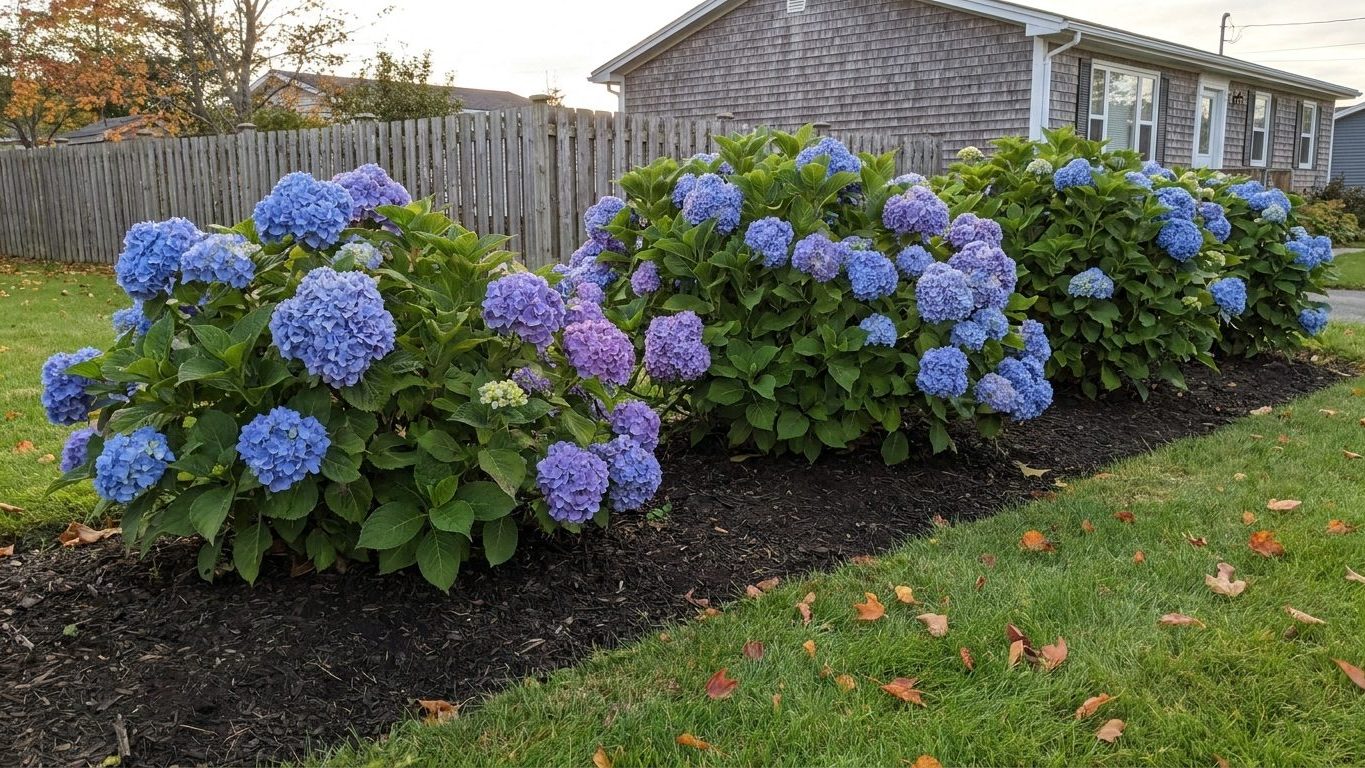
Hydrangeas in Newfoundland and Labrador face a short, damp growing season more than a rogue’s gallery of pests. Bud dieback from a late frost, slugs in the leaf litter, and powdery mildew on humid August evenings account for most of the complaints I hear from St. John’s to Corner Brook. None of it is exotic. All of it tracks the same short calendar that governs planting and pruning here.
Hydrangea pests and diseases Newfoundland and Labrador: The Short Answer
Natural Resources Canada rates St. John’s at hardiness zone 6a, and the same reference station logs the last spring frost there at an average of May 30, which means bud damage and a flowerless summer cause more heartbreak here than any insect. The next most common issues, roughly in the order they show up between that May thaw and the October 17 fall frost, are slugs, powdery mildew, aphids, botrytis blight, and leaf spot.
No flowers on a healthy shrub

A frost after buds swell is the top complaint here, since the last spring frost lands around May 30 on average and some years run later. Hold pruning of bigleaf types to June or July, after that risk clears, and skip a fall cut entirely.
Slug trails on new growth
Damp litter and cool nights favor slugs from the moment new leaves push, usually right after May or June planting. Clear mulch away from the crown, water in the morning instead of evening, and hand pick after dusk.
White powder on the leaf tops
Powdery mildew shows up once the air turns humid, typically through the July feeding and into the August planting window. Space plants for airflow, water the soil rather than the foliage, and pinch off the worst leaves.
Curled new leaves with sticky residue

Aphids cluster on the soft tips that follow the May and July feedings, leaving a shine that draws ants. A strong water spray most mornings knocks the colony down before it reaches the flower buds.
Gray mold on the flower heads

Botrytis blight favors the same cool, wet stretches that make this province hard on ripening blooms, often after a run of foggy days. Deadhead spent flowers promptly and avoid overhead watering late in the day.
Brown spots on lower leaves late summer

Leaf spot builds through the September planting window as nights cool and dew lingers longer. Rake and discard fallen leaves before the fall frost closes the season, since the fungus overwinters in that litter.
Newfoundland and Labrador — the year and the numbers
- State
- Newfoundland and Labrador
- Hardiness zones
- 6a
- Last spring frost
- May 30
- First fall frost
- October 17
- Annual rain
- 60 in
- Lawn zone
- cool-season
- Source
- Environment and Climate Change Canada — Canadian Climate Normals 1981-2010, station ST JOHN'S A · St. John's
How to Work Out the Dates for Your Own Yard
Work from the two anchor dates instead of a printed calendar, since your own yard may sit weeks off the St. John’s average in either direction.
- Mark the average last frost: Environment and Climate Change Canada puts it at May 30 for St. John’s, so treat anything before early June as frost territory for new growth.
- Push planting past that date: the calendar for this province keeps planting to May, June, August, and September, so a May planting still needs frost cloth on hand.
- Hold bigleaf pruning to June or July: cutting earlier removes the buds that survived winter and is the single biggest cause of a flowerless summer.
- Fertilize on the May and July windows only: feeding outside those months pushes soft growth into a frost or into the humid stretch that favors mildew.
- Count forward to October 17: that is the average first fall frost, so treat bloom or leaf damage after early October as cold, not disease.
- Watch the six weeks after each frost date: most of the symptoms above cluster in the weeks right after the spring thaw or right ahead of the fall frost.
A shrub that failed to flower right after a late May cold snap is almost always frost damage, not a pest. One that develops white film in July, weeks into steady warmth, is mildew reacting to that same humid window.
Newfoundland and Labrador North to South: How the Dates Shift
Coastal fog, elevation, and simple latitude move these dates around more than any calendar can, so treat the St. John’s figures as a starting point rather than a rule.
- The Avalon Peninsula (St. John’s, Conception Bay, the Cape Shore): ocean-moderated air keeps frost dates closest to the averages above, though coastal fog through summer favors powdery mildew and botrytis over the drier interior.
- Central Newfoundland (Gander, Grand Falls-Windsor, Notre Dame Bay): inland air swings colder at night and warmer by day, which pushes the safe planting window later and shortens the gap before the first fall frost.
- Western Newfoundland and the Northern Peninsula (Corner Brook, Deer Lake, St. Anthony): higher ground and a longer snow cover delay bud break, so bigleaf pruning often waits past the province’s usual June start.
- Labrador (Happy Valley-Goose Bay, Labrador City, the North Coast): a shorter, colder season overall limits which hydrangea types survive at all and compresses every pest and disease window into fewer weeks.
Whichever part of the province you garden in, the same frost-driven averages from St. John’s still set the baseline, adjusted by what your own microclimate does to them.
Mistakes Newfoundland and Labrador Punishes
Pruning bigleaf hydrangea in fall
Cutting back in September or October removes the very buds that need to overwinter, since bigleaf types set next year’s flowers on old wood. Keep pruning inside the June or July window and let the rest of the plant stand through winter.
Planting right after the last frost date
A shrub set out the week of May 30 still meets a real chance of a colder night, since that figure is only an average and half of years run later. Wait until growth is steady or keep frost cloth on hand.
Watering in the evening through summer
Damp foliage overnight is what lets powdery mildew and botrytis take hold in this cool, humid province. Switch watering to the morning so leaves dry before the fog rolls in, and aim the hose at the soil.
Newfoundland and Labrador Extension Offices and County Contacts
The province-wide zone and frost figures above are a starting point, not a diagnosis, and the provincial agriculture branch narrows that down for your own address.
- Newfoundland and Labrador Department of Fisheries, Forestry and Agriculture: the provincial extension service at gov.nl.ca/ffa takes soil and pest questions specific to your district.
- Your state page: the calendar of fertilize, plant, and prune windows used throughout this guide.
- Which varieties hold up here: the named hydrangea types rated for this province’s short season, worth checking before you buy.
Common questions
Are hydrangeas hardy in Newfoundland and Labrador?
Around St. John’s, Natural Resources Canada places the reference zone at 6a, which supports the hardier hydrangea types but leaves little room for a late frost after the May 30 average or an early one before October 17.
When should I prune hydrangeas in this province?
Bigleaf hydrangea should only be pruned in June or July here, after the frost risk has passed and before next year’s buds start forming on the old wood.
What’s the most common hydrangea problem in Newfoundland and Labrador?
Bud dieback from a late spring frost causes more flowerless summers than any single pest, simply because the May 30 average frost date still leaves plenty of colder years on the record.