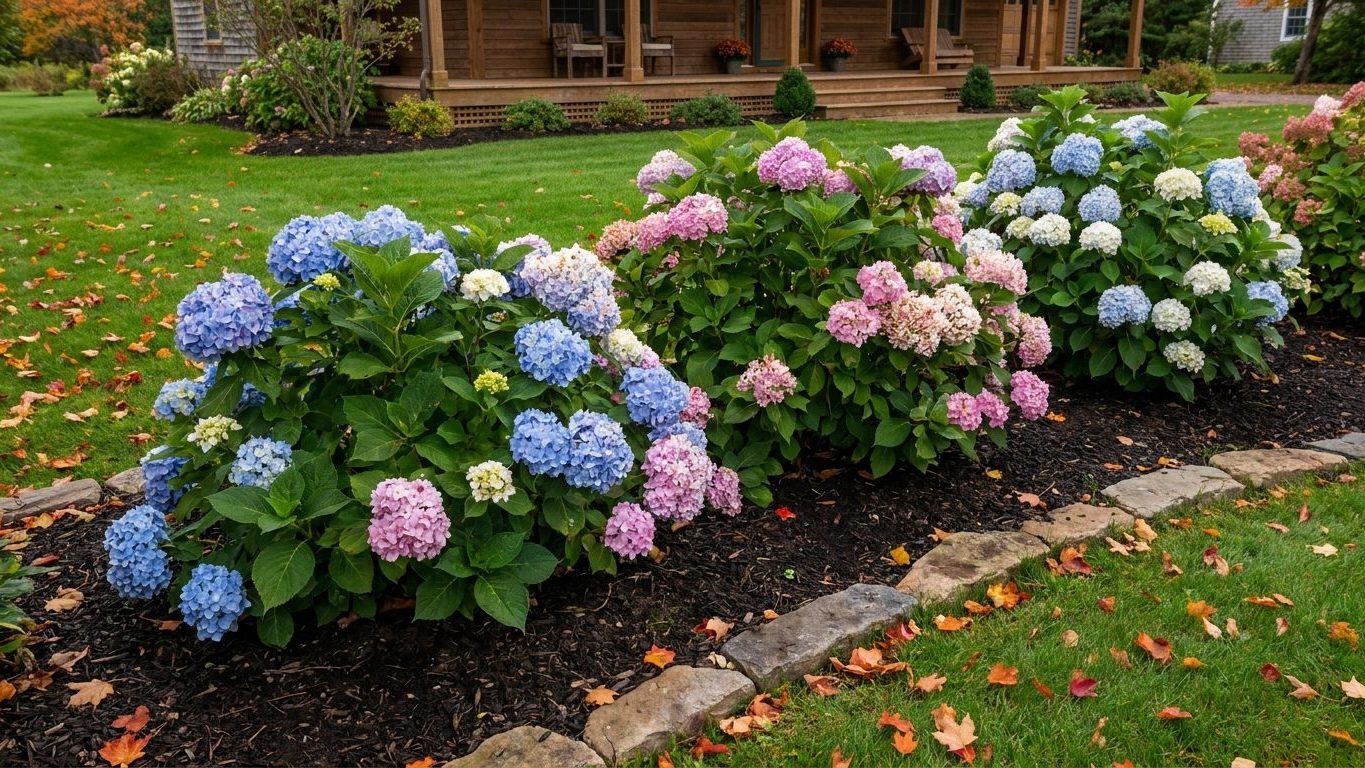
The pests and diseases hydrangeas actually face on Prince Edward Island are a short list shaped by cool, damp Maritime air: aphids on new growth, powdery mildew, botrytis gray mold, leaf spot, slugs, and frost-nipped buds. Charlottetown’s climate keeps most insect trouble minor, so the real damage tends to come from moisture and timing rather than any single bug.
Hydrangea pests and diseases Prince Edward Island: The Short Answer
In Charlottetown, Environment and Climate Change Canada puts the average last spring frost at May 16, and that single mean date decides more hydrangea trouble here than any insect or fungus does. The zone 5b Canadian hardiness rating for the area means damp air off the Northumberland Strait keeps most classic pests minor, so the real season runs from frost-nipped buds in spring through mildew and gray mold once humidity builds by July.
Frost-nipped flower buds
Buds pushed out before the mean May 16 frost blacken and drop when a late cold snap follows. Hold off cutting back old wood until new leaves confirm what survived, and mulch roots through the May and June plant window to buy the buds time.
Aphids on new growth
Small green or black clusters gather on soft spring tips and curl the leaves as sap gets drained. A hard spray from the hose knocks most colonies loose, and the damage rarely slows a shrub fed on the May and July schedule.
Powdery mildew
A gray-white film coats leaves once July humidity settles in, worse where a plant is crowded against a fence or wall. Space anything set out in the September plant window with airflow in mind, and strip the worst leaves rather than spraying.
Botrytis gray mold
Wet blooms turn brown and fuzzy after a stretch of Island fog, starting at the petal edges and spreading fast in a still corner of the yard. Deadhead spent flowers promptly and avoid overhead watering during the June and July pruning window.
Leaf spot
Purple-brown rings appear on lower leaves by late summer, usually where water splashes soil onto foliage. Rake up fallen leaves each fall rather than composting them nearby, since the fungus overwinters in that debris.
Slugs

Ragged holes and slime trails show up on low leaves through a damp summer, worse after a run of rain. A ring of crushed eggshell or a shallow trap set at dusk handles most of a home patch.
Winter dieback on old wood
Stems that look fine in fall turn black and brittle by spring once the ground freezes hard before snow cover arrives. Leave the old wood standing through winter as insulation and prune only in the June and July window, once live buds show.
Prince Edward Island — the year and the numbers
- State
- Prince Edward Island
- Hardiness zones
- 5b
- Last spring frost
- May 16
- First fall frost
- October 17
- Annual rain
- 46 in
- Lawn zone
- cool-season
- Source
- Environment and Climate Change Canada — Canadian Climate Normals 1981-2010, station CHARLOTTETOWN A · Charlottetown
How to Work Out the Dates for Your Own Yard
Environment and Climate Change Canada sets the mean last frost for Charlottetown at May 16, and because that figure is a midpoint, frost still lands after it in half of all years. Working out your own window starts with that mean date, then adjusts for how sheltered or exposed your particular yard sits.
- Mark the mean frost date on your own calendar: count outward from May 16 and hold new growth back another week or two if your yard sits low or open to wind, since frost pools there longest.
- Match symptoms to the fertilize window: a shrub fed during the May or July window that still yellows or wilts likely carries a root or drainage problem rather than a feeding gap.
- Watch the June and July prune window for fungus: any gray fuzz or white film that turns up while you cut back old wood points to botrytis or mildew building in humid air, not leftover winter damage.
- Check new plantings against the plant window: stock set into the ground during May, June, August, or September has enough weeks to root before the October 17 mean fall frost closes the season.
- Rate your own site against zone 5b: a bed tucked against a south wall runs a season milder than the open average, while a field edge exposed to wind runs colder and later.
- Note how wet the season has run: a summer with more fog days off the Strait pushes both mildew and gray mold earlier than a dry one, regardless of the calendar window.
None of this replaces a close look at the actual shrub, but lining up what you see with the calendar window above narrows the guesswork to one or two likely causes fast.
Prince Edward Island North to South: How the Dates Shift
Charlottetown’s readings sit near the middle of the Island, so coastal exposure and shelter from wind move both frost dates and disease pressure in either direction.
- The North Shore (Queens and Prince counties along the Gulf of St. Lawrence): open wind and sandy soil dry leaves fast, keeping mildew and gray mold lighter but leaving buds exposed to spring frost longer.
- Charlottetown and the central harbor belt: water on both sides moderates the swings, so this reading stays about as mild and as humid as the province gets, making it the reference point for the whole Island.
- Eastern and Western Kings (the tips of the Island away from the harbor): distance from open water brings colder pockets on calm nights, so frost lingers later into spring and returns earlier in fall than the Charlottetown mean suggests.
Whichever end of the Island you garden on, treat the mean dates as a starting point and watch your own site for the fungus and frost signs above.
Mistakes Prince Edward Island Punishes
Pruning too early
Cutting back stems before new leaves confirm which wood survived removes live buds along with the dead, since a shrub can look uniformly brown well past the May 16 mean frost. Wait for the June and July prune window and cut only what still shows no green.
Watering overhead in the evening
Wetting leaves late in the day leaves them damp through the cool Maritime night, exactly the window botrytis and mildew need to take hold. Water the soil in the morning instead, and save overhead watering for hot midday sun when leaves dry fast.
Skipping the fall leaf cleanup
Leaving spotted or moldy leaves under the shrub over winter hands the fungus a place to overwinter and reinfect the same plant come spring. Rake and bin the debris each fall rather than composting it near the bed.
Prince Edward Island Extension Offices and County Contacts
The zone 5b reading and Charlottetown’s frost dates are a starting point only, and the Prince Edward Island agriculture department along with the sibling pages on this site fill in the rest for your own yard.
- Your state page: the frost dates and the pruning window for the whole province gathered in one place.
- Which ones hold up here: the hydrangea varieties rated for the Charlottetown zone and climate.
- The month by month calendar: fertilize, plant, and prune windows laid out across the growing season.
Common questions
Do I need to spray my hydrangeas every year in Prince Edward Island?
Most Island yards get by without routine spraying, since cool air keeps pest pressure low and simple steps like morning watering and fall cleanup handle mildew and gray mold before they spread.
Why did my hydrangea buds turn black this spring?
A late frost after May 16 is the usual cause, not a disease, since Charlottetown’s mean frost date still falls later in half of all years and buds pushed early take the hit.
Is zone 5b enough for hydrangeas to survive winter here?
Zone 5b covers most hardy hydrangea types when the old wood is left standing through winter as insulation, though bigleaf varieties still need extra shelter in exposed spots.