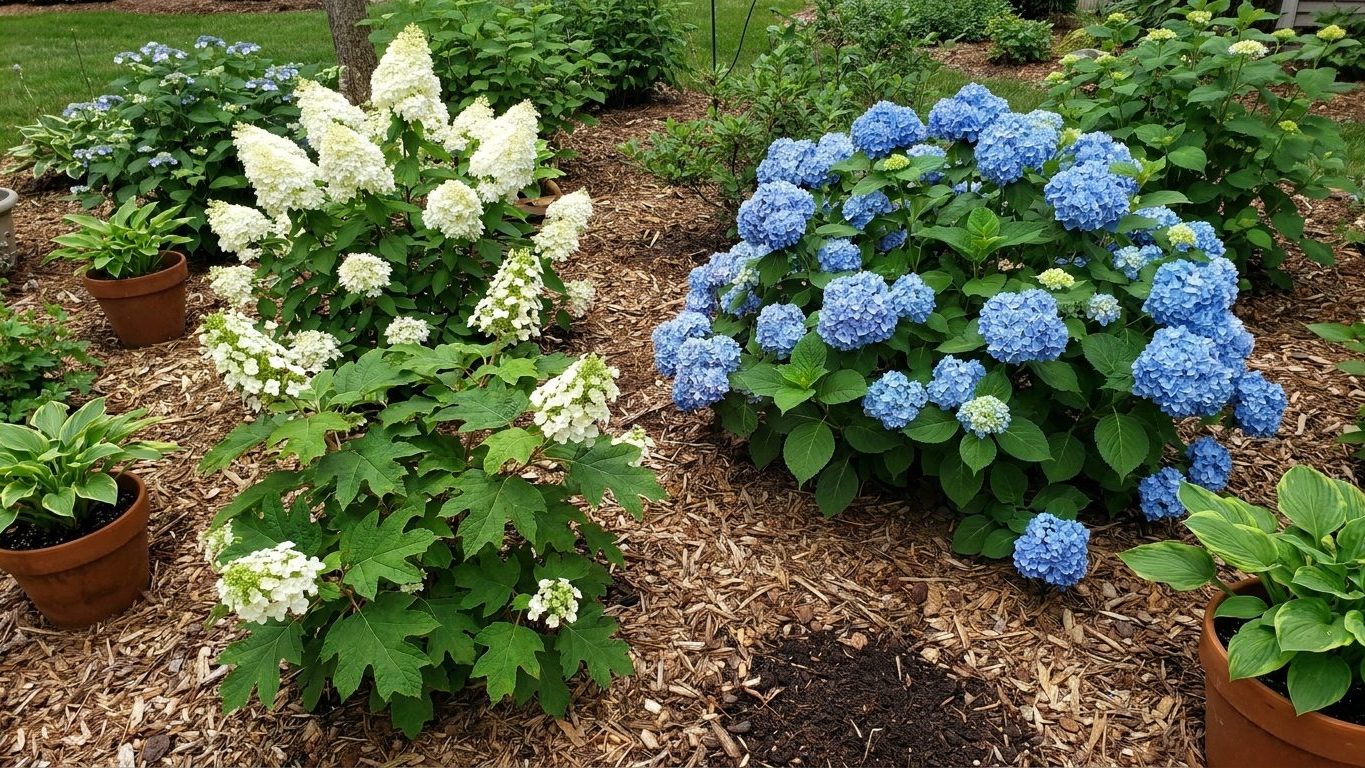
The safest bets are panicle and smooth hydrangeas, both rated for Minnesota’s 3a to 5a range on the USDA Plant Hardiness Zone Map. In the Twin Cities, the state’s reference city, a mountain or climbing hydrangea can work against a sheltered wall, while bigleaf types mostly die back to the ground each winter.
Hydrangeas that grow well in Minnesota: The Short Answer
The safest bets across Minnesota are panicle and smooth hydrangeas, both rated for the state’s 3a to 5a range on the USDA Plant Hardiness Zone Map.
In the Twin Cities, the state’s reference city, a mountain or climbing hydrangea can work against a sheltered wall, while bigleaf types mostly die back to the ground each winter.
Panicle hydrangea

Panicle hydrangea (Hydrangea paniculata) is the one variety that shrugs off a Minnesota winter without a second thought. It blooms on new wood, so even a hard dieback still leaves cone-shaped flower clusters by August. This is the shrub most nurseries in the Twin Cities stock first, and for good reason.
Smooth hydrangea

Smooth hydrangea (Hydrangea arborescens), the native Annabelle-type shrub, handles the state’s cold with the same ease as panicle types. It flowers on new wood too, which means a late spring frost that nips the tips barely changes the bloom count. It tolerates part shade better than most other hydrangeas sold here.
Climbing hydrangea

Climbing hydrangea (Hydrangea anomala subsp. petiolaris) can work against a south or east wall in the milder parts of the state, though it needs several seasons to establish before it flowers reliably. Wood above the snow line still risks winter injury most years, so patience matters more than skill here.
Mountain hydrangea

Mountain hydrangea (Hydrangea serrata) sits on the edge of what the Twin Cities can support. It flowers mostly on old wood, so a harsh winter often means a shrub with leaves but no blooms. Gardeners who grow it here usually mound mulch over the crown every fall as insurance.
Oakleaf hydrangea

Oakleaf hydrangea (Hydrangea quercifolia) brings striking fall foliage color but struggles with reliable flowering once temperatures drop into the state’s coldest zones. Its flower buds form on old wood, which the coldest winters in northern counties tend to kill outright even when the plant itself survives.
Bigleaf hydrangea

Bigleaf hydrangea (Hydrangea macrophylla), the mophead type sold everywhere in spring, is the riskiest choice for a Minnesota yard. It blooms almost entirely on old wood, and the state’s winter lows kill that wood most years, leaving a shrub that grows leaves but rarely flowers without heavy protection.
Minnesota — the year and the numbers
- State
- Minnesota
- USDA zones
- 3a-5a
- Last spring frost
- April 17 to April 30
- First fall frost
- October 11 to October 23
- Annual rain
- 32 in
- Lawn zone
- cool-season
- Source
- NOAA NCEI 1991-2020 Climate Normals, 32F freeze probabilities · Minneapolis
How to Work Out the Dates for Your Own Yard
Working out your own planting and pruning dates starts with the frost window rather than a fixed date. NOAA NCEI 1991-2020 Climate Normals puts Minnesota’s last spring frost between April 17 and April 30, depending on where you live in the state.
- Check your last spring frost: in the Twin Cities that window runs April 17 to April 30, so anything planted before mid-April risks a freeze.
- Line it up with the state’s planting window: the calendar lists April, May, August, and September as plant months, which follows the ground warming after that frost window closes.
- Match the variety to the wood it blooms on: panicle and smooth hydrangeas flower on new wood, so planting them anytime in that April to May stretch still gives a full season to set buds.
- Hold old-wood types for a sheltered spot: bigleaf and oakleaf hydrangeas need buds that survive winter, so plant them where snow piles up against a wall, not in an open bed.
- Schedule bigleaf pruning inside the state’s window: the calendar sets that task for June and July, once the shrub shows which wood actually made it through winter.
- Fertilize on the state’s three windows: March, May, and July, timed so tender new growth isn’t pushing right before the first fall frost between October 11 and October 23.
Panicle hydrangea passes this test easily since new wood means winter damage barely matters. Bigleaf hydrangea usually fails it, because the same freeze that closes the state’s frost window also kills the old wood carrying next year’s flowers.
Minnesota North to South: How the Dates Shift
Latitude moves these dates the most inside Minnesota. The USDA Plant Hardiness Zone Map puts the state’s range at 3a in the far north to 5a in the Twin Cities, and that gap is what changes when a shrub is safe to plant.
- Northern Minnesota (Zone 3a, near the Iron Range and the border): the growing season closes early, and only panicle and smooth hydrangeas hold up reliably.
- Twin Cities metro (Zone 4b to 5a): this is the mild south of the state, the reference point for the frost windows used throughout this guide, and where a mountain or climbing hydrangea has the best odds.
- Southeastern bluff country (along the Mississippi): the bluffs trap warmer air overnight, giving a slight edge over open ground at the same latitude.
- Western prairie (open, fewer windbreaks): wind exposure can undo that edge even where the zone number looks the same, so a windbreak matters as much as the map does.
The state guide covers the exact frost window for whichever part of Minnesota you call home.
Mistakes Minnesota Punishes
Pruning old wood in fall
Cutting back a bigleaf or oakleaf hydrangea in fall removes the buds it already set for next year, since Minnesota’s calendar reserves pruning for June and July after new growth shows what survived. Wait until then, and only remove what’s clearly dead once leaves confirm it.
Planting before frost clears
Setting a young hydrangea out before the last spring frost, which NOAA NCEI 1991-2020 Climate Normals puts at April 17 to April 30 in the Twin Cities, exposes tender roots to a freeze they haven’t hardened against. The state’s plant window opens in April and May for a reason, so hold off until then.
No mulch over the crown
Skipping a mulch layer leaves the crown of an old-wood hydrangea exposed to the extreme lows behind the state’s 3a to 5a rating, killing buds that would otherwise open the next summer. A few inches of mulch mounded over the base each fall protects that tissue through winter.
Minnesota Extension Offices and County Contacts
The state’s 3a to 5a range is a starting point, not a final answer, since local snow cover and windbreaks change what survives from one yard to the next. University of Minnesota Extension and county offices track those local differences county by county.
- University of Minnesota Extension: extension.umn.edu carries county-level advice on planting and winter protection for hydrangeas.
- Your county extension office: local staff can confirm whether your yard runs closer to the northern or southern edge of the state’s zone range.
- Minnesota state hydrangea guide: the calendar and frost windows for wherever you garden in the state.
Call before you plant, especially if the shrub goes in near a north wall or a low spot where cold air settles.
Common Questions
Do bigleaf hydrangeas survive Minnesota winters?
Rarely without heavy protection. The wood carrying next year’s flower buds sits above ground, and the state’s winter lows behind its 3a to 5a rating usually kill it, leaving a plant that leafs out but skips blooming most years.
What is the best hydrangea for a Minnesota front yard?
Panicle hydrangea is the most forgiving choice for most yards in the state, since it blooms on new wood and tolerates the swing between the Twin Cities’ milder pocket and the colder counties further north.
When should I plant a hydrangea in Minnesota?
The state’s calendar sets April, May, August, and September as planting months, timed around the frost window that closes in late April and reopens in mid-October.