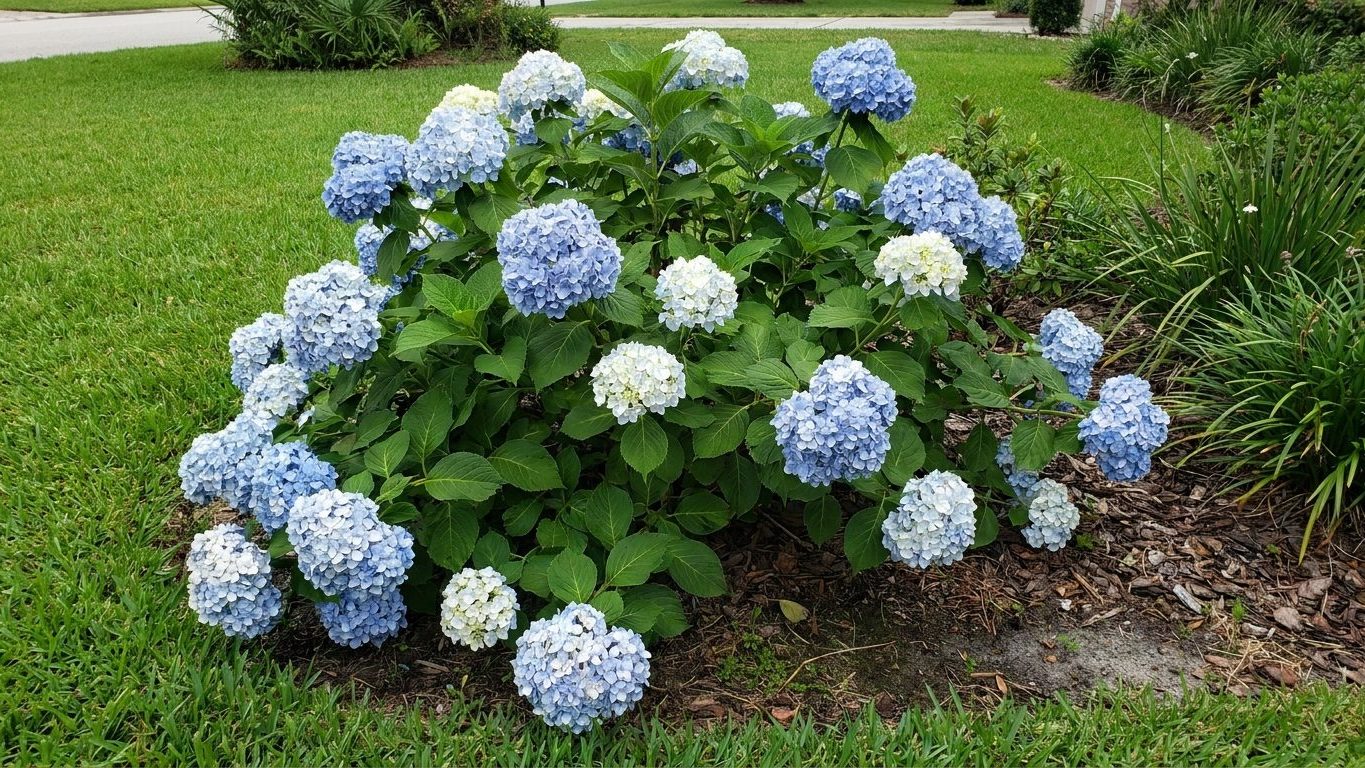
Florida hydrangeas face a shorter list of true threats than northern gardens, but humidity turns small problems into big ones fast. In Jacksonville, the reference city for the state’s climate data, the main risks are fungal, not insect, and they track the rainy season more than the calendar. Here is what actually shows up, in the order it shows up, and what stops it before it spreads.
Hydrangea pests and diseases Florida: The Short Answer
Most hydrangea trouble in Florida comes from heat and moisture, not from any single insect. In Jacksonville, the state’s reference station, the USDA Plant Hardiness Zone Map puts north Florida at 8b while the rest of the state runs warmer, up to 11b.
That extra warmth keeps fungal spores active for more months than a northern garden ever sees. Humidity, not cold, is what breaks a Florida hydrangea.
Aphids on new spring growth
Clusters of small green or black insects crowd tender stem tips as the plant leafs out, curling leaves and leaving a sticky residue behind. A strong water spray knocks most off, and insecticidal soap handles the rest. Check new growth weekly once you’re past the last spring frost window described on the Florida hydrangea calendar.
Powdery mildew on shaded leaves
A gray-white film settles over leaves that stay damp under thick canopy or crowded siding, and it spreads fastest during warm, wet stretches. Thin the surrounding shrubs for airflow, water at the base instead of overhead, and remove the worst leaves. It rarely kills the plant but it cuts bloom size.
Cercospora leaf spot in the rainy season
Round purple-brown spots appear on lower leaves first, then work upward as summer rains keep foliage wet for hours at a stretch. Pull off spotted leaves as soon as you see them and avoid watering in the evening. Left alone it can defoliate a shrub by late summer.
Spider mites during dry heat spells

Fine webbing and a dusty, stippled look on leaves shows up when a hot, dry week follows a wet one, favoring mites over fungus for once. A hard hose-down every few days breaks their life cycle better than most sprays. This often overlaps the state’s March, May, or July fertilizing months.
Scale insects on older wood

Small brown bumps cling to woody stems by late summer, hard to notice until stems look dusty or sooty mold grows on their sticky excretion. Scrape off light infestations by hand or treat with horticultural oil in cooler weather. Heavy infestations weaken the whole shrub over a season.
Botrytis blight after a cool, damp spell

Brown, mushy patches show up on flower clusters and soft new growth after a stretch of cool, wet weather, usually as temperatures start to drop. Cut out affected blooms and improve air movement around the base. It fades on its own once drier weather returns.
Root rot in poorly drained soil
Wilting leaves on a plant still getting watered on schedule usually mean roots sitting in soggy soil, common in Florida’s flat, poorly drained yards. Raise the bed or work in coarse material before replanting, covered on the Florida hydrangea varieties page. Rot rarely reverses once it sets in.
Florida — the year and the numbers
- State
- Florida
- USDA zones
- 8b-11b
- Last spring frost
- February 16 to March 7
- First fall frost
- November 26 to December 13
- Annual rain
- 53 in
- Lawn zone
- warm-season
- Source
- NOAA NCEI 1991-2020 Climate Normals, 32F freeze probabilities · Jacksonville
How to Work Out the Dates for Your Own Yard
Matching a symptom to the right cause takes a few minutes of comparison, not a lab test.
- Check the calendar first: NOAA NCEI puts Jacksonville’s last spring frost between February 16 and March 7, so a spring symptom before that window is more likely cold stress than disease.
- Look at the leaf pattern: spots that start low and climb point to a fungus splashing up from wet soil, not an insect working down from the tips.
- Feel the residue: a sticky film means aphids or scale, a dry powder means mildew, and neither shows up the same way.
- Note the weather of the past week: a hot dry spell favors mites, a cool damp one favors botrytis, and a long wet stretch favors leaf spot.
- Check the planting zone: the USDA system lists 8b through 11b for the state, and a plant pushed a full zone warmer than its label struggles more with every problem.
- Compare against the pruning window: damage that shows up outside June or July, the state’s bigleaf pruning months, is unlikely to be pruning shock and worth a second look.
Five minutes with this list usually narrows six possible problems down to one or two, which is enough to know what to cut, spray, or simply wait out.
Florida North to South: How the Dates Shift
Frost dates and pest pressure both shift hard across a state this long, and north Florida behaves nothing like the rest of it.
- North Florida (Jacksonville, Tallahassee, Gainesville): the only part of the state that sees a real frost window, so cold stress and fungal disease both track the same fall-to-spring calendar.
- Central Florida (Orlando, Tampa, Ocala): frost is rare enough that the growing calendar flips, with the main season running through winter and summer heat becoming the harder stretch to manage.
- South Florida (Miami, Naples, the Keys): effectively frost-free year round, where fungal pressure from constant humidity replaces cold as the shrub’s biggest threat, all season long.
Whichever part of the state you’re in, the Florida hydrangea guide lines up the frost and pruning windows for your exact spot.
Mistakes Florida Punishes
Watering overhead in the evening
Wetting leaves right before nightfall keeps them damp for hours, exactly what powdery mildew and leaf spot need to take hold in Florida’s humidity. Switch to a soaker hose at the base, ideally in the morning, and most fungal pressure drops within a couple of weeks.
Planting a zone too warm for the label
A tag written for cooler climates often can’t handle the extra heat once it’s a full zone warmer, and stressed plants draw pests faster than healthy ones. The state’s 8b to 11b range means a shrub that thrives in Jacksonville may struggle in Miami. Check the Florida hydrangea varieties page before buying.
Skipping the summer prune window
Cutting bigleaf hydrangeas outside June or July, the state’s set pruning months, removes next year’s flower buds and leaves fresh wounds open during the wettest part of the year. Wait for that window and disease pressure on the cuts drops with it.
Florida Extension Offices and County Contacts
The state-level numbers here are a starting point, and the county office fills in what’s different about your yard.
- Your state page: the frost dates and the pruning window where you live, gathered on the Florida hydrangea guide.
- Which ones hold up here: the varieties that shrug off Florida’s heat and humidity, covered on the Florida hydrangea varieties page.
- When to act: the month-by-month tasks tied to the frost windows, laid out on the Florida hydrangea calendar.
For a problem specific to your county, the UF/IFAS Extension network at sfyl.ifas.ufl.edu connects to a local office that can look at a leaf in person.
Common questions
Do I need to spray hydrangeas in Florida on a schedule?
No, most Florida problems trace back to watering habits and airflow rather than a pest calendar, so fixing those first usually cuts spraying down to occasional spot treatment.
Are Florida hydrangea diseases worse in south Florida than north Florida?
Fungal pressure runs higher in south Florida because the growing season never breaks for winter, while north Florida gets a cold stretch that slows spores down for a few months.
Can a hydrangea recover from root rot?
Rarely, once roots have gone soft and brown the shrub is usually done, which is why raised beds and good drainage matter more than any treatment after the fact.