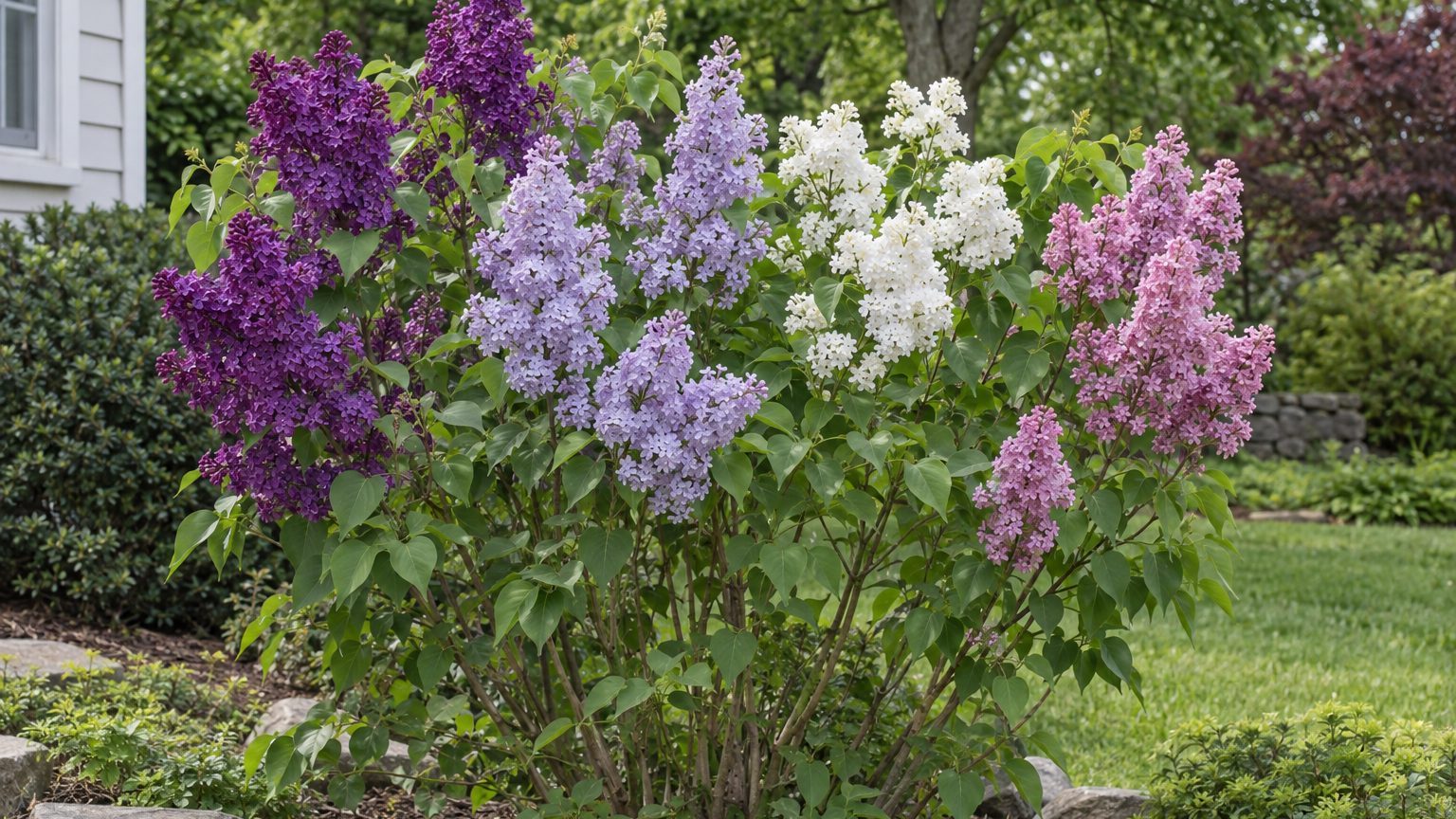
A lilac in full bloom is a Wisconsin May and June fixture, and the shrub earns it: the state’s cold winters are exactly what the plant wants. Some lilacs do well across Wisconsin, but the right choice depends on your yard; a poor match can cost you flowers.
Best Lilacs to Grow in Wisconsin

Lilacs suit Wisconsin because they need a cold winter rest to mature their flower buds, and the state’s USDA hardiness zones run from 3b to 6a. That overlap makes lilacs a good fit for many Wisconsin gardens, though the yard still has to provide the right sun, soil and summer conditions. Hot, humid summers are what they dislike.
Common Lilac

The common lilac, Syringa vulgaris, is the classic. Choose blight-resistant forms, since lilac blight is difficult to control once it settles in. Named selections that resist it include ‘Alphonse Lavallee’, ‘Crepuscule’, ‘Floreal’, ‘Guinevere’, ‘Lutece’, ‘Maud Notcutt’, ‘Rutilant’ and ‘William Robinson’.
Give it a sunny spot with good air circulation and moist but well-drained soil.
Early Lilac

Syringa oblata, the Early lilac, grows 10 to 12 feet tall and flowers in shades of purple. Hybrids between S. oblata and S. vulgaris are well suited to cold climates and open earlier than common lilacs. Leave it room to reach full height.
Meyer Lilac
Syringa meyeri is slow growing, with dense foliage and a broadly rounded shape. That tidy habit makes it a sensible pick for a front yard where a big, suckering shrub would crowd the walk.
Littleleaf Lilac
Syringa microphylla, the Littleleaf lilac, is one of the species that has shown resistance to blight. Others on that list are S. josikaea, S. komarowii, S. pekinensis and S. reflexa. If blight has troubled lilacs in your neighborhood, start here.
Preston Lilac
Preston lilacs, Syringa x prestoniae, are hybrids between Late lilac (S. villosa) and Nodding lilac (S. reflexa). They bloom later than common lilacs, so their flowers tend to miss a late spring frost.
Hyacinthiflora Hybrids
These vigorous hybrids look like French hybrids but bloom seven to 14 days earlier. The shrubs are very hardy, but early flowers are exposed to frost. Plant them only where May frosts are less frequent.
Wisconsin — the year and the numbers
- State
- Wisconsin
- USDA zones
- 3b-6a
- Last spring frost
- April 16 to April 29
- First fall frost
- October 17 to October 29
- Annual rain
- 35 in
- Lawn zone
- cool-season
- Source
- NOAA NCEI 1991-2020 Climate Normals, 32F freeze probabilities · Milwaukee
How to Choose a Lilac for a Wisconsin Garden
Start with what your yard throws at a shrub: the cold, the summer air, your free time and your space. Lilacs bloom in May and June, with the common lilac first and the later types following into June.
Pick the type that answers your toughest condition, then check the sun and drainage.
| Your situation | What suits it in Wisconsin | Why |
|---|---|---|
| Very cold winter | Common lilac or Early lilac hybrids | Lilacs are adapted to zones 3, 4 and 5 |
| Hot, humid summer | Blight-resistant selections such as Littleleaf lilac | Humid, hot summers stress lilacs, and blight is hard to control |
| Little time | Disease-resistant species | Resistance spares you a problem that is difficult to fight later |
| Small space | Meyer lilac | Slow growing with a dense, rounded shape |
| Need for winter cold | Any lilac sited in a sunny, open spot | Flower buds mature through a cold winter rest |
| Frosty Mays | Preston lilac over Hyacinthiflora hybrids | Early bloomers are best kept to places with fewer May frosts |
Pruning follows the plant’s habit. A lilac blooms on last year’s wood and sets next year’s buds in summer, so prune right after the flowers fade, in June. Cutting in late summer, fall or winter removes the next spring’s flowers.
Which Lilacs Suit Different Parts of Wisconsin
Wisconsin’s cold and its lake influence shift the choice a little from one region to the next.
- Northern Wisconsin: Cold winters suit lilacs well here. Plant late bloomers such as Preston lilacs, and skip the early Hyacinthiflora hybrids, which risk May frost.
- Lake Michigan shore: The lake delays the first fall freeze at the lakeshore, but the shrubs still get their winter rest. Frost-sensitive early bloomers remain a gamble.
- Southern Wisconsin: Inland areas freeze in early October and run milder. Choose blight-resistant lilacs, since summer humidity and heat bring more disease pressure.
In Milwaukee, the last spring freeze typically falls between April 16 and April 29, but other parts of Wisconsin differ.
Lilac Buying Mistakes to Avoid in Wisconsin
Choosing a Frost-Tender Early Bloomer
An early-opening lilac can lose its flowers to a May frost, leaving the shrub green and bare for the year. The shrub itself survives. Plant early bloomers only where May frosts are less frequent, and favor later types in colder spots.
Ignoring Blight Resistance
Lilac blight is difficult to control, so it costs you leaves and vigor year after year. Buy blight-resistant varieties whenever you plant new lilacs, and give them air circulation and moist but well-drained soil.
Forgetting the Adult Size
A small pot hides a shrub that can reach 10 to 12 feet, as the Early lilac does. Crowded against a house or walk, it ends up cut hard. An overgrown lilac can be cut back in March or April, but it will not flower for a few years afterward. Check the adult size before buying.
Where to Get Lilac Advice in Wisconsin
See University of Wisconsin Extension for the state’s resources.
- The extension website carries cold-climate lilac guides, handy before you shop in spring.
- Your county extension office can help identify blight or poor flowering, ideally when you can bring a leaf or twig in June.
Common Questions
Why Is My Lilac Not Blooming?
Look at the pruning history and the light. Cutting in late summer, fall or winter removes flower buds, and shade also cuts flowering. Prune right after bloom, and keep the shrub in a sunny spot.
Can You Cut an Overgrown Lilac to the Ground?
Yes, in March or April while it is dormant. Expect no flowers for a few years afterward, since the shrub blooms on last year’s wood.
Do Lilacs Mind Wilting in Summer?
Lilacs dislike extreme heat, and wilting can follow a change in light, such as a nearby tree coming down. Check that the soil is moist but well drained, not compacted or dry.