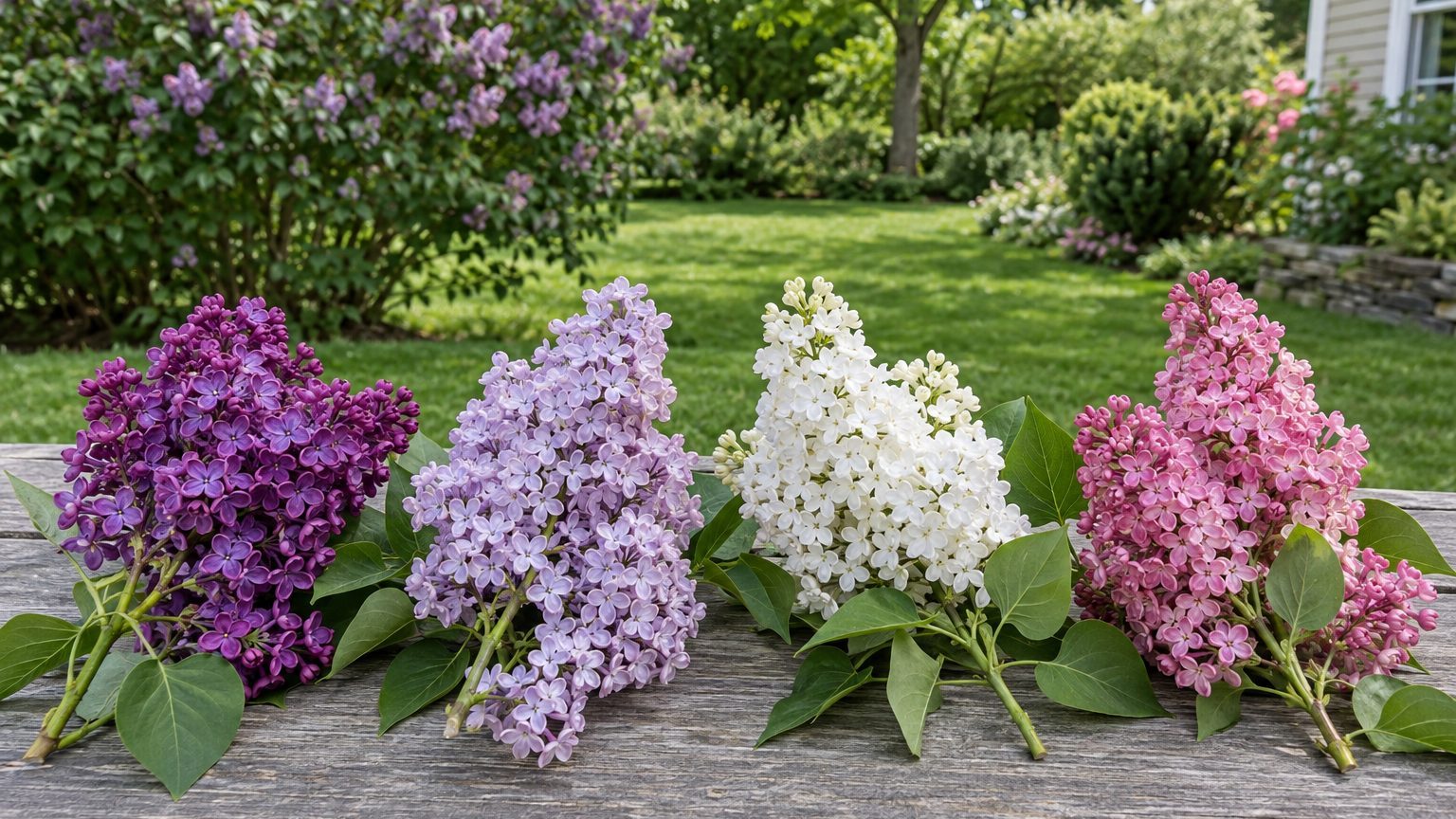
A lilac in full bloom in May is one of the great pleasures of a Washington spring, and the plant rewards you most where winters are properly cold. Which lilacs to plant, how to match one to your yard, and what changes between the wet coast and the dry interior all come down to matching the plant to the place.
Best Lilacs to Grow in Washington

Common lilacs and other lilac species can do well here, but lilacs want a cold winter rest to mature their flower buds and struggle in hot, humid summers. Mild, maritime western Washington gives it less chill than the interior, so choose with care. The choices below include classic, compact and blight-resistant lilacs.
Common Lilac

Syringa vulgaris is the most commonly grown lilac, and some of its cultivars are forced for cut flowers. Most common lilac cultivars are susceptible to lilac blight, so choose a resistant type where blight is a concern.
Madame Florent Stepman

This common lilac cultivar is creamy-yellow in bud and opens white. Growers in the Netherlands force it for cut flowers, and it accounts for 90% of the varieties they force.
Marie Legraye
White with creamy-yellow in the bud, this is another common lilac cultivar grown for cut flowers. It suits a gardener who wants a classic white lilac to scent a front walk.
Palabin Lilac
Syringa meyeri ‘Palabin’ has a dwarf habit, blooms early and flowers freely at a young age. It also grows well as a container plant, which suits a patio or a small yard.
It grows slowly, takes pruning well and can be kept compact.
Blight-Resistant Species
Syringa josikaea, S. komarowii, S. microphylla, S. pekinensis and S. reflexa have shown resistance to lilac blight. If wet spring weather has spoiled your blooms before, these species are worth seeking out.
California Lilac
Ceanothus is not a true lilac, but it fills the same role in a mild coastal yard. ‘Victoria’ is a rounded evergreen Ceanothus with abundant blue flowers.
Washington — the year and the numbers
- State
- Washington
- USDA zones
- 4a-9a
- Last spring frost
- February 27 to March 18
- First fall frost
- November 13 to November 30
- Annual rain
- 39 in
- Lawn zone
- transition-season
- Source
- NOAA NCEI 1991-2020 Climate Normals, 32F freeze probabilities · Seattle
How to Choose a Lilac for a Washington Garden
Start with your winter and your space. Washington runs from mild coastal gardens to cold interior ones, and hardiness zones across the state span 4a-9a in the USDA system, so a lilac that thrives in one yard may sulk in another.
Then think about how much room and time you have. A lilac that stays compact and blooms young suits a patio or a small yard.
| Your situation | What suits it in Washington | Why |
|---|---|---|
| Small space or container | Palabin lilac | Dwarf, slow growing and easy to keep compact |
| Wet spring weather and blight worries | Blight-resistant species such as Syringa pekinensis | Demonstrated resistance to lilac blight |
| Cut flowers and classic scent | Madame Florent Stepman or Marie Legraye | Common lilac cultivars widely forced for cut flowers |
| Little time for upkeep | Palabin lilac | Takes pruning well and flowers freely at an early age |
| Mild coastal yard with little winter cold | California lilac (Ceanothus) | An evergreen shrub that does not depend on a cold winter rest |
Wherever you plant, keep pruning simple: cut right after the flowers fade, in June, and it can also be done in May. Pruning in late summer, fall or winter removes the buds for the next spring.
Which Lilacs Suit Different Parts of Washington
Winter cold decides how well a true lilac blooms, and that cold varies a lot across the state.
- Puget Sound and the coast: Winters are mild and wet, so a true lilac gets less of the cold rest it wants. Blight-resistant species and California lilac are sensible choices here.
- Yakima Valley: Colder winters give common lilacs the rest their buds need, so they have a better chance of heavy bloom.
- Spokane and the eastern interior: This is high desert beyond the Cascades, with a far shorter season than Seattle, so favor sturdy, cold-tolerant common lilacs and plant them in full sun.
In the foothills, use your own winter conditions rather than assuming the coast or interior is the right model.
Lilac Buying Mistakes to Avoid in Washington
Choosing a Type Too Tender for Winter
Evergreen California lilac suits a mild western yard, but it is not the plant for a cold interior garden. Match the plant to your zone within the 4a-9a range before you buy, and keep true lilacs for colder sites.
Ignoring the Need for Winter Cold
A lilac needs a cold rest to mature its flower buds, so a variety that demands more chill than your yard gives will leaf out and never flower well. Along the mild coast, pick cultivars and species suited to gentler winters, and skip the plant if your yard stays warm and humid in summer.
Buying Without Knowing Adult Size
A small pot can hide a large shrub, and California lilac needs room to spread. Check the mature size on the label and leave room for it, or choose the compact Palabin lilac.
Where to Get Lilac Advice in Washington
WSU Extension publishes lilac guidance written for Washington gardens, and your county office can speak to local conditions.
- Check the extension site in early spring to compare varieties before the nursery rush.
- Call your county office with photos if blooms fail or leaves blacken after wet weather.
- Visit in May while lilacs are in bloom to see which cultivars thrive near you, then choose a site that suits the plant.
Common Questions
Why Won’t My Lilac Bloom?
Look at when the shrub was last pruned together with how much winter cold your yard gets. A lilac may fail to bloom after pruning at the wrong time or when a mild winter provides too little chill.
Can You Grow Lilacs in a Pot in Washington?
Yes, a compact type such as Palabin suits a container. It grows slowly, takes pruning well, and can be kept low.
When Do Lilacs Bloom in Washington?
May is the usual month, though bloom can come in April or June depending on your spring and your part of the state.