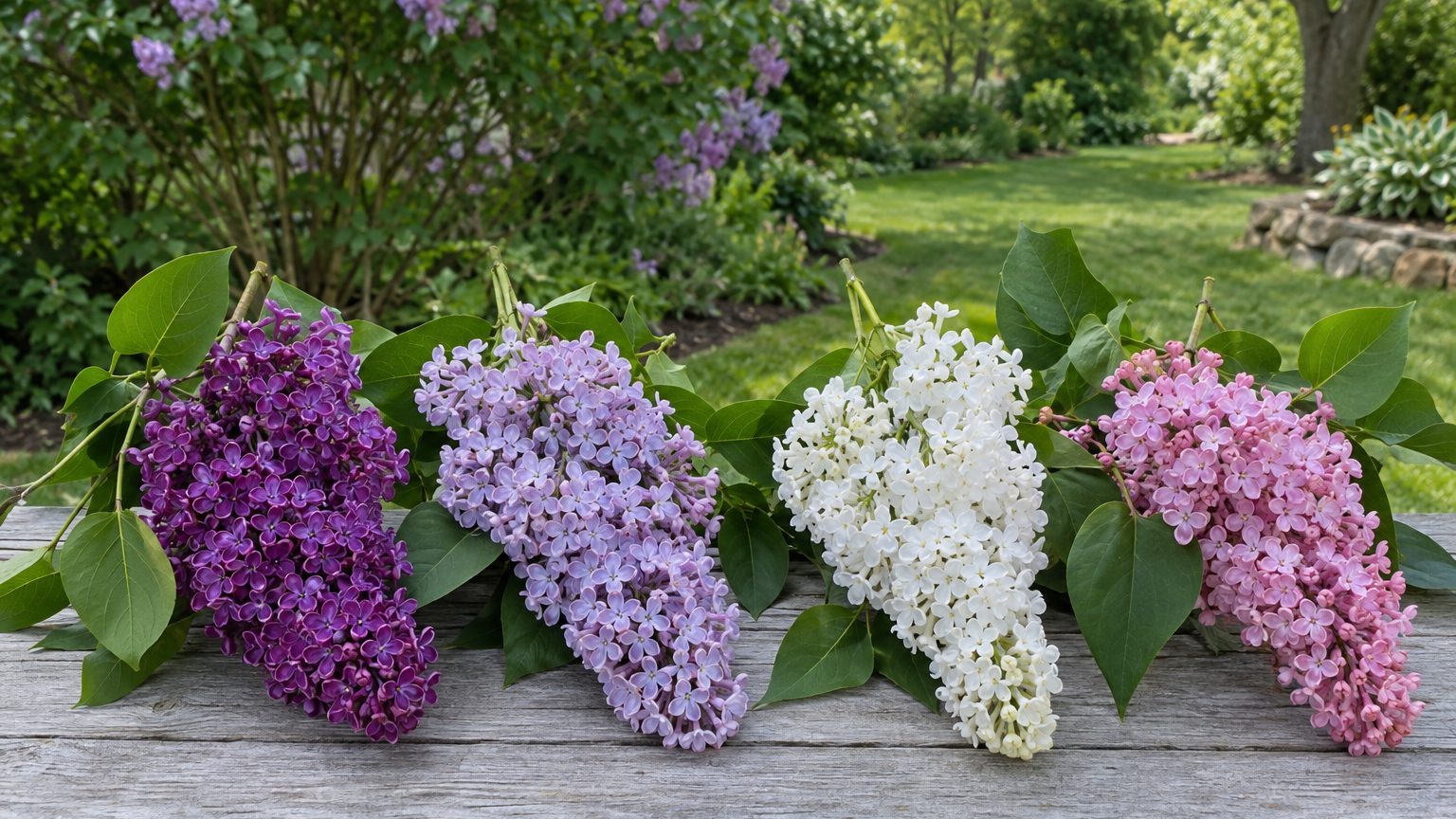
A lilac in full bloom is mostly a fragrance you notice before you see the shrub. In Virginia, the plants that keep delivering that scent year after year are the ones chosen for heat and disease tolerance rather than the old-fashioned types that thrive in the cold north.
Best Lilacs to Grow in Virginia

Meyer lilac, compact cultivars such as Miss Kim, reblooming types, dwarf lilacs and blight-resistant common lilacs are the ones that make sense in Virginia. Lilacs need a cold winter rest to mature their flower buds, so they do best in cold-winter climates and struggle in hot, humid summers.
Virginia spans USDA hardiness zones 5a to 8b, so the mountains give lilacs the chill they want while the warm end of the state tests them. Choosing a tough cultivar narrows that gap.
Meyer Lilac

Syringa meyeri ‘Palibin’ is a medium, dense shrub that resists powdery mildew, the disease that commonly afflicts common lilac in humid weather. Give it full sun, because that is what it needs for maximum flowering, which comes in April.
Miss Kim

This round, compact cultivar has pale lavender-purple flowers and has been around for decades. Its tidy size suits a front yard or a foundation bed, and it is the kind of above-average cultivar worth trying when summer heat is the worry.
Bloomerang Lilacs
The Bloomerang series resists powdery mildew and reblooms. Other varieties with pink or deeper purple blooms also rebloom a bit, sporadically producing flowers into summer and early autumn, though high heat can still hamper that second show.
Dwarf Lilacs
Dwarf lilac species and hybrids handle warm, humid conditions much better than the traditional varieties. Their compact habit makes them an approachable choice for a smaller Virginia yard.
Blight-Resistant Common Lilacs
Common lilac, Syringa vulgaris, is the extremely fragrant shrub most people picture, flowering in mid to late spring. Most of its cultivars are susceptible to blight, which is difficult to control, so buy resistant types whenever you plant new lilacs.
Some cultivars have shown less disease in gardens, including ‘Edith Cavell’, ‘Glory’, ‘Ludwig Spaeth’ and ‘Pink Elizabeth’. Several species have shown resistance too: S. josikaea, S. komarowii, S. microphylla, S. pekinensis and S. reflexa.
Virginia — the year and the numbers
- State
- Virginia
- USDA zones
- 5a-8b
- Last spring frost
- March 20 to April 3
- First fall frost
- November 10 to November 24
- Annual rain
- 47 in
- Lawn zone
- transition-season
- Source
- NOAA NCEI 1991-2020 Climate Normals, 32F freeze probabilities · Virginia Beach
How to Choose a Lilac for a Virginia Garden
Start with the summer your yard actually has, then think about winter. Humidity and heat are what wear lilacs down here, and disease follows close behind.
Bloom times differ by species and run from April through June, so planting several kinds stretches the show over a long season.
| Your situation | What suits it in Virginia | Why |
|---|---|---|
| Hot, humid summers | Meyer lilac ‘Palibin’ | Resists powdery mildew |
| Little time for upkeep | Bloomerang series or blight-resistant cultivars | Disease resistance means fewer problems to manage |
| Small space | Miss Kim or a dwarf lilac | Compact, round habit |
| Cold winters in the mountains | Common lilac | Flower buds need winter chill to bloom fully |
| Mild winters near the coast | Dwarf lilacs and heat-tolerant cultivars | Handle warm conditions better than traditional varieties |
| Long season of bloom | Several species with different flowering times | Flowering runs from April through June |
If you love the classic common lilac but your winters are mild, look for a heat-tolerant cultivar and expect flowering to be less reliable.
Which Lilacs Suit Different Parts of Virginia
Virginia’s winters and summers differ enough from the mountains to the coast that the same lilac will not perform everywhere.
- Blue Ridge and southwest Virginia: Spring arrives weeks later and fall comes sooner, with colder winters than elsewhere. Common lilac gets the winter chill it needs here, so resistant cultivars of it make a good choice.
- Virginia Beach and the coast: This is the mild end of the state, where the last spring freeze usually falls between March 20 and April 3. Winters offer less chill, so lean toward dwarf lilacs, Meyer lilac and heat-tolerant cultivars.
Given the range of lilacs available, let your summer humidity decide how much disease resistance you want.
Lilac Buying Mistakes to Avoid in Virginia
Buying Any Common Lilac
Most common lilac cultivars are susceptible to blight, and Virginia’s damp summers give it room to spread. A shrub that looks fine at the nursery can still decline after planting. Read the plant tag and choose a named resistant cultivar or one of the resistant species.
Ignoring Winter Chill
Common lilac flower buds need a period of winter chill to develop and bloom fully, and warmer winters work against them. In a mild coastal yard, a traditional lilac may leaf out well and flower poorly. Switch to a dwarf lilac or a heat-tolerant cultivar instead.
Not Checking Adult Size
A lilac in a pot tells you little about the shrub it becomes. An overgrown lilac can be cut back hard in March or April, but it will not flower for a few years afterward. Check the mature size first and choose a compact type for tight spots.
Prune lilacs in May or June, right after the flowers fade, because the next buds form on last year’s wood. Pruning in late summer, fall or winter cuts off the next spring’s flowers.
Where to Get Lilac Advice in Virginia
Local extension guidance covers lilacs and other shrubs suited to the state’s landscapes. Your county office can tell you which cultivars hold up in your soil and neighborhood.
- Visit Virginia Cooperative Extension before you shop, to compare cultivars and read about common lilac problems.
- Call your county extension office when a leaf or stem looks wrong, and bring a sample if you can.
- Ask about local conditions in spring, when you are choosing a planting spot in full sun.
Common Questions
How Much Sun Does a Lilac Need in Virginia?
Full sun. A Meyer lilac, for example, needs it for maximum flowering, which comes in April.
What Colors Do Lilacs Come In?
Named cultivars range through lilac, purple, white, pink and a reddish hue. Some varieties offer pink or deeper purple blooms than the classic pale lavender.
Where Should You Plant a Lilac in the Yard?
Plant it where you can enjoy the brief flowering period in spring. After that the shrub fades into the background through summer, so it works well behind showier plants.