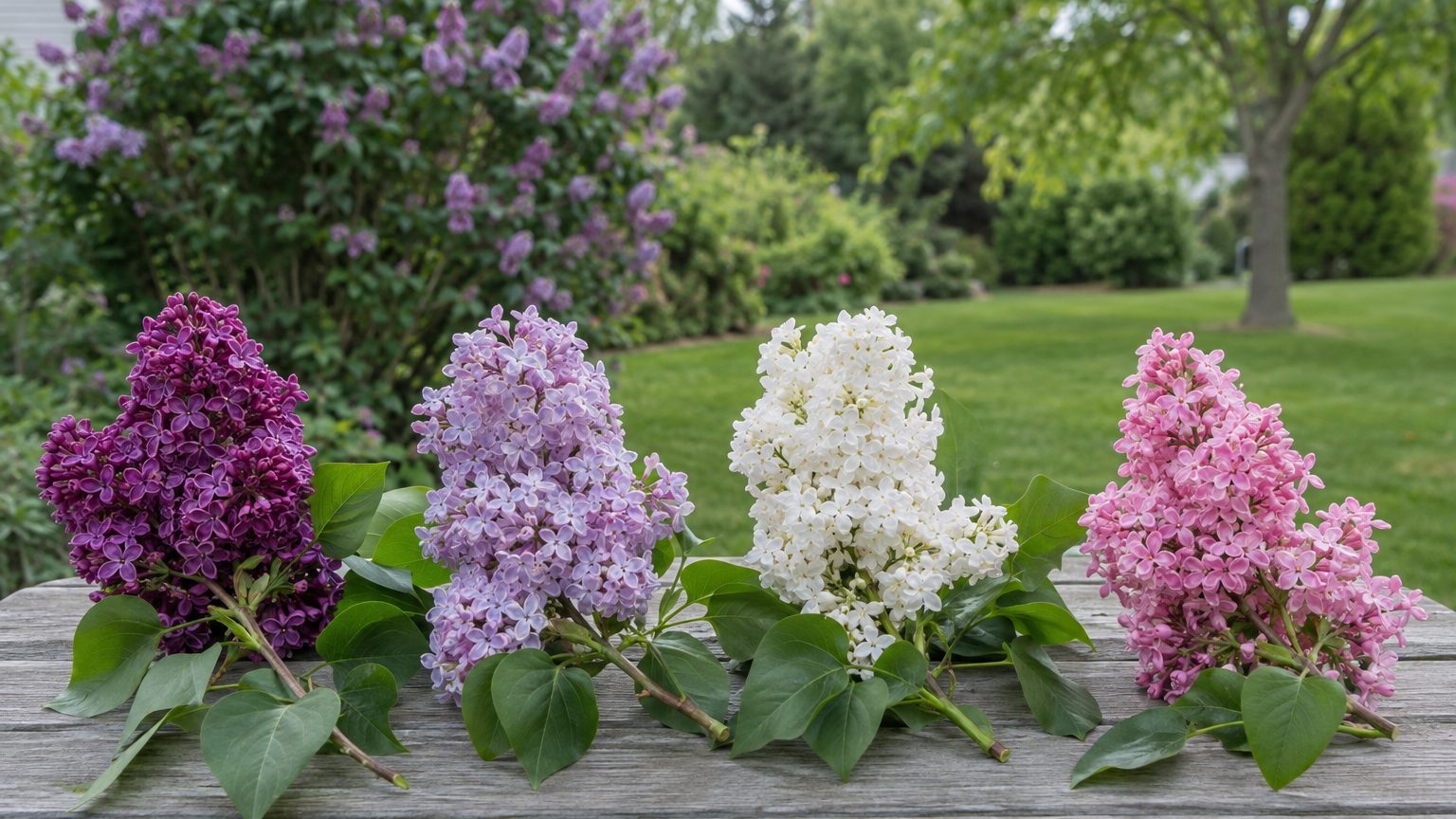
Lilacs bloom in Vermont gardens through May, filling the air with scent along farmhouse walls and old fence lines. The shrub loves a hard winter, so most lilacs suit the state. The choice that matters is which type fits your site, how tall it grows, and how it handles a late frost.
Best Lilacs to Grow in Vermont

Lilacs do well across Vermont because the state is cold in winter. Vermont runs from USDA hardiness zone 3b to 5b, a system based on the average annual extreme minimum temperature. Winter chill is also what matures their flower buds. All of the types below are good fits, with a few differences worth knowing.
Common Lilac

Syringa vulgaris is the lilac most people picture, with fragrant masses of purple, lavender and white flowers in May. It handles Vermont winters without fuss. It does have a weak side, since it can pick up powdery mildew, bacterial blight, scale and borers.
Hyacinthiflora Lilacs

These vigorous hybrids look like French hybrids but bloom earlier. The shrubs are very hardy, but the early flowers are exposed to spring frost. Plant them only where late frosts are less frequent, such as the milder lake shore, and not in a cold hollow.
Bloomerang Series
This series resists powdery mildew and reblooms. Like many dwarf hybrid lilacs, it is more disease-resistant than typical common lilac and matures shorter in height. That makes it a tidy choice for a front yard border or a spot near a walkway.
Less Susceptible Species and Hybrids
Many lilac species exist, and some resistant cultivars have been reported. Other less susceptible species and hybrids are also available. If mildew or borers have troubled old shrubs in your neighborhood, ask a nursery for one of these. Flower colors reach beyond purple, to pink, white, red and a reddish hue.
Vermont — the year and the numbers
- State
- Vermont
- USDA zones
- 3b-5b
- Last spring frost
- April 30 to May 10
- First fall frost
- October 3 to October 13
- Annual rain
- 38 in
- Lawn zone
- cool-season
- Source
- NOAA NCEI 1991-2020 Climate Normals, 32F freeze probabilities · Burlington
How to Choose a Lilac for a Vermont Garden
Start with the problem your site is most likely to give you. Vermont suits lilacs overall, so the choice is mostly about frost timing, disease pressure and the size you want at maturity.
Sun and air movement matter for every type. Lilacs thrive in sunny sites with good air circulation, and that setting also lowers the odds of mildew on leaves.
| Your situation | What suits it in Vermont | Why |
|---|---|---|
| Very cold winter | Common lilac | Vermont’s winter chill supports flower-bud development |
| Hot, humid summer | Bloomerang series or a less susceptible hybrid | Lilacs struggle in humid heat; Bloomerang resists powdery mildew, and other hybrids may be less susceptible |
| Little time for care | Bloomerang series | Powdery mildew resistance means less worry about that common problem |
| Small space | Dwarf hybrids such as the Bloomerang series | They mature shorter in height |
| Need for cold | A cold-hardy lilac suited to your local zone | Winter chill is needed for bud development and maturation |
| Frost-prone spot | Common lilac, not Hyacinthiflora | Early bloomers are caught by May frosts |
An early-blooming shrub can lose flowers to a late freeze, so the frost row deserves a close look if your yard sits low or high on a hillside.
Which Lilacs Suit Different Parts of Vermont
Vermont changes a lot from the lake to the mountains, and frost timing is what shifts the lilac choice.
- Burlington and the Lake Champlain shore: This area is milder than much of the state, with the last spring frost from April 30 to May 10.
- Green Mountains: The season runs substantially shorter, so frosts linger later. Favor common lilacs and hold off on early bloomers.
- Northeast Kingdom: Frost risk is also higher than at the lake. Choose hardy common lilacs, and plant on open, airy ground.
Wherever you live, a frost pocket at the bottom of a slope is a poorer home for an early bloomer than a spot higher up.
Lilac Buying Mistakes to Avoid in Vermont
Ignoring Hardiness
A lilac that is not matched to your zone can fail slowly through winter dieback. Check that the plant is rated for your local USDA hardiness zone, and keep to types listed as hardy for cold-winter regions.
Early Bloomers in Frost Pockets
Hyacinthiflora lilacs are very hardy, but early flowers are the ones May frosts take. The cost is a season with few blooms. Plant them only where late frosts are less frequent, or pick a common lilac instead.
Forgetting Adult Size
A small potted lilac can become a large shrub. A dwarf hybrid matures shorter, so check the label before planting beside a path or window. Prune right after the flowers fade, in May to June, because next year’s buds form in summer. Cutting in late summer, fall or winter removes them.
An overgrown lilac can be cut back hard in March to April. It will not flower for a few years afterward.
Where to Get Lilac Advice in Vermont
University of Vermont Extension answers local plant questions, and your county extension office can point you to a master gardener who knows your area.
- The state extension site has plant advice for Vermont yards, so check it before ordering shrubs.
- A county office can help with a stressed old lilac, a mildew problem or a question about frost in your valley.
Common Questions
When Do Lilacs Bloom in Vermont?
Bloom time runs from April into May, and later species can carry on into June. Hyacinthiflora types come before common lilacs.
What Colors Do Lilacs Come In?
Purple is the classic, but lilacs also come in red, blue, pink, white, mauve and yellow.
Are Common Lilacs Prone to Problems?
They can be. Powdery mildew, bacterial blight, scale and borers are the usual troubles. Resistant cultivars and less susceptible hybrids reduce the risk.