Skip to content
  1. Jan
  2. Feb
  3. Mar
  4. Apr
  5. May
  6. Jun
  7. Jul
  8. Aug
  9. Sep
  10. Oct
  11. Nov
  12. Dec
State
Virginia
USDA zones
5a-8b
Last spring frost
March 20 to April 3
First fall frost
November 10 to November 24
Annual rain
47 in
Lawn zone
transition-season
Source
NOAA NCEI 1991-2020 Climate Normals, 32F freeze probabilities · Virginia Beach

The year in Virginia, from the calendar

  1. Jan—
  2. FebPrune fruit trees
  3. MarSpring bulbs bloom · Feed hydrangeas · Plant hydrangeas · Renew an overgrown lilac · Plant roses
  4. AprSpring bulbs bloom · Plant hydrangeas · Lilacs bloom · Renew an overgrown lilac · Feed roses
  5. MaySpring bulbs bloom · Feed hydrangeas · Lilacs bloom · Prune lilacs · Peonies bloom
  6. JunPrune bigleaf hydrangeas · Prune lilacs · Feed roses · Dethatch (warm-season lawns) · Fertilize the lawn (warm-season lawns)
  7. JulFeed hydrangeas · Prune bigleaf hydrangeas · Feed roses · Fertilize the lawn (warm-season lawns) · Mow
  8. AugSeed the lawn · Feed roses · Aerate · Dethatch · Mow
  9. SepPlant hydrangeas · Plant peonies · Dethatch · Fertilize the lawn · Mow
  10. OctPlant spring bulbs · Plant hydrangeas · Plant peonies · Plant trees · Fertilize the lawn
  11. NovCut back peonies · Plant trees · Mow
  12. DecCut back peonies

From the state frost facts and extension calendars: University of Maryland Extension · Rutgers Cooperative Extension (NJAES) ; University of Kentucky Cooperative Extension · Clemson HGIC factsheet — Hydrangea · University of Tennessee Extension — PB1903 Lawn Maintenance Calendar (2025).

Best Spring Bulbs for Virginia

Best Spring Bulbs for Virginia

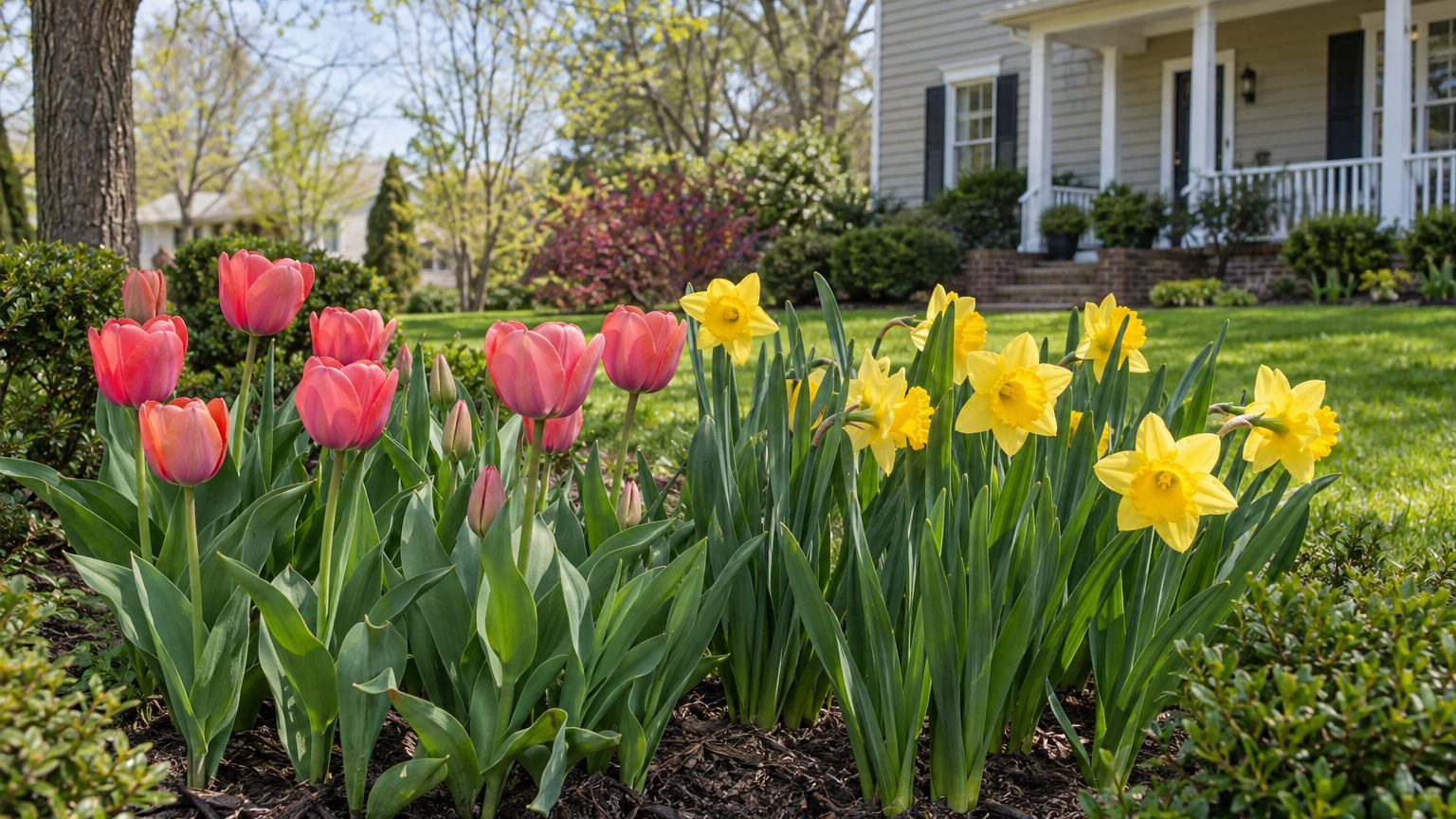
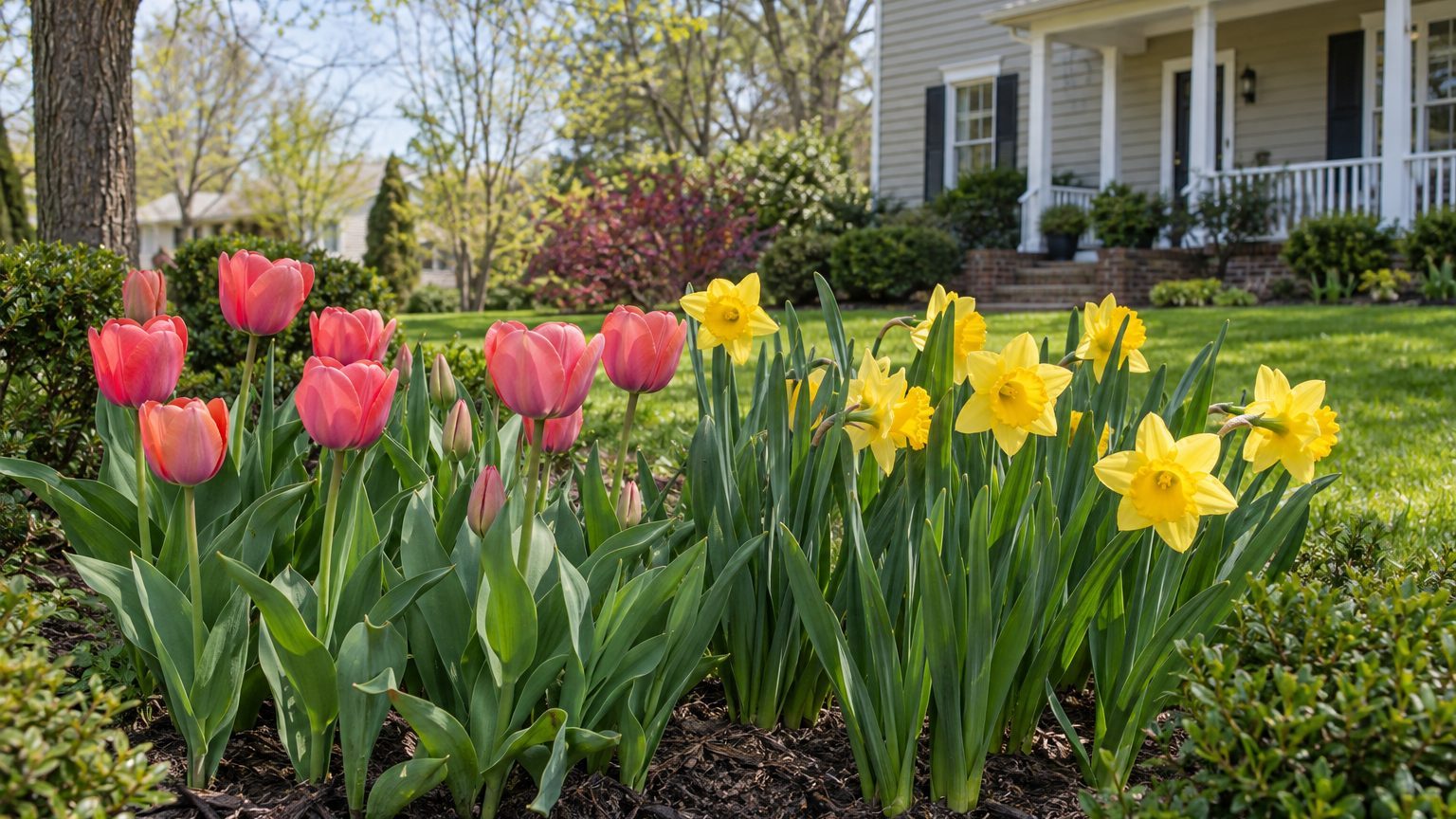
Daffodils opening along a Virginia fence line tell you the fall planting paid off. Daffodils, alliums, hyacinths, scilla and fritillaria are the bulbs that settle in across the state’s varied winters, while tulips and crocus need more protection from hungry wildlife.

Best Spring Bulbs to Grow in Virginia

Healthy spring bulbs in bloom

Daffodils are the dependable core of a Virginia bulb planting. The others earn a place because deer and squirrels leave them alone, or because they ask little of the winter. Virginia covers USDA hardiness zones 5a to 8b, and these bulbs cope with that spread.

Daffodils

Daffodils are hardy perennial bulbs that return year after year, and deer and rabbits pass them by. They also last longer than tulips, which makes them the more reliable choice for a yard you do not want to replant.

They suit naturalizing, meaning clumps scattered through a lawn edge or under trees. Planted that way, they never have to be dug.

Alliums

Alliums are ornamental onions, and like other spring-flowering bulbs, they need the cold of winter to bloom. That makes them forgiving if a winter runs mild. Deer tend to ignore them, so they work in beds that wildlife visits regularly.

Hyacinths

Hyacinths are another bulb that deer and squirrels leave alone. Where a winter fails to give enough cold, chilling the bulbs in the refrigerator before planting makes up the difference.

Scilla

Scilla is on the list of bulbs that deer and squirrels do not like. It is a sensible filler for the edges of beds where animals browse, and it asks for the same fall planting as everything else here.

Fritillaria

Fritillaria belongs to the same group of animal-resistant bulbs. If your garden is visited by deer or squirrels, it offers a different shape from daffodils without becoming a snack.

Tulips

Tulips are lovely but often short-lived in the garden, and voles, squirrels, rabbits and deer eat them. Plant them where you can watch over them, such as near the house or in a container, and expect to refresh them over time.

How to Choose Spring Bulbs for Your Virginia Garden

Start with what visits your yard and how much effort you want to spend. A bulb that deer ignore and that comes back reliably saves more work than a showier one that needs replacing.

Winter cold matters too. Most spring-flowering bulbs need about 12 to 16 weeks of cold to flower; where winters are too mild to give it, tulips and hyacinths are chilled in the refrigerator before planting.

Your situation What suits it in Virginia Why
Deer, squirrels or rabbits visit Daffodils, hyacinths, alliums, fritillaria, scilla Animals tend to leave these alone
Cold winter at higher elevations Daffodils A hardy bulb that overwinters and returns each year
Mild winter near the coast Chilled alliums, tulips, and hyacinths Alliums need a chill period, so chill them in the refrigerator before planting like the others
Little time for upkeep Daffodils They naturalize and never have to be dug
Bulbs still in the bag Plant them anyway Planting late beats storing them as long as the ground can be dug

Tulips and crocus are the ones to place carefully, since animals eat them and tulips fade sooner than daffodils. They still earn a spot near the door where you can protect them.

Which Spring Bulbs Suit Different Parts of Virginia

Virginia stretches from the Atlantic shore to the mountains, and the same bulb does not behave identically at both ends.

  • Blue Ridge and southwest Virginia: Spring arrives weeks later here and fall arrives earlier, so the soil cools sooner. Plant toward the start of the fall window and lean on daffodils, which are hardy enough for the cold.
  • Virginia Beach and the coast: This is the mild end of the state. Wait for the soil to cool before planting, and if winters turn out too mild, chill tulips, hyacinths, and alliums in the refrigerator first.

Between the two, the choice shifts gradually, so judge by how cold your own yard gets and how soon the ground cools in fall.

Spring Bulb Buying Mistakes to Avoid in Virginia

Counting on Tulips to Return

Tulips are often short-lived, and voles, squirrels, rabbits and deer eat them. Buying a large batch for a wide-open bed can mean a thin show within a few seasons. Put tulips in protected spots, and fill the open areas with daffodils.

Planting into Warm Soil

Bulbs set out while the soil is still above about 60°F can sprout in the fall. Too late and roots lack time to form before the ground freezes. Wait until the soil has cooled, which happens sooner in the mountains than on the coast.

Holding Bulbs Over Winter

A bulb left in the bag until next year dries out and loses ground. Planting late is better than storing, so put leftovers in the ground as long as you can still dig. They may bloom a little behind the others, but they will bloom.

Where to Get Spring Bulb Advice in Virginia

Local help is easy to reach. Virginia Cooperative Extension publishes planting guidance for the state, and your county office knows how your own soil and winters behave.

  • Visit the state extension site before you buy, so you can match bulbs to your zone.
  • Call your county extension office when you are ready to order bulbs.
  • Ask a county master gardener about local deer and vole pressure before planting.

Common Questions

When Do Spring Bulbs Bloom in Virginia?

Tulips and daffodils flower in March, April and May, and bloom can start as early as February. Your own bloom dates shift a little with local warmth.

When Should You Remove the Leaves After Bloom?

Leave them on the plant until they turn brown, and remove only the faded flowers. The leaves feed the bulb for next year’s flowers.

Is September Too Early to Plant Spring Bulbs in Virginia?

October is the target month, and planting can also be done in September or November. In practice, the timing depends on how fast the soil cools, so you may be planting from mid-September to late November.
When Do Tulips and Daffodils Bloom in Virginia?

When Do Tulips and Daffodils Bloom in Virginia?

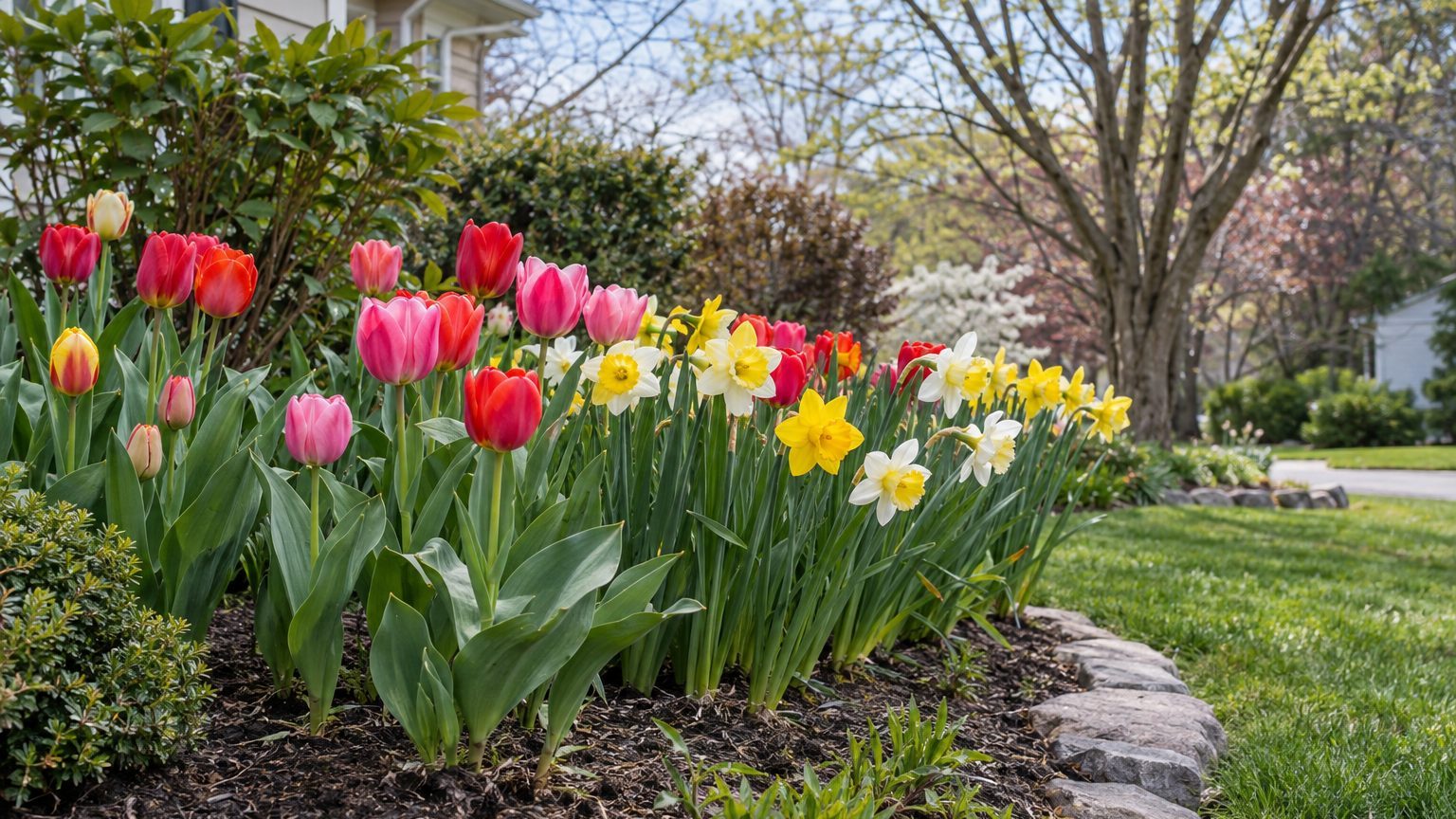
Daffodil spears push through leaf litter, and soon the tulips color up behind them. In Virginia, that spring show runs across several months, and where you garden shifts it a good deal. Knowing the usual window, and what moves it, helps you plan color and decide when to put the camera away.

When Do Tulips and Daffodils Bloom in Virginia?

When Do Tulips and Daffodils Bloom in Virginia?

Tulips and daffodils bloom in Virginia from March through May, and in a mild year the first flowers can open in February. Bloom follows how fast spring warms the ground and air, so a cold snap holds buds back and a warm spell pushes them forward.

Winter does the groundwork. Bulbs planted the previous fall need a long stretch of cold before they can flower, and the spring warm-up then sets the day the buds open.

Bulb When it blooms in Virginia What sets the timing
Daffodils March to May, with a few opening in February Spring warming after a cold winter
Tulips March to May, with a few opening in February Spring warming after a cold winter
Alliums Near the end of the spring bulb season Needs a winter chill period, and the season’s warmth then decides

Spring bulbs bloom in a long succession, starting with snowdrops and winter aconites and finishing with alliums, also called ornamental onions. Crocus and hyacinths sit between those ends, and tulip varieties spread across the season too, which is why a single planting of mixed types can stay colorful for a long stretch. Virginia spans USDA hardiness zones 5a to 8b, so the same bulb can open at quite different moments depending on your yard.

How to Tell Your Bulbs Are About to Bloom

Bulbs announce themselves in stages, and each stage tells you something you can act on.

  • Green tips poking through the soil mean the roots did their work over winter, so mark the spot and keep digging tools away from it.
  • Leaves that lengthen and thicken show the bulb is drawing on its stored energy, which is the moment to clear fallen leaves and mulch from the planting bed.
  • A bud rising between the leaves means flowers are close, so protect it from foot traffic and from rabbits and deer if they visit your yard.
  • A bud that swells and begins to show color is days from opening, which makes it a good time to plan any cut flowers you want indoors.
  • A flower stalk stretching taller each day tells you the warm spell is working, and a cold night can briefly pause it without harming the bulb.

If nothing appears where you planted, check the spot before assuming failure, because animals sometimes dig up tulips and crocus.

What to Do After Tulips and Daffodils Bloom in Virginia

Snip off the faded flowers and leave everything else alone. The leaves keep feeding the bulb for next year’s flowers, so let them stay on the plant until they turn yellow and then brown. Never cut them green, and never tie or braid them, because bundled leaves catch less light.

Plan for the two bulbs to behave differently over the years. Tulips are often short-lived in the garden, while daffodils last longer and are the more reliable perennial bulb. Voles, squirrels, rabbits and deer eat tulips and crocus, and they leave daffodils alone, which is another reason daffodils tend to hold their ground.

When it is time to refill gaps, plant spring bulbs in fall, once the soil has cooled down. October is the best month in Virginia, with September and November still workable. That timing gives roots a chance to form before the ground freezes, without letting the bulbs sprout too early.

How Bloom Time Shifts Across Virginia

Elevation and distance from the ocean move bloom dates more than anything else in the state, and the shift runs from the coast toward the mountains.

  • Virginia Beach and the Hampton Roads coast: This is the mild end of the state, so bulbs here wake first and flowers open ahead of the rest of Virginia.
  • The Blue Ridge: Spring arrives later on the ridges and in the high valleys, so the same daffodil that is fading near the coast may only be opening here.
  • Southwest Virginia: Winters are colder and spring comes later, so bloom lands toward the back of the March to May window and sometimes spills past it.

A neighbor an hour or so away at a different elevation can be a useful guide, because watching their bulbs gives you a preview of your own.

Where to Get Bulb Advice in Virginia

Virginia Cooperative Extension offers research-based guidance on bulbs, and its county offices know the local conditions on your side of the state.

  • The Virginia Cooperative Extension website carries gardening guides for homeowners, so check it before you buy bulbs in late summer or early fall.
  • Your county extension office can answer questions about soil, pests and varieties, and a visit in fall helps you plant at the right time.

Common Questions

Do You Need to Chill Tulips and Hyacinths Before Planting?

Most spring-flowering bulbs need about 12 to 16 weeks of cold to flower. Where winters are too mild to supply it, tulips and hyacinths are chilled in the refrigerator before planting. If you garden on the coast and winters feel short, that step can be worth taking.

What If Bulbs Are Still in the Bag After October?

Plant them as long as the ground can be dug. A bulb planted late is a better bet than one stored over the winter, because a stored bulb dries out and loses its chance to bloom.

Which Bulbs Can You Plant If Deer or Squirrels Visit Your Yard?

Daffodils are the dependable choice, since animals leave them alone. Hyacinth, allium, fritillaria and scilla are also ones deer and squirrels tend to pass by, while tulips and crocus are the ones they go after.

When to Plant Tulips and Daffodils in Virginia

When to Plant Tulips and Daffodils in Virginia

Daffodil leaves poking through cold ground and tulip cups opening in spring begin with a quiet job done months earlier, when the soil turned cool. In Virginia, that job belongs to autumn, and the exact timing depends on where you garden. These are the months, the bulbs worth planting, and the habits that keep them coming back.

When to Plant Tulips and Daffodils in Virginia

When to Plant Tulips and Daffodils in Virginia

October is the month for planting tulips and daffodils in Virginia, and the job can also be done in September or November if your soil cools early or late. At Virginia Beach, the first fall frost tends to arrive between November 10 and November 24, and the state spans USDA hardiness zones 5a to 8b. Here is the bulbs’ year.

  • In September, shop while the selection is full, and choose bulbs that feel firm and heavy for their size. Soft or moldy ones rarely recover.
  • In late summer and early fall, if winter stays mild where you garden, tulips and hyacinths go into the refrigerator before planting so they get the cold they would otherwise miss.
  • In October, plant once the soil has cooled down from its summer warmth. That is early enough for roots to form before the ground freezes and late enough that the bulbs do not sprout in fall.
  • After planting, and again once cold weather settles in, spread a layer of mulch over the bed to even out soil temperature through winter.
  • By late winter, green tips push through the mulch, and flowers open from March to May, with the earliest sometimes showing in February.

Bulbs cannot read a calendar, only the soil, so a warm October may call for waiting a little, while a cool one lets you start sooner.

Which Spring Bulbs Do Best in Virginia?

Daffodils are the most dependable choice here. They come back year after year and animals leave them alone. Alliums, crocus, and hyacinths also grow well, since Virginia’s winters supply the cold they need to flower. Tulips succeed too, but they take more care.

The real trouble in Virginia yards is wildlife. Voles, squirrels, rabbits, and deer eat tulips and crocus, which can leave a bed empty by spring.

Bulb type How it does in Virginia Why
Daffodils Reliable, returns for years Hardy perennial bulb that animals skip
Tulips Lovely but often short-lived Eaten by voles, squirrels, rabbits, and deer
Crocus Fine where animals are kept off Eaten by voles, squirrels, rabbits, and deer
Hyacinths Good, often left alone by deer Chilled first where winters run mild
Alliums Dependable, a good pick for deer country Alliums need the cold of winter to bloom

If deer or squirrels visit your yard, lean on daffodils, hyacinths, and alliums, and treat tulips as a seasonal pleasure rather than a permanent resident. Fritillaria and scilla are also bulbs deer tend to pass over.

When to Plant, Chill and Care for Spring Bulbs in Virginia

The bulb year has only a few jobs, and each one has its moment. Planting follows the soil. Chilling matters only where winters are too gentle. Leaf care takes place in spring, after the flowers have faded.

Task Best timing in Virginia Why then
Plant October, though September and November also work Soil has cooled, so roots settle before freezing
Chill tulips and hyacinths In the refrigerator before planting, only where winter is mild Most spring bulbs need about 12 to 16 weeks of cold to flower
Enjoy the bloom March to May, sometimes February Bulbs open in a long run through spring
Leave the leaves Until they turn yellow to brown Green leaves feed the bulb for next year

Remove only the faded flowers, never the leaves while they are green. A bulb still in the bag is better planted late than stored over the winter, so put it in whenever the ground can be dug.

How Bulb Planting Time Changes Across Virginia

Virginia stretches from the ocean to the mountains, and soil cools on different schedules along the way. Plant earlier where fall arrives sooner and later where it lingers.

  • Blue Ridge and southwest Virginia: Fall comes sooner and winter is colder here, so start planting early in the window, even in September when the soil has cooled. Bulbs get settled well ahead of hard freezes.
  • Virginia Beach and the Hampton Roads coast: This is the mild end of the state, so lean toward late October or November. Waiting keeps bulbs from sprouting early, and tulips and hyacinths here are the ones most likely to need a stint in the refrigerator.

Between those ends, trust a soil thermometer more than the date, and plant when it shows the soil has turned reliably cool.

Where to Get Bulb Advice in Virginia

Virginia Cooperative Extension answers local questions about bulbs, and your county office can look at problems up close.

  • The extension website has guides on planting and bulb care, worth a read in late summer before you buy.
  • Your county extension office can run a soil test and help diagnose a bed where bulbs fail, so take a sample before planting.
  • Master gardeners connected with your county office can suggest bulbs suited to your neighborhood, so ask early in September and plant when the soil cools.

Common Questions

Which Way Up Do Tulip and Daffodil Bulbs Go?

Pointed end up, flat root end down. If a bulb’s orientation is unclear, plant it on its side, and the shoot will find its way to the surface.

Do Daffodils Need to Be Dug Up and Divided?

No. Daffodils never have to be dug, and they are good for naturalizing, which means scattering clumps through a lawn edge or bed. Lift them only if flowering thins out and the clump has grown crowded.

What Kind of Soil Do Spring Bulbs Like?

Loose, well-drained soil, because bulbs rot where water stands. Work compost into heavy clay before planting, or raise the bed slightly. A soil test through your county extension office shows whether anything else is needed.

Best Grass Seed for Virginia

Best Grass Seed for Virginia

Thin, patchy turf in late summer sends many Virginia homeowners shopping for seed, and the aisle offers more choices than the climate allows. Virginia sits where cool-season and warm-season lawn grasses both struggle a little, so the right seed depends on your part of the state and how much work you want to do. Tall fescue suits most yards.

Which Grass Grows Best in Virginia?

Virginia is transition-zone country, so cool-season grasses carry most lawns, with warm-season grasses filling in on hot, sunny, low ground. Across the state, USDA hardiness zones run from 5a to 8b, but that winter-minimum range alone does not decide which lawn grass will thrive. The main choices are tall fescue, Kentucky bluegrass, bermudagrass and zoysiagrass.

Tall Fescue

Tall fescue is the workhorse for Virginia yards. It is a cool-season grass with deep roots, so it rides out summer heat better than other cool-season turf, and it stays green through most of the year.

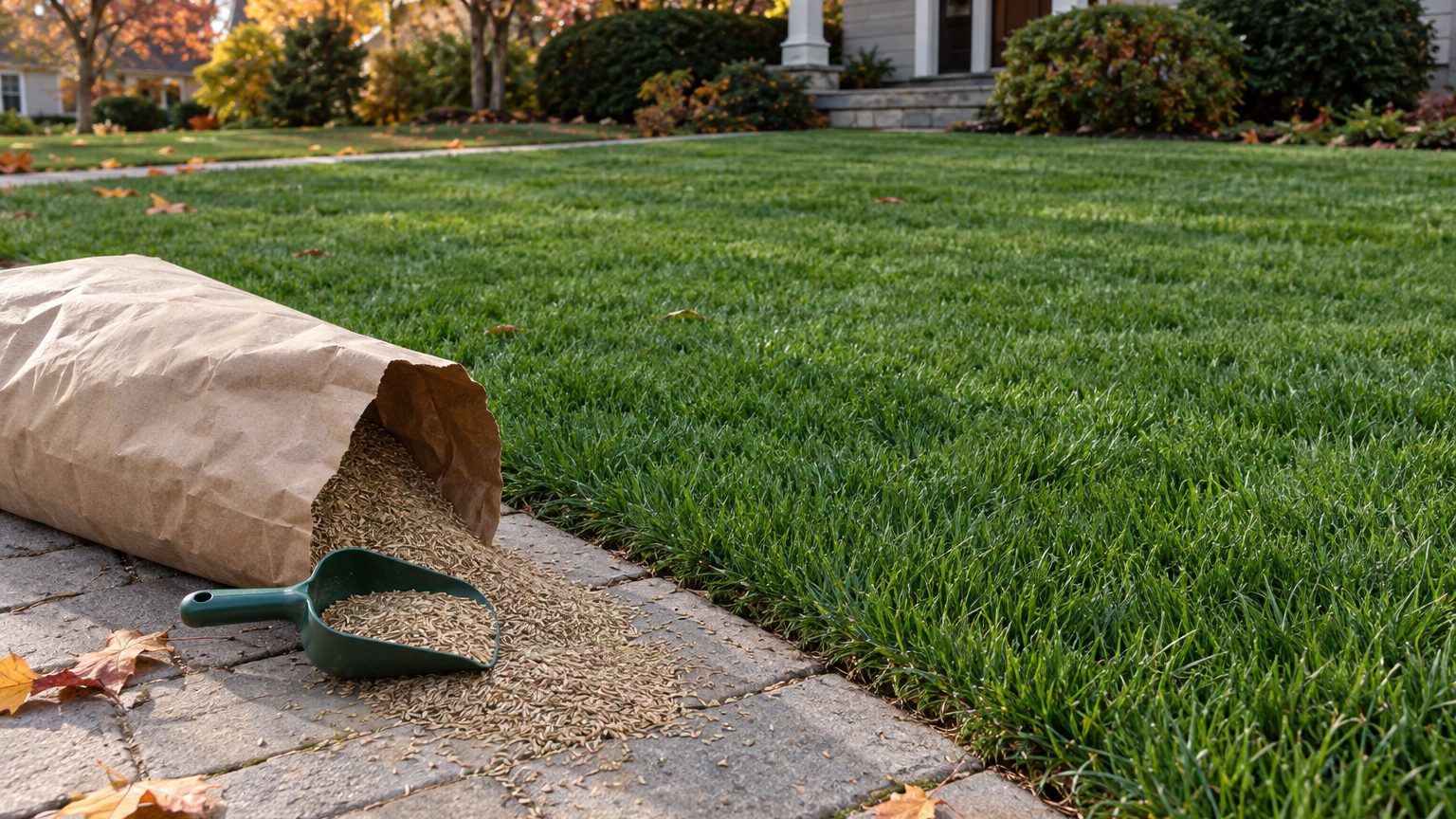
Seed it in August, and if you miss that, September still works. Feed it in early spring and fall, never in summer, when the grass is stressed and fertilizer only pushes weak growth.

Kentucky Bluegrass

Kentucky bluegrass belongs on cooler, higher ground, where summers ease off and the grass spreads to repair itself. In the heat of the Piedmont and the coast it browns and thins, and it asks for more water to hold its color.

Many homeowners get a good result by blending a little bluegrass into a tall fescue lawn in the higher country, rather than planting it alone.

Bermudagrass

Bermudagrass loves heat and full sun, and it can be started from seed or sod. It turns tan after the first hard frosts and stays dormant through winter, which some neighbors enjoy and others find frustrating.

Seed it in May, with June as a fallback. It crowds out weeds well, but it will creep into flower beds and needs plenty of sun to stay dense.

Zoysiagrass

Zoysiagrass makes a thick, soft carpet that handles heat and foot traffic, but it grows slowly and is mostly sold as sod or plugs rather than seed. That slow growth means it fills in gradually.

Like bermudagrass, it goes dormant and brown in winter, so expect a straw-colored lawn from late fall into spring.

How to Choose Grass Seed for a Virginia Yard

Start with sunlight, since it narrows the field fastest. Yards with at least part shade lean toward tall fescue, while open, baking lawns with little shade give bermudagrass or zoysiagrass a real shot at success.

Then think about how you live in the yard. Kids and dogs wear on turf, so a dense grass that recovers quickly helps. A willingness to water in June, July and August also widens your options.

Grass Season Seeding or planting Suits
Tall fescue Cool Seed in August, September as a fallback Sun to part shade, busy yards, most of the state
Kentucky bluegrass Cool Seed in August, September as a fallback Cooler, higher ground with regular watering
Bermudagrass Warm Seed in May, June as a fallback, or lay sod in May through July Full sun, heavy wear, owners who mow often
Zoysiagrass Warm Sod or plugs, laid in May through July Sunny yards where a dense, slow-growing lawn appeals

If winter color matters, tall fescue is the better fit. Warm-season lawns reward you with heat tolerance in summer, but they ask for sun, patience and a lawn mower that sees regular use from April through October.

Which Grasses Grow Where in Virginia

Virginia’s lawn map changes with elevation and distance from the water, and seed choices shift along with it.

  • Blue Ridge and southwest Virginia: Spring arrives weeks later and fall comes earlier, so cool-season grasses do the job. Tall fescue is the main choice, with Kentucky bluegrass doing well on the cooler, higher ground.
  • Shenandoah Valley and the Piedmont: This is the heart of the transition zone. Tall fescue carries most lawns, and warm-season grasses work in the sunniest, hottest spots near cities like Richmond.
  • Virginia Beach and Hampton Roads: The mild coast stretches the growing season, so bermudagrass and zoysiagrass feel at home, though tall fescue still works in shadier yards.

When in doubt, tilt toward tall fescue inland and consider warm-season grasses as you near the water.

Grass Seed Mistakes to Avoid in Virginia

Planting the Wrong Grass for the Spot

Bermudagrass thins in a shaded yard, and tall fescue struggles in a baking, treeless lot by midsummer. Match the grass to the light your yard actually gets, not to what looks good on the bag.

Seeding at the Wrong Time

Cool-season seed does best in August, when warm soil sprouts it quickly and cooler weather follows as the seedlings root. Spring seeding runs into crabgrass season, and a preventer applied in March can also stop your new grass from sprouting. Warm-season seed belongs in May.

Burying Seed or Skipping Contact

Seed needs light and firm contact with soil. Cover it with no more than 0.25 inch of soil or compost, then press it down with a roller or your feet. Thick piles of seed crowd one another and fail, so spread evenly and follow the rate on the bag.

Where to Get Lawn Advice in Virginia

Local soil, shade and elevation vary widely across Virginia, and a little local guidance saves a lot of reseeding.

  • Virginia Cooperative Extension publishes lawn guides for the state, and they are worth reading before you buy seed.
  • Your county extension office can test your soil and answer questions about your yard, and a visit in summer leaves time to plan for August seeding.
  • Take a soil sample to the office before you buy seed, so you know what the lawn needs.

Common Questions

When Should You Put Down Crabgrass Preventer in Virginia?

March is the target. February also works, as do April and May if March passes. Skip it on any spot you plan to seed.

When Should You Aerate and Dethatch a Virginia Lawn?

For cool-season lawns, core aeration works best in August, with September as a fallback, and dethatching in August or September. Warm-season lawns are dethatched in May and June, with April as a fallback.

When Should You Stop Mowing a Virginia Lawn?

Tall fescue and other cool-season grasses keep growing, so mowing continues through November. Bermudagrass and zoysiagrass slow down earlier, and mowing for them wraps up in October.

Lawn Problems and Solutions in Virginia

Lawn Problems and Solutions in Virginia

Tan rings spreading across the grass on a humid July morning, crabgrass sprawling along the driveway, a spongy lawn that sheds water: Virginia lawns show trouble in familiar ways. The state grows cool-season tall fescue alongside warm-season bermuda and zoysia, and each has its own weak spots. Once you know the sign, the season and the fix, most problems stay small.

Lawn Pests and Diseases in Virginia

Crabgrass

Crabgrass — Lawn Problems and Solutions in Virginia

Coarse, pale green blades fan out flat from a central point, usually along pavement and in thin spots. It dies with the first hard frost and leaves bare soil that invites more seedlings the next year.

A pre-emergence preventer goes down in March, and it also works in February, April or May if spring runs odd. Dense turf is the lasting fix, since seedlings struggle without light.

Brown Patch

Roundish tan or brown patches, sometimes ringed with a dark, smoky edge on dewy mornings, appear on tall fescue in hot, muggy weather. The blades die, but the crowns often survive and recover.

Water early in the day during June, July and August so the blades dry out by afternoon. Wet grass overnight is what feeds the fungus.

White Grubs

Irregular patches turn brown in late summer and feel loose underfoot. Tug the turf and it peels back like a carpet, with white, C-shaped grubs curled in the soil. Crows, raccoons and skunks tearing at the lawn can point to grubs as well.

Treatment depends on how many grubs you find, so ask your county extension office before treating.

Thick Thatch Layer

Thatch is the tight, spongy mat of stems and roots between the green blades and the soil. A layer up to 1/2 inch is healthy. Above that, dethatch or core aerate.

On tall fescue, dethatching works in August and September. Bermuda and zoysia want it in May and June, and April also works.

How to Tell Which Lawn Problem You Have

Start with the shape of the damage, then check the season and whether the grass pulls up. Diagnosis rarely rests on a clue in isolation; consider the clues together.

Get down on your knees, tug a handful of blades, and look at the soil underneath. That quick check can narrow the diagnosis.

Sign Likely cause When to act
Coarse, pale clumps spreading flat in summer sun Crabgrass Preventer in March
Spongy turf, water beading and running off Heavy thatch August or September on fescue
Thin, bare grass in open sun after summer Stressed tall fescue Aerate and overseed in August

Tan rings in muggy weather that stay put when you tug the blades point to brown patch. Loose turf that rolls back like a rug, plus animals digging at it, points to grubs.

Where Lawn Problems Are Worst in Virginia

Virginia stretches from ocean to mountains, and the problems shift with it.

  • Virginia Beach and Hampton Roads: The mildest part of the state, so crabgrass and warm-weather fungus get a long run. Warm-season grasses such as zoysia and bermuda do well here.
  • Blue Ridge: Spring comes weeks later and fall arrives sooner, so preventer and seeding timing slide with it. Tall fescue is more at home, with less summer disease stress.
  • Southwest Virginia: Cold arrives early, which gives late-summer seed less time to root. Plan on seeding toward the front of the window.

The Piedmont, including Richmond, sits between these extremes, so use the middle of each timing window.

Lawn Care Mistakes That Invite Problems in Virginia

Mowing Too Short

Scalped grass has less leaf to feed itself, and bare soil between blades gives crabgrass its opening. Mow regularly through the growing season, which runs March to November for tall fescue and April to October for bermuda and zoysia. Raise the deck, keep the blade sharp, and avoid removing too much height at once.

Sprinkling Lightly

A quick daily splash keeps roots shallow and the surface damp, which is just what brown patch likes. Soak the lawn deeply and less often during June, July and August, and let the top of the soil dry between waterings.

Feeding Fescue in Summer

Nitrogen in hot weather pushes soft growth that disease attacks first. Never fertilize tall fescue in summer. Feed it in March, September and October instead, and April works as a fallback.

Bermuda and zoysia are the reverse, and they eat best in May, June and July.

Where to Get Lawn Advice in Virginia

Lawn trouble is easier to name with someone who has seen the soil and the weather you deal with. Virginia Cooperative Extension is the state’s land-grant service, with offices serving local communities.

  • The extension website has lawn care publications you can read before a problem gets worse, such as when patches first appear.
  • Your county extension office can answer questions about your own yard, including soil testing, and is worth calling before you buy a treatment.

Common Questions

Can You Grow Bermuda or Zoysia in Virginia?

Yes, both are grown in the state, mostly in the warmer east and south. Seed warm-season grass in May, with June as a fallback. Sod goes down in May, and June and July also work.

Is Virginia One Hardiness Zone?

No. In the USDA system, Virginia spans zones 5a to 8b, based on average annual extreme minimum temperature. Mountain areas sit at the colder end and the coast at the warmer end, so check your own location.

Does the Last Frost Date Tell You When to Seed?

Not by itself. Frost date marks the risk of a freeze, and grass growth follows soil warmth and the grass type. For tall fescue, late summer is the seeding time, with August best and September as a fallback.

Virginia Lawn Care Schedule, Month by Month

Virginia Lawn Care Schedule, Month by Month

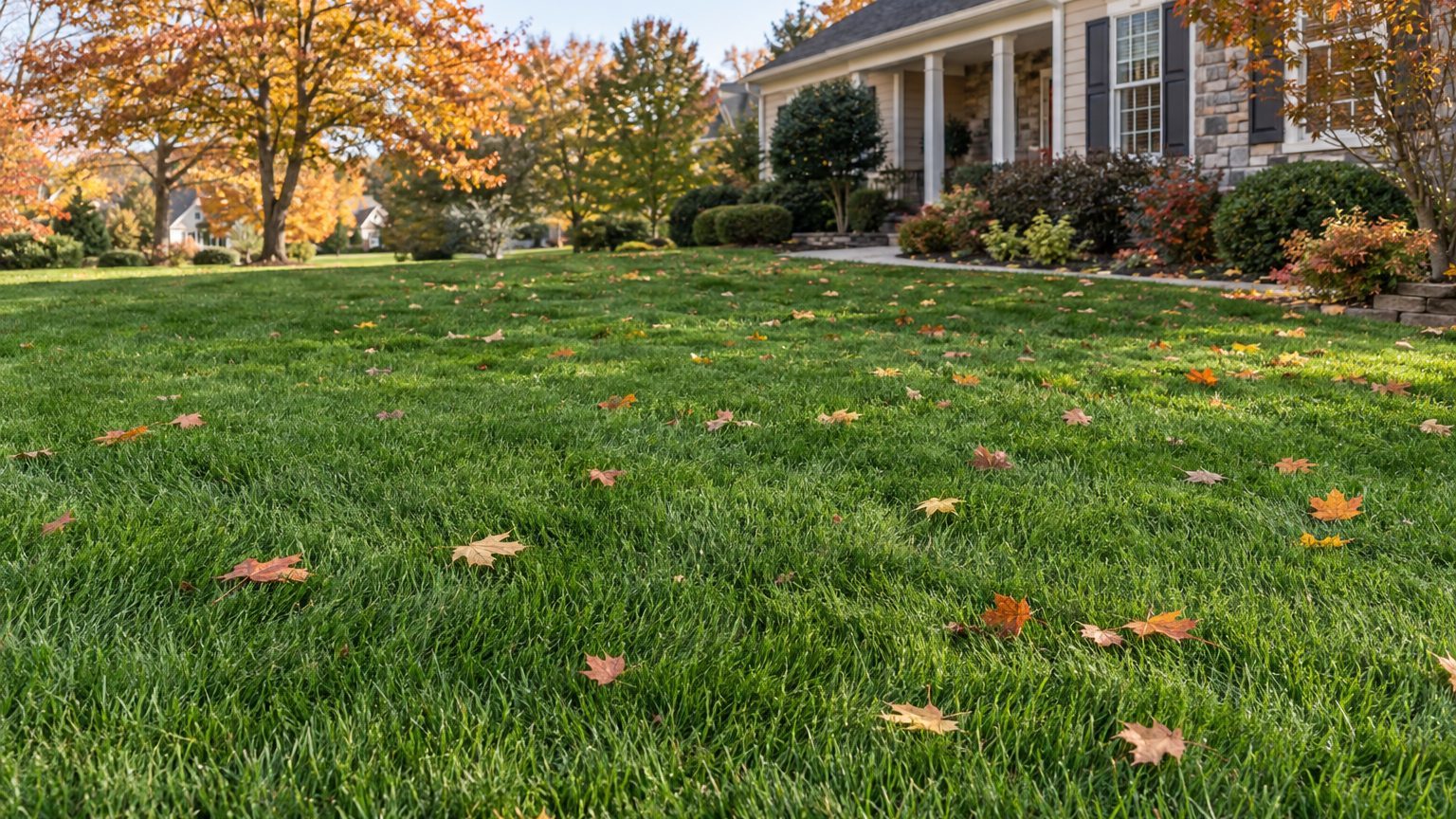
Tall fescue greens up in early spring while the bermudagrass next door stays straw-brown into May. That gap drives the whole Virginia lawn schedule.

What to Do Each Month in a Virginia Lawn

Lawn in Virginia

Most Virginia lawns are cool-season grass, usually tall fescue, with bermuda and zoysia more common in the warmer parts of the state. Tasks below apply to cool-season turf unless a line names warm-season grass.

Month In the lawn
January Rest. The grass is dormant, so stay off it when it is frozen and let it sleep.
February Still quiet. In a mild spell, crabgrass preventer also works now, before the soil wakes up.
March Put down crabgrass preventer and feed tall fescue as it starts growing again. Virginia law says lawn maintenance fertilizer sold in the state contains no phosphorus, which is reserved for new lawns and repairs. Start mowing as growth picks up.
April Keep mowing. If March slipped by, preventer and fertilizer still work now. Warm-season lawns begin growing, so start mowing them and dethatch them if the thatch is thick.
May Warm-season month. Seed or lay sod bermuda and zoysia, dethatch them, and start feeding them. Preventer still works if you are late.
June Water deeply as heat builds. Keep feeding and dethatching warm-season grass, and if you missed May, you can still seed or sod it.
July Water through dry spells and keep mowing. Warm-season lawns take their last feeding of the season now, while fescue gets no fertilizer in summer. Sod still works for warm-season grass.
August Core aerate, dethatch and seed tall fescue, since late summer gives new seed warm soil and falling heat. Keep watering the new seed.
September Feed the fescue and keep mowing. If August got away from you, aerating, dethatching and overseeding still work now.
October Feed again for root growth before dormancy and keep mowing. Warm-season grass slows down and heads toward its tan winter color.
November Make the final mows of the year for cool-season grass while it still grows, and keep fallen leaves from smothering it.
December Rest. The lawn is dormant, and there is nothing to do but watch for matted leaves.

Water only when rain falls short, and aim for deep soakings rather than daily sprinkles. Roots follow the water, so shallow watering leaves summer grass weak.

When Does the Lawn Season Start and End in Virginia?

Growth follows soil warmth and grass type, not the calendar. Cool-season seed germinates when soil sits at 50 to 65 °F, but Virginia fescue is seeded in late summer so young roots are not exposed to the next summer’s heat. Warm-season seed needs soil at 65 to 70 °F, so bermuda and zoysia start later and stop sooner.

Frost dates matter mainly for young seedlings. In Virginia Beach, the last spring freeze usually falls between March 20 and April 3, and a seedling that sprouts before then can be nipped.

The first fall freeze in Virginia Beach usually comes between November 10 and November 24. Fall-seeded fescue has the weeks before that to root in. Inland and in the mountains, both dates shift, so treat these as the mild end of the state.

How the Lawn Calendar Shifts Across Virginia

Elevation and distance from the Atlantic help move the calendar, and each part of the state runs a little differently.

  • Hampton Roads and Virginia Beach: The mildest spring and fall in the state. Fescue wakes up early here, and bermuda and zoysia do well, so you can start tasks at the early end of each window.
  • Shenandoah Valley and the Blue Ridge: Spring comes weeks later and fall frost arrives sooner. Lean toward the later end of spring tasks and seed fescue promptly in late summer.
  • Southwest Virginia: Cooler and higher, with the same pattern as the Blue Ridge. Warm-season grasses are a harder sell here, and fescue is the safer bet.

Northern Virginia and the Richmond area fall between these, so use the middle of each window.

Lawn Care Timing Mistakes to Avoid in Virginia

Seeding Fescue in Spring

Spring seed sprouts, then meets summer heat before roots are deep. Weak seedlings burn out, and crabgrass moves into the gaps. Seed tall fescue in August instead, and if you miss it, September still works.

Feeding Fescue in Summer

Fertilizer in July pushes soft growth on a stressed lawn and feeds disease. Tall fescue wants fertilizer in early spring and fall. Keep summer feeding for bermuda and zoysia, which grow hardest then.

Dethatching at the Wrong Time

Tearing out thatch from bermuda or zoysia in late summer leaves the grass too little time to recover before dormancy. Do it in May or June, when it is growing fast. Cool-season lawns are the opposite, and August and September are their windows.

Where to Get Lawn Advice in Virginia

Virginia Cooperative Extension publishes lawn guidance written for the state’s soils and grasses, and every county has an office staffed by local agents.

  • The extension website covers grass choice, weed control and seeding, so check it before you buy seed or fertilizer.
  • Your county extension office can explain a soil test, which tells you what the lawn needs before feeding in spring or fall.
  • A call to the county office works best when you describe the problem and where on the lawn it shows.

Common Questions

How Can You Tell If Your Lawn Is Tall Fescue or Bermuda?

Look at the color in winter and the blades in summer. Fescue stays green or dull green through winter and has wide, coarse blades. Bermuda turns tan after frost and has fine blades and creeping runners.

Is a Soil Test Worth Doing Before Fertilizing?

Yes, especially if the lawn is thin even though you feed it. A test shows acidity and nutrient levels, so you add what the soil lacks instead of guessing, and you can take a sample any time the ground is workable.

What Should You Do with Fallen Leaves on a Lawn?

Mow light layers into small pieces so they break down in the turf. A thick, matted layer blocks light and holds moisture, which invites disease, so rake or mulch it off before it covers the grass.

Virginia Lawn Care: What to Do and When

Virginia Lawn Care: What to Do and When

Tall fescue going straw-colored in August while the bermudagrass next door is at its greenest says most of what lawns in Virginia ask of you. The state sits where cool-season and warm-season grasses both grow, so the right task depends on which one you mow. The timing for each follows the soil more than the calendar.

Frost Dates and Growing Season in Virginia

Around Virginia Beach, the mild coastal end of a state spanning USDA hardiness zones 5a to 8b, the lawn year runs on soil warmth, with frost marking only the risky edges of it.

  • In early spring, the last freeze in Virginia Beach usually lands between March 20 and April 3, which is why a young seeding can still be nipped. March is also the time for crabgrass preventer and an early-spring fescue feeding.
  • Once the soil warms in May, bermudagrass and zoysiagrass start growing in earnest. That is the month to seed bermudagrass, or to lay sod of either grass, and growth picks up through June.
  • Through summer, from June to August, deep watering keeps the lawn alive. Tall fescue is the one to leave unfed in these months, since feeding it in heat only feeds stress.
  • In late summer, August and into September, tall fescue lawns get aerated and overseeded. The seed sprouts in warm soil and roots before cold arrives.
  • In fall, September and October are for feeding. In Virginia Beach, the first freeze comes between November 10 and November 24, which closes the seeding season, though mowing continues into November.

Inland, these dates slide. The Blue Ridge and southwest Virginia run weeks later in spring and earlier in fall, so use local soil conditions within the recommended windows.

Cool-Season or Warm-Season Grass in Virginia?

Both can work here, but most lawns are cool-season, with tall fescue the usual choice. Winters are cold enough to turn warm-season grass tan for months, while summers are hot enough to stress cool-season grass and brown it during dry spells.

The warmer coast and the lower, hotter parts of the state lean toward bermudagrass and zoysiagrass. Cooler, higher ground suits bluegrass and fescue.

Grass How it does in Virginia Why
Tall fescue Cool-season, the common choice for lawns across the state Holds green through much of the year, but needs feeding in early spring and fall, never in summer
Kentucky bluegrass Cool-season, suited to cooler, higher ground Prefers the milder summers of higher elevations
Bermudagrass Warm-season, grown from seed or sod Thrives in summer heat and goes dormant and tan in cold weather
Zoysiagrass Warm-season, mostly sod or plugs Fills in slowly, so it is usually planted as sod rather than seeded

Pick the grass that matches your elevation and how much summer browning you can live with. Tall fescue keeps more winter color, while warm-season lawns trade winter color for summer toughness.

When to Seed, Fertilize and Aerate a Lawn in Virginia

Cool-season lawns do their heavy work in late summer and fall. Warm-season lawns do theirs from late spring into midsummer, when soil is warm enough for them to grow.

Virginia law shapes feeding. In Virginia, lawn maintenance fertilizer sold in the state contains no phosphorus, since phosphorus products are meant for new lawns and repairs.

Task Best months in Virginia Why then
Core aeration (tall fescue) August, with September as a fallback Roots recover fast while the grass is still growing
Seeding tall fescue August, with September as a fallback Warm soil sprouts seed quickly and cooler nights follow
Crabgrass preventer March, though February, April and May still work It must be down before crabgrass germinates
Feeding cool-season lawns March, September, October, with April as a fallback Fescue grows most in spring and fall
Seeding bermudagrass May, with June as a fallback Soil has finally warmed enough for germination
Feeding warm-season lawns May, June, July Bermudagrass and zoysiagrass grow hardest in summer heat

If you miss the August window, September still gives seed time to root. Aerate first, then overseed, so seed drops into the holes.

Lawn Problems to Watch for in Virginia

Brown Patches in Midsummer

Brown Patches in Midsummer — Virginia Lawn Care: What to Do and When

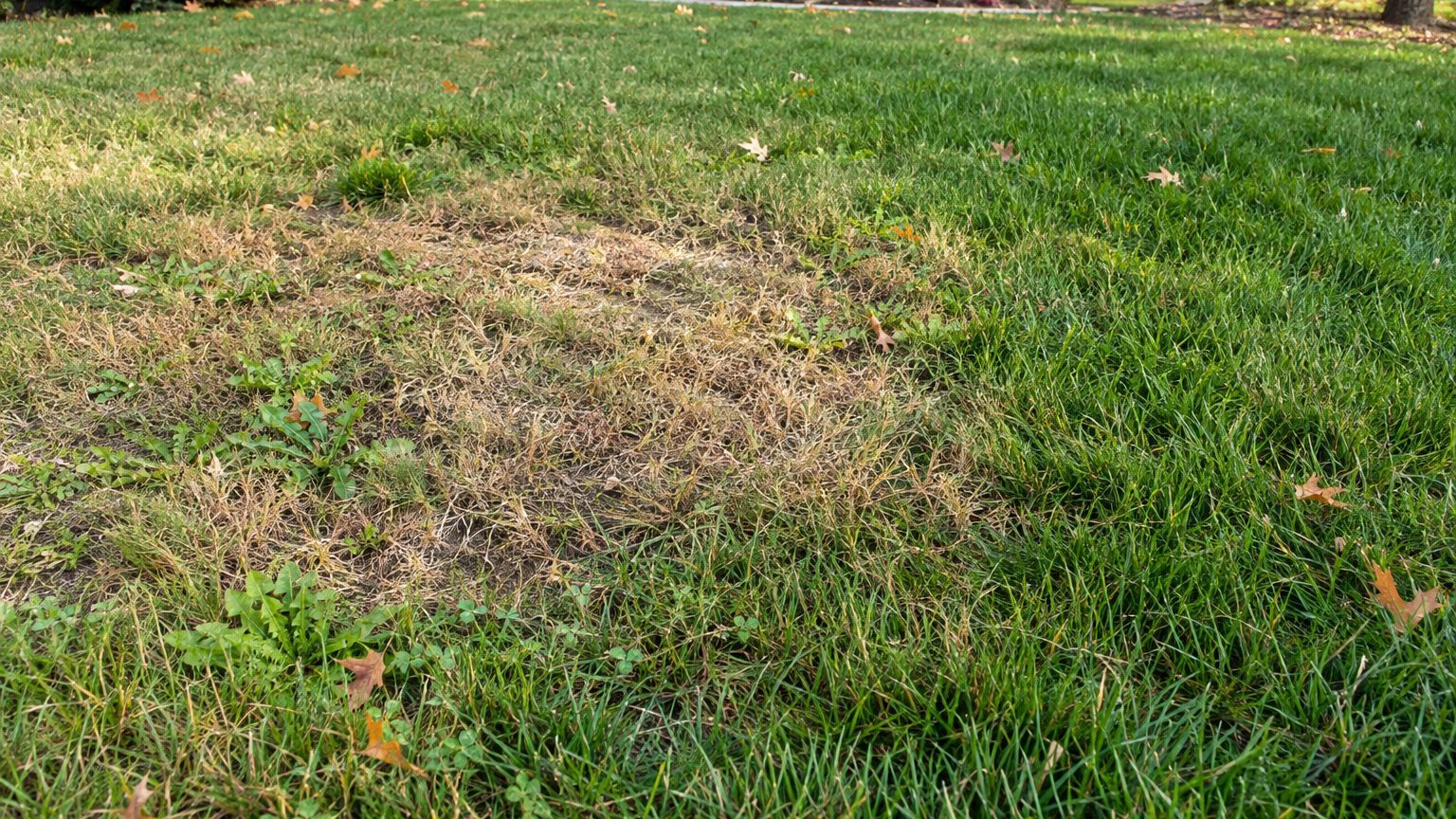
Straw-colored fescue that crunches underfoot and has patches spreading during hot, dry stretches is usually heat and drought stress. Tug a handful of blades. If the crowns are firm and the grass is simply dormant, it will green again when rain returns.

Watering deeply and regularly from June to August keeps it alive. Skip fertilizer on tall fescue during these months.

Bermudagrass That Won’t Green Up

Tan grass in winter is normal for bermudagrass and zoysiagrass. Trouble shows when a patch stays tan after neighbors have greened in May, and the blades pull away easily from the soil.

Dead patches in a warm-season lawn can be reseeded in May or filled with sod. If a patch is simply slow, wait for steady growth before deciding whether it needs repair.

Crabgrass in Thin Turf

Coarse, light-green clumps that sprawl in open patches may be crabgrass, so identify them before choosing a treatment. Dense turf shades the soil and keeps seeds from sprouting.

Preventer in March, before the soil warms, stops it early. Seeding thin areas in August thickens the lawn so there is less bare ground next year.

How Lawn Care Dates Change Across Virginia

Elevation and distance from the coast set the pace, and both can move your dates by weeks.

  • Blue Ridge and southwest Virginia: Spring arrives late and fall frost comes early, so seeding and feeding start later in spring and wrap up sooner in fall. Bluegrass and fescue suit these cooler hills better than warm-season grasses.
  • Virginia Beach and the coast: The coast is the mild end of the state, with the earliest spring and the latest fall frost. Bermudagrass and zoysiagrass do well here, and mowing runs longest.

Between those two, the rest of the state shifts gradually. Let soil warmth guide you, and move each date earlier or later to match your own yard.

Where to Get Lawn Advice in Virginia

Virginia’s land-grant extension service offers free, research-based help with turf questions, and its local offices know the soils and grasses in your own county.

  • Virginia Cooperative Extension publishes lawn care guidance written for the state, which you can read before planning any seeding or feeding.
  • Your county extension office can help with soil-testing questions and lawn problems, so contact it when a patch looks wrong.

Before the next feeding, pull a soil sample and have it tested, so you know what the lawn needs.

Common Questions

When Should You Start and Stop Mowing a Lawn in Virginia?

Cool-season lawns are mowed from March through November, following growth. Bermudagrass and zoysiagrass are mowed from April through October, since they grow only when the soil is warm.

When Should You Lay Sod in Virginia?

For bermudagrass and zoysiagrass, May is the strongest time, and June and July also work. Warm soil lets the sod root quickly into the ground below.

When Should You Dethatch a Lawn in Virginia?

Tall fescue lawns are dethatched in August or September, when the grass recovers fast. Bermudagrass and zoysiagrass are dethatched in May or June, and April also works.

Hydrangeas That Grow Well in Virginia

Hydrangeas That Grow Well in Virginia

Panicle and smooth hydrangeas grow well in every part of Virginia, from Virginia Beach to the Blue Ridge, because they bloom on new wood each spring and shrug off a late freeze. Bigleaf hydrangea, the classic mophead, only holds up reliably along the coast, where winters stay mild enough to spare its old-wood flower buds.

Hydrangeas that grow well in Virginia: The Short Answer

The USDA Plant Hardiness Zone Map puts Virginia at 5a to 8b, and that spread explains which hydrangea holds up where in the state. Virginia Beach, home to the coastal weather station behind these dates, sits at the mild end of that range, while the Blue Ridge and southwest Virginia run several zones colder.

A shrub that blooms without fail on the coast can lose every bud a hundred miles inland. Here are six that cover the state, ranked from the safest bet to the one that needs the right spot to pay off.

Panicle hydrangea

Panicle hydrangea — Hydrangeas That Grow Well in Virginia

Hydrangea paniculata blooms on new wood, so a late freeze nipping the stems in spring doesn’t touch the flower buds, which form later. It handles the cold pockets of the Blue Ridge and a Virginia Beach summer with equal ease. This is the shrub I’d plant first, sight unseen.

Smooth hydrangea

Smooth hydrangea — Hydrangeas That Grow Well in Virginia

Hydrangea arborescens, parent of the popular ‘Annabelle’, is native to the eastern woodlands that include Virginia, so it already suits the state’s freeze-thaw swings. It blooms on new wood too, which makes it nearly foolproof from the mountains to the coast. Afternoon shade keeps the flower heads from flopping in July heat.

Oakleaf hydrangea

Oakleaf hydrangea — Hydrangeas That Grow Well in Virginia

Hydrangea quercifolia is native to the Southeast and feels at home in Virginia’s clay soil and part shade. Its cone-shaped blooms fade to a rust color that holds into fall, after the panicle and smooth types have gone bare. The coldest mountain hollows can still burn its buds some winters.

Climbing hydrangea

Climbing hydrangea — Hydrangeas That Grow Well in Virginia

Hydrangea anomala subsp. petiolaris is hardy statewide but slow, often taking several seasons to bloom while it establishes on a wall or trellis. Once rooted in, it performs about as reliably as the panicle type. Patience is the real requirement here, not the climate.

Mountain hydrangea

Mountain hydrangea — Hydrangeas That Grow Well in Virginia

Hydrangea serrata is a smaller cousin of bigleaf, with flower buds that survive a harder freeze than the classic mophead. It still blooms mostly on old wood, so a hard late frost in the colder third of the state can cut the show short. It suits Piedmont gardens better than the open Blue Ridge crest.

Bigleaf hydrangea

Bigleaf hydrangea — Hydrangeas That Grow Well in Virginia

Hydrangea macrophylla is the classic mophead, with big pink or blue blooms, and it’s the riskiest pick statewide. It sets flower buds on old wood, so a late freeze or hard winter can strip a healthy plant of every bloom. It performs best near Virginia Beach, less well toward the mountains.

How to Work Out the Dates for Your Own Yard

Working out whether a hydrangea will perform in your yard starts with the same frost window that governs every other spring job in Virginia, adjusted for the fact that flower buds often form months before they open.

  1. Locate your zone on the map: Virginia spans 5a to 8b, so a shrub rated no colder than zone 7 is a gamble past the Piedmont.
  2. Check bloom habit before buying: old-wood bloomers set next year’s flowers by late summer, so a hard freeze during NOAA NCEI 1991-2020 Climate Normals’ last spring frost window, March 20 to April 3 near the coast, can wipe them out.
  3. Weigh the first fall frost too: the same normals put it at November 10 to November 24 near the coast, and a shrub needing a long season to finish wood struggles in the colder third of the state.
  4. Match bud swell to the frost window: if buds are already swelling before that spring window closes, the plant is exposed, count backward from it rather than forward from planting day.
  5. Compare against a plant that already works: panicle hydrangea blooms on wood grown after both frost windows close, so it never gambles on a single date.
  6. Check the reference city against yours: Virginia Beach anchors these dates, so gardens in the Blue Ridge or southwest should push every window later in spring and earlier in fall.

Bigleaf hydrangea fails this test across half the state, since it needs old wood to survive winter intact, and in the colder pockets that’s not a safe bet most years. Panicle passes because it starts fresh each spring, regardless of what winter did to last year’s stems.

Virginia North to South: How the Dates Shift

Elevation and distance from the ocean shift these dates more than latitude does within Virginia, and the direction it moves changes which hydrangea makes sense.

  • Coastal Tidewater and Virginia Beach: the mild end of the state, where the frost windows named above apply directly and bigleaf hydrangea has its best odds.
  • The Piedmont, around Richmond: spring frost lingers later and fall frost arrives sooner than at the coast, narrowing the season for anything that blooms on old wood.
  • The Blue Ridge and Shenandoah Valley: elevation pushes both frost dates further from the coastal window, favoring panicle and smooth over bigleaf.
  • Far southwest Virginia: the coldest ground in the state, where the season runs weeks shorter than the coast and only the hardiest new-wood types are worth the effort.

Whichever part of the state you garden in, shift the coastal dates later heading inland and check the Virginia hydrangea calendar for the exact planting and pruning months.

Mistakes Virginia Punishes

Planting bigleaf inland and hoping

Bigleaf sets flower buds on old wood, and inland Virginia’s colder nights kill those buds most winters even when the plant itself survives. Plant it only near the coast, and choose panicle or smooth for the Piedmont and mountains instead, checking the ranked list above before buying on looks alone.

Pruning on the wrong month

Cutting bigleaf back in fall or winter removes the buds it already set for next summer’s flowers. The safe window runs June and July, right after the current bloom fades and before next year’s buds start forming on the new growth.

Skipping afternoon shade

Full sun all day scorches hydrangea leaves fast once Virginia’s summer humidity sets in, especially on bigleaf and oakleaf types. Give it morning sun and afternoon shade instead, and mulch to keep roots cool through the fertilizing months of March, May, and July.

Virginia Extension Offices and County Contacts

The USDA Plant Hardiness Zone Map’s 5a to 8b range is a starting point, not a verdict for your yard, and Virginia Cooperative Extension fills in the rest county by county.

  • Virginia Cooperative Extension: ext.vt.edu lists the local office for your county, along with soil testing and plant clinics.
  • The Virginia hydrangea calendar: month-by-month planting and pruning dates for wherever you live in the state.
  • What goes wrong with hydrangeas in Virginia: the pests and problems specific to this state’s climate, and how to spot each one.

Common questions

Can bigleaf hydrangea survive in the Blue Ridge?

It can survive the cold and still fail to bloom, since the plant itself is hardier than the flower buds it sets on old wood. Most gardeners in the mountains get better results from panicle or smooth hydrangea instead.

When should I plant a new hydrangea in Virginia?

March, April, September, and October are the planting months for the state, giving roots time to settle before summer heat or winter cold arrives.

Why did my hydrangea leaf out but never flower?

An old-wood bloomer like bigleaf or mountain hydrangea likely lost its flower buds to a late frost or a cold winter, even though the rest of the plant survived fine. Switching to a new-wood bloomer solves this for good.

Hydrangea Pests and Diseases in Virginia

Hydrangea Pests and Diseases in Virginia

Virginia’s humid summers set the terms for hydrangea trouble. Wet leaves, crowded stems and a long growing season invite fungal spots and sap-feeding insects far more often than they kill a shrub outright. Nearly every problem shows on the foliage first, in the order the season delivers it. Inland yards will differ.

Hydrangea pests and diseases Virginia: The Short Answer

In Virginia Beach, NOAA NCEI 1991-2020 Climate Normals put the last spring frost between March 20 and April 3 and the first fall frost between November 10 and November 24. Hydrangea problems live in that stretch, so match what you see below and confirm with extension before spraying anything.

Blackened new growth in spring

A late freeze, not a disease, blackens tender shoots after leaf-out. Wait until the last spring frost window closes, March 20 to April 3 in Virginia Beach, then clip only tips that are clearly dead. Spraying does nothing here, and structural pruning of bigleaf waits for June and July.

Ragged holes in fresh leaves

Many chewing insects work at night and hide by day, so the damage is often the only clue. Check leaves after dark with a flashlight, and hand-pick what you find into soapy water. Holes on a few leaves are cosmetic. Widespread loss, or an insect you cannot name, goes to extension.

Sticky leaves and curled tips

Sap-feeding insects excrete a sugary film, which can turn black as a sooty mold grows on it. Blast colonies off with a firm stream of water, then look again in a few days. Skip extra fertilizer. Soft, lush growth feeds them, and feeding fits March, May and July.

Speckled, bleached leaves in heat

Tiny sap-feeders on leaf undersides stipple the surface with pale dots, especially in midsummer heat. Turn a leaf over and look for fine debris or webbing. Rinse undersides with a hose every few days and keep the root zone evenly moist. Stressed, thirsty shrubs suffer most.

White powder on the surface

A powdery white coating shows up where air barely moves, on shaded, crowded stems and in humid weather. It wipes off with a finger but returns. Thin a few old stems at the base in June or July for airflow, remove the worst leaves, and keep water off the foliage.

Round brown spots that spread

Leaf spots follow long wet spells, and rain splash carries spores from fallen leaves up to healthy ones. Pick off spotted leaves, bag them rather than composting, and water at the base. Rake fallen foliage before the first fall frost window, November 10 to November 24 in Virginia Beach.

How to Work Out the Dates for Your Own Yard

Start with Virginia Beach as the anchor, since NOAA NCEI 1991-2020 Climate Normals give March 20 to April 3 for the last spring frost and November 10 to November 24 for the first fall frost, then read your own shrubs against those windows.

  1. Mark leaf-out against the spring window: anything blackened before the last frost window closes, March 20 to April 3 in Virginia Beach, is usually cold injury rather than disease, so wait before you diagnose.
  2. Read the pattern on the whole shrub: holes, stickiness, stippling, powder and round spots each point to a different family of problems, and new growth versus old growth narrows it further.
  3. Flip leaves from sun and shade: insects and fungus favor different spots, and undersides give away what the tops hide.
  4. Count back from the fall window: take November 10 to November 24 and subtract about four weeks, and you land in mid-to-late October, the time to rake and bag spotted leaves.
  5. Bag a sample for the county office: one stem with healthy and affected leaves side by side, sealed in a bag, is what an extension agent can actually work with.

The arithmetic works anywhere: a frost range minus a number of weeks gives a date range, never a single day. Move the window later for a Blue Ridge yard and every check moves with it.

Virginia North to South: How the Dates Shift

The USDA Plant Hardiness Zone Map spans 5a to 8b across Virginia, and the season for leaf problems slides along with it.

  • Tidewater and the coast (Virginia Beach, Norfolk, Chesapeake): the mild end of the state, with the earliest leaf-out and the latest fall frost, so wet-leaf problems get the most weeks to build.
  • The Piedmont (Richmond, Charlottesville, Danville): frost comes later in spring and earlier in fall than on the coast, and humid summer stretches still favor leaf spots and powdery coatings.
  • Blue Ridge and Shenandoah Valley (Roanoke, Staunton, Harrisonburg): altitude and cooler nights push everything back by weeks, so watch for cold injury in spring before you worry about fungus.
  • Southwest Virginia (Abingdon, Wytheville, Wise): the shortest season, with frost lingering in spring and arriving early in fall, so pests have less time but one cold snap can undo new growth.

The statewide picture, including what to plant and where, sits on Hydrangeas in Virginia.

Mistakes Virginia Punishes

Leaves wet from evening sprinklers

Sprinklers running at dusk leave foliage wet through Virginia’s warm, humid nights: ideal for fungal spots. Water in the morning, at the base, so leaves dry by midday. Drip lines or a hand-held hose make this easy, and coastal yards near Virginia Beach feel the humidity most.

Shrubs planted shoulder to shoulder

Tight spacing traps humid air inside the canopy, which invites powdery coatings and spots. Give each shrub room to reach mature width when you plant in March, April, September or October. A tough, well-suited variety helps too, and Hydrangeas That Grow Well in Virginia covers which ones suit the state.

Extra feeding on top of the schedule

Feeding beyond March, May and July pushes soft, sappy growth that sap-feeding insects favor. Lush growth looks healthy, and that is the trap. Hold to those three rounds. Pruning bigleaf has its own window, June and July, laid out in When to Plant and Prune Hydrangeas in Virginia.

Virginia Extension Offices and County Contacts

The frost figures belong to Virginia Beach, and your yard may sit weeks off. The USDA NIFA Land-Grant University Extension directory lists ext.vt.edu as Virginia’s extension service, and your county office knows which problems are circulating nearby.

  • Hydrangeas in Virginia: the statewide guide, with the frost dates and the pruning window where you live.
  • Hydrangeas That Grow Well in Virginia: which types suit the state, useful when the same problem keeps coming back.
  • When to Plant and Prune Hydrangeas in Virginia: the planting and pruning months, so cuts and feeding land on schedule.

Bag one affected stem this week and take it to your county office.

Common questions

When do hydrangea problems show up in Virginia?

Cold injury appears right after leaf-out, and insects follow as the weather warms. Fungal spots and powder build in humid stretches through summer. In Virginia Beach, NOAA NCEI 1991-2020 Climate Normals put the last spring frost between March 20 and April 3.

Should I spray as soon as I see spots?

No. Spots, holes and stippling have different causes, and the wrong spray wastes money and can stress the shrub. Pick off affected leaves, water at the base, and take a sample to your county extension office through ext.vt.edu. Sprays come after the problem has a name.

Do mountain yards get the same problems as the coast?

The same families of problems show up, but the calendar shifts. The Blue Ridge and southwest Virginia run weeks later in spring and earlier in fall than Virginia Beach, so cold injury matters more early and the fungal season runs shorter. Your county office can confirm the local rhythm.

When to Prune Hydrangeas in Virginia

When to Prune Hydrangeas in Virginia

In Virginia Beach, the state’s mildest reference point, hydrangeas go into the ground twice a year: in spring once the soil clears the last frost window of March 20 to April 3, and again in fall between September and October before the first frost lands between November 10 and November 24.

When to prune hydrangeas in Virginia: The Short Answer

Here is how the twelve months break down for a hydrangea bed anywhere from the Tidewater to the Blue Ridge.

  • January: The ground is dormant and too cold to dig, so this month is for ordering stock and picking a site with morning sun. No fertilizer, no pruning, just planning.
  • February: Frost still grips most of the state, weeks ahead of the last spring frost. Prep the planting hole now so it’s ready the moment soil temperatures climb.
  • March: NOAA NCEI 1991-2020 Climate Normals puts Virginia Beach’s last spring frost at March 20 to April 3, and planting can start once that risk fades. This is also the first of three fertilizing months.
  • April: Planting continues as the frost window closes statewide. New root systems need steady moisture through this stretch, not just a one-time soak.
  • May: A second fertilizing round feeds the flush of leaf growth. Skip planting this month and let spring-set roots establish instead.
  • June: Bigleaf pruning opens now, limited to spent blooms and dead wood. Cutting further back risks removing next year’s flower buds.
  • July: The pruning window for bigleaf hydrangeas closes at month’s end, alongside the third and final fertilizing round. Afternoon shade matters more than ever as heat peaks.
  • August: No fertilizing and no pruning this month, since either would push tender growth into an unforgiving stretch of heat. Deep, infrequent watering keeps root balls from drying out.
  • September: Fall planting opens back up as nights cool. Roots set now have two full months before the first fall frost to anchor themselves.
  • October: The second fall planting month, and the better one for cooler soil and steadier rain. This is the last comfortable window before frost returns.
  • November: The first fall frost lands somewhere between November 10 and November 24 depending on elevation. Mulch goes down now, not before, to insulate roots without inviting rot.
  • December: The shrub is fully dormant and needs nothing but a check on mulch depth after any hard freeze. Save the pruning tools for June.

Spring and fall are the two safe doors into a Virginia hydrangea bed, with summer heat and winter dormancy locking everyone else out. The exact week still depends on where in the state that yard sits, which is what the next section works out.

How to Work Out the Dates for Your Own Yard

Working out a planting date for one specific yard means counting backward from the frost window instead of copying a date off a calendar.

  1. Check the local hardiness zone first: The USDA Plant Hardiness Zone Map puts Virginia’s range at 5a to 8b, and a yard near the coast sits at the warm end while a Blue Ridge property lands close enough to 5a that a marginal variety struggles some winters.
  2. Confirm the local frost window: Virginia Beach’s last spring frost falls between March 20 and April 3, but that date shifts later with every mile inland and every foot of elevation gained.
  3. Count forward past the last frost date before digging: That buffer lets soil temperature catch up to air temperature, which matters more to a hydrangea’s roots than the calendar does.
  4. Watch the soil, not just the thermometer: Cold, waterlogged soil in early spring can rot a new root ball even after the air has warmed past frost risk.
  5. Count backward from the first fall frost for a September or October planting: with the first fall frost landing November 10 to November 24, a plant set in September gets close to two months to root in before cold arrives, while an October planting gets far less cushion.
  6. Pick the species before the date: a panicle hydrangea tolerates a wider planting window than a bigleaf, which is pickier about both heat at planting and cold once it’s established.

None of this replaces watching the specific yard. A south-facing bed against brick warms weeks ahead of an open lawn, and that gap is often bigger than the difference between two Virginia counties.

Virginia North to South: How the Dates Shift

Elevation and distance from the water move these dates more than latitude alone does.

  • Tidewater and the coast (Virginia Beach, Norfolk, Hampton Roads): the mildest corner of the state, where the reference frost dates above apply almost exactly and the growing season runs longest.
  • The Piedmont (Richmond, Charlottesville): sits inland enough that spring arrives later and fall arrives sooner than the coastal reference dates, trimming the season from both ends.
  • The Shenandoah Valley (Winchester, Harrisonburg): valley cold air pools overnight, so frost lingers later into spring than the elevation alone would suggest.
  • The Blue Ridge and southwest (Blacksburg, Abingdon): the coldest ground in the state, where spring planting waits longest and fall planting has to start earliest to beat frost.

The state hydrangea guide lines up these regional shifts against the coastal reference dates for a specific county.

Mistakes Virginia Punishes

Pruning bigleaf in fall or winter

Bigleaf hydrangeas set next year’s flower buds on the current season’s wood by late summer, so a fall or winter cut removes blooms before they ever open. Keep pruning inside the June and July window and limit it to spent flower heads and dead stems.

Fertilizing past July

A late feeding in August or September forces soft new growth that has no time to harden before the first fall frost arrives in November. Stop after the third round in July and let the plant slow down on its own.

Planting into a Tidewater heat wave

Setting a hydrangea into the ground during a hot, dry stretch of Virginia Beach summer stresses roots that haven’t spread far enough to keep up with water loss. Hold off until the September or October window, when cooler soil gives roots a real head start.

Virginia Extension Offices and County Contacts

Virginia’s hardiness range of 5a to 8b covers coastal Norfolk to the Blue Ridge, and Virginia Cooperative Extension‘s county offices narrow that down to a specific soil and frost pattern.

  • Your state page: the frost dates and the pruning window where you live.
  • Which ones hold up here: bigleaf, panicle, and other names weighed against this state’s winters.
  • What goes wrong here: the pests and mistakes this climate makes worse, and the fix that actually works.

Common questions

Can I plant hydrangeas in Virginia in summer?

Nothing stops a summer planting except the hydrangea’s odds. July and August heat in Virginia Beach and points west stresses new roots before they’ve spread, so most gardeners wait for the September window instead.

Do hydrangeas need winter protection in Virginia?

Most of the state’s 5a to 8b range doesn’t require covering a hydrangea, but a bigleaf variety planted at the cold edge near the Blue Ridge benefits from a mulch layer applied once the first fall frost settles in.

What happens if I miss the fall planting window?

Spring is the fallback, and it works nearly as well once the last spring frost has passed in late March or early April. The trade-off is a shorter head start before summer heat arrives.

The almanac, state by state. Every date on this site comes from a state’s own frost facts and its extension service’s calendar — and says where it comes from.