Skip to content

How to Plant a Tree: Hole, Depth and First Watering

How to Plant a Tree: Hole, Depth and First Watering

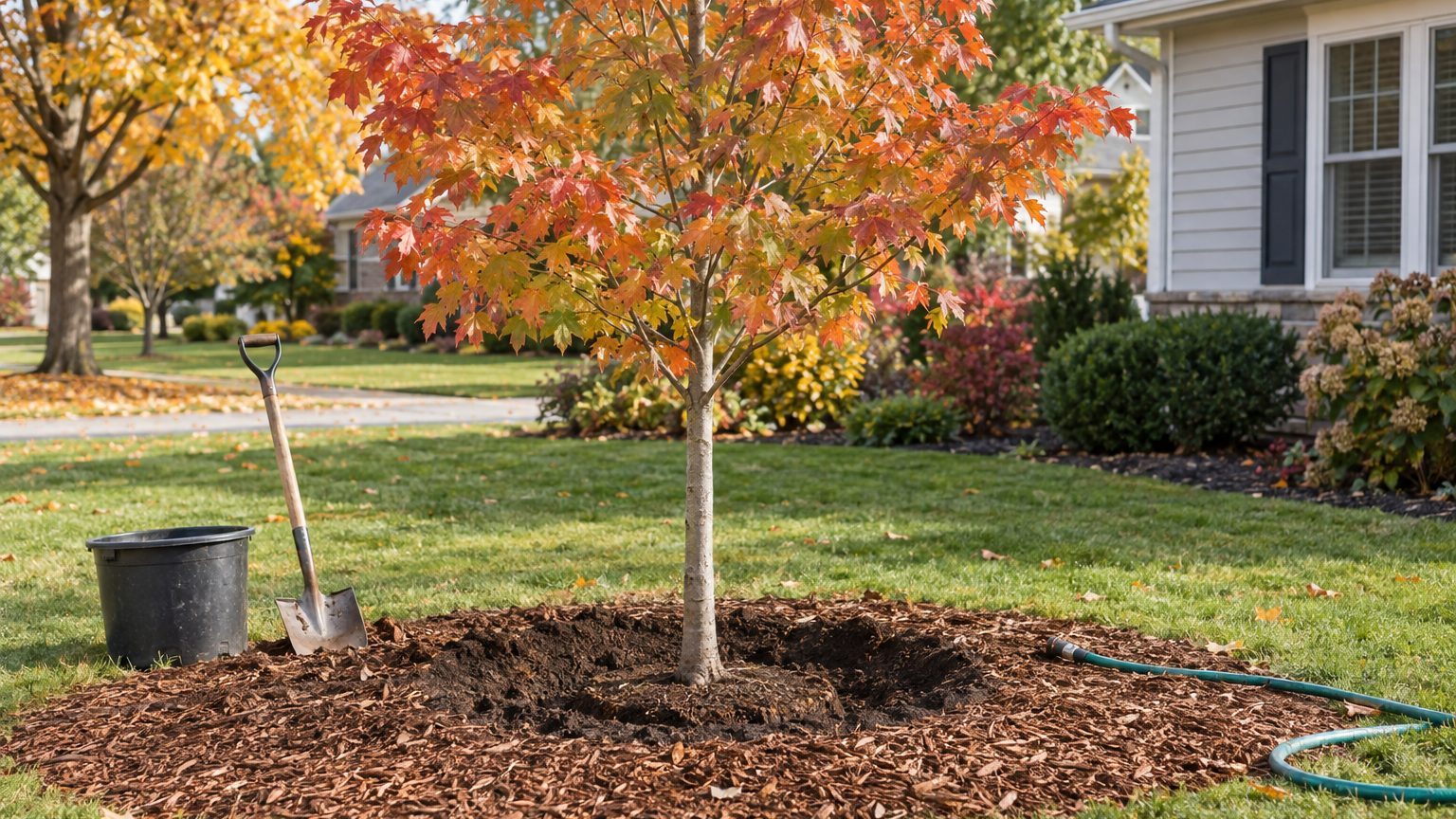
How a newly planted tree is set in its hole helps decide whether the roots spread or sit in a soggy pocket. The hole is wide and shallow, the trunk flare stays visible, and the first watering soaks the whole root ball.

What Is the Right Way to Plant a Tree?

Dig a wide, shallow hole, set the tree so the roots sit at the depth they grew in the nursery, refill with the soil you dug out, and water well. Width matters more than depth, because new roots spread sideways through loosened soil near the surface.

The details shift with the kind of tree (container, balled, or bare-root) and with your soil. Where drainage is poor, the tree rides a little higher so water runs away from the trunk instead of pooling around it.

The state selector just below this section leads to the page for your state, where timing is spelled out for your climate.

How to Plant a Tree Step by Step

Tree: How to Plant a Tree: Hole, Depth and First Watering

The order of the work matters, because each gesture protects the roots from a different problem.

  1. Size the root ball to the trunk before you buy or dig, so that the roots can support the top. As a rule of thumb, allow 10 to 12 inches of root ball width for each inch of trunk caliper, which means a tree with a 3-inch caliper needs a root ball of at least 30 to 36 inches.
  2. Dig the hole about 6 to 12 inches wider than the roots are when spread out, so that the surrounding soil is loose enough for new roots to push into.
  3. Set the tree so the root ball sits 1 to 2 inches above grade, which allows for settling and for mulch. If drainage is poor or the soil is compacted, set the tree 2 to 4 inches above the surrounding ground so that water drains away from the trunk.
  4. Check that the trunk flare is visible, and on a grafted tree that the bud union stays above the soil line. Burying either one invites rot at the base.
  5. Backfill with the soil you removed and firm it gently, so that air pockets close without crushing the roots. Skip heavy amendments, which can make the hole drain differently from the ground around it.
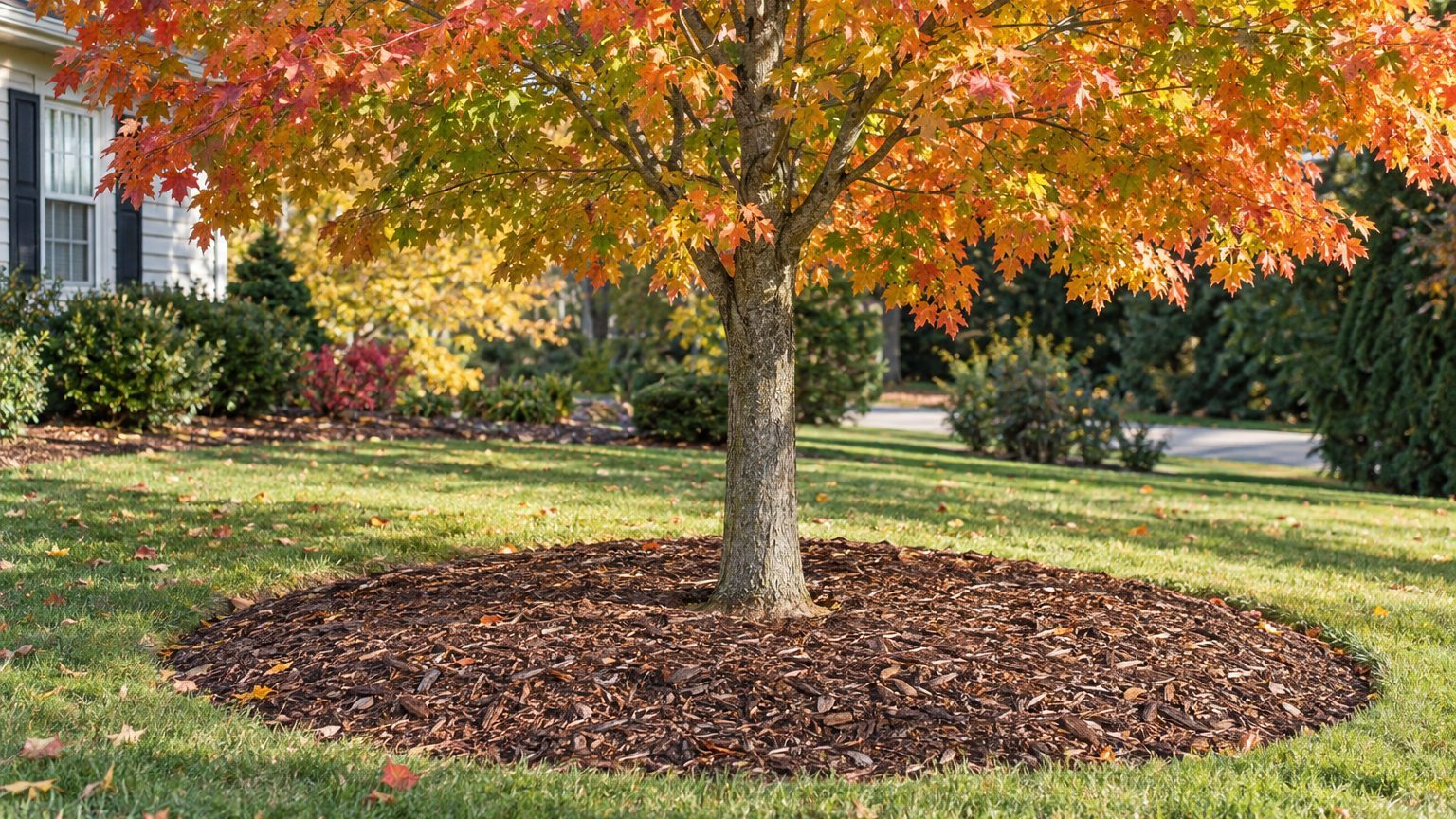
  6. Spread about 3 inches of mulch in a ring, keeping it off the trunk, so that the soil stays evenly moist and the bark stays dry.

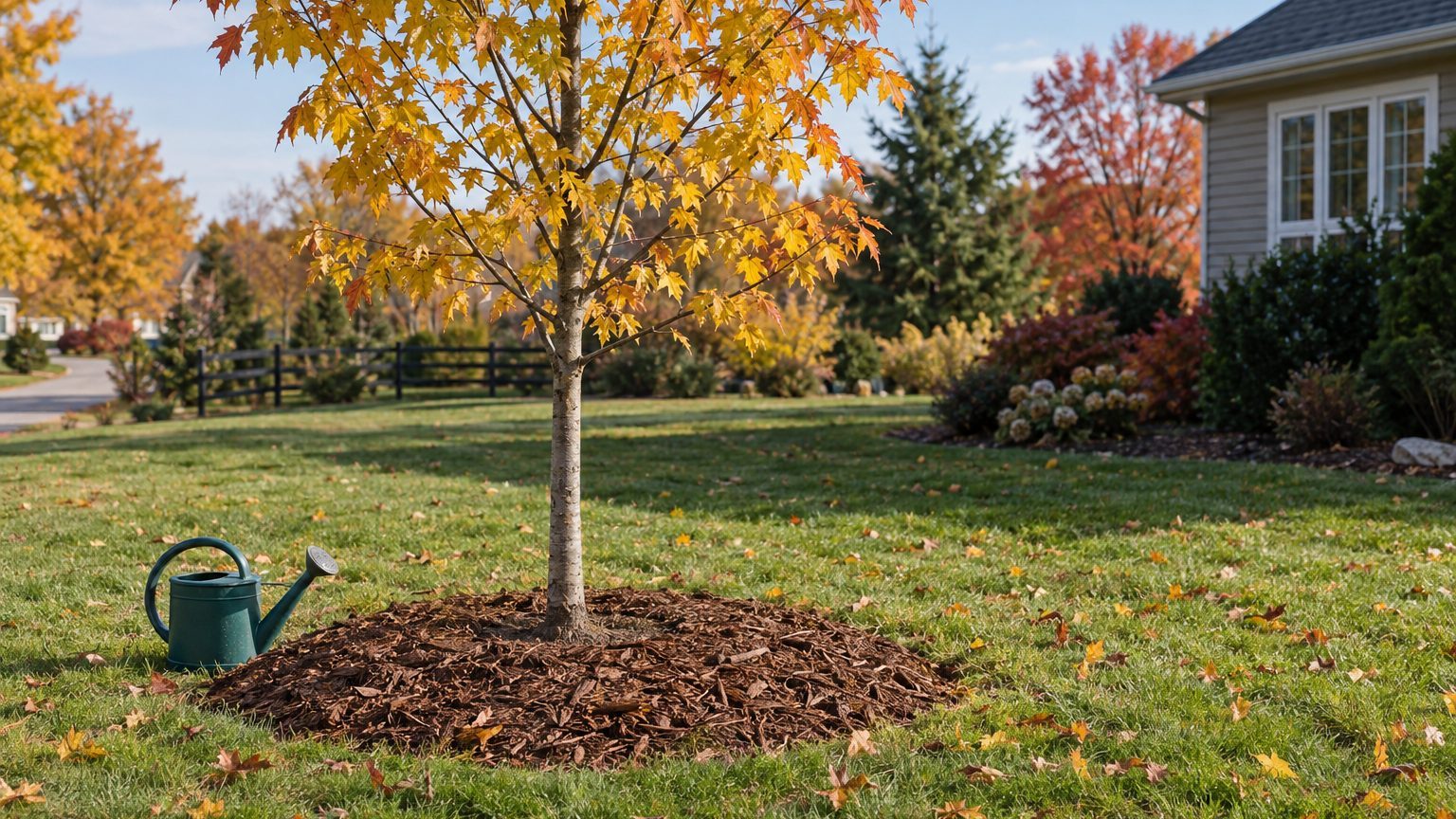
Water slowly right after planting, until the whole root zone is soaked. In Oregon, about 3 to 5 gallons of water per tree every week should be enough. Hotter, drier places call for more attention, so check the soil itself before watering.

Planting by Tree Type

Container, balled, and bare-root trees all want the same wide hole, but they arrive in different states. What the roots look like on planting day sets how much care the first season takes.

Bare-root trees are planted while dormant and suit smaller stock, so the roots are never out of the ground long.

Tree Type What changes Why it matters
Bare-root deciduous Trunk caliper under 2 inches Smaller trees recover faster once the roots are bare
Bare-root evergreen Very small, under 2 feet tall Larger evergreens lose too many roots when dug without a ball
Grafted fruit tree Bud union 2 to 3 inches above the soil line The graft stays dry and the variety above it stays true
Shade tree Choose a planting spot at least 15 to 20 feet from the foundation and well away from power lines. Room for the mature crown without damage to the house or wires
Peach and similar fruit trees Space trees 12 to 16 feet apart, adjusting for the rootstock and how the trees are trained. Each tree gets light and airflow

In practice, check the trunk size and the label before you dig. A shade tree needs its siting decided first, while a fruit tree needs its union tracked and its spacing planned.

Tree Planting Mistakes to Avoid

Planting Too Deep

A hole dug to the full depth of the root ball often leaves the trunk flare buried. Keep the roots within 1 to 2 inches of the surface and let the flare show.

Piling Soil Over Existing Trees

Raising the grade around a nearby tree to match a new bed smothers its roots. Adding more than 1 to 3 inches of soil is discouraged, and even that only in a limited way. Build a mulch ring instead and keep the original soil level.

Planting When the Soil Is Cold

Roots grow only when the soil is warm enough. Where fall planting is common, as in Indiana, soil should be well above 55 F at a depth of 6 inches.

When to Plant Trees in Your State

The sign to watch is soil that is workable and not frozen, with roots able to grow. A dormant tree can go in then, and a tree in leaf is better planted when the soil is warm.

  • Pick your state from the selector on this site to find the months that fit your climate.
  • Check that page again in late winter if you plan a spring planting, and again in late summer if you plan to plant in fall.

Common Questions

How Far from the House Should You Plant a Shade Tree?

Keep a shade tree at least 15 to 20 feet from the foundation, and look up for power lines before you choose the spot. The crown and roots both grow far beyond what the nursery pot suggests.

Should You Add Fertilizer or Rich Soil to the Planting Hole?

Plain backfill is the usual choice, because roots then grow out into the surrounding ground instead of circling in a richer pocket. Mulch on top does more for a young tree than anything mixed into the hole.

What Size Tree Is Easiest to Establish?

Smaller stock settles in faster. Bare-root deciduous trees with a caliper under 2 inches, and very small evergreens, lose fewer roots in the move and catch up quickly once watered regularly.
Tree Pests: Borers, Scale and Caterpillars

Tree Pests: Borers, Scale and Caterpillars

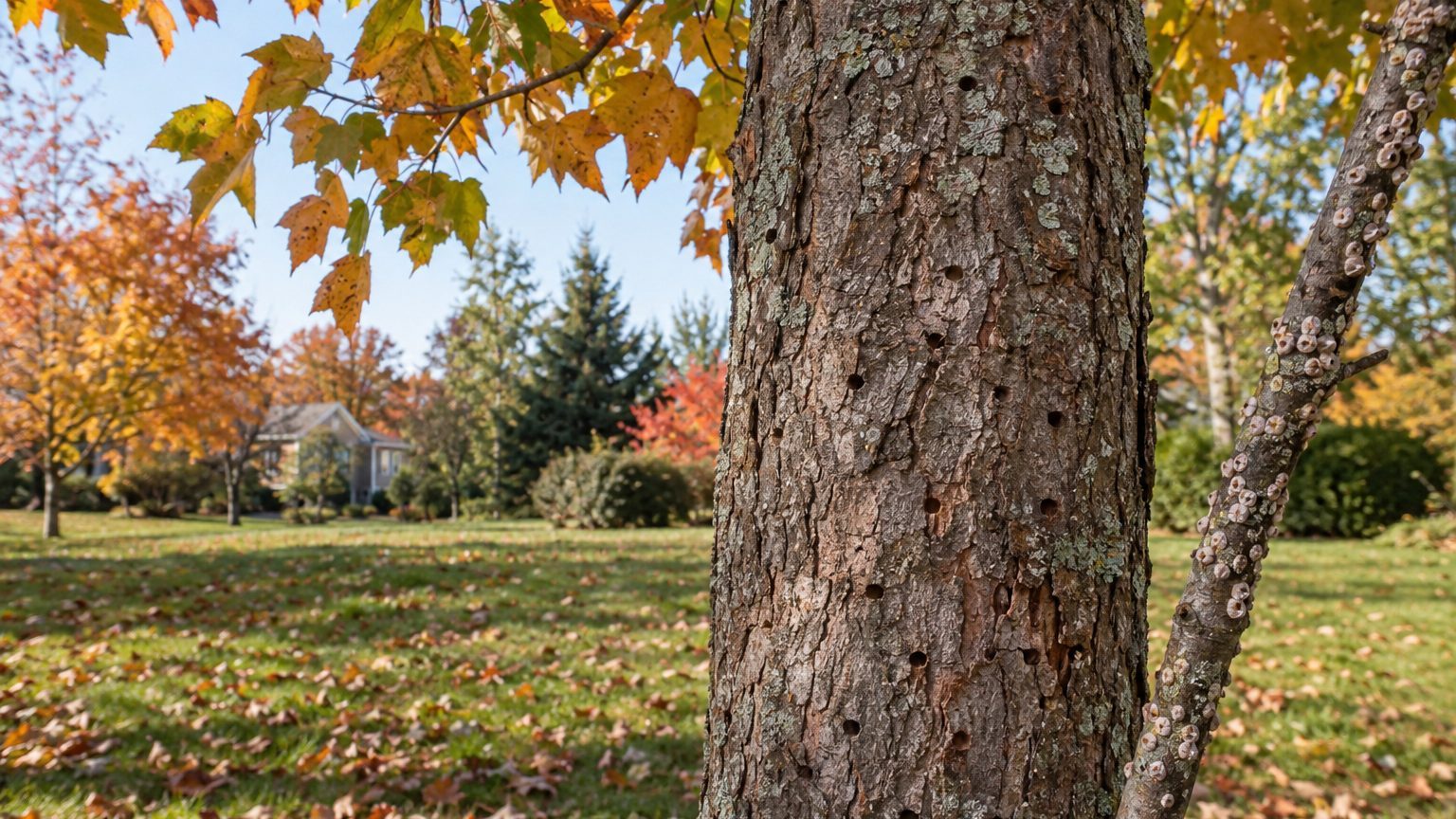
Tiny holes at the base of a trunk, sticky leaves, or ragged foliage hanging in silk tents all point to insects feeding on a tree. Borers, scale and caterpillars are the three groups most yards meet, and each one shows up at a different point in the season. Matching the sign to the pest tells you which job to do and when.

Which Insects Damage Trees?

Across the country, three groups do most of the damage: borers that tunnel under the bark, scale insects and aphids that suck sap, and caterpillars that eat leaves. Which one you meet depends on the kind of tree and on the climate, since fruit trees, shade trees and citrus each attract their own set.

Borers are the ones that kill. The peach tree borer, a white worm about 1 inch long, works under the bark and below the soil line, and it often injures or kills the tree. Young citrus is different, because trees 3 years old or more can withstand the leaf damage from citrus leafminer.

The state selector just below this section takes you to the page for your own state.

How to Find and Control Tree Pests

Tree: Tree Pests: Borers, Scale and Caterpillars

Pests arrive in a rough order through the year, so the gestures that work follow the same order, starting with a close look at the bark and ending with protecting the trunk.

  1. Walk around each trunk and check the base for gum, sawdust-like frass or small holes, so that borers working below the soil line are caught before they girdle the tree.
  2. Look for bagworm bags on evergreens and pick them off by hand, because each bag holds up to 300 eggs that spent the winter inside it.
  3. Watch the bark on warm sunny days, since adult pear psylla start moving around once temperatures turn mild, and that is the cue to act on them.
  4. Knock aphids off with a stiff spray of water every 2-3 days until their numbers decline, so that soft new growth is protected without any chemical.
  5. Treat scale with insecticidal soap or horticultural oil, using a 1% oil mix for a minor or moderate infestation, so that the crawlers are smothered while the tree is spared.
  6. Water deeply, giving established trees 2-4 inches of water a month, so that a stressed tree does not become the easy target borers look for.

Where a moderate scale problem is stubborn, the soap or oil can be repeated every 5 to 7 days. For fruit trees in the warm, humid Southeast, a complete fruit tree spray goes on every 14-21 days from post-bloom up to three weeks before harvest. Apple maggot larvae are white, legless and headless, and quite small even when mature, so you will rarely see them before the fruit is already damaged.

Tree Pests by Tree Type

The pest list changes with the tree. Fruit trees draw borers, maggots and psylla, while evergreens carry bagworms and young citrus deals with leafminers.

Each kind of tree also has its own weak point, the trunk base, the leaves or the fruit, and that is where to look first.

Tree Type What changes Why it matters
Peach Borer larva about 1 inch long feeds under bark and below the soil line The tree can be injured or killed, so check the trunk base
Apple Maggot larvae feed inside the fruit The pest lives inside the fruit, so it is hard to spot
Citrus Trees 3 years old or more tolerate leafminer damage to leaves Only young trees need close protection
Pear Adult psylla move on the bark on warm sunny days Warm sunny days signal the time to treat
Evergreens Bagworm eggs overwinter, up to 300 per bag Removing bags in winter stops the next generation

For you, this means scouting the part of the tree each pest uses. Check trunks on peaches, fruit on apples, bark on pears and bags on evergreens, and leave mature citrus alone over a few chewed leaves.

Tree Pest Control Mistakes to Avoid

Leaving Wraps on Too Long

Tar paper, building paper, magazine sheets and aluminum foil can shield a trunk, but left on, they trap moisture and shelter insects against the bark. Take them off in early spring, as growers in Virginia advise, so the bark can breathe.

Ignoring Wild Hosts Nearby

Disease and pests move in from wild trees at the edge of your property. Black knot control in New Hampshire calls for a border at least 600 feet wide free of wild hosts, which shows how far the source can be from the tree you are fighting for.

Mistaking Animal Damage for Insects

Gnawed bark and girdled stems often come from voles, which can kill trees as large as 3-4 inches in diameter. A shelter at least 12-18 inches high, staked tightly to the ground, stops them, so look for chew marks before reaching for a spray.

Tree Pests in Your State

The sign that triggers action is the first damage you can see: gum or frass at the trunk base, sticky leaves, or bags and silk tents in the branches. Each state has its own months for acting on these signs.

  • Your state page lists the months when borers, scale and caterpillars usually appear where you live.
  • Check it before the season starts, then walk your trees when those months arrive.

Common Questions

How Can You Tell Borer Damage from Scale?

Borers leave holes and gum at the trunk base, often with weak top growth. Scale shows up as small bumps on twigs with sticky leaves below.

Can an Emerald Ash Borer Reach the West?

Yes. It was found in Forest Grove, Oregon, in June of 2022, and had not previously been found west of Colorado.

Do Tree Shelters Keep Pests Away?

They help against voles and deer. In Pennsylvania, short shelters 18-24 inches high may attract fewer wasps than traditional 4-foot ones and so help avoid bear damage. In Alaska, a wire fence at least 8 feet high protects an orchard better over the long term.

How to Mulch Around a Tree, and How Not To

How to Mulch Around a Tree, and How Not To

A ring of dark mulch under a tree looks tidy, but the shape of that ring decides whether the roots get a cushion or a slow rot at the trunk. Mulching around trees comes down to a wide, flat doughnut kept clear of the bark. Depth, width and the gap at the trunk each matter.

How Much Mulch Should Go Around a Tree?

Across the country, extension advice lands on a layer 2 to 4 inches deep, spread wide and kept off the bark. Thinner layers let weeds and moisture loss win, while a heavier pile smothers roots and holds water against the trunk.

The exact number shifts with climate and tree size. Cold northern yards often favor the upper end of the range, and 3 to 4 inches is common there, while a layer of about 3 inches is a steady choice where summers are hot and humid. Young trees need the ring to match their small root zone.

The state selector just below this section leads to the page for your state.

How to Mulch a Tree Correctly

Tree: How to Mulch Around a Tree, and How Not To

Work from the ground up, and finish with a gap at the trunk, since that gap is what separates good mulching from the harmful kind.

  1. Clear the grass and weeds from the ring, keeping turf 4 feet away from the trunk in every direction, so the tree does not compete with sod for water.
  2. Find the trunk flare, the spot where the trunk widens toward the roots, and leave it visible, so the bark can stay dry and breathe.
  3. Spread the mulch evenly to a depth of 2 to 4 inches, so the soil holds moisture and stays steady in temperature without suffocating the roots.
  4. Pull the mulch back from the trunk, leaving a bare gap of several inches, so moisture does not sit against the bark and invite rot and pests.
  5. Widen the ring toward the dripline where you can, so more of the root zone gets the benefit.
  6. Top up the layer as it breaks down, so the depth stays in range and the mulch keeps feeding the soil.

The gap at the trunk varies by source. One recommendation is to leave just a narrow mulch-free band at the base, while other guidance calls for keeping the mulch 4 inches, or even 6 inches, away from the trunk flare. A wider gap costs the tree nothing, so leaning toward the larger number is a safe habit. For a young tree, a ring at least 6 feet across, reaching 3 feet out from the trunk, gives the roots room to settle.

Mulching by Tree Type

Mulching advice is mostly the same for every tree, but a few differences show up in the guidance. The size of the root ball and the planting stage change how wide the ring should be.

Trees planted into lawn also need the sod pushed back, since turf and young roots compete for the same water.

Tree Type What changes Why it matters
Newly planted tree Ring covers 2 to 3 times the diameter of the root ball Roots are still inside that zone and need steady moisture
Young tree in a lawn Ring at least 6 feet across, turf kept 4 feet from the trunk Grass roots take water from small trees
Established tree Ring extends toward the dripline Feeder roots spread out under the canopy
Fruit tree in a cold climate 3 to 4 inches deep, never deeper than 4 inches Extra depth helps in cold winters, but too much holds moisture

For most yards, the practical takeaway is simple: size the ring to the tree’s age, widen it as the tree grows, and keep the depth in range. Pine straw, bark and shredded leaves all work as mulch material around the base of a tree.

Mulching Mistakes to Avoid

Volcano Mulch

Mulch heaped in a cone against the trunk keeps the bark wet, which invites decay and pests. Rake it flat, pull it away from the trunk, and shape it like a doughnut with a hole in the middle. A ring 2 to 3 inches deep makes a good target.

Piling It Too Deep

More mulch does not mean more benefit. Past 4 inches, the layer holds too much water and can starve the roots of air. Check the depth with a ruler, scrape off the excess, and add fresh mulch only as the old layer thins.

Leaving Grass at the Base

Turf growing up to the trunk competes with the tree for water and invites mower damage to the bark. Remove sod from the ring, extend the cleared area outward, and let mulch take its place so a mower never has to get close.

Mulching Trees in Your State

The sign to act is a bare or thin ring: soil showing around the base, weeds creeping in, or mulch that has broken down into the dirt. Timing and local habits differ from state to state, so the month-by-month details sit on each state’s own page.

  • Open your state’s page to see the months that suit tree care where you live.
  • Check the ring again once the old mulch has settled, and renew it to the right depth.
  • Pull any mulch back from the trunk before you leave the yard.

Common Questions

Can You Use Pine Straw or Shredded Leaves Around a Tree?

Yes. Pine straw, bark and shredded leaves all work, applied at 2 to 3 inches and held back from the trunk, as in North Carolina where this is common advice.

Does Mulch Help a Tree If It Already Has a Lawn Around It?

It does. Clearing the grass and replacing it with mulch cuts competition for water and keeps mowers away from the bark.

How Do You Know When to Add More Mulch?

When the layer has broken down and soil is visible, or when it drops below the 2 inch mark. Add enough to bring it back to the right depth without burying the trunk base.

How and When to Fertilize Trees

How and When to Fertilize Trees

A tree that leafs out green and puts on a good flush of new shoots each spring usually needs no help from a fertilizer bag. Fertilizing trees pays off when growth lags, when the soil is poor, or when a young tree is still settling in.

Do Trees Need Fertilizer?

Often not. A established shade tree in decent soil gets by on what the ground already holds, and extra nitrogen can push soft growth the tree does not need. Young trees, fruit trees and trees in thin or sandy soil are the ones that respond.

Shoot growth is the clearest guide. Where peaches are grown in Utah, a tree that puts on more than 24 inches of new shoot in a year should get no nitrogen at all. Slow growth points the other way.

Climate shifts the schedule too, since feeding follows the growing season. The state selector just below this section leads to the page for your state.

How to Fertilize a Tree

Tree: How and When to Fertilize Trees

Start with the ground, then the calendar, then the measuring cup. Each step below protects the roots from too much or too little.

  1. Take a soil sample 6 to 8 inches below the surface, so that the test reflects the layer where feeder roots actually work.
  2. Check last year’s shoot growth against what is normal for the tree’s age, so that you feed only when growth is short. In Pennsylvania, bearing fruit trees should average 12 to 18 inches a year, while young nonbearing trees should average 18 to 30 inches.
  3. Pick the window: early spring, 4 to 6 weeks before bud break, or late fall after the leaves drop and while the soil is still cool but not frozen, so that roots can take up nitrogen when they are active. That timing was written for Colorado shade trees.
  4. Measure the dose by area for shade trees. In Colorado, an application should not exceed 0.1 pounds of nitrogen per 100 square feet of planting hole area, which keeps salts from burning roots.
  5. Halve the dose for small trees under 6 inches in trunk diameter, so that a thin root system is not overloaded. That adjustment comes from Oregon.
  6. Spread the fertilizer in a circle around the tree. In Virginia, nitrate fertilizer goes on once a young tree is established and growing, about 8 to 10 inches out from the trunk, so that granules never touch the bark.

Water the area afterward so the nutrients move down toward the roots. Newly planted trees are a special case: in zones 4 and 5, establishment lasts about one year for each inch of trunk caliper measured 6 inches above the ground, and a tree still in that phase is busy rebuilding roots, not chasing top growth.

Fertilizing Needs by Tree Type

Fruit trees are fed on a schedule tied to age, while shade trees are fed only when the soil or the growth says so. Within fruit trees, age sets both the dose and the growth you should expect.

Mature peach trees in Ohio, ages 4 to 10 years, get a bigger dose than trees in their second and third years.

Tree Type What changes Why it matters
Shade trees Fertilize in early spring or late fall, using no more than 0.1 pounds of nitrogen per 100 square feet. Light feeding avoids root burn and forced soft growth
Young apple trees (1 to 3 years) About ½ cup of ammonium sulfate (20-0-0) each late winter or early spring Feeding gives young roots fuel as shoots start
Older apple trees Growth target of 8 to 12 inches a year after seven years in the ground, versus 12 to 15 for younger trees Slower growth is normal with age, so it is not a signal to add more
Young peach trees (2 to 3 years) In Ohio, put down ¾ pound of 10-10-10 in March, then the same amount again in May. Two feedings match the spring and early summer growth push
Mature peach trees (4 to 10 years) In Ohio, spread 1 to 2 pounds of 10-10-10 in March, then repeat the application in May. Bigger trees carry more wood and crop to support
Warm-climate fruit trees Every 8 weeks in the first year, then 2 to 3 times from bloom to just after harvest and pruning Year-round growth in Florida-type climates means steady feeding

Sweet cherry follows the same growth logic. In Illinois, nonbearing trees should grow 22 to 36 inches a year and mature trees about 8 inches, so a young cherry that stalls well short of that is the one worth feeding.

Tree Fertilizing Mistakes to Avoid

Feeding a Tree That Is Already Growing Fast

Extra nitrogen on a vigorous tree makes long, soft shoots. For a peach in Utah, growth past 24 inches means skipping nitrogen. Measure last year’s shoots first and hold back when they are long.

Guessing the Dose

Too much fertilizer burns roots, and too little does nothing. A rule used in many commercial apple orchards in Virginia is about ¼ pound of a 16% nitrogen fertilizer, or its equivalent, for each year of the tree’s age since planting. Scale the amount to the tree’s age and the planting area instead of pouring on a handful.

Fertilizing Without a Soil Test

Spring feeding by habit can add nutrients the soil already has. A sample taken 6 to 8 inches down shows what is missing. Feed only for those gaps, and your county extension office can read the results with you.

When to Fertilize Trees in Your State

The sign to act on is the tree itself: buds still tight in early spring, or leaves dropped in late fall while the soil is not yet frozen. Shoot length from the previous year tells you whether to feed at all. Months differ by state, and each state page gives its own.

  • Check your state’s page in late winter.
  • Measure last year’s shoots on a young or fruiting tree before opening a bag, and go again after leaf drop in fall.

Common Questions

Can You Fertilize a Tree in Summer?

Fruit trees in long-season climates such as Florida can take feedings from bloom through right after harvest. Elsewhere, stick to the spring and late fall windows so new growth hardens before frost.

How Do You Tell If a Tree Is Growing Enough?

Measure the new shoots from the tip back to last year’s bud scars. Compare that length with the numbers for the tree’s age. A tree on target needs no extra feeding.

Should You Fertilize a Newly Planted Tree?

A tree still in its establishment phase is rebuilding roots first. Wait until it is growing steadily, then apply a light dose in a circle away from the trunk.

Fast-Growing Shade Trees: What You Gain and What You Give Up

Fast-Growing Shade Trees: What You Gain and What You Give Up

A young shade tree that fills in over a few summers feels like a bargain, and often it is, until a heavy limb drops in a storm or the tree fades early. Fast-growing shade trees trade speed for brittle wood and a shorter life. The type you plant decides how much of that trade you accept.

Which Shade Trees Grow Fastest?

Fast growing is often defined as a tree that matures in 20 to 30 years, and the trees that fit that description grow quickly enough to cast useful shade within a few seasons. How fast yours gets there depends mostly on the type of tree and the climate around it.

Some fast growers are tall and narrow, others spread wide, and a few are short-lived. Soil, water and the length of the warm season set the pace for each. A tree in rich soil with regular water outruns the same tree in a dry, compacted corner.

The state selector just below this section leads to the page for your state, where the planting months and local care are laid out.

How to Choose a Fast-Growing Tree That Lasts

Tree: Fast-Growing Shade Trees: What You Gain and What You Give Up

Choosing well starts before you buy, and the steps run in a clear order.

  1. Decide what the tree is for, such as afternoon shade on a patio or a screen from the street, so that you match the tree to the job instead of to the fastest growth rate on the tag.
  2. Pair a quick grower with a slower, longer-lived tree, so that the fast one gives shade while the other matures and takes over.
  3. Before you dig, check how wide the tree will be at maturity and place the hole well away from the house; a baldcypress, for example, spreads 40–50 ft wide and needs that same distance from underground structures.
  4. Plant in spring where the ground thaws, timing it near Arbor Day in Indiana, so that roots can settle before summer heat arrives.
  5. Prune young trees on a regular schedule, so that the branching develops a sound structure before the wood gets heavy.

Speed has a price in lifespan. A good tree in a suburban neighborhood typically lives 30 to 50 years, and trees bought for speed often fall short of that. Planting a long-lived neighbor alongside makes sure the yard is never left bare when the fast one gives out.

Growth Rate by Tree Type

Trees sold as fast growers do not all behave alike. Some race upward, some spread wide, and a few burn out early. Even oaks, which have a slow reputation, can surprise you.

Size at maturity matters as much as speed, because a tree that grows quickly also ends up big.

Tree Type What changes Why it matters
Very fast shade tree In just 3 years it can reach 30 feet. Shade arrives while you are still enjoying the yard
Wide, spreading fast grower Reaches 60′ tall by 60′ wide It needs room on every side, not just overhead
Tall, upright fast grower Reaches 75′ tall by 45′ wide, taller than wide It suits a spot where height is welcome and width is limited
Oaks Chinquapin and red oaks grow more than 2′ per year, and other trees can put on as much as two feet per year when conditions are good. They offer quick growth with long-term benefits
Short-lived trees A Bradford pear quits before 20 years, and a willow lasts less than 50 years You will be replacing them sooner and caring for them more

For most yards, this means the fastest tree is rarely the best fit. An oak that keeps pace with the quick growers while living far longer gives you the shade sooner and spares you a replacement later.

Fast-Growing Tree Mistakes to Avoid

Planting Beside the House

Fast-growing trees and trees with weak, narrow crotch angles drop limbs more easily. A tree planted right beside the roofline puts that risk over your shingles and windows. Set these trees well away from houses and other buildings, and favor trees with strong branch attachment where limbs could land on something you care about.

Planting Near Sheds and Power Lines

Short-lived trees need more maintenance as they age, and when one fails it takes whatever is under it. Sheds, power lines and fences sit in the danger zone. Keep these trees in open ground and save the spots near structures for longer-lived species.

Skipping Early Pruning

A very fast-growing tree can need annual pruning for the first 10 years to develop good structure. Left alone, it grows tight, crowded branching that splits under snow or wind. Begin shaping the tree when it is young, while cuts are small and heal quickly.

Fast-Growing Trees in Your State

The sign to plant is soil you can dig and a tree that is still dormant or just starting to grow, before summer heat sets in. Planting months vary from state to state, and each state’s page lays them out.

  • The state page gives the planting months for your area, so check it before you buy a tree.
  • It also covers local care, which is worth reading before the tree goes in the ground.

Common Questions

Why Do Trees in Yards Die Sooner than Trees in the Woods?

Yard trees grow in highly manipulated landscapes, with compacted soil, mower and trimmer nicks, and changed drainage. Trees in their natural habitat tend to live much longer lives, so a yard tree starts at a disadvantage whatever its species.

What Is a Weak Crotch Angle?

It is a tight V where two branches meet, often with bark pinched in the joint. A branch that joins at a wider angle holds better, so look for that when you choose a tree and when you prune.

How Can You Tell a Fast-Growing Tree Has Outgrown Its Spot?

Branches that scrape the roof or reach toward utility wires are one sign, and roots lifting a walk or driveway near the trunk are another. Together they point to a tree that needs a pro’s look, or a different tree next time.

Planting Trees in Fall: Why It Works and When to Stop

Planting Trees in Fall: Why It Works and When to Stop

Leaves turn, the air cools, and the soil underneath stays warm, which is exactly what a newly planted tree wants. Fall planting can work because roots keep growing after shoot growth stops. A few trees still do better in spring, and the soil sets the final cutoff.

Is Fall a Good Time to Plant Trees?

Often, but the answer depends on the tree and the local winter climate. In Georgia, fall is the preferred planting season even though most planting and transplanting happens in spring. The exceptions come from the type of tree and the winter climate.

Once the air cools below the soil temperature, shoot growth stops and roots keep developing until the soil dips below 40℉. That stretch of root growth gives the tree a head start before the next summer’s heat arrives.

Planting in summer is the harder path. In Nevada, trees set out when temperatures reach the 90s F and above often drop their leaves from transplant shock and may not recover. The state selector just below this section leads to the page for your state.

How to Plant a Tree in the Fall

Tree: Planting Trees in Fall: Why It Works and When to Stop

Fall planting rewards a steady order of work, from picking the day to watering the tree until the ground freezes.

  1. Plant while the soil is still workable and not frozen, so that roots can grow out into the surrounding ground before winter.
  2. Choose a tree with shallow, fibrous roots when you have a choice, because those recover faster than trees with large, thick taproots.
  3. Dig a wide hole and set the tree so the root flare sits at ground level, so that the trunk does not stay buried and stay damp.
  4. Backfill with the soil you dug out and firm it gently, so that air pockets do not leave roots dry.
  5. Spread mulch over the planting area, keeping it back from the trunk, so that the soil holds moisture and stays steadier through cold snaps.
  6. Water deeply and regularly until the ground freezes, so that the roots keep drinking while the top is dormant.

Timing depends on where you live. In northern New Hampshire, mid-August through October is usually best for seedlings, while in Maryland, fall, winter and early spring all work as long as the soil is not frozen. In parts of Nevada, the fall and early winter months are preferred. Kansas orchard advice pushes fall planting until after November 1.

Fall Planting by Tree Type

Root structure decides most of the answer. Trees with fleshy roots and some slow-to-establish species prefer spring, while those with shallow, fibrous roots handle fall well.

Bare-root trees follow their own rule, since they are sold dormant without soil around the roots.

Tree Type What changes Why it matters
Shallow, fibrous roots Good choice for fall planting They recover faster than trees with thick taproots
Fleshy roots (dogwoods, magnolias, willow oaks, tulip poplar, yellowwood) In Maryland, plant or transplant in spring. Fleshy roots are slower to settle when planted before winter
Bare-root trees In Indiana, plant in late winter or early spring while dormant. They go in without soil, so they need to be dormant when moved
Slow-to-establish trees (Eastern Hemlock) In Maine, transplant best in spring. They need the full growing season to settle in

If you are unsure about a particular tree, check whether it is on the spring list before buying it in fall. Dogwood and magnolia are common yard trees, so that check saves many plantings. In New Hampshire, plants with shallow, fibrous roots are usually the best choices for fall planting.

Fall Planting Mistakes to Avoid

Planting Too Early in Hot Weather

In Nevada, a tree planted while days still reach the 90s F and above can lose its leaves from transplant shock and may not bounce back. Wait until the heat breaks and the air cools, then plant.

Planting a Spring Tree in Fall

In Maryland, dogwoods, magnolias, willow oaks, tulip poplar, and yellowwood transplant best in spring; in Maine, Eastern Hemlock does too. A fall planting can leave them struggling, so hold them until spring and choose fibrous-rooted trees now.

Planting Bare-Root Trees in Fall

In Indiana, bare-root trees should go in only in late winter or early spring while still dormant. If one arrives in fall, do not leave it sitting out. Choose a tree that local guidance recommends for fall instead, and order bare-root stock for spring.

Letting the Roots Dry Out Before Freeze-Up

Roots keep working until the soil gets cold, so a dry fall can stall them. Water deeply and regularly until the ground freezes.

When to Plant Trees in Your State This Fall

The sign to act on is the cooling air with soil that is still workable and not frozen. Leaves dropping and cool nights mean the roots have time to settle. Months differ by state, and each state’s page gives its own.

  • Use the state selector to reach your state page and see its planting months.
  • Go there before buying, so the tree and the timing match.

Common Questions

Can You Plant a Tree in Winter?

In Maryland, yes, as long as the soil is not frozen. In mild climates such as Maryland’s, fall, winter and early spring all suit trees and shrubs.

What Happens to Roots After the Leaves Drop?

Roots keep growing while the soil stays warmer than the air, until it falls below 40℉. That is why a tree planted in fall can be ready for spring.

Do Fall-Planted Trees Need Staking?

Staking depends on the tree and the site. A tree that stands on its own after planting usually does not need it. If it leans or rocks in wind, a local extension office can advise on support.

Tree Diseases: Leaf Spots, Cankers and Fire Blight

Tree Diseases: Leaf Spots, Cankers and Fire Blight

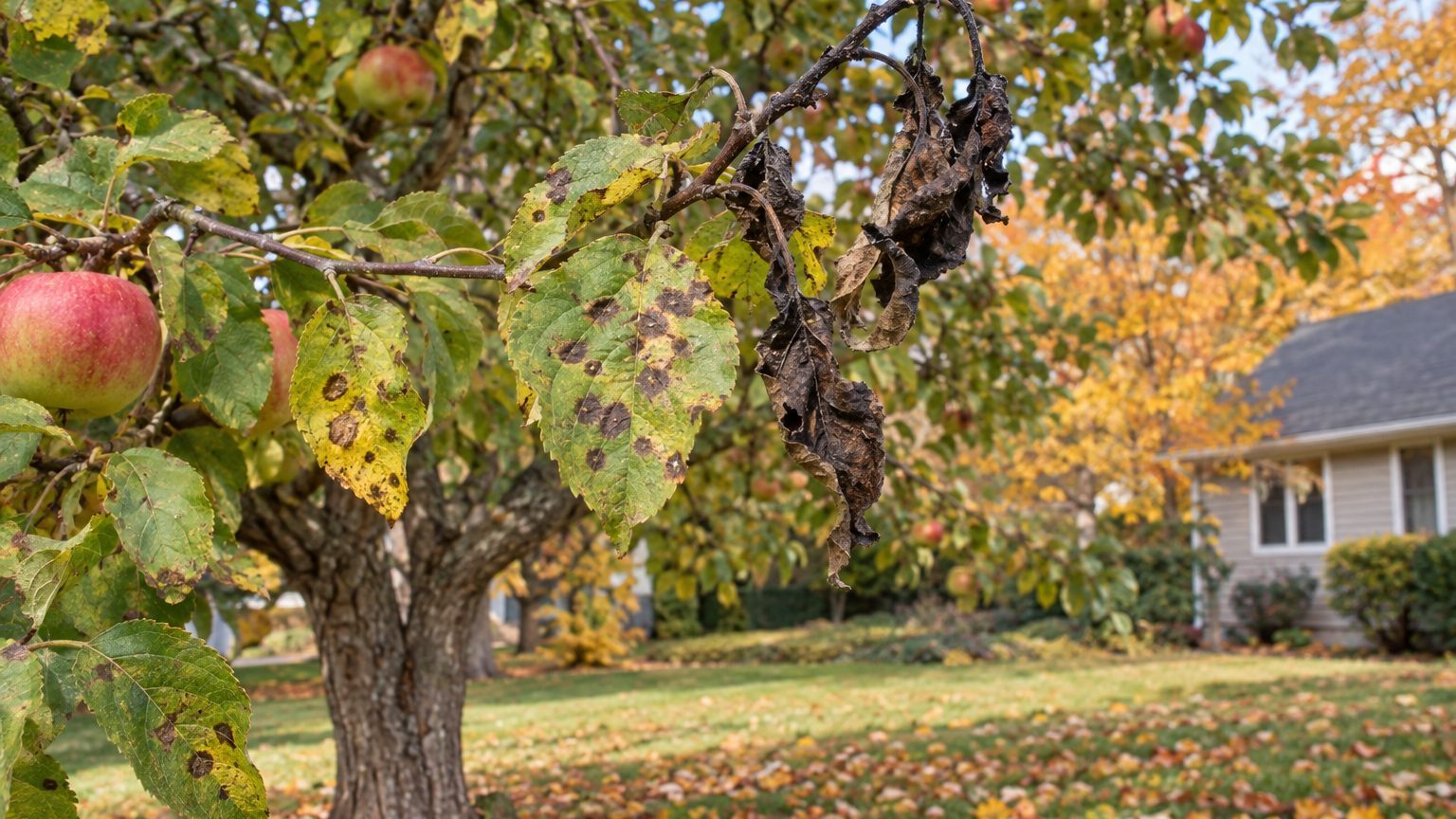
Spots on leaves in summer, sunken patches on bark, and branch tips that wilt and curl like a shepherd’s crook are the signs most homeowners see first. Each one points to a different kind of tree disease, and each calls for a different move.

How Do You Recognize a Tree Disease?

Look for a change that does not match an insect or a watering mistake: spots on leaves, dead patches on bark, or shoots that die back. The rule holds across the country, but what you see depends on the tree type and on climate, since warm, humid weather speeds many diseases.

Plain sight can mislead. Many plant diseases leave no obvious sign and are easy to confuse with over- or under-watering, so check the soil moisture before you blame a fungus or bacterium.

The state selector shown just under this section takes you to the page for your state.

How to Prevent Tree Diseases

Tree: Tree Diseases: Leaf Spots, Cankers and Fire Blight

Prevention follows the tree’s year, starting with the cut you make in winter and ending with the cleanup you do after leaves drop.

  1. Prune out diseased wood in late winter while the tree is dormant, so that spores and bacteria are removed before spring growth. In New Hampshire, that means finishing before April 1.
  2. Cut well below the damage, about 12 to 18 inches under any sign of infected tissue, so that no hidden infection stays in the branch you leave behind.
  3. Prune crabapples, pears and other rose family trees in early spring, because that timing lowers the chance of spreading fire blight.
  4. Remove nearby pear trees if you grow apples, since fire blight moves between them, and take out cankered areas at winter pruning.
  5. Keep water and mulch off the trunk base, so that the bark stays dry enough to resist foot rot and similar trunk problems.
  6. Rake and remove fallen leaves in autumn, which cuts the spores waiting for next year, though it will not end a leaf spot problem.

Skip late summer and fall pruning. Cuts made then can die back at the wound, and fresh wounds give disease an easy way in.

Tree Diseases by Tree Type

The same symptom means different things on different trees. A blackened shoot on a pear is a fire blight warning, while a sunken, dead patch on a stem is a canker.

Some trees also fail for reasons you cannot see above ground, so the tree type tells you where to look.

Tree Type What changes Why it matters
Apple and crabapple Disease spreads fast in rainy spring weather above 60 °F during bloom Bloom time is when to watch the tree closely
Pear Fire blight resistance varies by cultivar, with ratings such as 9.5 versus 4.2 A resistant cultivar loses far less growth to infection
Plum and cherry Black knot is cut out in late winter, before April 1 in New Hampshire Removing the knots before spring stops new spread
Lemon Foot rot is avoided with resistant rootstock and a dry trunk Wet bark and piled mulch invite the disease
English walnut Trees on black walnut roots can die at age 15 to 25 or older from blackline The failure comes from the graft union, not from care

Oaks, such as white oak, can show powdery mildew in summer. Check which group your tree belongs to before you choose a pruning date.

Tree Disease Mistakes to Avoid

Pruning Fire Blight at the Wrong Time

Late summer and fall cuts can die back at the wound and leave an opening for infection. Do the work while the tree is dormant, and cut 12 to 18 inches below the diseased tissue.

Painting Wounds and Wrapping Trunks

Exterior paints may contain antimicrobial agents that harm the tree, so leave them off. If you use flexible tree wrap on a young tree for winter, take it off in spring so it does not shelter pests.

Ignoring Fallen Leaves

Leaf spot fungi that stay on the leaves overwinter in the litter. Raking and removing foliage in fall cuts the spores for next year, though it will not end the disease.

Tree Diseases in Your State

The sign that calls for action is new dead wood, a sunken patch on bark, or shoots that wilt and blacken in warm, humid weather. The right month to cut depends on where you live.

  • Pruning months depend on your climate, so confirm the right timing for your area before you pick up the saw.
  • Your county extension office can confirm a diagnosis when the symptoms are unclear, so call before you cut a large limb.

Common Questions

What Is a Canker on a Tree?

A canker is a dead, often sunken area on a branch or trunk. Look for bark that is discolored or cracked, with healthy bark around it. Cut out affected branches well below the damage.

Can Fire Blight Spread from One Tree to Another?

Yes. Bacteria move quickly in young, soft tissue in warm, humid weather, and fire blight passes between apples and pears. Removing infected branches and nearby pear trees lowers the risk to an apple planting.

How Far Should You Stay from a Black Walnut?

In New Jersey, the toxic zone extends an average of 50 to 60 feet from a mature tree. Plant other trees outside that distance, because wilting nearby can come from the walnut itself rather than from disease.

How to Choose the Right Tree for Your Yard

How to Choose the Right Tree for Your Yard

A tree you plant in a small hole today becomes a roof, a shadow and a root system within a few decades, so the choosing matters more than the digging. Start with the size the tree reaches at maturity, then match it to the sun, the soil, the winter cold and the space around your house.

Which Tree Is Right for Your Yard?

The right tree is the one whose full-grown size fits your space and whose needs match your sun, soil and winter lows. A large shade tree and a small fruit tree ask for very different things, and climate decides which species will live through your coldest nights.

Fruit trees add their own demands. In cold-winter areas, avoid planting a peach in a spot that gets bitterly cold in winter, whereas a nut tree grower in a milder part of the Northeast deals with minimums that never fall very far below zero.

The state selector just below this section leads to the page for your state, where the planting months and local conditions are laid out.

How to Choose a Healthy Tree at the Nursery

Tree: How to Choose the Right Tree for Your Yard

Good choosing happens in a sequence, starting at home with a tape measure and ending at the garden center with the tree in front of you.

  1. Look up before anything else, so that overhead wires never end up inside a mature crown. Where wires run across a property, large shade trees stay at least 25 feet away, and a tree planted directly under them should finish under 30 feet tall.
  2. Measure the distance to the house and to neighboring trees, so the crown has room without crowding walls or roofs. A shade tree sits 15 to 20 feet from the foundation where it is planted in Arkansas, while lemon trees in Florida want 15 to 25 feet or more from buildings and other trees.
  3. Check the sun, because fruit trees do best in full sun with good air movement. Watch the spot through a day and skip corners that sit in shade for most of it.
  4. Test the soil depth with a spade or probe, so roots have somewhere to go. Fruit trees do well in soil at least 4 feet deep in California, while Oregon guidance asks for rooting to at least 3 feet, and well-drained ground with 18 inches above any ledge or hardpan suits fruit trees in Maine.
  5. Confirm the winter hardiness of the species against your lowest winter temperatures, so a hard freeze does not undo years of growth.
  6. Inspect the root ball at the nursery, because a tree with a well-sized ball recovers faster after planting. For a tree, allow 12 inches of root ball width for every inch of trunk diameter, measured 6 inches above the root flare.

Call 811 before any digging so buried utilities stay untouched. If a septic field sits nearby, keep trees at least 5 to 10 feet from its edge, and more where you can manage it.

Choosing a Tree by Tree Type

Tree types differ in how much room they need and how much cold they take. Size is the first thing to sort out, because it sets the distance from the house and from the wires.

Soil and climate come next. Some species wait on warm winters, others on well-drained ground, and the facts below cover the types that have clear numbers.

Tree Type What changes Why it matters
Large shade tree Stays 25 feet from overhead wires and 15 to 20 feet from the foundation Branches and roots grow into lines and walls as the tree matures
Medium or small tree near lines Medium trees sit 15 to 20 feet to the side of electric lines, large trees 30 feet, and trees under distribution lines stay 25 feet or less A mature height kept low avoids constant cutting by the utility
Lemon Full sun, 15 to 25 feet or more from buildings and other trees Fruiting wood needs sun and air on every side
Jackfruit 25 to 30 feet from other trees and structures if little pruning is planned Unpruned crowns grow very wide
Peach A south-facing site with a gentle slope, and not a spot that gets bitterly cold in winter Cold and slope decide whether buds survive and whether you can work the ground

For you, this means picking the tree type last, after the site is measured. Plums, nut trees and other fruit trees follow the same logic: full sun, deep and well-drained soil, and winter lows the species can take.

Tree Buying Mistakes to Avoid

Planting a Big Tree Under Wires

A small sapling hides how tall it will get, and high voltage lines usually run on poles 30 to 35 feet tall. A large tree beneath them ends up cut back by the utility, which leaves a lopsided crown.

Choose a species that stays under 30 feet where it must go under wires, or move the large tree 25 feet away from them.

Crowding the House

A tree set too close to the foundation sends branches onto the roof and roots toward the walls. Spacing is easy to fix before planting and hard to fix after.

Place shade trees 15 to 20 feet or more from the foundation, and give fruit trees like jackfruit even more room when pruning is minimal.

Ignoring Soil and Cold

A tree in shallow or soggy ground struggles, and a species rated below your winter lows can lose its buds. Both problems come from skipping the homework.

Test the soil depth first, and sample the soil 6 to 8 inches deep every two to three years where fruit trees are growing, as is advised by local gardening experts.

Best Trees to Plant in Your State

The sign that it is time to plant is soil you can work and a tree that is dormant or ready to root. The planting months for each state sit on that state’s page.

  • Open your state page to see the planting months that suit your climate.
  • Go during the dormant season or when the ground is workable, with your site measurements in hand.

Common Questions

How Far Should a Tree Be from Your House?

For a shade tree, 15 to 20 feet from the foundation is a common guide in Arkansas. Larger or wide-spreading trees need more room.

Can You Plant a Tree Near a Septic System?

Keep trees at least 5 to 10 feet from the septic field edge, as advised in Nebraska, and farther if you can. Roots search out moisture.

What Size Root Ball Should a Nursery Tree Have?

Pick a root ball that is 12 inches across for every inch of trunk diameter, measured 6 inches above the root flare. A ball that small for the trunk means roots were cut away.

Fruit Tree Chill Hours: What They Are and Why They Matter

Fruit Tree Chill Hours: What They Are and Why They Matter

Fruit trees that drop their leaves in fall are not simply resting through winter. They are counting cold, and the count decides whether buds open evenly in spring or sputter. Chill hours are that count, and knowing the number for your yard tells you which apple, peach or plum to plant.

What Are Chill Hours?

In Nevada guidance, chill hours are counted while a dormant fruit tree experiences temperatures between 32 and 45 degrees Fahrenheit. Each kind of tree, and each variety, needs a certain total before it will bloom normally and set fruit. Mild winters supply fewer hours than cold ones.

Cold winters generally provide more chill than mild winters. Where winters are mild, such as Florida or the low desert of Arizona, the total falls short for many trees, and the choice of variety matters far more.

The state selector just below this section takes you to the page for your state.

How to Match a Fruit Tree to Your Chill Hours

Tree: Fruit Tree Chill Hours: What They Are and Why They Matter

Matching a tree to your winter takes a few steps, done in this order before you buy.

  1. Use the definition supplied with your local chill-hour figure, so the rating on the tag and the total for your yard are calculated on the same basis.
  2. Find out how much winter cold your area usually gets from your county extension office, since a local figure beats a guess from the next state over.
  3. Look at the total built up by January 1st, which gives a useful picture of the winter so far, as peach growers in Florida do.
  4. Choose varieties that need fewer hours than your winter delivers. In the Arizona low desert, where most areas average 300 to 400 chilling hours per year, varieties needing less than 400 hours give a full crop almost every year.
  5. Check the variety label for its rating, and pass on any tree that asks for more cold than your yard provides, because it will bloom poorly no matter how well you care for it.
  6. In the Arizona low desert, favor early-maturing, self-pollinating varieties when space is limited.

Georgia growers sort peaches into three bands. Low chill means under 600 hours, moderate runs 600 to 750 hours, and high means 750 to 900 hours. A rating on a tag fits into one of those bands, which makes comparing varieties much easier.

Chill Needs by Tree Type

Apples and peaches both count cold, but they are not equally easy to place in a mild climate. Some apple varieties do well on about 300 to 400 hours below 45 degrees, which suits North and north-central Florida.

Peaches vary even more from variety to variety, so the label on the individual tree counts for more than the fruit type alone.

Tree Type What changes Why it matters
Apple Some varieties need about 300 to 400 hours below 45 degrees They can fruit in North and north-central Florida
Peach, low chill One Florida variety, ‘FloridaCrest’, needs 350 chill hours It suits North Florida winters
Peach, Texas Zest series Needs range from 500 to 600 chilling units, depending on the variety. Choose the one that fits your winter
Peach, White Delight series White Delight One and White Delight Two need 550 hours; White Delight Three and White Delight Four need about 700 hours. Variety within one series changes the fit

For you, this means reading the rating on the exact variety, not the tree type. Peaches from the same series can have different chill requirements, enough to separate a good crop from a poor one in a mild winter. Plums, pears and other deciduous fruit trees follow the same principle, so check each label against your local winter.

Chill Hour Mistakes to Avoid

Buying a Tree That Needs Too Much Cold

A tree rated for more hours than your winter supplies may leaf out late, bloom late and set little fruit. Fruit that does form can be small and misshapen, a problem growers call buttoning. Check the rating before buying and choose a lower-chill variety.

Counting Warm Winter Days

Only cool hours count. In Florida guidance, chilling hours accumulate when temperatures drop below 45 degrees. Judge a winter by its cold hours, not by how long it lasts, and ask your county extension office for the typical local count.

Trusting Another State’s Number

A chill figure written for one place applies only there. The low desert of Arizona averages 300 to 400 hours, while the Verde Valley, at 3,000 to 4,500 ft, sits in a different climate. Use figures from your own area, and let local growers guide the final pick.

Chill Hours in Your State

The sign to act on is a variety label that asks for more cold than your winters give. When you see that, pick a lower-chill tree. Each state page covers the months for planting and dormant-season care in that state.

  • Open your state page to see when to plant and when to prune dormant fruit trees where you live.
  • Visit it before you shop for trees, in the months when bare-root stock is sold.

Common Questions

How Do You Find Out How Many Chill Hours Your Yard Gets?

Your county extension office can give the typical winter total for your area. Local orchards and garden centers often know it too, since they choose varieties to match.

Can a High-Chill Tree Grow in a Mild-Winter Area?

It can grow, but it may leaf out and flower late, set less fruit and give lower-quality fruit. Low-chill varieties are the safer choice where winters are mild.

Do Nut Trees Need Chill Hours Too?

Yes. California guidance says deciduous fruit and nut trees need a certain number of hours below 45°F to produce, so check the rating before planting.

Best Time to Plant Trees in Yukon

Best Time to Plant Trees in Yukon

A young tree in a nursery pot looks ready to plant any day of the growing season, but Yukon summers are short and winters are hard. Planting shade, ornamental and fruit trees at the right moment gives roots time to settle before the cold returns. A few hardy trees do the best here.

When Is the Best Time to Plant Trees in Yukon?

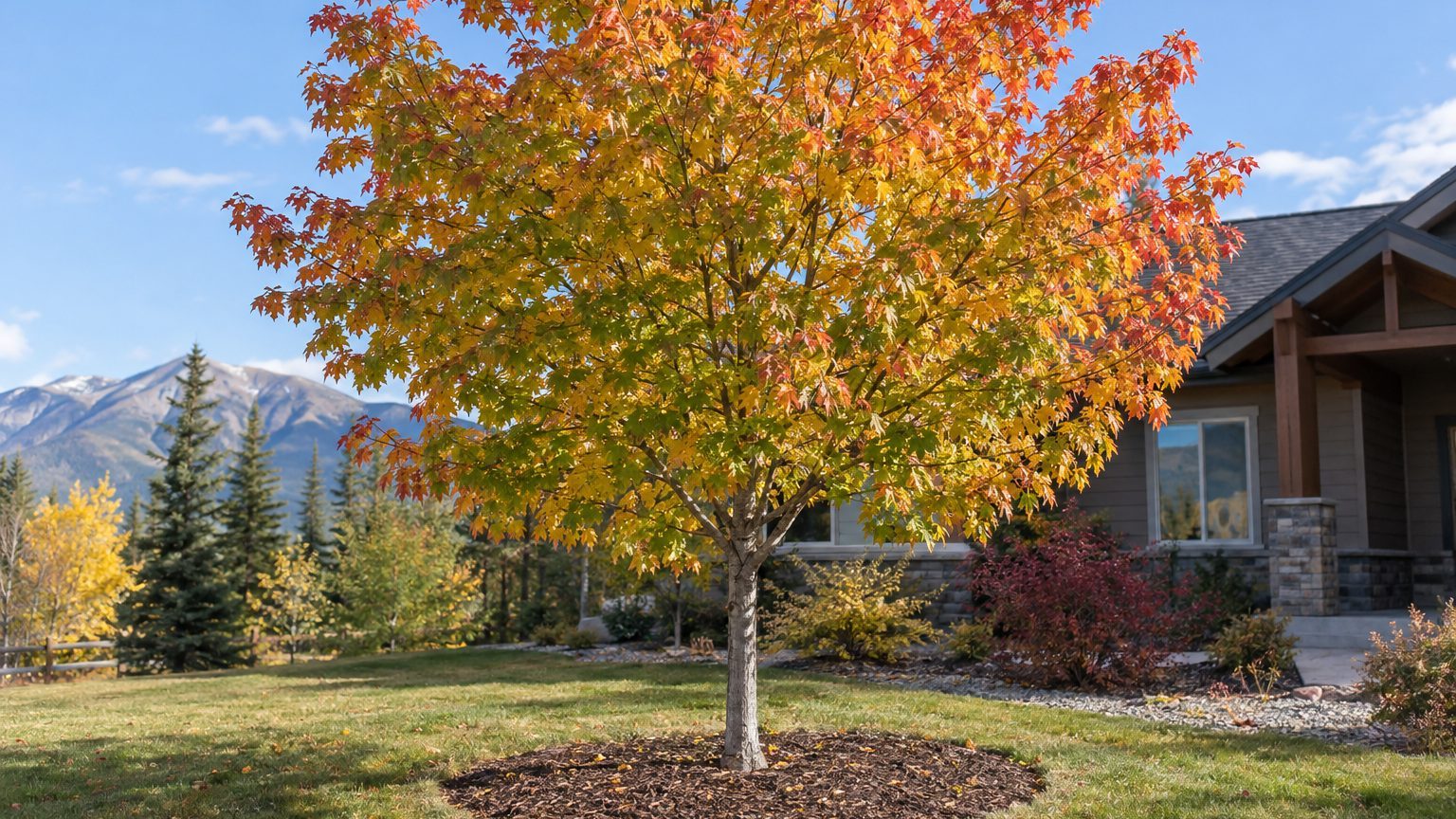
A young shade tree newly planted in a home yard

Plant shade and ornamental trees in September, with May as a fallback, because a tree that is dormant can rebuild damaged roots without feeding leaves at the same time.

  • In early spring, a tree can be planted once the ground thaws enough to work, though buds often start to swell by then, which is why May works only as a fallback.
  • Through summer, planting is the hardest, since heat and dry soil stress new roots.
  • In September, container-grown and balled-and-burlapped trees go in while the tree is heading into dormancy, and the roots have a stretch of time to regrow and recover before the soil freezes.
  • After a fall planting, water the tree regularly until the ground freezes.
  • Bare-root trees are planted while dormant, before the buds open, and container trees can go in most of the year if watered but settle best in the dormant season.

In Whitehorse, the last spring frost falls on average around June 5, so in half of all years it comes later. The first fall frost arrives on average around August 25, and half of all years it comes earlier. Northern and upland districts run weeks behind these dates. Yukon sits in Canadian hardiness zone 1b, a rating that does not convert to a USDA zone.

Dates here follow the nearest comparable climate, so confirm local timing with a garden centre, a garden society or a territorial gardening group.

When to Plant Fruit Trees in Yukon

Plant a bare-root fruit tree as soon as the soil can be worked in spring, while the tree is still dormant and before the buds open. A container-grown fruit tree is more flexible, but it also settles best in the dormant season.

Fall planting works for fruit trees too, with the same watering until the ground freezes. Once buds open on a bare-root tree, the roots cannot keep up with the leaves.

Kind of fruit tree When to plant in Yukon Why then
Bare-root While dormant, before the buds open Roots establish before leaves ask for water
In a container Most of the year if watered, best in the dormant season The root ball is intact, but dormancy still helps it settle

Choice of tree matters as much as timing. Rescue and Norland apples, and tart cherries, have done well in cold climates like this one. The Manchurian plum and Manchurian apricot are winter-hardy there too, though they are grown from seed and vary in quality. Dwarfing rootstocks common in southern nurseries are not reliably winter-hardy.

Best Trees to Plant in Yukon

Crabapples are the proven shade and ornamental choice in cold climates like this one. Breeding has produced many hardy cultivars, and some survive extremely severe winter cold. Match any tree to your space, sun and hardiness zone.

Tree How it does in Yukon Why
Siberian crabapple Grows well in cold northern climates Bears edible fruit slightly larger than wild crabapples
Dolgo crabapple Grows well in cold northern climates Bears edible fruit slightly larger than wild crabapples
Hardy crabapple cultivars Some survive the deepest winter cold Bred and selected for extreme cold

Wild crabapples are native in parts of North America, so a crabapple suits a wide range of yards. Check the cultivar label for hardiness before buying.

When to Plant, Water and Prune Trees in Yukon

Planting, watering and pruning each have a window tied to dormancy, so most of the work happens when the tree is asleep. Pruning in fall or early winter is avoided because new growth may not harden before the cold.

Task Best timing in Yukon Why then
Plant a shade or ornamental tree September, or May as a fallback Dormant roots can regrow and recover before or after winter
Plant a bare-root fruit tree While dormant, before buds open Roots settle before leaves demand water
Water a young tree Regularly after planting, until the ground freezes New roots need moisture to establish before winter
Prune a fruit tree March to April, in late winter or very early spring The tree is still dormant and the buds have not swollen

Peaches are pruned last, closest to bloom, because their flower buds are easily hurt by cold, while apples go first. The page on when to prune fruit trees covers the details.

Where to Get Tree Advice in Yukon

Yukon has no county extension office, so tree and soil questions go to a few other places.

  • Agriculture and Agri-Food Canada, linked as Agriculture and Agri-Food Canada, is the federal department to check for general growing guidance in the winter planning months.
  • A local garden centre or a garden society can tell you which trees suit your district and soil, so ask before spring ordering.
  • Territorial gardening groups can confirm local timing, and a September visit lets you plant and water the new tree until the ground freezes.

Common Questions

Is a Canadian Hardiness Zone the Same as a USDA Zone?

No. The Canadian system uses seven climate variables, while the USDA system uses one, and there are no simple conversions between them. Yukon is in zone 1b by the Canadian system, so check a plant’s rating by that system.

Do Plums and Apricots Grow in a Cold Climate Like Yukon?

The Manchurian plum and Manchurian apricot are winter-hardy in a cold climate similar to Yukon’s. Both are grown from seed, so fruit quality varies from tree to tree.

Do Dwarfing Rootstocks from Southern Nurseries Survive?

Often not. The Malling, Merton Malling and EMLA dwarfing rootstocks common in southern nurseries are not reliably winter-hardy in a climate this cold, so ask a local garden centre which rootstock a tree is on before buying.

The almanac, state by state. Every date on this site comes from a state’s own frost facts and its extension service’s calendar — and says where it comes from.