Skip to content

When to Prune Fruit Trees in Alabama

When to Prune Fruit Trees in Alabama

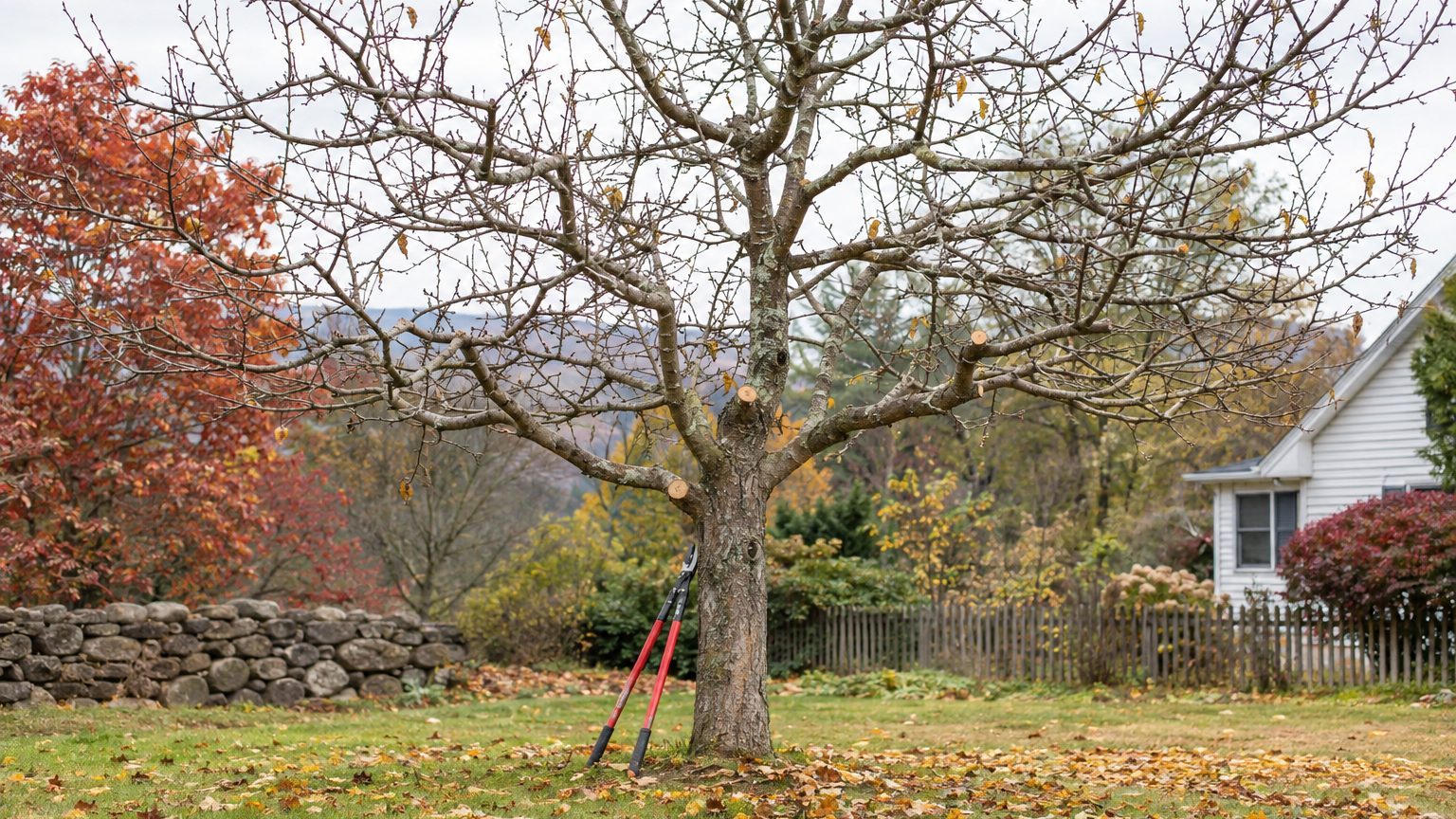
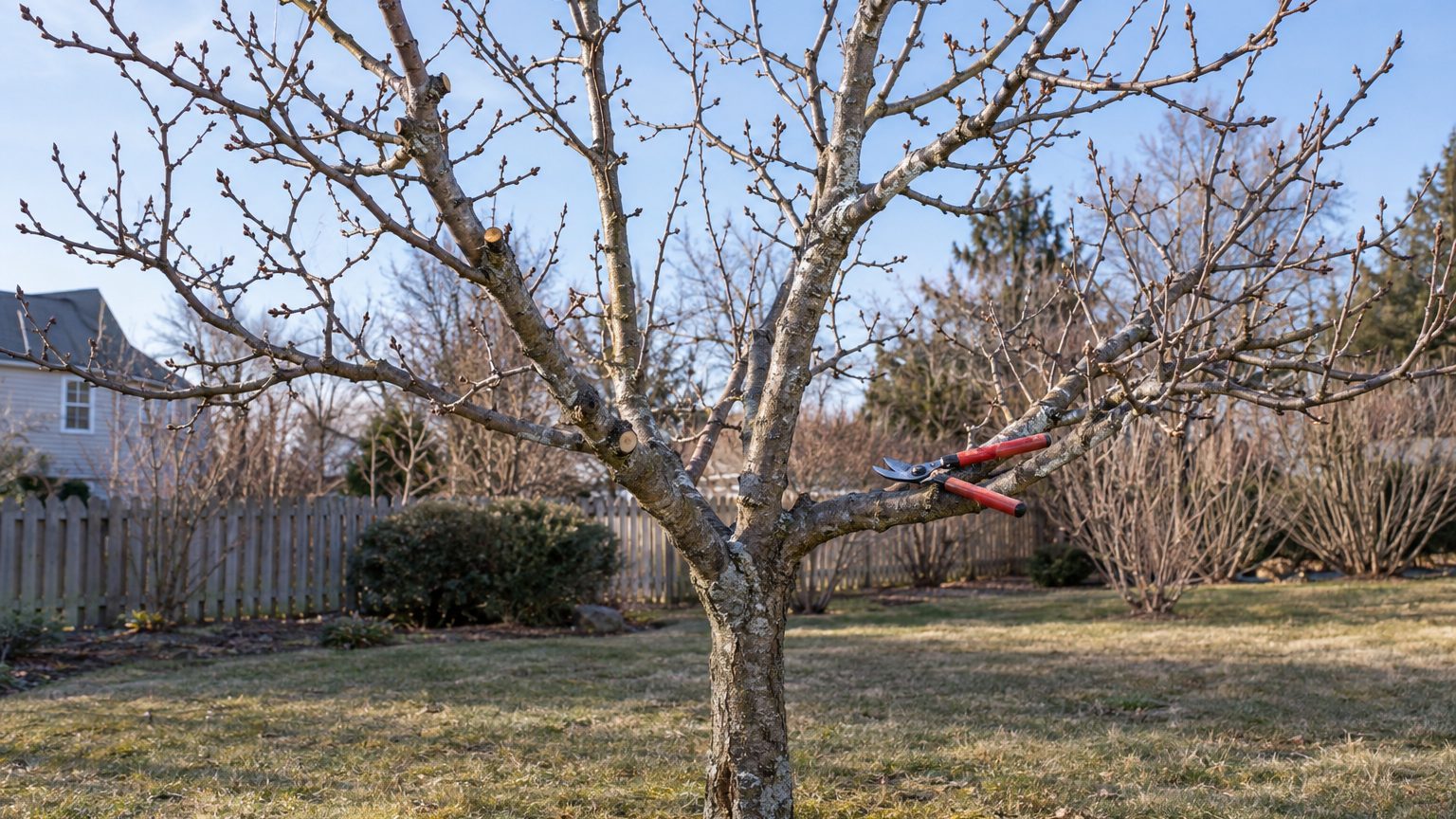
A bare apple or peach branch in the middle of winter looks like the wrong moment to reach for the loppers, yet that is exactly when fruit trees in Alabama want their haircut. The tree is asleep, the cuts are easy to see, and the wounds close as growth restarts in spring.

When to Prune Fruit Trees in Alabama

Pruning a dormant fruit tree before the buds open

Dormant pruning of fruit trees in Alabama is best done in February, while the tree is at rest and before the buds swell. It can also be done in January or March. Pruning in fall or early winter is avoided, because new growth may not harden before the cold.

Fruit tree When to prune in Alabama Why
Apples and pears February, with January and March as fallbacks Dormant wood is easy to read, and apples go first in the pruning order
Peaches and nectarines Last of the group, closest to bloom Flower buds are easily hurt by cold
Cherries and plums February, with January and March as fallbacks Cuts heal as growth restarts in late winter
Young trees Same dormant window, before the buds open Early shaping happens while the tree is still at rest

Alabama stretches across USDA hardiness zones 7a to 9a, so a yard in the northern hills and one near the Gulf Coast will not wake up on the same schedule. Let the tree guide the final week. At the reference city, the last spring frost falls between March 19 and April 3, and gardens outside town often see it later, so check your own county.

How to Tell Your Fruit Trees Are Ready to Prune

The calendar gives a window, and the tree tells you when inside it. Look for these signs before you make the first cut.

  • The tree has dropped all its leaves, which means it is dormant and can handle cuts without wasting stored energy.
  • The hardest part of winter has passed, so wounds will not sit open through a deep freeze.
  • The buds are still tight, because pruning must finish before they swell.
  • Bare branches show their structure clearly, so crossing limbs, dead wood and crowded centers are easy to spot.
  • Swelling buds on a peach or nectarine tell you its turn has come, since these are pruned closest to bloom.

If buds on apples or pears are already opening, you have moved past the dormant window and should hold off on heavy cuts.

When to Prune Peach and Apple Trees in Alabama

Apples are pruned first, in the heart of the dormant season. With no leaves in the way and the buds still closed, you can thin the canopy and remove weak growth.

Peaches wait. Their flower buds are easily hurt by cold, so they are pruned last, as close to bloom as the season allows. Starting later lets you see which buds survived the cold and trim accordingly.

A practical order is apples and pears early in the window, then cherries and plums, then peaches and nectarines at the end. Pruning stays in the dormant months, so if you are tempted to do heavy shaping in fall or early winter, hold off until late winter arrives.

Where to Get Fruit Tree Advice in Alabama

The Alabama Cooperative Extension System, reachable through Alabama Extension, publishes guidance written for Alabama soils and weather. Your county office adds local knowledge.

  • Alabama Extension has tree selection and planting guides, worth reading before you choose a variety or plan cuts.
  • Your county extension office can tell you how far your local spring runs ahead of or behind the reference city, so call in January before the pruning window opens.

Common Questions

Can You Prune Fruit Trees in January in Alabama?

Yes. January can work for dormant pruning, though February is the target. Apples and pears suit the earlier end, and peaches are better left for later.

Can You Prune Fruit Trees in March in Alabama?

March is a fallback month. Finish before the buds open, and keep peaches for last, since they are pruned closest to bloom.

When Should You Plant Fruit Trees in Alabama?

Bare-root and container fruit trees go in during January, February or December, with March as a fallback while they are still fully dormant. Bare-root trees are planted before the buds open, and the dormant season is when container trees settle best too.
How Often to Water a Newly Planted Tree

How Often to Water a Newly Planted Tree

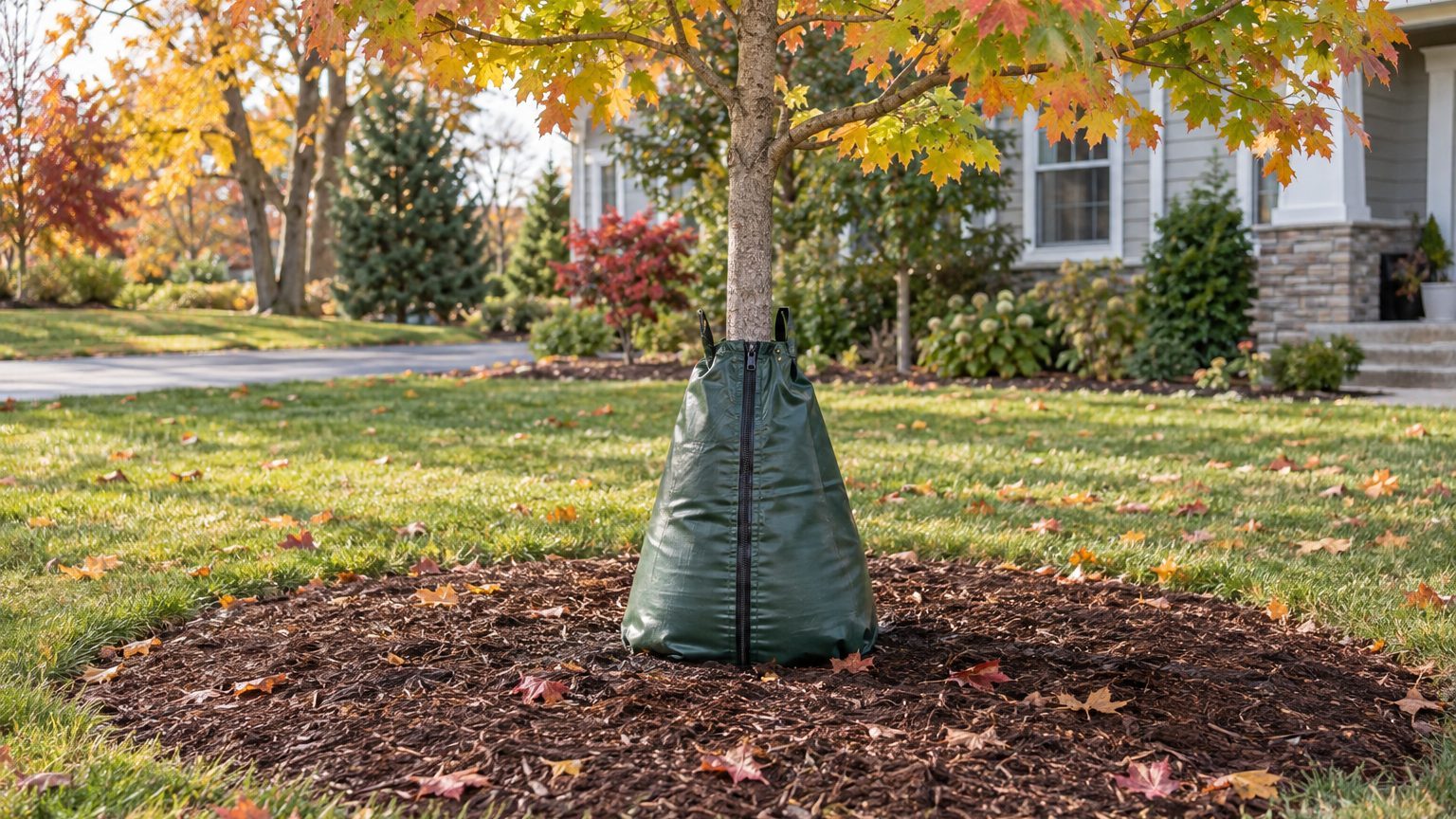
A freshly planted tree sits in a small ball of soil, and that ball dries out long before the surrounding ground does. Watering newly planted trees comes down to keeping that root ball damp while roots reach outward, which takes a good soaking at planting, frequent watering at first, then a gradual stretch between drinks.

How Much Water Does a New Tree Need?

A common guide in Pennsylvania is about 2 gallons for every inch of trunk diameter, so a tree with a 3-inch trunk gets 6 gallons.

Tree type and climate move that number. Small seedlings in the cool North get far less than a large balled tree, and trees in hot, humid country are watered more often early on than trees where summers stay mild.

The state selector just below this section leads to the page for your state, where the months that matter for your area are laid out.

How to Water a Newly Planted Tree

Tree: How Often to Water a Newly Planted Tree

Order matters here, because the first weeks decide how fast roots leave the root ball and grab the native soil.

  1. Soak the root ball and the hole right after planting, so that air pockets collapse and soil settles tight against the roots.
  2. Water often during the first weeks, since the roots are still confined to the ball. In Florida, a newly planted lemon tree is watered at planting and every other day for the first week or so. In North Carolina, trees planted in fall are watered every 2–3 days for the first 2–3 weeks unless heavy rain does the job.
  3. Apply the water slowly across the top of the root ball, so it soaks down instead of running off. A two-inch caliper tree takes 20 to 40 gallons spread evenly over the ball each time it is watered.
  4. Check the soil before you water again, because the top 2 to 3 inches of the root ball should stay moist. Push a finger or a trowel in. Damp means wait, dry means water.
  5. Settle into a weekly rhythm after the first month. In Kansas, a weekly soaking of about 10 gallons carries spring and summer plantings on most sites.
  6. Keep going in winter when it stays dry and above freezing. Where winters are mild, as in North Carolina, that means a drink every 2–3 weeks, and in Kansas it means a monthly soaking if less than an inch of rain or about 10 inches of snow has fallen.

How long you keep this up depends on trunk size. Trees in Florida need extra water until established, which takes 3-4 months for each inch of trunk caliper, so a thick-trunked tree stays on your watering list far longer than a slender one.

Watering by Tree Type

Size and kind of planting change the routine more than most people expect. Seedlings are small and shallow rooted, while balled trees and fruit trees carry bigger root systems and ask for bigger drinks.

Local guides give different amounts for different plantings, and the differences follow the tree and the climate where the advice was written.

Tree Type What changes Why it matters
Seedlings in the cool North 5 gallons per week in the growing season without timely rain, then 10 gallons every other week for the following two years Small roots need steady moisture, and the rhythm eases as they spread
Fruit and nut trees in the Pacific Northwest About 3 to 5 gallons per tree every week A modest, regular drink suits young trees in a mild, cool climate
Citrus in hot, humid country Water at planting and every other day for the first week or so, then 1 to 2 times a week for the first couple of months Frequent early watering keeps a small root ball from drying out in heat
Larger balled trees Based on trunk size, with 2 gallons per inch of trunk diameter at each watering A bigger trunk means a bigger root ball to keep moist

For you, that means matching the dose to your tree rather than copying a neighbor’s hose routine. Measure the trunk, note the climate you garden in, and scale the gallons to fit. Peaches in Utah, once established, move to irrigation every 7 to 14 days that reaches 18 to 24 inches deep, a pattern a young tree grows toward.

Tree Watering Mistakes to Avoid

Shallow Sprinkling

A quick spray wets the surface and leaves the root ball dry underneath. Roots then stay near the top, where they dry out fastest. Water slowly and long enough to soak the whole ball, using the gallon guide for your tree’s trunk size.

Watering on a Fixed Schedule

Rain, heat and soil type change what a tree needs from one week to the next. Sticking to the calendar can drown roots after a wet spell or leave them thirsty in a dry one. Check the top 2 to 3 inches of the root ball first, and water only when it feels dry.

Stopping Too Soon

A tree that looks settled after a season is often still building roots. Florida guidance runs 3-4 months for each inch of trunk caliper, and a larger tree takes longer than people expect. Keep watering through dry spells, including mild winter stretches, until the tree has had its full establishment period.

How Often to Water New Trees in Your State

The sign that triggers watering is dry soil in the top few inches of the root ball, and the months to watch shift with where you live. The right timing depends on your local climate.

  • Use the state selector to reach your state’s page, where you will find the months to water.
  • Go there before planting day, then check the root ball with a finger each time you head out with the hose.

Common Questions

Should You Water a New Tree When It Rains?

Skip the hose after a soaking rain, but check the root ball a day or two later. A light shower often wets only the surface, and the ball can still be dry underneath.

Can You Overwater a Newly Planted Tree?

Yes. Soil that stays soggy starves roots of air. Wilting leaves paired with wet, heavy soil around the root ball point to too much water, while wilting leaves with dry soil point to too little.

Does a New Tree Need Water in Winter?

It can. When conditions are dry and the ground is not frozen, a soaking helps roots stay hydrated. Frozen ground is the signal to wait.

Types of Trees for Home Yards: Shade, Flowering and Fruit

Types of Trees for Home Yards: Shade, Flowering and Fruit

A shade tree you plant in spring may take longer to cast real shade than a flowering tree takes to bloom, and a fruit tree asks for the most attention of all. Yard trees fall into four groups: shade, flowering, evergreen and fruit. Mature size decides which ones fit your lot.

What Are the Main Types of Yard Trees?

Yard trees sort into shade trees, smaller flowering or ornamental trees, evergreens and fruit trees, and mature size separates them more than anything else. Shade trees can stay under 35 feet or climb past 100 feet. Climate decides which species within each group will thrive for you.

Smaller ornamental trees often top out under 25 feet, which suits tight front yards and spots near a house. Fruit trees come in sizes from patio dwarfs to full semi-dwarfs, so the same fruit can fit very different spaces.

The state selector rendered just below this section takes you to the page for your own state, where the local timing and conditions are covered.

How to Tell Tree Types Apart

Tree: Types of Trees for Home Yards: Shade, Flowering and Fruit

Start with the job you want the tree to do, then work through the size and the space, in this order.

  1. Decide the purpose first (shade, flowers, year-round green or fruit), so that every later choice narrows the list instead of widening it.
  2. Measure the open space overhead and to the sides, so that the mature tree never grows into wires, eaves or a neighbor’s fence.
  3. Match the mature height to that space. Shade trees range from under 35 feet to over 100 feet, while many ornamental trees stay under 25 feet, so the wrong pick can outgrow a small lot.
  4. Look at the leaves and form, since deciduous trees drop leaves and let winter light through, while evergreens keep their needles or foliage and block wind and views all year.
  5. For fruit, pick the rootstock size, because a semi-dwarf apple, peach, apricot or plum wants about 15 to 18 feet between trees, and a smaller dwarf asks for much less.
  6. Check how the tree arrives (bare-root, containerized or balled), so that you plant at the right moment while it is dormant or the soil is workable and the roots can settle.

Bare-root deciduous trees do best when the trunk is under 2 inches across, and bare-root evergreens should be very small, under 2 feet tall. Smaller stock usually catches up with larger stock once it roots in.

Tree Types Compared by Tree Type

The groups differ most in how big they get and how much room they need. Fruit trees add one more variable, the rootstock, which sets the final size more than the variety does.

Where winters are cold, columnar and dwarf forms make fruit possible on small lots. Where summers run hot, size choices still follow the same logic.

Tree Type What changes Why it matters
Shade trees Mature height from under 35 feet to over 100 feet A tall species needs open sky and distance from the house
Medium ornamental trees Mature height of 25 to 50 feet Fits a front yard but still needs clearance from structures
Small ornamental trees Mature height under 25 feet Works near walkways, patios and under power lines
Semi-dwarf fruit trees 12 to 15 feet tall and wide, spaced 15 to 18 feet apart for apples, peaches, apricots and plums Needs a real planting bed and room to reach
Dwarf fruit trees 8 to 10 feet tall and wide Suits a small yard and keeps fruit within reach
Ultra-dwarf fruit trees 3 to 6 feet tall and wide Grows in a container on a patio
Columnar fruit trees Apples reach 12 to 15 feet tall and 3 to 4 feet wide Gives height without taking much width

Evergreens and the many flowering species are not broken out here, so judge them the same way: check the mature height on the plant tag and compare it with your space. For fruit, remember the long view, since peaches and nectarines may stay productive for 20 to 25 years while other fruit trees can go past 40.

Tree Selection Mistakes to Avoid

Planting a Giant Under Wires

A shade tree that can pass 100 feet will eventually push into utility lines and roofs, and removal costs more than the sapling ever did. Pick a small tree under 25 feet for spots near lines or the house, and save the large shade species for open ground.

Crowding Fruit Trees Together

Semi-dwarf apples, peaches, apricots and plums planted closer than 15 to 18 feet compete for light and make harvest and care harder. Space them from the start, or choose dwarf or columnar forms if the yard is small.

Ignoring Cold Pockets and Elevation

In California stone fruit country, planting above 2,000 feet is advised only on hilltops, because low spots collect frost and invite bacterial canker. Where your yard sits in a hollow or on a slope matters, so choose the higher, drier ground for fruit trees and keep frost-prone dips for hardier plants.

Best Trees for Your State

The right choice depends on your climate, so look at what grows well in your area and plant while the tree is dormant or the soil is workable. Peaches in the medium chill zone of Texas can ripen over 6 weeks from early May until late July.

  • Before you shop, check which trees suit your local winters and summers.
  • Visit it again before planting day to check the months that fit your state.

Common Questions

How Long Do Fruit Trees Keep Producing?

Many fruit trees stay productive for 40 or more years, while peaches and nectarines last a shorter 20 to 25 years. Plan to replace peaches sooner than apples.

Which Fruit Trees Fit a Patio?

Ultra-dwarf trees, only 3 to 6 feet tall and wide, grow well in containers. Columnar apples are another choice when you want height but little width.

Do Cherry Trees Need Staking?

Cherries grafted onto Gisela 5 rootstock stay under 10 feet tall, and after 2 to 3 years they no longer need staking. Until then, give the young tree a stake for support.

When and How to Transplant a Tree

When and How to Transplant a Tree

A young tree that has outgrown its spot or stands too close to the house can often be moved, and the move goes best while the tree is dormant and the ground can be worked. The page covers timing, root ball size, and the care that softens transplant shock.

When Can You Move a Tree?

Move a tree while it is dormant, which means late fall after the leaves drop or early spring before the buds swell, as long as the soil is not frozen or waterlogged. Roots can then settle in without feeding a full canopy.

The exact months shift with climate and with the kind of tree. Where winters are mild, the dormant window opens earlier and stays open longer, while cold regions wait for the soil to thaw.

The state selector just below this section leads to the page for your state, where the months for your area are laid out.

How to Transplant a Tree

Tree: When and How to Transplant a Tree

Transplant shock comes from lost roots, so the work is mostly about keeping as many roots as possible and keeping them moist until they grow again.

  1. Measure the trunk about 6 inches above the ground, so that you can size the root ball to the tree.
  2. Dig a root ball of about 10 to 12 inches in diameter for every inch of trunk diameter, which is the guide for cooler states such as Nebraska and Utah, so that enough feeder roots travel with the tree.
  3. Cut any tap root cleanly and leave it no shorter than about 18 inches, a guide from Mississippi, because it will regrow and anchor the tree.
  4. Move the tree with its soil attached whenever the trunk is thicker than an inch, and always with evergreens, so that the roots never dry out in the air.
  5. Dig the new hole two or three inches shallower than the height of the soil ball, so that the root flare sits at or slightly above the surrounding ground.
  6. Widen the hole well beyond the ball, since loosened soil lets new roots spread, and water the tree in thoroughly.

In Alaska, the advice is a hole five times the width of the root ball, or at least 2 feet wider on all sides. Keep mulch a few inches back from the trunk, and keep the soil evenly moist while the roots re-establish.

Transplanting by Tree Type

Size and kind of tree change how much root you need to carry. A small bare-root tree is light and easy, while a large shade tree needs a heavy ball of soil and often a crew.

Evergreens ask for more care than leafy trees because they keep their foliage through the move and cannot be moved bare.

Tree Type What changes Why it matters
Bare-root deciduous tree Trunk caliper under 2 inches Larger trees lose too many roots when dug without soil
Bare-root evergreen Under 2 feet tall Evergreens keep their needles, so only very small ones survive bare roots
Broadleaf and narrowleaf evergreens Always moved with the soil attached Roots stay moist while the foliage keeps losing water
A tree whose trunk measures more than 1 inch across Moved with a soil ball Keeps the root system intact during the move
Tree 6 inches or more in caliper For every inch of caliper, plan on 10 inches of root ball, so a 7 inch tree needs a 70 inch ball. The ball becomes very heavy, which usually calls for professional equipment

For most yards, that means small trees are a weekend job and large ones are a hire. A 3 inch tree needs a root ball of at least 30 to 36 inches in width, so check the size before you commit.

Tree Transplanting Mistakes to Avoid

Digging a Root Ball Too Small

A ball that is too small leaves most of the feeder roots behind, and the tree starves above ground while the roots rebuild. Measure the trunk first and dig to the size that matches, about 10 to 12 inches of ball per inch of trunk.

Planting Too Deep

A hole that is too deep lets the ball settle and buries the root flare, which invites rot at the base of the trunk. Dig the hole two or three inches shallower than the soil ball, and set the flare level with the ground or just above it.

Letting the Roots Dry Out

Roots exposed to sun and wind dry quickly, and dry roots do not recover. Keep the ball wrapped and covered while it travels, replant soon after digging, and water the tree in well so the soil settles around the roots.

When to Transplant Trees in Your State

The sign to act is dormancy: the leaves are down or the buds have not yet opened, and the soil is soft enough to dig. Each state page gives the months that match its climate.

  • Open your state page to see the dormant months for your area, so you can plan the move ahead.
  • Check the soil before you start, and dig on a day when it crumbles in your hand instead of sticking in clumps.

Common Questions

Can You Transplant a Tree in Summer?

Summer heat pulls water from the leaves faster than cut roots can replace it, so moving a tree then stresses it hard. Wait for dormancy, or keep a container-grown tree shaded and watered if the move cannot wait.

How Do You Know If a Transplanted Tree Is Struggling?

Look for leaves that wilt or scorch at the edges, and check the soil a few inches down. If the leaves droop while the soil is dry, the roots need water. If the soil is soggy and the leaves still droop, drainage is the likelier problem.

Should You Cut the Tap Root When Moving a Tree?

Yes, you may cut it, since it will regrow. In Mississippi, the advice is to leave it no shorter than about 18 inches so the tree keeps a strong anchor.

How to Thin Fruit on Apple and Peach Trees

How to Thin Fruit on Apple and Peach Trees

Branches bowed under a heavy crop of small apples or peaches are a sign the tree set more fruit than it can finish. Pulling off some of the young fruit by hand in spring leaves the rest room to grow bigger, sweeter and easier to pick. Apples and peaches follow similar rules, with different spacing.

Why Should You Thin Fruit?

Thinning makes sense for nearly every apple, pear, peach, nectarine, plum and apricot tree, because a tree that sets a full crop spreads its energy across too many fruits. Stone fruits and pome fruits need different spacing, and local climate shifts the timing.

Heavy loads also hurt the tree itself. On young trees, a crop that is too large has been observed to cause limb decline, limb death and stunted growth, so a young tree should carry very little fruit.

The timing depends on your climate, and the state selector just below this section leads you to the page for your state.

How to Thin Apples and Peaches

Tree: How to Thin Fruit on Apple and Peach Trees

Start when the fruit is small and work branch by branch, using the size of the young fruit as your signal, with spacing that depends on the fruit.

  1. Check the size of the fruit before you thin so you act at the right time: peaches and other stone fruits are ready at ¾ to 1 inch across, and apples and pears are ready at ½ to 1 inch.
  2. Remove fruit by hand, snapping or pinching it off at the stem, so that you do not tear the branch or damage the fruit you want to keep.
  3. Reduce apples and pears to one fruit per cluster, so that the remaining apple has no neighbor pressing against it.
  4. Space apples about 6 to 8 inches apart along the branch, so that each one has room to swell.
  5. Space peaches wider than apples, and pick the spacing by how heavily the tree set: in Oregon 6 to 10 inches is common, while in Pennsylvania 8 to 12 inches is used.
  6. Remove the smallest, misshapen or damaged fruit first, and keep the largest, so that the remaining crop is the best the branch can produce.

A simple field test for peaches is the size of a quarter, which arrives about three to four weeks after bloom. Where the tree was pruned lightly and carries many fruiting shoots, lean toward the wider spacing of at least 8 inches between fruit.

Thinning by Tree Type

Stone fruits and pome fruits do not share one rule. Peaches and nectarines need the widest gaps, while apples and pears are thinned by cluster first and then by distance.

Plums and apricots sit between the two in spacing, since their fruit is smaller than a peach.

Tree Type What changes Why it matters
Apples and pears One fruit per cluster, clusters 6 to 8 inches apart Fruit in a cluster crowds its neighbors, so the survivor sizes up
Peaches and nectarines 3 to 5 inches in one desert guide, 8 to 10 inches in a Pennsylvania guide Wider gaps give larger fruit, and the right gap depends on how many set
Plums Set the fruits 4 to 6 inches apart, and break up any clusters. Small fruit still needs space, and clusters rub and shade each other
Apricots Leave 2 to 4 inches of space along each branch. Small fruit can sit closer than peaches without crowding

For you, this means walking the tree with the fruit type in mind rather than one spacing for the whole yard. A peach and an apple growing side by side get different gaps, and the plum or apricot gets tighter ones.

Fruit Thinning Mistakes to Avoid

Thinning Too Late

Fruit left on the branch past the early window has already drained the tree, and removing it later helps less. In Oregon the work is usually done within the first 20 days after petal fall, and in Pennsylvania within about 2 to 4 weeks after bloom. Watch the fruit size and start while it is still small.

Leaving Clusters Intact

Skipping the cluster step leaves several apples or plums pressed together, and they stay small and can crowd the branch. Take each cluster down to one fruit, then check the distance to the next. For plums, break the clusters up by hand as you space them.

Letting Young Trees Fruit Heavily

A young tree that carries a full crop can stunt or lose limbs. Where trees are young, limit the fruit to one per tree or major limb. The tree puts that energy into growing the structure that will carry bigger crops in later years.

When to Thin Fruit in Your State

The sign to watch is the fruit itself. When the young fruit reaches the size of the tip of your finger, or about the size of a quarter on peaches, it is time to start. Calendar months shift with climate, so each state has its own window.

  • Open your state’s page to find the months that fit your local spring.
  • Check it before bloom, so you know when to start walking the branches.
  • Go out when the fruit reaches finger-tip size, and thin one branch at a time.

Common Questions

Can You Thin Fruit Too Much?

Yes, though it is rare for a home tree. Stick to the spacing for your fruit, and when a tree set very few fruits, the wider end of the range is not needed.

Do You Need Tools to Thin Apples and Peaches?

Hands are enough. Pinching or snapping off young fruit near the stem works well, and it avoids tearing the spur or branch that will bear fruit again.

Should You Thin Fruit That Has Dropped on Its Own?

Natural drop happens early and removes some of the crop, but it rarely thins enough. Walk the branches after it ends, then space the fruit that is left.

Should You Stake a New Tree? When and How Long

Should You Stake a New Tree? When and How Long

A young tree leaning after a windy storm makes most homeowners reach for a stake. In most yards the tree does not need one, because a trunk that moves a little in the wind grows thicker and stronger. Staking helps only a weak tree or one on an exposed site, and it should come off once the roots hold.

Does a Newly Planted Tree Need Staking?

Usually no. A tree that stands upright on its own after planting does best left free, and staking is reserved for sites and specimens that call for it. Extension guidance describes staking as typically unnecessary, with a few exceptions.

What changes the answer is the tree and the place. A weak tree, a tree on a windy site or one that cannot stand without help may need support for the first 6 months or year. Some apple trees on dwarfing rootstocks, such as M-9 and M-26, usually need support of some kind.

The state selector just below this section leads to the page for your state.

How to Stake a Tree

Tree: Should You Stake a New Tree? When and How Long

When a tree does need support, the work happens at planting time, and the goal is a tree that is held steady while the trunk can still flex. These steps go in order.

  1. Drive the stakes into solid, undisturbed ground outside the root ball, so that the post never pierces the roots you just spent time protecting.
  2. Drive each stake at least 6 inches into the soil so it holds firm when wind pushes against the tree.
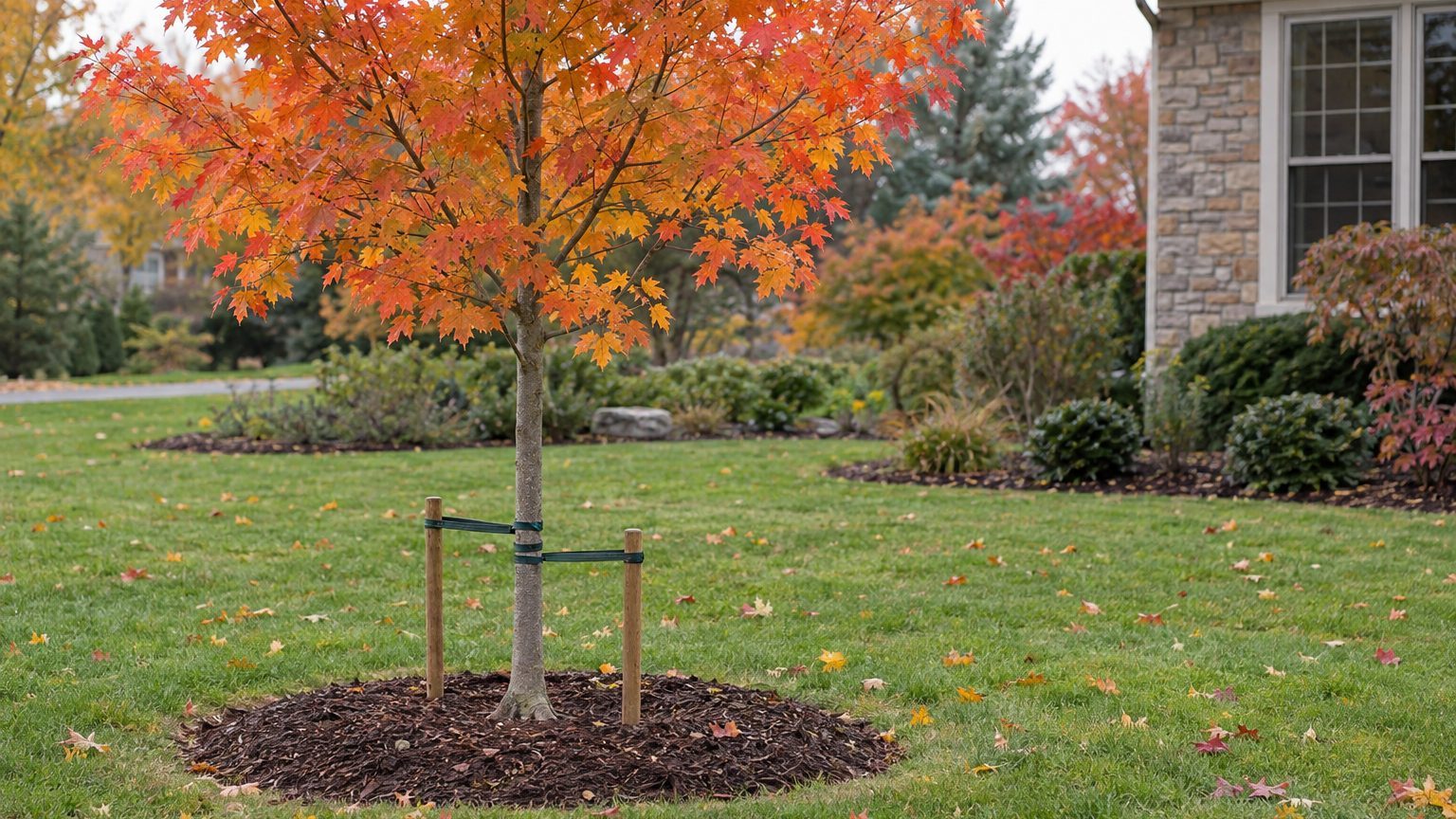
  3. Use two stakes, placing one on each side of the trunk at least 18 inches away, so the pull on the tree stays balanced.
  4. Place the ties low, between 1/3 and 2/3 of the distance from the ground to the first branch, so that the top of the tree is free to move and the trunk is not forced to snap at the tie.
  5. Fasten the ties just snugly enough to support the tree, so the trunk can still sway 6 to 8 inches and grow stronger as it moves.
  6. Check the ties regularly through the growing season, so that nothing begins to rub the bark or bite into the trunk as it thickens.

The stakes and ties should come off as soon as the tree can stand alone. In a mild climate such as Florida, small fruit trees are ready within 2 to 6 weeks, while large trees may need up to 6 months. A forgotten tie turns into a band around a growing trunk, so removal matters as much as installation.

Staking by Tree Type

Most shade and ornamental trees need nothing at all, and the exceptions come from the tree or the site, not from a calendar.

Timing also varies with how long a tree takes to settle. The table sets out what changes for the types where the answer shifts.

Tree Type What changes Why it matters
Trees on M-9 and M-26 rootstocks Usually need support of some kind, and sometimes M-7 does too The rootstock does not hold the tree upright without help
Small fruit trees Stakes come off within 2 to 6 weeks in a mild climate such as Florida Small trees firm up quickly, so long staking only weakens them
Large trees Support comes off no more than 3 to 6 months after planting in that same climate A bigger trunk needs longer to anchor, but still should not stay tied
Weak or windy-site trees May stay staked for the first 6 months or year A lean or constant wind can pull the roots loose before they grip

For a home planting, this means a healthy tree with a straight trunk goes in without stakes. A tree on a dwarfing rootstock or on an open, breezy lot gets two stakes, and every one of them has a removal date in mind from the day it goes in.

Tree Staking Mistakes to Avoid

Leaving Stakes on Too Long

A tree held rigid grows a thin trunk and a weak root system, and ties left on can girdle the bark. Guidance runs from about 3 months up to no longer than a year, and in Alabama up to 12 to 18 months at most. Remove the support once the tree stands alone, usually after one growing season.

Tying the Tree Too Tight

A tight tie stops the swaying that builds trunk strength. In Oregon, the advice is to let the trunk move up to 2 inches in any direction. Loosen the ties so the tree is held but still flexes, and check them as the trunk thickens.

Driving Stakes into the Root Ball

A stake pushed through the root ball cuts the roots the tree needs to establish. Set stakes in solid ground outside the root ball instead. If guy wires are used, attach them on the lower half of the trunk, below 2/3 of the tree’s height, to lower the chance of the trunk breaking at the attachment point.

Staking Trees in Your State

The sign to watch is a tree that leans or rocks at the base after planting, or one set in a gusty spot. Once the trunk stands firm without help, the stakes can go. Months for each state sit on that state’s page.

  • The planting months for your climate are listed on a separate page for your state, so you can set stakes at planting time.
  • Look there again when the tree has grown a season, to decide when the ties should come off.

Common Questions

Can You Stake a Tree Too Loosely?

Yes. A tree that tips over or leans hard in a gust is held too loosely. The ties should keep it upright while still letting the trunk move, so snug them until the lean stops without locking the trunk in place.

What Should You Use to Tie a Tree to Its Stakes?

Choose a wide, flexible strap that spreads the pressure across the bark. Thin wire or rope can cut into the trunk as it grows, which is the reason ties need checking and removing on schedule.

How Many Stakes Does a Young Tree Need?

Two stakes on either side of the trunk are the usual setup, driven in near the base but outside the root ball. Wooden stakes that stand fairly tall are common for this, and they give the ties a place to sit low on the trunk.

How to Prune Fruit Trees: Timing, Cuts and Shapes

How to Prune Fruit Trees: Timing, Cuts and Shapes

Late winter, before the buds swell, is when a bare fruit tree shows its framework best, and that is the moment to reach for the pruning saw. The goal is a short trunk, a few well-spaced main limbs and an open center that lets light reach the fruit. A little each year beats a big haircut after years of neglect.

When and Why Do You Prune Fruit Trees?

Across the country, fruit trees are pruned while dormant, in late winter before the buds open. Cold climates push the job toward the end of that dormant stretch, while mild climates open the window earlier. Peaches, apples and pears each ask for slightly different cuts.

The reason is structure. Pruning sets the scaffold limbs that will carry fruit, lets sunlight into the canopy and keeps the crop within reach. Fruit spurs grow very slowly, typically under 1 inch a year, so a branch that loses them needs a long time to recover.

The state selector just below this section leads to the page for your state, where the local pruning months are laid out.

How to Prune a Fruit Tree

Tree: How to Prune Fruit Trees: Timing, Cuts and Shapes

Work from the trunk outward, and make each cut with a clear purpose. These steps follow the order most growers use on a young tree being trained.

  1. Cut the central leader 6 to 8 inches above the spot where you want branching to begin, so that buds just below the cut push out side limbs at the right height.
  2. Keep the bottom 25 to 36 inches of trunk clear of limbs, so you can walk, mow and spray around the tree without ducking under branches.
  3. Spread the chosen limbs wider where they grow too upright, since laterals should be spread to approximately 60 degrees from vertical in Utah and branches should ideally be at a 45-degree angle in Arizona.
  4. Remove watersprouts and any shoot growing straight up through the center, so that sunlight and air reach the fruiting wood.
  5. Keep side branches on each scaffold at least 15 inches from where the scaffold leaves the trunk, so that the main limb stays clean and carries its load.

Two shapes cover most home trees. The central leader system keeps a single upright trunk with scaffolds set roughly every 18 inches along it, which suits apples and pears well. The open center, or vase, keeps a short trunk with two, three or four scaffolds, and suits peaches because it lets light into the middle of the tree.

Pruning by Tree Type

Peaches, apples and pears share the same dormant-season timing, yet the shape and the height of the lowest limb differ. Where the fruit grows also matters. Some trees carry fruit on slow spurs, while others fruit on young shoots that you renew each year.

A good fruiting shoot on a peach is a fairly slim one, moderately long and roughly as thick as a pencil at the base.

Tree Type What changes Why it matters
Peach and nectarine Open-center shape, with the lowest limb fairly close to the ground and the highest limb a little higher up, all within easy reach. Light reaches the center, where fruiting shoots form
Unbranched young peach At planting, cut the young tree back to a modest height above the ground. The cut forces the side limbs that become the framework
Apple In Pennsylvania, the lowest scaffold sits at least 24 inches off the ground, and up to 36 inches where flowers or shrubs grow beneath it. Leaves room for plantings and mowing beneath the canopy
Apple and pear Scaffolds at least 6 inches apart vertically, evenly around the trunk Limbs do not crowd each other as they thicken

If you grow more than one kind, prune each to its own shape instead of treating the orchard as a single job. Apples and pears carry a good deal of their crop on spurs, so protecting those short branches protects the harvest. Peaches reward steady renewal of young shoots.

Fruit Tree Pruning Mistakes to Avoid

Heading Cuts Too Low

Topping a tree far below the first branching point leaves little to build on. A small unbranched whip from a southern nursery usually has no side limbs; Pennsylvania advice is to cut it back to 24 to 30 inches above the ground. Cut higher and the lower branches come in out of reach, while cutting lower leaves too little trunk.

Crowded Scaffolds

Leaving several limbs to leave the trunk at the same height makes a weak tree that splits under a heavy crop. Lateral buds spaced 3 to 4 inches apart along the leader give you plenty of choices when selecting branches. Keep the well-placed ones and remove the rest early, while the cuts are still small.

Leaving Limbs Too Upright

Steep limbs shade the tree, produce few fruiting spurs and tend to form tight, weak crotches. In Utah, spreading laterals out to about 60 degrees from vertical is advised to open up the canopy and encourages earlier fruiting. Use a wooden spreader or tie a limb down in the dormant season, and loosen it once the wood holds its new angle.

When to Prune Fruit Trees in Your State

The sign to watch for is the end of the cold stretch: pruning belongs in the dormant weeks, after the hardest freezes are behind you and before the buds swell and open. Months shift from state to state, so each state has its own page.

  • Open your state page in late winter to find the local pruning months before the buds begin to move.
  • Check it again before you buy or plant a bare-root tree, since the first cuts are made at planting.

Common Questions

How Much Can You Prune Off a Fruit Tree at Once?

Take only what the shape needs, starting with dead, broken and crossing wood. Heavy removal in one season pushes a flush of vertical watersprouts, so spread large corrections over several years.

Do Fruit Trees Need Pruning at Planting?

Yes, a bare-root whip is cut at planting to the height where you want the first branches. This sets the trunk length and starts the framework from the beginning.

What Tools Do You Need to Prune Fruit Trees?

Sharp hand pruners handle small shoots, loppers take limbs up to a modest thickness and a pruning saw handles the larger ones. Clean, sharp blades leave smooth cuts that close faster than ragged ones.

When to Prune Trees: Timing and the Right Cuts

When to Prune Trees: Timing and the Right Cuts

Bare branches in winter and a crown that has crowded itself by midsummer both tell you a tree needs attention. Shade and ornamental trees are pruned in the dormant season or just after their flowers fade, and fruit trees while dormant.

When Is the Best Time to Prune Trees?

For most shade and fruit trees, the dormant season, after the hardest cold has passed and before buds open, is the usual window. Flowering trees follow their bloom instead. Climate matters too, since a cold winter calls for waiting longer than a mild one.

Bloom time sorts the flowering kinds. Where summers are hot and humid, trees that flower before June 1 are pruned right after they bloom, while those that flower after June 1 can be pruned just before spring growth. In Colorado, crabapples should be finished by June 1, because next spring’s flower buds start forming in June and July.

The state selector just below this section leads to the page for your state, with the months that fit your climate.

How to Prune a Tree Branch

Tree: When to Prune Trees: Timing and the Right Cuts

Work in the order below, and a branch comes off cleanly without tearing bark or leaving a stub that rots.

  1. Choose the season by the tree: dormant for most shade trees, just after bloom for spring flowerers, so that you do not cut away this year’s or next year’s flowers.
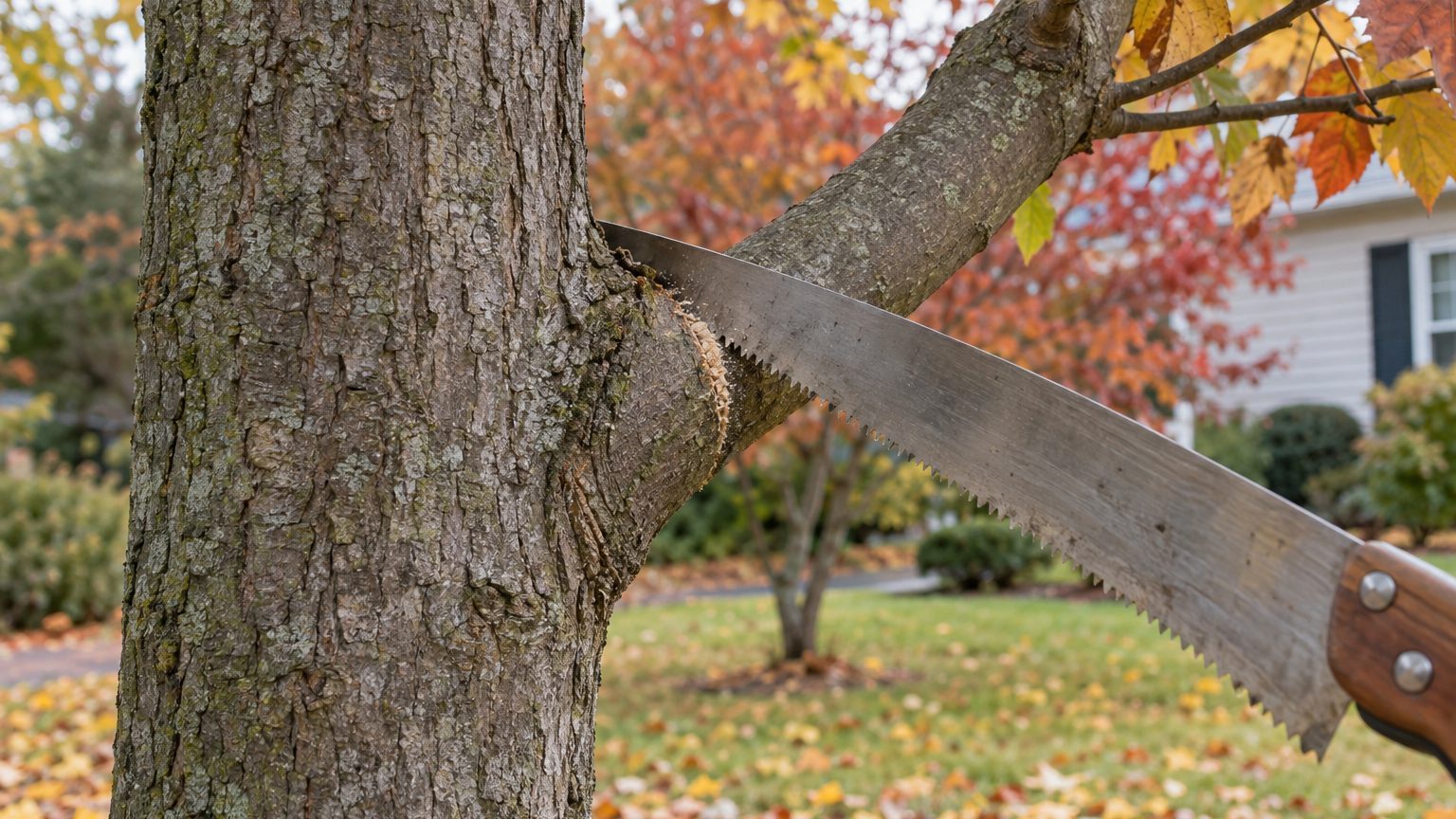
  2. Make your first cut on the underside of the branch, a short way out from the trunk, so the branch’s weight can’t rip a strip of bark down the trunk as it falls.
  3. Make a second cut from the top, a little farther out, to drop the limb, so that the heavy part is gone before the final cut.
  4. Cut the remaining stub back at the branch collar, the slightly swollen ring where branch meets trunk, so that the tree can seal the wound itself.
  5. Follow the natural slope of the collar, which usually sits at a slight angle, and don’t cut a new bevel where there isn’t one, so the wound stays small.
  6. Be gentle with a young tree, since removing more than 25% of its canopy in one year deprives it of leaf area.

Some trees, such as maples and birches, bleed sap heavily when cut in late winter. The flow looks alarming but does little harm, and pruning after the leaves have fully opened avoids it. Oaks need separate care. Prune them while dormant and keep fresh wounds to a minimum, because a cut during the growing season can let in the fungus behind oak wilt. If leaves turn brown and drop in summer, ask your county extension office before you cut more.

Pruning by Tree Type

Shade trees, fruit trees and spring bloomers do not share a calendar. What each tree does with its buds decides when the saw is safe.

Spacing matters as much as timing. Strong side branches, called scaffolds, need room to grow without crowding the ones above and below them.

Tree Type What changes Why it matters
Large shade trees Leave roughly 18 to 24 inches between scaffold branches. Wide spacing leaves room for heavy limbs to thicken
Small ornamental and fruit trees Scaffold branches 8 to 12 inches apart Smaller trees carry lighter limbs, so they can sit closer
Young apples and stone fruits Wait until after February 1 in Virginia Early cuts raise the chance of winter injury
Spring-flowering trees Prune after bloom, finished by June 1 for crabapples in Colorado Next year’s flower buds form in June and July
Summer-flowering trees Prune just before spring growth Flowers come on new growth, so late winter cuts cost nothing

For you, that means checking when a tree flowers before picking a month. A tree that blooms in April and a tree that blooms in July need opposite timing. Walnuts grown for lumber are a special case: side branches come off while they are still small, which keeps the lower trunk clean and free of knots for a good length.

Tree Pruning Mistakes to Avoid

Cutting Too Much at Once

Removing a large share of a young tree’s canopy cuts the leaves that feed it. Hold each year’s cuts to under 25% of the canopy, and spread larger corrections over several seasons.

Pruning Late in Summer

Cuts made close to fall frost push out soft new growth that has no time to harden. In places with hot, humid summers, avoid pruning within 10 weeks of the first hard frost. Wait for the dormant season instead.

Working Near Power Lines

A branch that touches or leans toward a utility line is a job for a professional. Never prune anywhere near a power line yourself; leave that work to a professional. For clearance over walks and roads, permanent branches should sit at least 8 feet high over a sidewalk and 14 feet over a street.

When to Prune Trees in Your State

The sign that triggers the job is the tree itself: buds still closed on a dormant tree, or petals just dropped on a spring bloomer. The months for each state are on that state’s page.

  • Open your state page when the leaves have fallen and you want the dormant-season window.
  • Check it again in late spring if your tree flowers early, so you can cut just after the bloom.

Common Questions

How Far from the Trunk Should You Make the First Cut?

Make this cut on the underside of the branch, a short way out from the trunk. It acts as a stop, so the bark cannot tear downward when the limb drops.

Do Young Fruit Trees Need Pruning at Planting?

Yes. When planting a bare-root tree, cut it back to 24 to 28 inches above the ground, which encourages the first side branches to grow low and strong.

How Soon Do Fruit Trees Need Regular Pruning?

Pruning is needed every year while the trees are dormant in winter, and it encourages new growth. A newly planted tree can take up to 3 years before the first harvest.

Fruit Tree Pollination: Which Trees Need a Partner

Fruit Tree Pollination: Which Trees Need a Partner

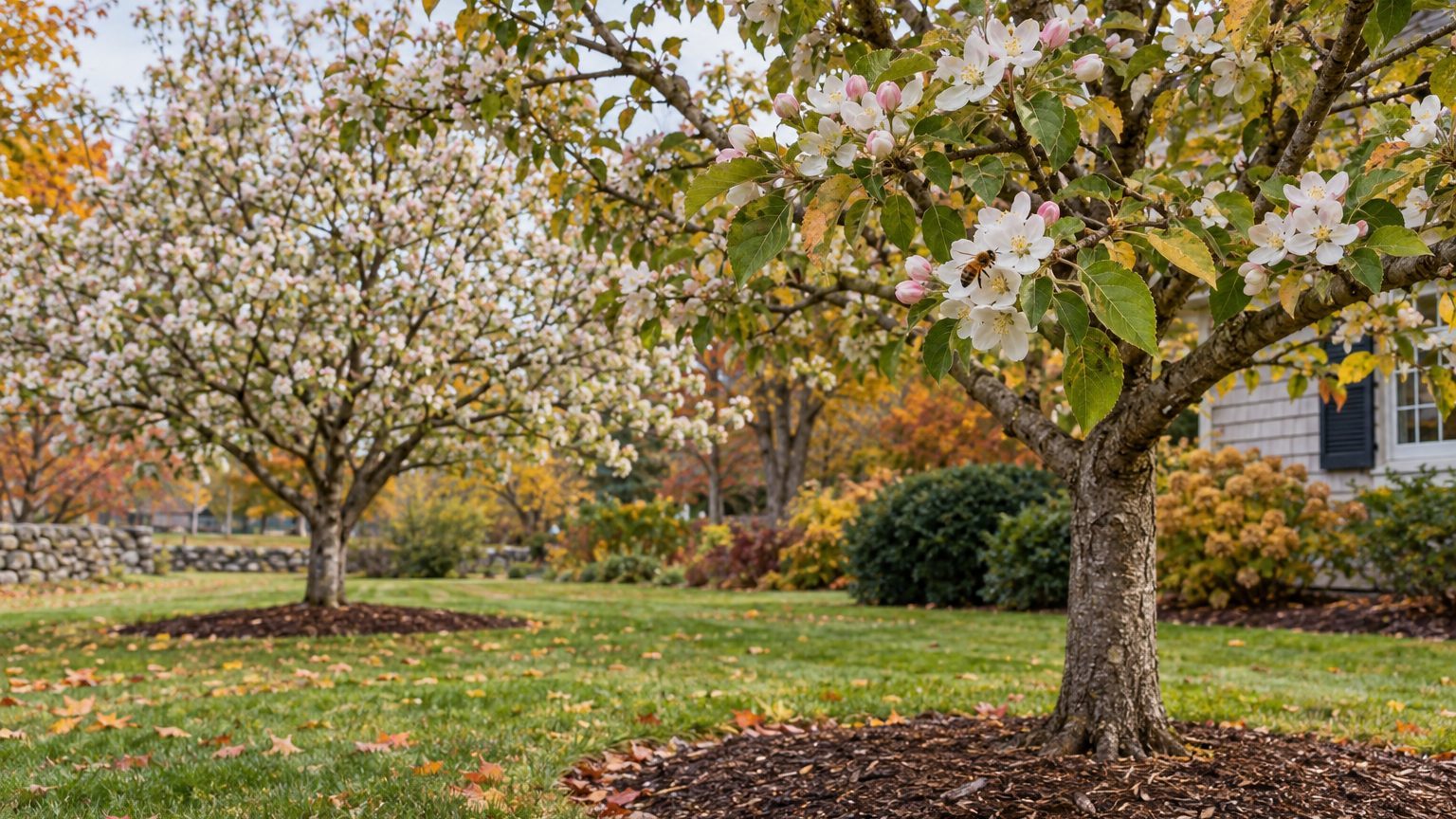
Bees working a crabapple or pear in spring is a sign that pollen is moving, and for many fruit trees that pollen has to come from a different tree. Apples, pears, plums and sweet cherries usually need a second variety nearby, while peaches usually do not.

Do Fruit Trees Need a Second Tree to Bear Fruit?

Many do, but not all. Apples, sweet cherries, pears and Japanese plums are generally cross-pollinated, so each needs a compatible variety of the same fruit blooming close by. Peaches are the usual exception, since nearly all of them are self-fruitful.

Climate shifts the picture too. Cool, rainy springs keep bees grounded, so even a well-matched pair can set a light crop. The state selector just below this section takes you to the page for your own state.

How to Pick a Pollination Partner

Tree: Fruit Tree Pollination: Which Trees Need a Partner

Choosing a partner comes down to a short sequence, done before you buy and again once the trees are in the ground.

  1. Identify whether your fruit is self-fruitful or cross-pollinated, so that you only buy a second tree when the first one truly needs it.
  2. Choose a variety that blooms at the same time as your main tree, because pollen only helps when the flowers are open together.
  3. Rule out triploid varieties as partners, since they do not produce viable pollen and would leave your main tree unpollinated.
  4. Plant the pair within 100 feet of each other, so that bees can carry pollen between them on a single foraging trip.
  5. Count the bees on your trees at bloom, because in Pennsylvania, if you do not see three to four honey bees per tree visiting the flowers, your fruit set may be less than desired.

In a larger planting, the partner variety can be spread through the rows. Orchard growers commonly follow a guideline of making 10 to 15 percent of the trees pollinizers, and placing them so that no tree is more than two tree spaces away from one. In a small yard, a single compatible tree or a crabapple on the neighbor’s side of the fence may already do the job.

Pollination Needs by Tree Type

Each fruit has its own habits. Some need a partner every time, a few are fine alone, and one native fruit needs several trees so that both sexes are present.

The table sets these differences side by side so you can match your planting plan to the fruit.

Tree Type What changes Why it matters
Apple Two different varieties within 100 feet Many varieties cannot set fruit with their own pollen
Pear Most need a pollinator, and bearing starts at 5 to 8 years A partner is needed, and patience is too
Sweet cherry Two compatible varieties within 100 feet A single tree usually stays barren
Japanese plum Cross-pollinated, with a compatible variety nearby Matching varieties gives better fruit set
Peach Nearly all are self-fruitful One tree can fruit alone
American persimmon Two or more varieties or seedlings Planting a single tree leaves the flowers unpollinated

For most yards, the practical result is simple. Plan for two trees if you want apples, pears, cherries or plums, and plant them close together. Pears take longer to bear than apples, cherries, plums or apricots, so do not read slow fruiting as a pollination problem. Peaches give you the most freedom, since one tree can stand on its own.

Pollination Mistakes to Avoid

Planting a Single Tree

One apple, pear or sweet cherry on its own often flowers heavily and then drops everything. Buy the partner at the same time, or choose a tree already grafted with more than one variety.

Spraying During Bloom

Insecticides applied while the flowers are open can kill the honey bees that carry the pollen. Avoid the use of insecticides during blooming, which may kill honey bees.

Ignoring Wet Spring Weather

Bees do not fly in cool, rainy weather, and a long stretch of it can leave flowers unpollinated even when the partner tree is right next door. You cannot change the weather, but you can plant more than one tree and add blossoms that attract bees nearby, so that the visits happen whenever the sun does come out.

Fruit Tree Pollination in Your State

The sign that matters is open bloom: when flowers open, bees need to be working them, and any spraying should stop. The timing varies with your climate, so your state’s page gives the months that fit your yard.

  • Open your state’s page in early spring to see when bloom usually arrives where you live.
  • Check it again before you buy trees, so that your two varieties flower together.

Common Questions

Can You Plant Two Trees of the Same Variety for Pollination?

Two trees of the same variety share the same pollen type, so they generally cannot pollinate each other. Plant two compatible but different varieties instead.

Does a Neighbor’s Fruit Tree Count as a Partner?

It can, if it is a compatible variety that blooms at the same time and stands within 100 feet of your tree. Bees do not care whose yard the tree is in.

Why Is a Pear Tree Blooming but Not Setting Fruit?

Pear blossoms offer nectar with only about 10 percent sugar, so bees often favor other nearby flowers whose nectar can reach as high as 60 percent. Look for a compatible partner within range, and check whether bees are visiting your pear bloom at all.

How to Plant a Fruit Tree: Bare-Root and Container Trees

How to Plant a Fruit Tree: Bare-Root and Container Trees

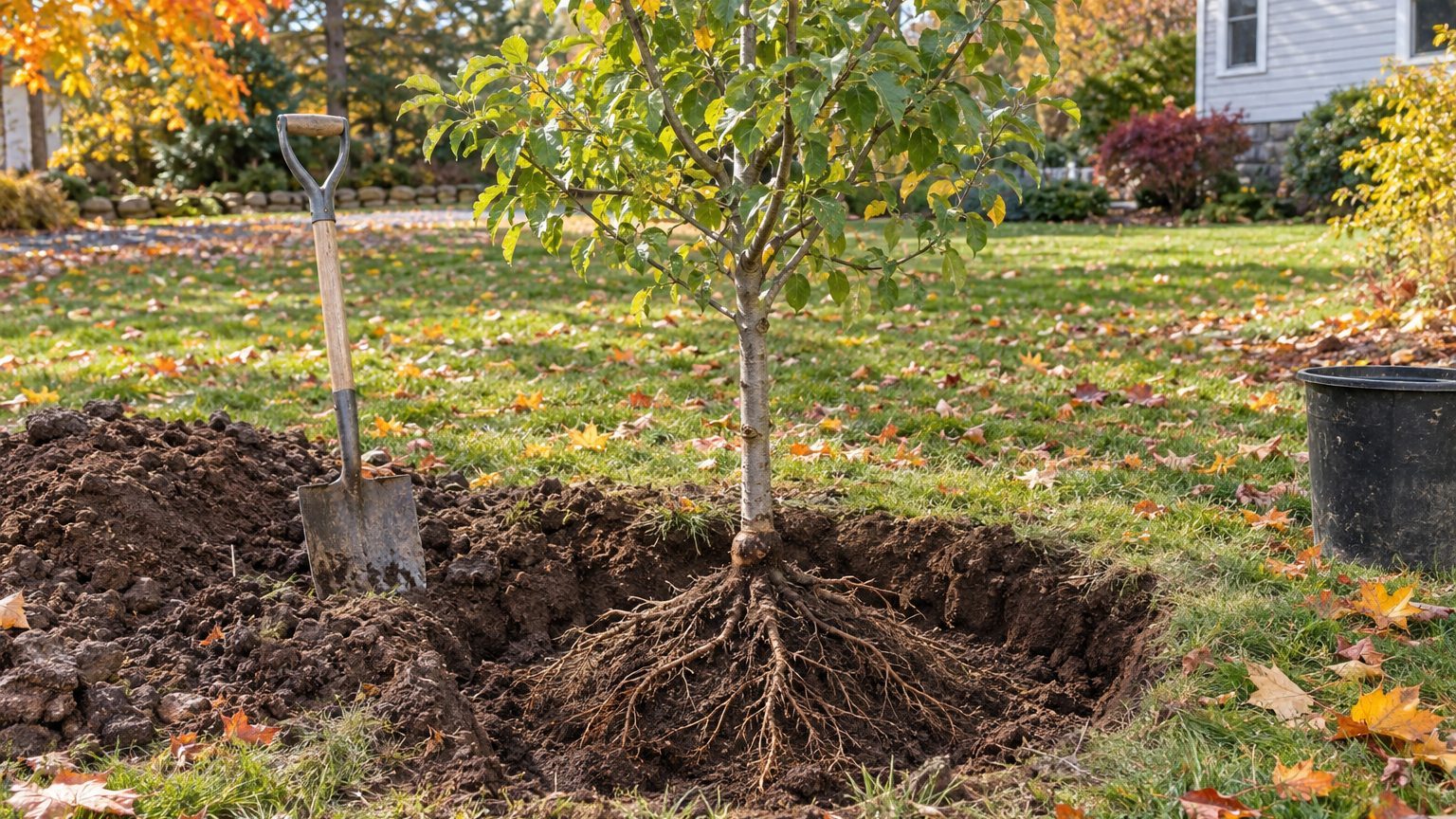
A bare-root fruit tree arrives in late winter as a bundle of roots and a bare stem, and a container tree can be set out whenever the soil is workable. Both go in the ground the same way, with the roots spread wide, the graft union kept above the soil and the hole sized to the root system rather than the pot.

When Should You Plant a Fruit Tree?

Plant a fruit tree while it is dormant or when the soil is workable and the roots can grow. For most of the country that means late winter to early spring for bare-root trees, before the buds open. Container trees are more forgiving, since their roots are already growing in soil.

Climate moves the window more than anything else. Where winters are mild, planting can begin earlier, and where the ground freezes hard it waits for the thaw. Peaches, apples and other tree types follow the same rule, but the calendar shifts with the weather.

The state selector just below this section leads to the page for your state, where the months are laid out for your climate.

How to Plant a Bare-Root Fruit Tree

Tree: How to Plant a Fruit Tree: Bare-Root and Container Trees

Planting goes quickly once the tree is in hand, so prepare the spot before it arrives and work in this order.

  1. Plant the tree as soon as it arrives, so that the bare roots do not dry out while they wait.
  2. Dig the hole 1 1⁄2 to 2 feet wide, so that the roots can spread out instead of curling around a narrow pit.
  3. Make the hole about 1 1⁄2 feet deep, so that the tree sits on firm soil and cannot sink after watering.
  4. Set the tree so that the uppermost root is no more than 2 inches below ground level, so that the roots get air as well as moisture. For a container tree, loosen any roots circling the root ball first so they grow outward.
  5. Backfill with the soil you dug out and water it in, so that no air pockets are left around the roots.
  6. Plant semi-dwarf trees 10 feet apart along the row so the crowns have room to fill out. Leave 16 feet between rows so sunlight and air can reach every tree and a mower or cart can get through.

In the first year, water the tree regularly and keep mulch a few inches back from the trunk so the bark stays dry. Keep mowers and trimmers away from the trunk, because young bark is easily damaged, and let the roots, not the branches, do the work while the tree settles in.

Planting by Tree Type

Tree type changes the size of tree to buy, the shape it is bought in, and how the framework branches are set. The numbers below were written for particular regions, so treat them as a sound guide rather than a rule for every yard.

Tree Type What changes Why it matters
Peach, nectarine, apricot A 4-foot tree is the ideal planting size where growers in the mid-Atlantic buy A small tree will never catch up to a sturdier one
Apple A vigorous one-year-old whip that stands 4 to 7 feet tall is the best choice. A strong first-year stem gives the frame a good start
Apple, Mountain West training The first scaffold sits about 18 inches above the ground Branches low on the trunk make a sturdy, open frame
Peach, Midwest training The lowest scaffold branches should start at least 15 inches above the ground. Branches placed too low are hard to manage and shade the trunk

For you, this means choosing the tree by trunk and height before you choose it by price, and noting that a thicker trunk, for peach in cooler orchard country, starts the strongest. Branch heights also differ by fruit, so check which fruit you are buying before you set your cutting heights.

Fruit Tree Planting Mistakes to Avoid

Burying the Graft Union

The graft union is the knobby bend low on the trunk where the fruiting variety joins the rootstock. If soil covers it, the upper part of the tree can root on its own and the rootstock loses its influence over size. In North Carolina, grafted trees are planted with the union at least 2-3 inches above the soil line. Check the bend after backfilling and again after the first heavy rain, when soil settles.

Planting into Wet Soil

Soggy ground drives air out of the root zone, and a newly planted tree has little ability to cope with it. Where late winter is rainy, the soil can stay too wet to plant for a long stretch. Squeeze a handful. If it stays in a sticky ball, wait for it to crumble, and do not tramp around the hole while it is wet.

Letting Roots Dry Out

Bare roots dry quickly, and the damage is done before any leaf shows it. In California, the advice is to get the tree in the ground within a few days of buying it. If the hole is not ready, wrap the roots in damp material and keep them in shade. Buying a tree and planting it the same weekend is the simplest cure.

When to Plant Fruit Trees in Your State

The sign that starts the work is soil that crumbles in your hand while the tree is still dormant, with the buds closed. Each state has its own months, laid out on the page for that state.

  • Your state page gives the months for bare-root trees, so check it before you order.
  • It also gives the months for container trees, so look there when a garden center has stock in spring.
  • Use the selector under the first section to reach it, then set the date on your calendar and dig when the soil is ready.

Common Questions

How Long Does a New Fruit Tree Take to Bear Fruit?

Some trees take 2–3 years before they produce fruit, so the first seasons go to roots and framework. Patience in those years pays back in sturdier branches later.

Should You Cut Back an Unbranched Tree at Planting?

Yes, while the tree is still dormant. In Illinois, an unbranched peach is headed back to 27 inches above the ground. If the branches that are there will not make good scaffolds, the tree is topped at 27 to 30 inches and the side branches are cut to 3 to 5 inches long.

How High Should the Lowest Branches Be on a Young Fruit Tree?

Keep the trunk short. In Kansas, a trunk of not more than 18 inches is best, and the first set of framework branches is spread over 12 to 18 inches of the leader just above it. In Utah, following scaffolds are spaced 6 to 8 inches apart up the trunk, and the lowest branch of a second tier sits at least 24 inches above the top branch of the tier below, to limit shading.

The almanac, state by state. Every date on this site comes from a state’s own frost facts and its extension service’s calendar — and says where it comes from.