Skip to content

How to Naturalize Daffodils and Other Spring Bulbs

How to Naturalize Daffodils and Other Spring Bulbs

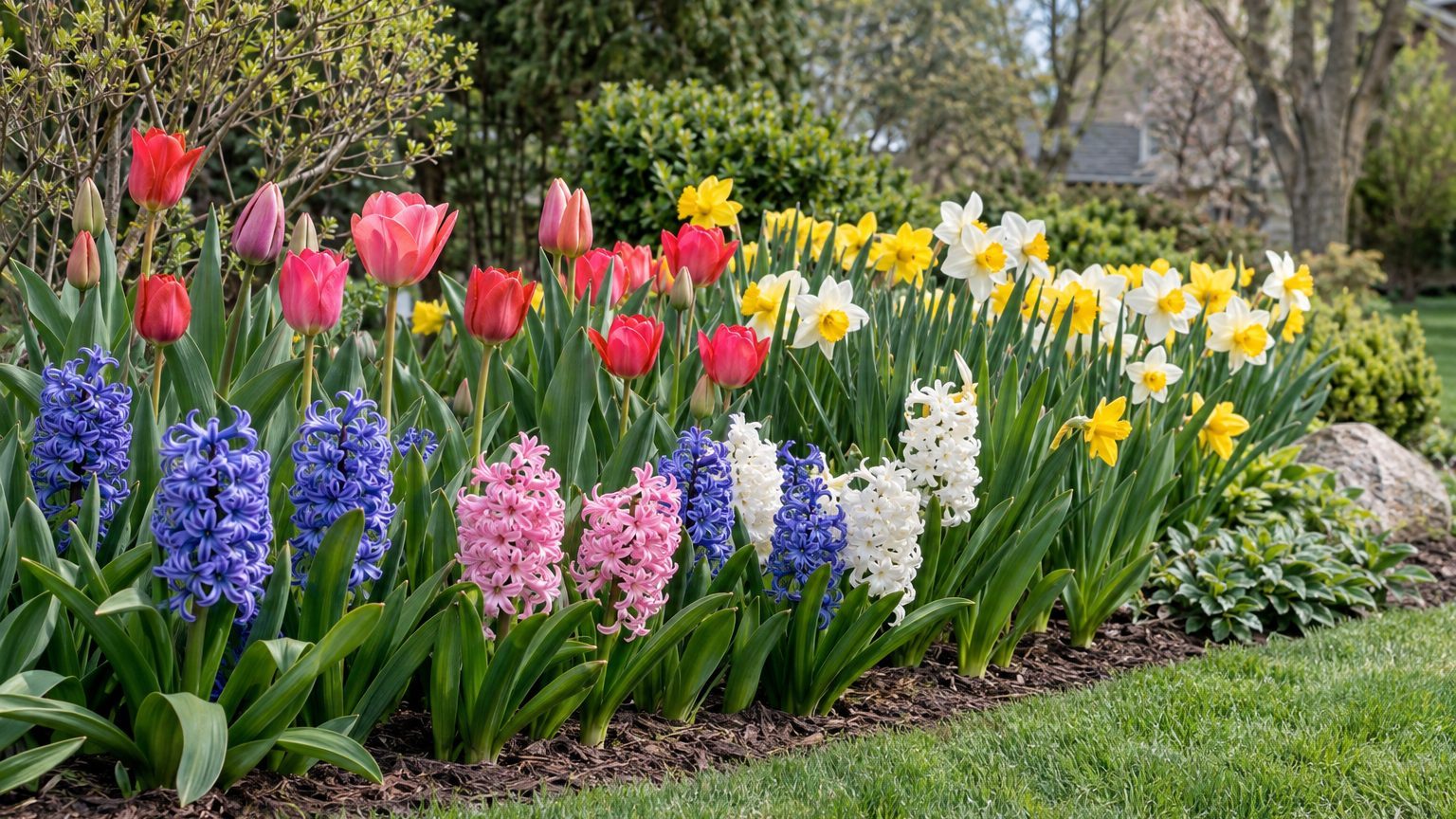
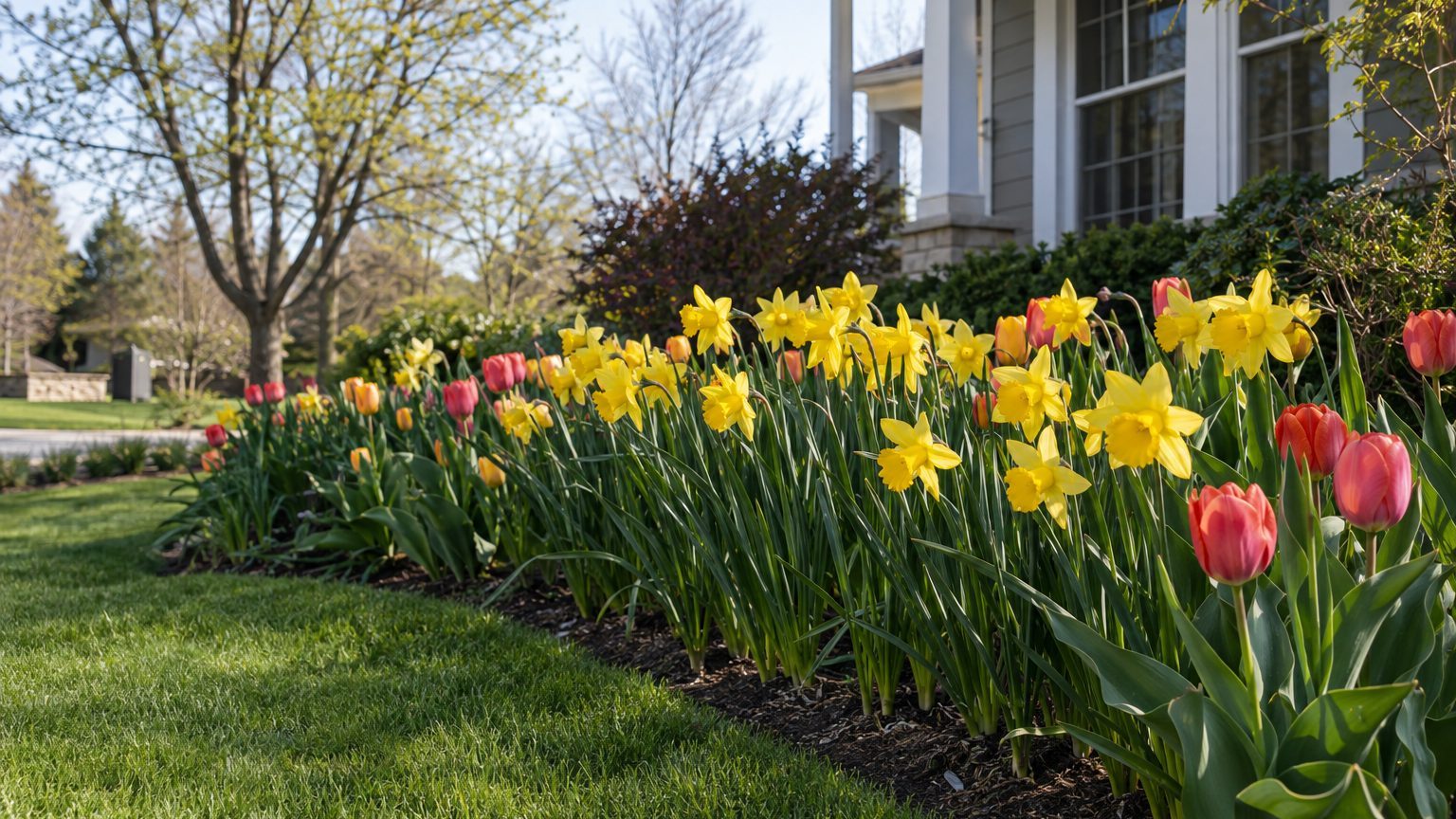
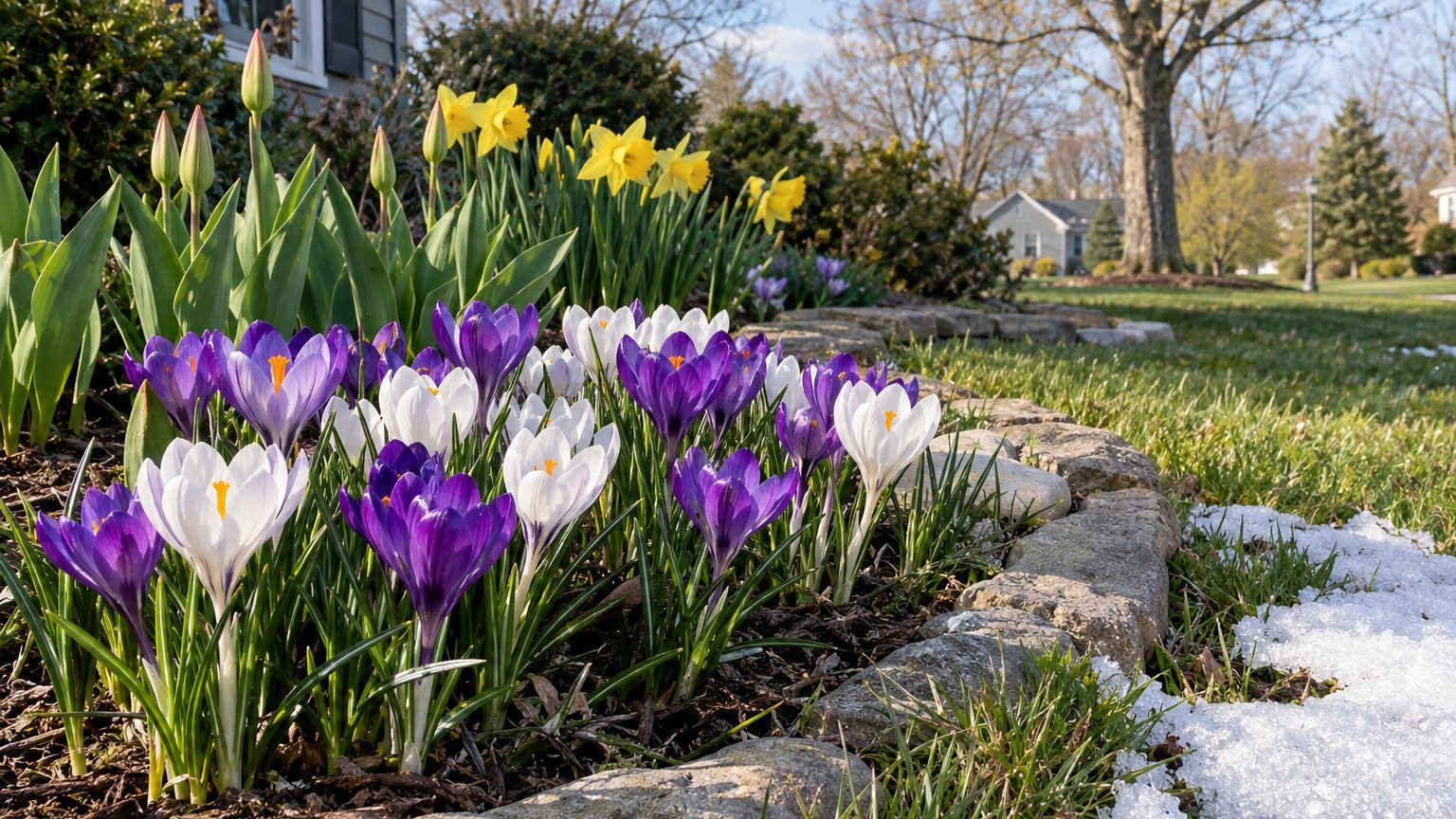
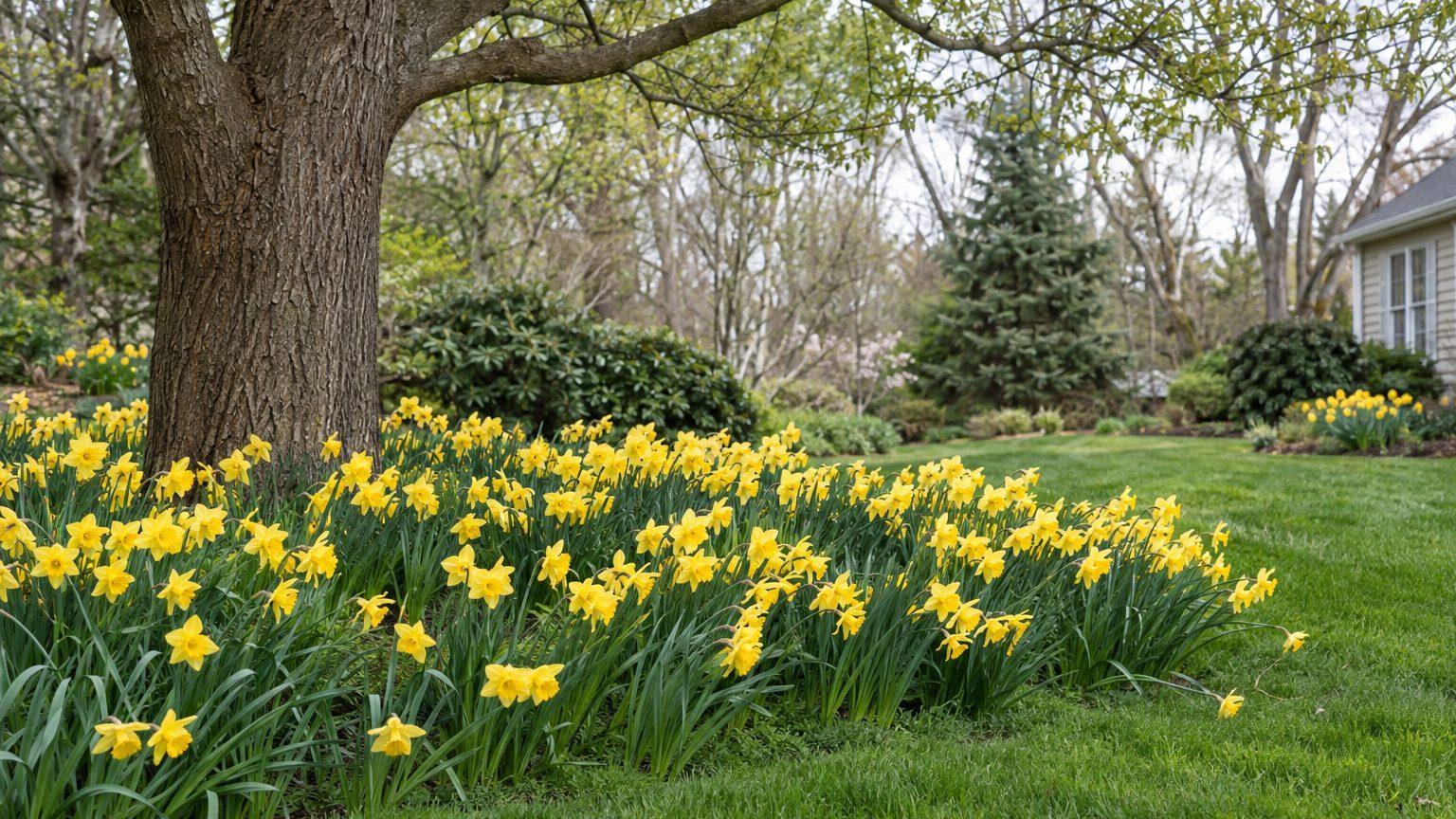
Daffodils and crocus coming up through the grass in early spring look as if they were always there, and the effect is easy to copy. Naturalizing bulbs means planting them loosely, the way they would seed themselves, so they return and spread each year. Success depends on the bulbs you choose, how you scatter them and when the mower comes back out.

Which Bulbs Come Back and Spread?

Bulbs that multiply on their own, either by offsets (small new bulbs that form beside the parent) or by seed, return and thicken year after year. Those are the ones to choose for naturalizing, and they are the ones that earn the label.

Climate and bulb type decide the rest. Spring bulbs need winter cold to flower, and small bulbs behave differently from large ones in a drift. In Missouri, properly spaced bulbs need dividing only every five to 10 years, so a good planting can sit untouched for a long time.

The state selector just below this section leads to the page for your state.

How to Naturalize Bulbs

How to Naturalize Daffodils and Other Spring Bulbs

Naturalizing is mostly a matter of letting chance arrange the bulbs and then respecting the grass afterward.

  1. Choose early bloomers such as crocus or small-flowered daffodils for lawns, because in North Carolina they finish blooming before mowing has to start.
  2. Buy bulbs by the dozens, since a broadcast planting in Kansas runs as many as 500 to 700 per 100 square feet, and thin plantings read as dots instead of drifts.
  3. Toss the bulbs by the handful over the area, so they land in uneven clusters instead of tidy rows.
  4. Dig a hole where each bulb falls, or use a bulb auger for quick planting as is done in North Carolina, so the random pattern survives and each pointed end faces up.
  5. Mix bulbs with different bloom times, because in New York that keeps a lawn colorful for weeks.
  6. Wait to mow until 6 weeks after flowering, as in North Carolina, so the leaves can keep feeding the bulbs for next year.

That timing is the logic of lawn planting. In New York, early bulbs push up through the turf and bloom before the grass begins to grow, so bulbs and mower rarely compete for the same weeks.

Naturalizing Bulbs by Bulb Type

Size sets how many bulbs make a convincing group. A small bulb disappears when it stands alone, while a large one holds its own in a smaller cluster.

Place matters too, since the numbers below come from different states and each holds where it was written.

Bulb Type What changes Why it matters
Small bulbs In Kentucky, groups of at least 10 to 12 A small bulb needs company to be seen
Large bulbs In Kentucky, groups can be as few as 5 to 6 Bigger plants make an impression sooner
Daffodils In Iowa, groupings of 10 or more often look best A clump reads as a drift in the grass
Crocus Stays less than 6 inches tall and wide Low plants suit lawns, borders and pathways
Grape hyacinth In North Carolina, at least 25 bulbs in a small garden The sparse look is avoided in a tight space

For you, that means ordering bulbs by the bag rather than by the handful. Small types such as crocus and grape hyacinth need the biggest counts. In Iowa, drifts of at least 25 bulbs are suggested for them, and groupings of 50 or more look best. Daffodils and other large bulbs get by with smaller groups.

Naturalizing Mistakes to Avoid

Mowing Too Soon

Mowing Too Soon — How to Naturalize Daffodils and Other Spring Bulbs

Cutting the grass while the bulb leaves are still green starves the bulbs of the food they store for next year, and the planting thins out over time.

In North Carolina, the wait is 6 weeks after flowering. Mark the date on a calendar and keep the mower off the patch until then. Never tie or cut the leaves while they are green.

Planting Crocus Where You Mow Early

Planting Crocus Where You Mow Early — How to Naturalize Daffodils and Other Spring Bulbs

Crocus is a popular lawn bulb, but in Missouri the advice is not to naturalize it in lawns that need mowing in early spring. The mower arrives before the leaves have finished their work.

If your grass gets cut early, plant crocus in a border or a bed along a path instead, and save the lawn for bulbs that finish in time.

Planting Bulbs One by One

Single bulbs stuck in here and there look lost. In Utah, planting in mass rather than scattering bulbs 1 by 1 is the way to get a real splash of color.

In Washington, at least 5 to 7 bulbs of one variety together give punch, and 25 to 30 or more create a carpet. Put the whole bag into one well-chosen area instead of spreading it across the yard.

Naturalizing Bulbs in Your State

The sign to act is the cooling of the soil after summer heat, once bulbs are on the garden center shelves and the ground can be dug. Planting months differ from state to state, and each state has its own page with its months.

  • Planting months depend on where you live, so check the right timing for your area before you buy.
  • Go there again in spring to match the mowing wait to your own calendar.
  • Once you have the months, toss the bulbs, dig where they land and plant them.

Common Questions

Can You Naturalize Bulbs Outside the Lawn?

Yes. In North Carolina, crocus is often planted in mass in lawns, borders, naturalized areas, along pathways and in rock and woodland gardens. Grass is only one of many settings where a loose drift works.

What If Some Bulbs Are Still in the Bag?

Plant them as soon as the ground can be dug. A bulb left in the bag will not wait for next year and will dry out instead of settling roots.

Do Naturalized Bulbs Need Cold Winters?

Spring bulbs need winter cold to flower, which is why they go in during fall and spend the cold months underground. The months that fit your climate are the ones to plant in.
Planting Spring Bulbs in Pots and Containers

Planting Spring Bulbs in Pots and Containers

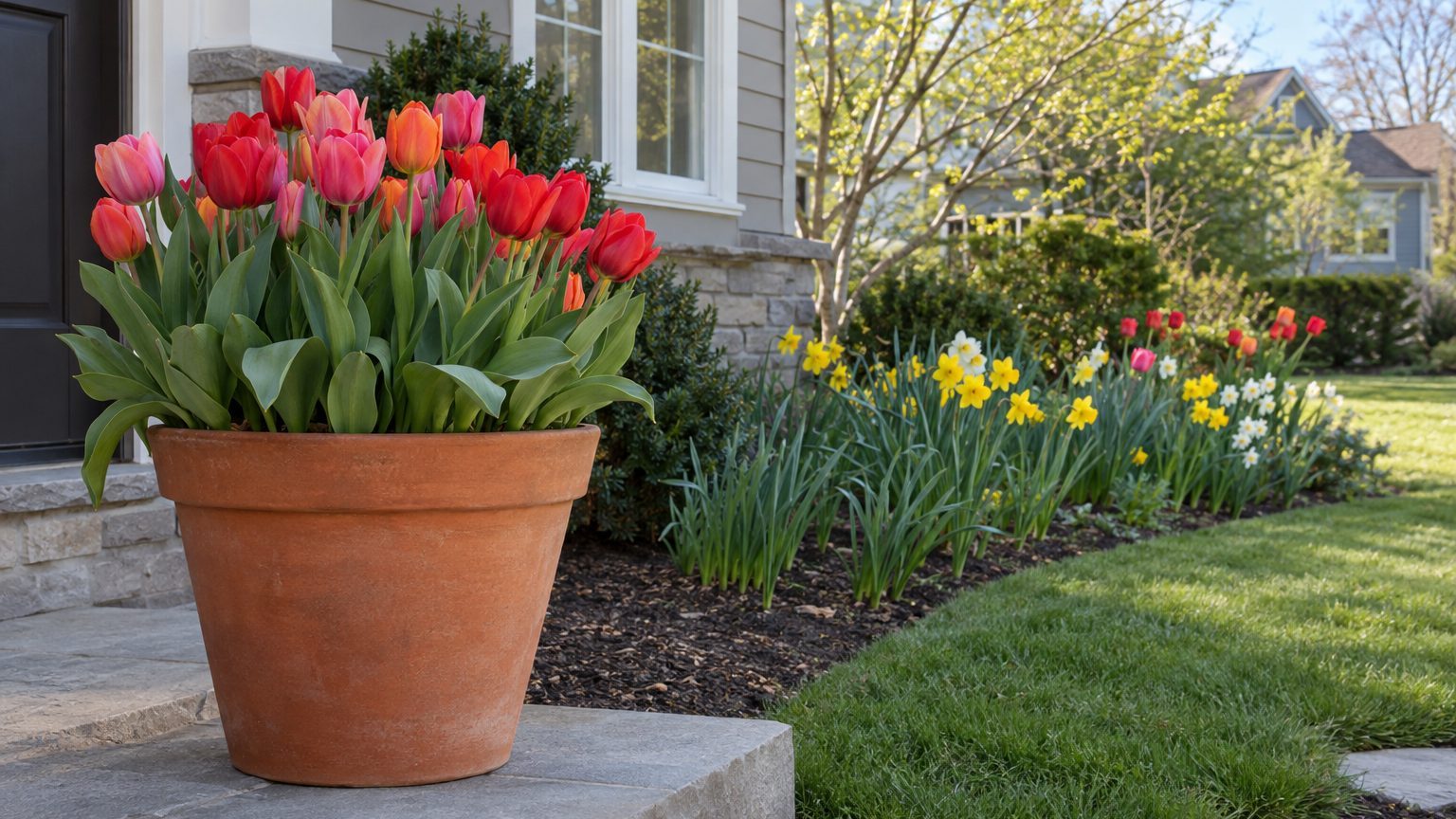
Bare pots by the front steps look empty in fall, and that is exactly when they can be turned into a spring display. A bulb in a container does the same work as one in a bed. The difference is that the pot sits above the ground, so its soil chills faster and dries out sooner. Planting bulbs in pots comes down to depth, a good mix and a stretch of winter cold.

Can You Plant Spring Bulbs in Pots?

Yes, spring bulbs grow well in pots. The general rule is to plant them in fall and give them a long, cool, moist rest before they flower. What changes the plan is the type of bulb, because sizes and spacing differ, and the climate, because it decides where the pot gets its cold.

Roots form first in the cool, and shoots come later. A pot has no ground around it for insulation, so in a hard-winter region the soil in a container gets colder than garden soil. In a mild region, such as the Gulf Coast, the pot may need help finding enough cold.

The state selector just below this section leads to the page for your state.

How to Plant Bulbs in a Container

Planting Spring Bulbs in Pots and Containers

Order matters in a pot, because roots, cold and light each take their turn.

  1. Choose a pot with drainage holes, so that rain and melting snow run out instead of sitting around the bulbs and rotting them.
  2. Spread a layer of loose potting mix first, so that, as in Pennsylvania, at least 2 inches separate the bulbs from the bottom of the pot and the roots can run downward.
  3. Set the bulbs pointed end up and close together without touching, so that the pot looks full in spring, with the tops about even with the top of the pot as is done in Pennsylvania.
  4. Fill in around the bulbs and water well, leaving the mix ½ to 1 inch below the rim, as in Iowa, so that water soaks in rather than spilling over the edge.
  5. Move the pots to a cold, dark place such as an unheated garage or a cold frame and keep the mix moist, so that the roots grow while the shoots wait.
  6. Bring the pots into a cool, bright room once roots have filled the pot and shoots show, so that the new growth bends toward the light and not toward a dark corner.

In New Jersey, pots are held at 35°F to 48°F for a minimum of 12 to 13 weeks. After the blooms fade, leave the leaves in place until they turn yellow, since they refill the bulb for next year.

Container Bulbs by Bulb Type

Size sets how many bulbs a pot can take, and the type also changes how long the cold rest runs. In Oregon, a 14- to 20-inch wide pot can easily hold 20 to 30 bulbs or more.

The counts below are for a small pot, and a larger pot simply takes proportionally more.

Bulb Type What changes Why it matters
Crocus Many can be packed into a single pot. Small bulbs pack in tightly for a full look
Daffodil Fewer fit per pot than crocus. Larger bulbs need more room each
Hyacinth Only a few fit per pot. Big bulbs mean fewer to the pot
Tulip Several fit in a single pot. Crowding is fine, but touching bulbs can rot

Cold needs vary too. In Pennsylvania, daffodils in pots are kept moist and cool, ideally 40-45° F, for 12 to 16 weeks. In Missouri, hyacinth pots go where the temperature stays constantly near 40 degrees F. Count the bulbs before you shop, and plan the cold spot before you plant.

Container Bulb Mistakes to Avoid

Cutting the Chill Short

A pot pulled out of the cold too soon holds bulbs that are not ready to grow. In Nebraska, some bulbs need 15 to 18 weeks rather than the usual minimum.

Before moving a pot, tip it gently or look at the drainage hole. Wait until roots are well developed and short shoots are showing.

Letting the Pot Freeze

Letting the Pot Freeze — Planting Spring Bulbs in Pots and Containers

A bulb that freezes solid is damaged, and a small pot with little soil around it freezes faster than a bed does. In Georgia, bulbs in cold storage must not be allowed to freeze. In Oregon, pots move indoors when temperatures drop below 28 to 30 degrees.

On the coldest nights, slide the pots into an unheated garage or against a house wall, then set them back out when the weather eases.

Letting the Mix Dry Out

Letting the Mix Dry Out — Planting Spring Bulbs in Pots and Containers

Pots tucked under an eave or in a garage never catch rain, so the mix can dry out while you are not looking. In Georgia, the soil in the pots must not be allowed to dry. Dry roots stop growing, and the bulb loses the head start the cold was meant to give it.

Poke a finger into the mix regularly. Water when the top feels dry, and let the excess drain out.

Bulbs in Pots in Your State

The sign to start is cooling weather in fall, when nights turn crisp and bulbs fill the garden center shelves. The calendar for each state is on the page for that state, so the months you need are a short step away.

  • The state page gives the planting months that suit your climate, so go there before buying bulbs.
  • Check it again when the pots come out of cold storage, to see when shoots and roots should be ready.

Common Questions

Can You Chill Potted Bulbs in a Refrigerator?

Yes, where space allows. In Georgia, pots can sit in darkness at about 40 °F in a cold frame, an unheated garage, a basement or a refrigerator, as long as the bulbs do not freeze. In Washington, bulbs that are not in pots are refrigerated at 45-50 degrees in aerated bins for at least 6 weeks.

How Do You Know When Potted Bulbs Can Leave the Cold?

Look for roots and shoots, not just the calendar. In Georgia, after 8 to 12 weeks the roots should be well developed and shoots emerging. In Nebraska, bulbs should be well rooted with short shoots after 12 to 15 weeks.

How Warm Should the Room Be Once Shoots Appear?

Start cool. In Iowa, rooms around 60 to 65°F suit potted bulbs. In Utah, a room at about 68 F with direct sunlight gives good results after the pot has had time in indirect light.

Hyacinths and Grape Hyacinths: Planting and Care

Hyacinths and Grape Hyacinths: Planting and Care

Hyacinth bulbs go into cool fall soil, and the dense, fragrant spikes appear the following spring. Grape hyacinths follow the same fall routine and return as small clusters of flowers. When the bulbs go in depends on where you garden and on how much winter cold they will get.

When Should You Plant Hyacinth Bulbs?

Plant hyacinth bulbs in fall, after the summer heat has left the soil and well before the ground freezes. That gives the roots time to settle and lets the bulb collect the winter cold it needs to flower.

Climate and bulb type shift the timing. Where winters are mild, as in Texas, bulbs usually need a chill in the refrigerator before planting. In South Carolina, the cue to wait for is soil that stays below 60 °F.

Hyacinths grown in pots or glasses indoors run on their own schedule, because their chilling happens before they ever bloom. The state selector just below this section leads to the page for your state.

How to Grow Hyacinths

Hyacinths and Grape Hyacinths: Planting and Care

Hyacinths and grape hyacinths both want a sunny spot, a cold winter and a leaf canopy left alone in spring, and the steps below follow the order you do them in.

  1. Wait for cool soil before planting, so the bulbs stay dormant instead of sending up leaves that a hard freeze would damage.
  2. Choose a spot in full sun, as South Carolina gardeners do, so the leaves can gather enough energy to feed the bulb after the flowers fade.
  3. Dig holes at the right depth. In Illinois, hyacinths go 7 inches deep, and in South Carolina the depth is 4 to 6 inches. Deeper planting suits colder ground, where the extra soil acts as insulation.
  4. Space the bulbs apart so each has room to grow. In Illinois, 6 to 9 inches between bulbs is the guide, while South Carolina plantings sit closer, at 3 to 6 inches. Set each bulb pointed end up so the shoot has the shortest route to the surface.
  5. Let winter do the chilling. In Arkansas, hyacinths need a minimum of 10-12 weeks below 50 degrees before they grow, which is why a fall planting in the ground works without any extra effort.
  6. Plant grape hyacinths the same way in fall, then leave them in place. In North Carolina they bloom in early to mid-spring, and left undisturbed they spread into larger patches over the years.

After flowering, leave the foliage standing until it turns yellow and dies back on its own. Those green leaves are feeding the bulb for next year, so cutting or tying them early weakens the next bloom.

Hyacinth Types by Bulb Type

Not every hyacinth bulb gets the same treatment. Dutch hyacinths, the large, fragrant bulbs sold in fall, need a chill before they grow, and the amount of chill depends on whether winter provides it.

Bulbs forced indoors get their cold from a refrigerator or cold frame instead. Grape hyacinths are a separate, smaller bulb with a simpler routine.

Bulb Type What changes Why it matters
Dutch hyacinth in a mild-winter area In Texas, 6 to 10 weeks of chilling before planting Mild winters do not supply enough cold on their own
Hyacinth forced in pots or glasses In Georgia, 8 to 12 weeks in darkness at about 40 °F Cold and dark let roots form and the bulb prepare to flower
Hyacinth rooted in pots or glasses In Missouri, chilling for eight to 10 weeks after rooting Without it, flowering will not take place
Hyacinth planted outdoors in a cold-winter area In Arkansas, a minimum of 10-12 weeks below 50 degrees Natural winter covers the chill requirement
Grape hyacinth In North Carolina, planted in fall for early to mid-spring bloom Follows the usual fall routine with no forcing needed

For you, this means checking how cold your winters run before choosing a method. Gardeners with cold winters can plant straight into the ground in fall, while those in mild areas should chill bulbs first or grow them in containers where the cold can be managed.

Hyacinth Growing Mistakes to Avoid

Planting Too Early

Planting Too Early — Hyacinths and Grape Hyacinths: Planting and Care

Bulbs set into warm soil may start growing before winter arrives. The tender shoots then meet freezing weather and the flowers suffer. Hold the bulbs in a cool, dry place until the soil has cooled, then plant them as soon as it has.

Skipping the Chill

Skipping the Chill — Hyacinths and Grape Hyacinths: Planting and Care

A hyacinth that has not had its cold period generally will not flower. In warm regions, buy bulbs in early fall and chill them in the refrigerator before they go in the ground, keeping them away from ripening fruit.

In mild areas, plant them after the chilling is done. Pots let you control the process more easily than open ground.

Cutting Leaves Too Soon

Tidying the leaves while they are still green cuts off the bulb’s food supply, and the next year’s flowers shrink. Wait until the foliage is yellow and pulls away easily.

Even well-tended hyacinths lose vigor in time. In Utah, they usually start to fade after 3 to 4 years and are replanted then with fresh bulbs.

When to Plant Hyacinths in Your State

The sign to act on is soil that has cooled after summer, while it can still be dug. The months that fit this sign differ from one state to the next, so your own state matters.

  • Open the State by State Garden page for your state to see the planting months that match your climate.
  • Check it before you buy bulbs, so they arrive when the ground is ready and go in the soil soon after.

Common Questions

How Tall Do Hyacinths Grow?

In Utah, hyacinths usually reach 6 to 10 inches tall. In Arkansas, the blooms are described as standing about 12 inches tall, so height varies with variety and growing conditions.

How Often Should You Replant Hyacinths?

In Utah, hyacinths tend to lose vigor after 3 to 4 years, and that is the point to dig them up and replant with fresh bulbs. Until then, leave them where they are.

Are Hyacinths Fragrant?

Yes. The dense clusters of flowers carry a strong scent, and in spring a planting can perfume the whole garden. Place them near a path, window or entry where you will notice the fragrance.

How and When to Fertilize Spring Bulbs

How and When to Fertilize Spring Bulbs

Green shoots pushing through cold soil in spring are the first sign that bulbs planted the previous fall are working. What they find in that soil decides how much energy goes into the flowers and into next year’s bulb. Fertilizing spring bulbs is a short job with a clear rhythm, and timing and amounts matter more than the label on the bag.

Do Spring Bulbs Need Fertilizer?

Often yes, though not always. A feeding at planting and another as growth starts helps bulbs rebuild for next year, but the rule shifts with the type of bulb, how long you want the planting to last, and the climate that sets your planting and growing seasons.

In Utah, tulips you plan to replace each year need no fertilizer at all. Tulips you want to return as perennials get well-rotted manure dug in during fall, then a 10-10-10 fast-release fertilizer worked in come spring.

The state selector just below this section takes you to your own state’s page.

How to Fertilize Spring Bulbs

How and When to Fertilize Spring Bulbs

The routine runs across fall and spring, and every step has a job to do for the bulb.

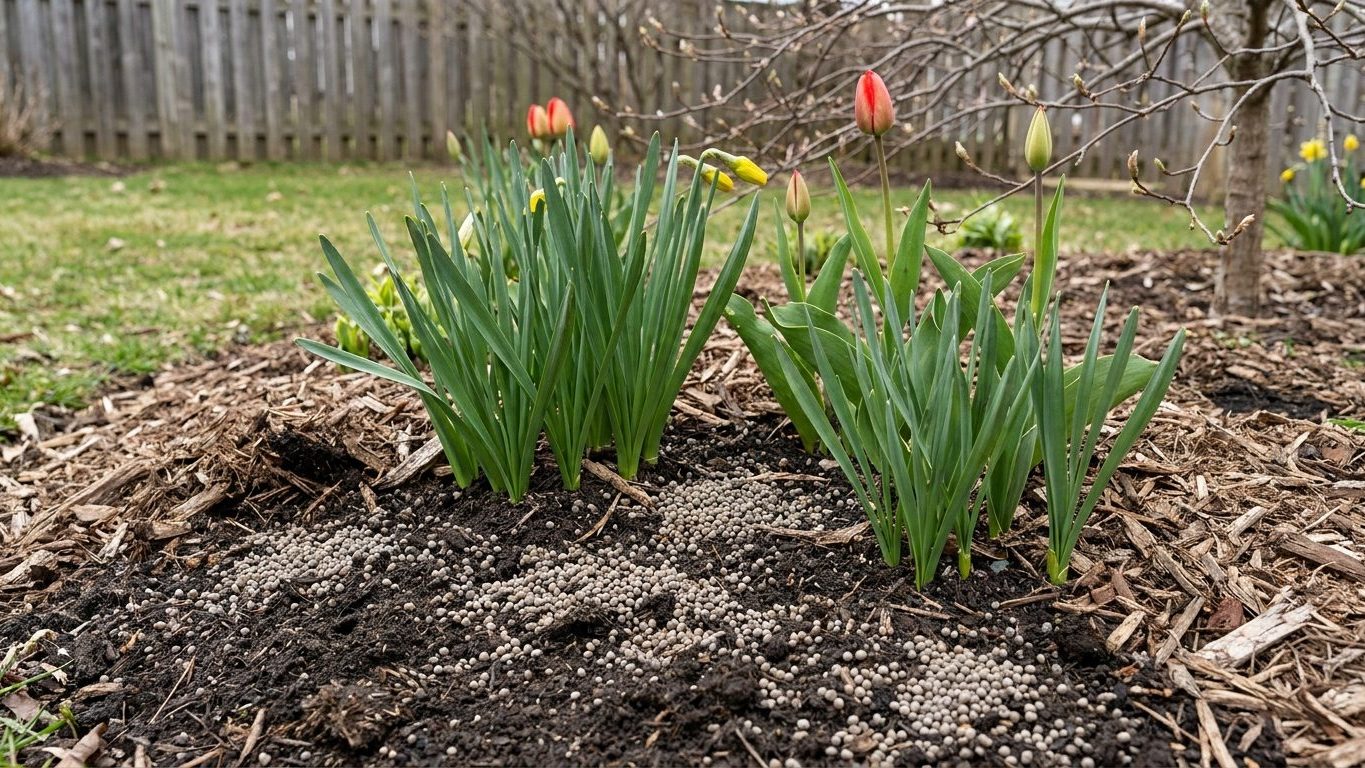
  1. Spread a balanced fertilizer such as 10-10-10 over the bed at planting time, so the roots have nutrients nearby as they form.
  2. Work it into the upper 4 to 6 inches of soil, as is done in Wisconsin, so it sits where roots grow instead of washing off the surface.
  3. Feed again in spring when shoots emerge in South Carolina, or while the flowers are still in the bud stage in Georgia, so the plant can use the nutrients while it builds leaves and buds.
  4. Add nitrogen before the foliage withers, at 1/4 pound per 100 square feet in Colorado, so the green leaves can carry it down into the bulb.

Green leaves are the bulb’s kitchen, which is why feeding belongs to fall and to the weeks when shoots and leaves are active. After the foliage has yellowed, the bulb has finished refilling, and fertilizer has no working leaves to pass through.

Fertilizing Needs by Bulb Type

Most spring bulbs share the same fall feeding, but tulips come with a choice that depends on how long you plan to keep them. Summer- and fall-flowering bulbs run on a different schedule altogether.

Bulb Type What changes Why it matters
Tulips replaced each year No fertilizer needed (Utah) The bulb is discarded after one season, so there is nothing to rebuild
Tulips left to perennialize Rotted manure in fall, 10-10-10 fast-release in spring (Utah) The bulb has to refill each year to flower again
Summer- and fall-flowering bulbs Feeding every 4 to 6 weeks through the growing season (South Carolina) These bulbs grow through the warm months and need a steady supply

Decide before planting whether tulips are a one-season display or a long-term planting, because that choice settles whether fertilizer is worth buying. Other spring bulbs follow the general fall and spring routine described above.

Bulb Fertilizing Mistakes to Avoid

Fertilizer Touching the Bulbs

Fertilizer Touching the Bulbs — How and When to Fertilize Spring Bulbs

In Maryland, tulip growers apply fertilizer at planting while making sure it never contacts the bulbs. Concentrated granules sitting against a bulb can injure it, and the roots only need nutrients in the surrounding soil. Mix the fertilizer into the bed before setting bulbs, so the granules end up in the soil and not against them.

Guessing the Rate

Rates vary from place to place, and overshooting wastes fertilizer. In Georgia, without a soil test, 1 to 2 pounds of a balanced fertilizer per 100 square feet is the guide.

In Iowa, 2 to 3 pounds of a 5-10-5 or similar analysis goes on the same area. Wisconsin gardeners add about one pound of 5-10-5 or 5-10-10 per one hundred square feet. Measure the bed, weigh the fertilizer, and use a soil test if you can get one.

Cutting Leaves Too Soon

Cutting Leaves Too Soon — How and When to Fertilize Spring Bulbs

A tidy bed is tempting once the flowers fade, but the leaves are still feeding the bulb. Cutting or tying them while green leaves the bulb short for next spring and wastes the fertilizer already spread. Let them stand until they turn yellow, then remove them.

When to Fertilize Bulbs in Your State

The signals come from the garden itself: planting time in fall for the first feeding, and the first green shoots in spring for the next. Exact months shift with climate, which is why each state has its own page.

  • Open your state’s page to find the months that fit your climate before you buy fertilizer.
  • Return to it when shoots break the surface in spring to confirm the window for the second feeding.
  • Then work the fertilizer into the bed as soon as the signs match.

Common Questions

Is Bonemeal Enough for Spring Bulbs?

Bonemeal is usually paired with a general fertilizer. In Illinois and Pennsylvania, it goes into the fall mix at two cups per ten square foot area, alongside a soluble 10-10-10 fertilizer. In Colorado, adequate phosphorus can also come from 1/2 pound of 0-46-0 per 100 square feet.

How Do You Feed Tulips Grown in Rows for Cutting?

In Maryland, after shoots emerge in spring, the recommendation for rows is one pound of actual nitrogen per 1,000 square feet (1.6 oz per 100 sq ft). That feeding supports the leaves and stems while the plants are actively growing.

What Do the Numbers on a Fertilizer Bag Mean?

They list nitrogen, phosphorus and potassium, always in that order. Fertilizers sold for bulbs often carry a higher middle number, as in 5-10-10, because phosphorus supports root growth. A balanced 10-10-10 is also widely used for spring bulbs.

Spring Bulb Diseases: Gray Mold, Basal Rot and Blue Mold

Spring Bulb Diseases: Gray Mold, Basal Rot and Blue Mold

Shoots that come up twisted, bulbs that turn soft in the soil, a gray fuzz on spring leaves: bulb diseases show up in the yard long before they threaten a whole bed. Gray mold, basal rot and blue mold each leave a different mark. Each also calls for a different decision about what stays in the ground.

How Do You Recognize a Bulb Disease?

A diseased bulb usually gives itself away by not behaving like its neighbors. Shoots may never emerge, leaves may come up stunted or deformed, or growth may appear and then wilt soon after. The look changes with the type of bulb, and damp soil and cool, wet spring weather make every one of these problems worse.

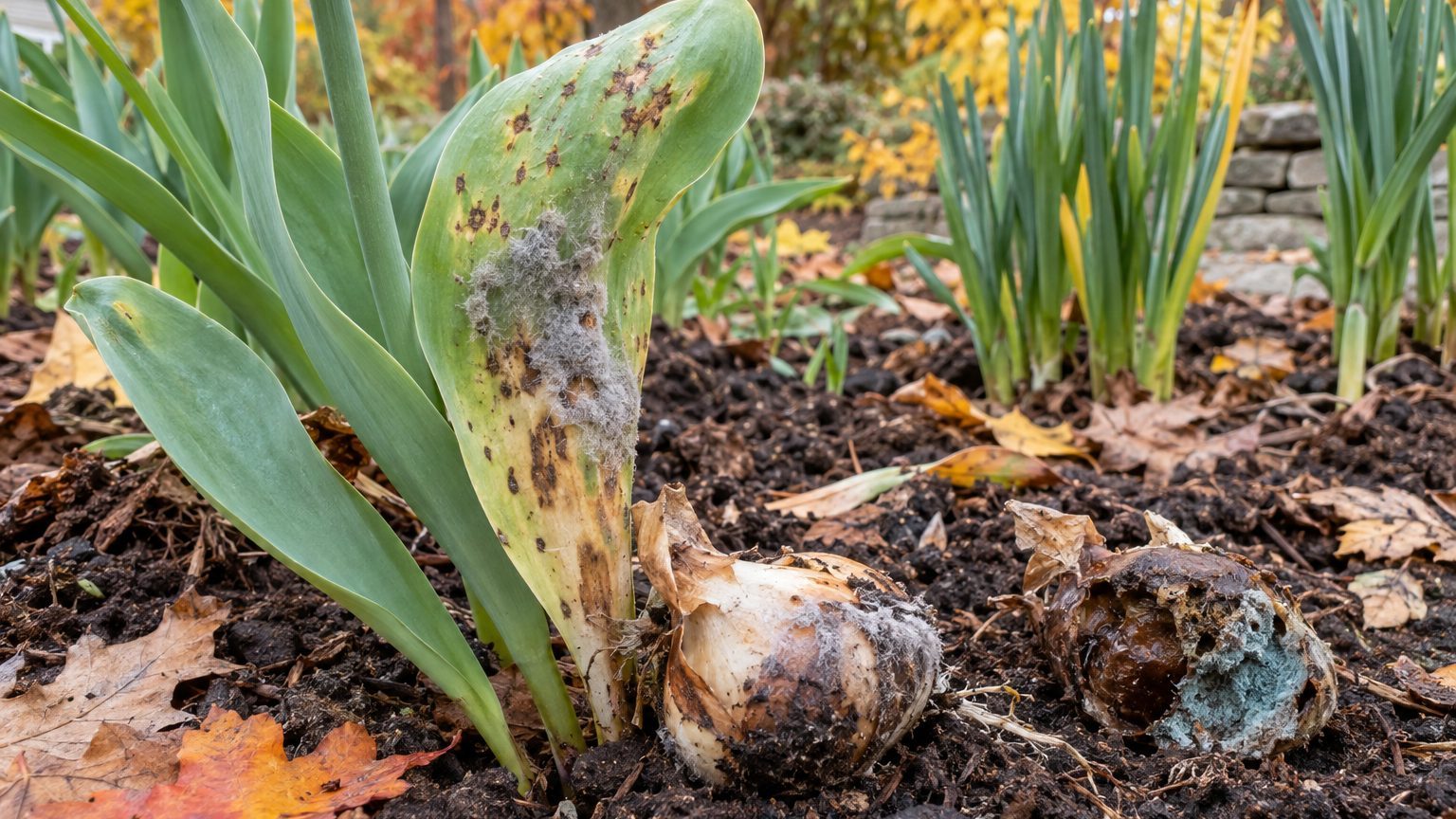
Taken together, these signs narrow down the cause. A gray fuzzy coat on leaves or flowers in a damp spring points to gray mold. A bulb that feels soft and water-soaked when you dig it points to rot, and a white or pink fungus on the outside of a bulb is reason enough to set it aside.

The State selector just below this section takes you to the page for your State, where the months for each job are laid out.

How to Prevent Bulb Diseases

Spring Bulb Diseases: Gray Mold, Basal Rot and Blue Mold

Prevention starts before the bulb touches the soil and carries on through the first weeks of spring, so the order of the jobs matters.

  1. Inspect every bulb before planting and discard any with white or pink fungus on it, as Pennsylvania guidance puts it, so that the disease never enters the bed.
  2. Choose a sunny spot with good air circulation, so that leaves dry quickly after rain and gray mold has little chance to settle.
  3. Keep the soil from staying soggy, because bulbs other than snowdrop, checkered lily and camas tend to rot when overly wet, as in Washington.
  4. Hold back on nitrogen fertilizer, since in Utah an overfed planting is considered more open to trouble than a lightly fed one.
  5. Check the bed as shoots emerge in spring, and pull up and discard any plant that is stunted, tightly curled, wilting or failing to flower, so that it cannot pass the problem to healthy neighbors.
  6. Clear away diseased leaves and stems instead of leaving them on the ground, because fungi such as Fusarium can survive winter in the soil on last year’s diseased tissue.

Healthy plants keep their green leaves until they yellow on their own, since that foliage feeds the bulb for next year. Removal applies only to plants that are clearly diseased. Where a bed has had a serious rot, Utah guidance is to avoid replanting that spot for at least three years.

Bulb Diseases by Bulb Type

The same fungus does not look the same on every bulb. A tulip shows trouble in its young leaves, a daffodil often shows it only when you cut the bulb open, and garlic shows it as soft spots on the cloves.

The signs below come from extension guidance written for different places, so treat them as a guide to what to look for in your own yard.

Bulb Type What changes Why it matters
Tulip Leaves emerge stunted and tightly curled in early spring, or fail to emerge, and shoots may curl to one side In Utah and Pennsylvania these are early signs of disease in the bulb itself
Tulip (tulip fire) Blighted, stunted plants appear from diseased bulbs planted by accident In Illinois, cool, wet spring weather can then cause an almost complete loss of flowers
Daffodil Layers of coarse white mold cover the bulb (crown rot) In Florida, infected plants come out and the soil is avoided for two to three years
Daffodil (nematodes) Darkened scales give a ringed look in cross section, with yellowish pockets inside In Florida, infested bulbs do not grow or fail to flower
Garlic Bulbs and cloves develop soft, water-soaked spots (blue mold) In Maine, this is the first sign to look for when handling cloves
Summer and fall bulbs Flowers may show variegation, leaves yellow streaks, and plants stay smaller and weaker In South Carolina, these plants are a poor bet for blooms

For you, the practical difference is where to look. Tulips tell you in spring through their leaves, daffodils may need a bulb cut open, and garlic needs a hands-on check of every clove. In New Jersey, most spring flowering bulbs have been selected for tolerance or resistance to the serious soil-borne diseases, which is one more reason to buy sound bulbs and avoid diseased ones. Tulip break virus and mosaic virus also turn up alongside gray mold in North Carolina, so a strangely patterned tulip is worth a second look.

Bulb Disease Mistakes to Avoid

Composting Diseased Plants

Composting Diseased Plants — Spring Bulb Diseases: Gray Mold, Basal Rot and Blue Mold

Most home compost bins never get hot enough to kill the fungi that cause bulb rots. Finished compost can then carry the problem right back into the bed. Bag the diseased bulbs and foliage with household trash instead, or dispose of them as local rules allow.

Planting Bulbs with Visible Mold

Planting Bulbs with Visible Mold — Spring Bulb Diseases: Gray Mold, Basal Rot and Blue Mold

A bulb with white or pink fungus on it may look salvageable, but planting it brings the disease into clean soil. In Illinois, the stunted, blighted plants that grow from diseased bulbs planted by accident are the usual source of each spring’s infection. Sort bulbs by hand before planting, and discard any that look suspect.

Waiting for Sick Plants to Recover

A tulip that comes up stunted or wilts soon after emerging will not bounce back. In Connecticut, plants hit by soil-borne fungal disease are not expected to recover, so the better move is to pull the plant up and discard it right away. Doing so protects the bulbs around it, and the bed gets a clean start the next season.

Bulb Diseases in Your State

The trigger is simple: a shoot that comes up curled, a plant that wilts soon after emerging, or a bulb that turns soft and moldy. When you see any of these, act on that plant. The months for each State are on that State’s page.

  • Go to your State’s page when you are sorting bulbs for planting, to see when that job falls where you live.
  • Return to it in early spring, when shoots emerge and any stunted or curled plants need to be pulled out.

Common Questions

Why Do Bulb Problems Come Back in the Same Spot?

Fungi such as Fusarium can overwinter in the soil on diseased plant tissue, and diseased bulbs planted by accident start fresh infections each spring. A bed that grew sick plants keeps some of the risk until the debris is gone and the spot has rested.

Does Dipping Bulbs Before Planting Help?

In Kentucky, the advice is to dip bulbs in water and then treat them with a fungicide, as a way to head off tulip and daffodil disease in fall. Read the label of any product carefully, and ask your county extension office which options suit your State.

Is a Streaked or Patterned Flower Always a Fungal Disease?

No. Variegated flowers and yellow-streaked leaves, as noted in South Carolina for summer and fall bulbs, can mean a different kind of problem than gray mold or rot. Check the bulb itself for soft spots or fungus before deciding what you are dealing with.

Deer- and Squirrel-Proof Bulbs, and How to Protect Them

Deer- and Squirrel-Proof Bulbs, and How to Protect Them

A bed that looks fine after planting and then turns up empty holes, or tulip shoots nibbled to stubs, is a familiar sight for bulb growers. The culprit is usually a deer, squirrel or chipmunk. What it takes depends on the bulbs you chose and how you planted them, and a few choices and a few simple barriers keep most of a bed intact.

Which Bulbs Do Deer and Squirrels Leave Alone?

Daffodils are the dependable choice. In North Carolina, they are described as deer- and rodent-resistant, and they multiply over time. Snowdrops are toxic, so in South Carolina deer go out of their way to avoid them. Tulips and crocus are the usual victims, and in South Carolina animals often dig and eat those bulbs during the winter.

Bulb type sets the rule, while climate shifts how long and how hard animals forage in your yard. The state selector just below this section leads to the page for your state.

How to Protect Bulbs From Animals

Deer- and Squirrel-Proof Bulbs, and How to Protect Them

Protection works best when it goes in with the bulbs, since a digging animal gets its reward below ground before anything shows above it.

  1. Choose bulbs deer dislike for the outer rim of the bed, so that deer that find them there move on. In New York, this keeps them from reaching the lilies and tulips behind.
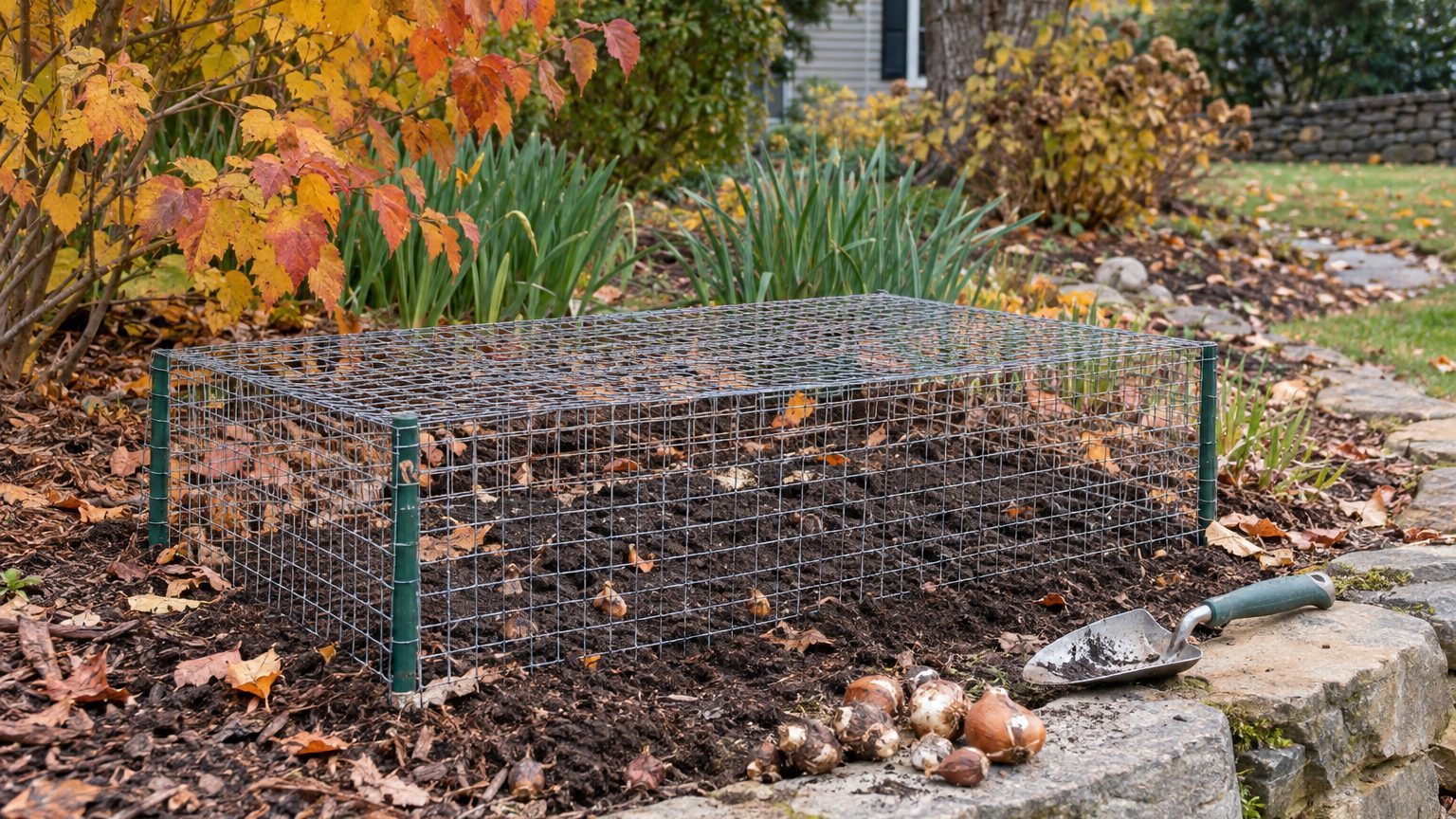
  2. Set prized bulbs in a small cage of 1/2-inch mesh, root plate down, so that the whole cage can be buried at the proper depth. In Illinois, several bulbs share one cage, which keeps the work manageable.
  3. Lay a sheet of hardware cloth over the planted area before the soil goes back, so that diggers meet metal instead of loose earth. In Ohio, this is the suggested route when only a few bulbs are going in and rodents are a problem.
  4. Dust bulbs or soak them in an animal repellent product before planting, so that they smell unappealing from the start. In Texas, this is the suggested answer to critters eating bulbs through winter.

Mesh with openings about half an inch wide is large enough for leaves to poke through in spring, as a New Hampshire gardener would put it. Leave the leaves in place afterward until they turn yellow, because they are feeding the bulb for next year.

Animal Damage by Bulb Type

Deer browse what grows above ground and rodents go after the bulb itself, so the same bed can lose different things to different animals. A bulb that animals skip needs little more than a good spot.

A bulb they like needs a barrier. The table sorts the bulbs by what the place-based notes say about them.

Bulb Type What changes Why it matters
Daffodils In North Carolina, deer- and rodent-resistant, and they multiply over time Little protection is needed, and the clump grows without chilling or pre-treatment
Snowdrops In South Carolina, deer avoid them because they are toxic They hold up in a deer-heavy yard where other bulbs would not
Siberian squill, grape hyacinth, hyacinths In Illinois, deer and rabbits do not eat them They fill gaps in beds where browsing animals are a problem
Tulips and crocus In South Carolina, animals often dig and eat the bulbs in winter The bulbs can disappear before spring, so they need mesh over or around them

For you, that means planting the tulips and crocus under mesh and giving daffodils and snowdrops the exposed spots. Lilies sit in a gray zone. In New York, deer that find disliked bulbs at the bed’s edge move on and leave the lilies and tulips alone.

Bulb Protection Mistakes to Avoid

Adding Bone Meal at Planting

Adding Bone Meal at Planting — Deer- and Squirrel-Proof Bulbs, and How to Protect Them

Bone meal is a long-standing habit in bulb planting. In North Carolina, it is advised against because it attracts animals instead of deterring them, and a bed that smells like a meal gets dug.

Plant bulbs in plain soil instead, and let the winter cold and the soil do the rest.

Putting Tulips on the Outer Edge

Putting Tulips on the Outer Edge — Deer- and Squirrel-Proof Bulbs, and How to Protect Them

Tulips along the front of a bed are the first thing a deer reaches. A rim of bulbs deer dislike, as New York gardeners use, turns the animals away before they find anything they like.

Keep the tulips toward the middle and put the daffodils on the outside.

Leaving the Bed Bare

Freshly planted soil is loose, and that invites digging. In Washington, bulbs are most vulnerable in fall right after planting, while the soil is still soft and worked up.

Cover the bed as soon as the last bulb is in, so the barrier is down while the soil is at its softest.

Protecting Bulbs in Your State

The sign to act is freshly worked soil with bulbs in it, since that is when animals find a bed. Each State has its own planting months, and the months for each State are on that State’s page.

  • Plant spring bulbs in the months suited to your state, and have mesh and cages ready before then.

Common Questions

Should You Dig Up Tulips and Check Them?

In Connecticut, tulips are dug when they look crowded and each year when disease is a concern. Inspect the bulbs before replanting and discard any that are not firm, are discolored, or otherwise look unhealthy.

Can Dry Winter Weather Hurt Bulbs Even When Animals Stay Away?

In South Dakota, dry winter air can speed moisture loss from foliage. Without enough moisture in the soil, shoots may dry out, which stunts growth or causes dieback. Mesh does nothing for that, so a bed that stays dry through a mild winter needs watering.

What Should You Do with Bulbs Still Unplanted?

Plant them as soon as the ground can be dug, and give them the same protection as the rest of the bed. A bulb left waiting only loses time to settle in before the cold.

Daffodils: When to Plant, Bloom Time and Care

Daffodils: When to Plant, Bloom Time and Care

Daffodil leaves pushing through cold ground in late winter are the payoff for a job done months earlier, in the fall. Those bulbs went in while the soil was cooling and the garden was winding down. Timing decides whether the roots settle before the hard freeze, and whether the flowers open at all.

When Should You Plant Daffodils?

Plant daffodil bulbs in the fall, once the soil has cooled and well before it freezes solid. They need winter cold to flower, and many bulbs want a chill of 12 to 16 weeks, which the ground supplies once they are planted.

Climate moves the window. In South Dakota, the soil should be below 60 degrees when the bulbs go in, so a cooling bed matters more than a date on the calendar. Milder winters give more room, and in South Carolina bulbs can go in any time before Dec. 1.

The state selector just below this section leads to the page for your state.

How to Grow Daffodils

Daffodils: When to Plant, Bloom Time and Care

Daffodils ask for little beyond sun, loose soil and patience, and the work goes in this order.

  1. Choose a sunny spot, because in Nebraska bulbs need at least 10 hours of direct sun per day to bloom in successive years.
  2. Dig the soil 12 inches deep and work in compost and a complete fertilizer, as Virginia growers do, so the roots meet loose, fed soil instead of a hard bed.
  3. Set standard bulbs pointed end up and 6 inches deep, as in Illinois, with smaller species bulbs placed shallower, so each one has enough soil cover against winter cold.
  4. Water the bed after planting, so the soil settles around the bulbs and the roots start to grow.
  5. Leave the leaves in place after the flowers fade until they turn yellow, so they can feed the bulb for next spring.
  6. Lift and divide crowded clumps, which in Utah happens every 3 to 4 years, because long-lived bulbs multiply and a packed clump blooms less.

Spacing of 6 to 12 inches apart in Illinois gives each bulb room to make offsets. Daffodils are perennial bulbs that should return year after year in Maryland, and the yellowing leaves are what pay for that return. In North Carolina, a site sunny in winter and shady in summer suits them, such as the ground under a deciduous tree.

Daffodil Types by Bulb Type

Narcissus are extremely variable. In Illinois they are sorted into 12 named divisions, grouped by flower form rather than by how the bulb is grown.

Most differences show up in the bloom, not in the planting hole. A few features are worth knowing before you buy.

Bulb Type What changes Why it matters
Long-trumpet types Trumpet is long and tubular Gives a bold, upright look in a border
Short-cup types Trumpet is short and cuplike Gives a softer, rounder flower shape
Single or double flowers Flowers come single or double Double forms look fuller in a bed
Several flowers per stalk One or several flowers open on a stalk Stalks with several flowers fill a spot with more color
Smaller species bulbs Planted more shallowly in Illinois than standard bulbs A shallow seat suits a small bulb and avoids burying it too deep

For you, the choice comes down to the look you want, since the sunny site, loose soil and fall planting stay the same across the group. Colors run through white, pink, yellow, orange and orange-red, and the six lower segments of the flower are white or yellow. Mixing forms in one bed gives a varied show.

Daffodil Growing Mistakes to Avoid

Cutting Leaves Early

Cutting Leaves Early — Daffodils: When to Plant, Bloom Time and Care

Tidying green leaves right after the flowers fade starves the bulb. The leaves are making the food that builds next year’s flower, so a bulb cut back too soon blooms smaller, or not at all.

Let the foliage turn yellow before it comes off. If it bothers you, plant perennials nearby that will grow up and hide it.

Planting in Deep Shade

In Pennsylvania, daffodils tolerate part shade, about 4 to 6 hours of direct sun. Below that, the bulbs may leaf out but make fewer flowers each year.

If a clump has gone blind, mark it and move it to a brighter spot after the leaves yellow. A bed under bare winter trees can still work, since the sun arrives while the leaves are growing.

Watering Dormant Bulbs

Watering Dormant Bulbs — Daffodils: When to Plant, Bloom Time and Care

In Florida, daffodils need at least 1 inch of rain or equivalent watering each week during growth and bloom. Once dormant, they are highly drought tolerant, and soggy summer soil can rot a bulb sitting idle.

Water in dry spells while the plants are in leaf. When the foliage fades, stop, and keep summer sprinklers off the bed if the soil drains slowly.

When to Plant Daffodils in Your State

The sign that triggers the job is cooling ground. Once the soil has dropped below 60 degrees, as in South Dakota, daffodil bulbs can go in, and the months that fit follow each state’s climate.

  • Planting months depend on your state’s climate, so check the right window for your area before you buy bulbs.
  • Pick up your bulbs when the soil is cooling and plant them as soon as the ground can be dug.

Common Questions

Can You Plant Daffodils in January?

In North Carolina, November and December are the preferred months, but some gardeners have had success planting even into January. A bulb still unplanted goes in as soon as the ground can be dug.

Will Daffodils Survive Winter in Your Zone?

In Pennsylvania, the daffodil is a hardy bulb that overwinters in USDA zones 3 through 8. Check your zone before planting, and give extra attention to drainage if your winters are wet.

When Do Daffodils Bloom?

In Illinois, daffodils bloom from early spring into spring, depending on the form you planted. Planting a mix of forms stretches the show over more of the season.

Crocus: When to Plant, Bloom Time and Naturalizing

Crocus: When to Plant, Bloom Time and Naturalizing

Crocus flowers open in the cold, often while patches of snow still sit on the lawn, and the corms behind that show go into the ground the autumn before. Planting happens once the soil has cooled and before it freezes. Timing, depth and spacing, plus a few habits that keep squirrels and mowers from undoing the work, decide how well a clump returns.

When Should You Plant Crocus Bulbs?

Crocus goes in the ground in fall, once the soil has cooled and before it freezes hard. In Tennessee, that means temperatures below 60 degrees and a planting window of October to November. In South Dakota, soil under that same 60 degree mark is the cue.

Climate shifts the picture. In Texas, where winters are mild, crocus needs six to 10 weeks of chilling before it is planted, so the corms spend time in cold storage first. Where winters are cold, the ground itself supplies the chill.

The state selector just below this section leads to the page for your state.

How to Grow Crocus

Crocus: When to Plant, Bloom Time and Naturalizing

Crocus asks for little, but the order of the work matters, because each step protects the corm through winter and sets up the spring show.

  1. Wait for cool nights before planting, so the corms are not pushed into growth by warm soil. In South Dakota, nighttime temperatures holding in the 40 to 50 degree range signal that it is time.
  2. Choose a spot in full sun or light shade with well-drained soil, because corms sitting in wet ground rot over winter.
  3. Dig each hole about 3 inches deep, which is what Illinois and Tennessee growers use, so the corm sits below the reach of frost heave yet still close enough to the surface for the shoots to push through early.
  4. Set the corm with the pointed tip facing up, as North Dakota growers advise, so the shoot does not waste energy turning toward the light.
  5. Space the corms 3 to 4 inches apart, so each clump has room to multiply without crowding its neighbors.
  6. Group them in drifts rather than single rows. In South Dakota, large groups of 20 to 30 bulbs look stunning, and in Wisconsin, clusters of 5 or more look best and can naturalize under ideal conditions.

For a lawn planting, choose crocus because only bulbs that flower very early in spring suit turf, according to Kentucky growers. The foliage then finishes its work before mowing season starts. Leave the leaves alone until they turn yellow, since they feed the corm for next year. Do not be surprised if crocus appears under a shrub you never planted it beneath, which is part of how it spreads.

Crocus Types by Bulb Type

Crocus grows from a corm, a waxy, irregular storage organ wrapped in a dark-brown, leathery skin. Plantings from corms differ from those grown from other bulb forms mainly in how deep and how tightly they go in.

Two kinds of crocus are worth telling apart on the label. Spring crocus, such as the woodland species, flowers from late winter to early spring. Autumn crocus, a different plant called Colchicum, flowers in early fall.

Bulb Type What changes Why it matters
Spring crocus corms (common or Dutch) Plant in fall about 2.5 inches deep and 2 inches apart in North Carolina, 35 to 70 corms per square foot Close spacing fills a patch quickly for a dense carpet of color
Woodland crocus (Crocus tommasinianus) Plant 3 to 4 inches deep and 3 to 4 inches apart in North Carolina, with lavender to red purple flowers from late winter to early spring It is the species noted as squirrel resistant in Tennessee, though it spreads prolifically
Autumn crocus (Colchicum) Plant 3 to 6 inches deep and about 6 inches apart in Wisconsin, and each corm sends up 1 to 10 flower stalks in early fall It needs more room and a different calendar than the spring types

For most yards, the practical difference is spacing. If you want a fast, thick carpet, plant spring crocus closer and shallower. If you want a patch that fills in on its own, woodland crocus is the one to pick, and give it space to spread. Plants stay small, usually only 4 to 6 inches tall in Arkansas, so they suit the front edge of a bed or the open lawn.

Crocus Growing Mistakes to Avoid

Planting Too Early

Planting Too Early — Crocus: When to Plant, Bloom Time and Naturalizing

Corms set into warm soil can sprout before winter, and the tender shoots are then exposed to cold they were not meant to meet. Hold off until soil temperatures fall below 60 degrees, which in Tennessee happens by October and November. In warm regions, that is also when pre-chilled corms go in.

Planting Too Shallow or Too Deep

Planting Too Shallow or Too Deep — Crocus: When to Plant, Bloom Time and Naturalizing

Corms set just under the surface are easy pickings for squirrels and prone to frost heave. Planting far deeper than 3 inches delays the shoots. Aim for 3 inches in most places, and go a little deeper only in the larger spacing that autumn crocus calls for in Wisconsin.

Cutting the Leaves Too Soon

After the flowers fade, the narrow leaves keep feeding the corm. Mowing them down or tying them while still green leaves the corm underfed, and next spring brings fewer flowers. Wait until the foliage turns yellow, and in a lawn planting hold off mowing that patch until then. Only very early flowering bulbs belong in turf for exactly this reason.

When to Plant Crocus in Your State

The sign to act on is cool soil: nights settling into the 40 to 50 degree range in South Dakota, and ground that has dropped below 60 degrees but not yet frozen. When that arrives, the corms go in.

  • Planting months depend on where you live, so check the timing for your area before ordering corms.
  • Go there again in late summer to line up the planting date with your local cool-down.

Common Questions

Can You Plant Crocus in a Lawn?

Yes, as long as the bulb flowers very early in spring, as crocus does. The leaves then die back on their own before regular mowing begins, so the corms keep their food supply.

Will Squirrels Dig Up Crocus?

They can. Woodland crocus, Crocus tommasinianus, is noted as squirrel resistant in Tennessee, though it spreads freely, so give it room.

How Tall Do Crocus Plants Grow?

Crocus plants stay small, usually only 4 to 6 inches tall in Arkansas, which is why they work best in clusters at the front of a bed or in the lawn.

How to Choose Spring Bulbs: Size, Type and What to Buy

How to Choose Spring Bulbs: Size, Type and What to Buy

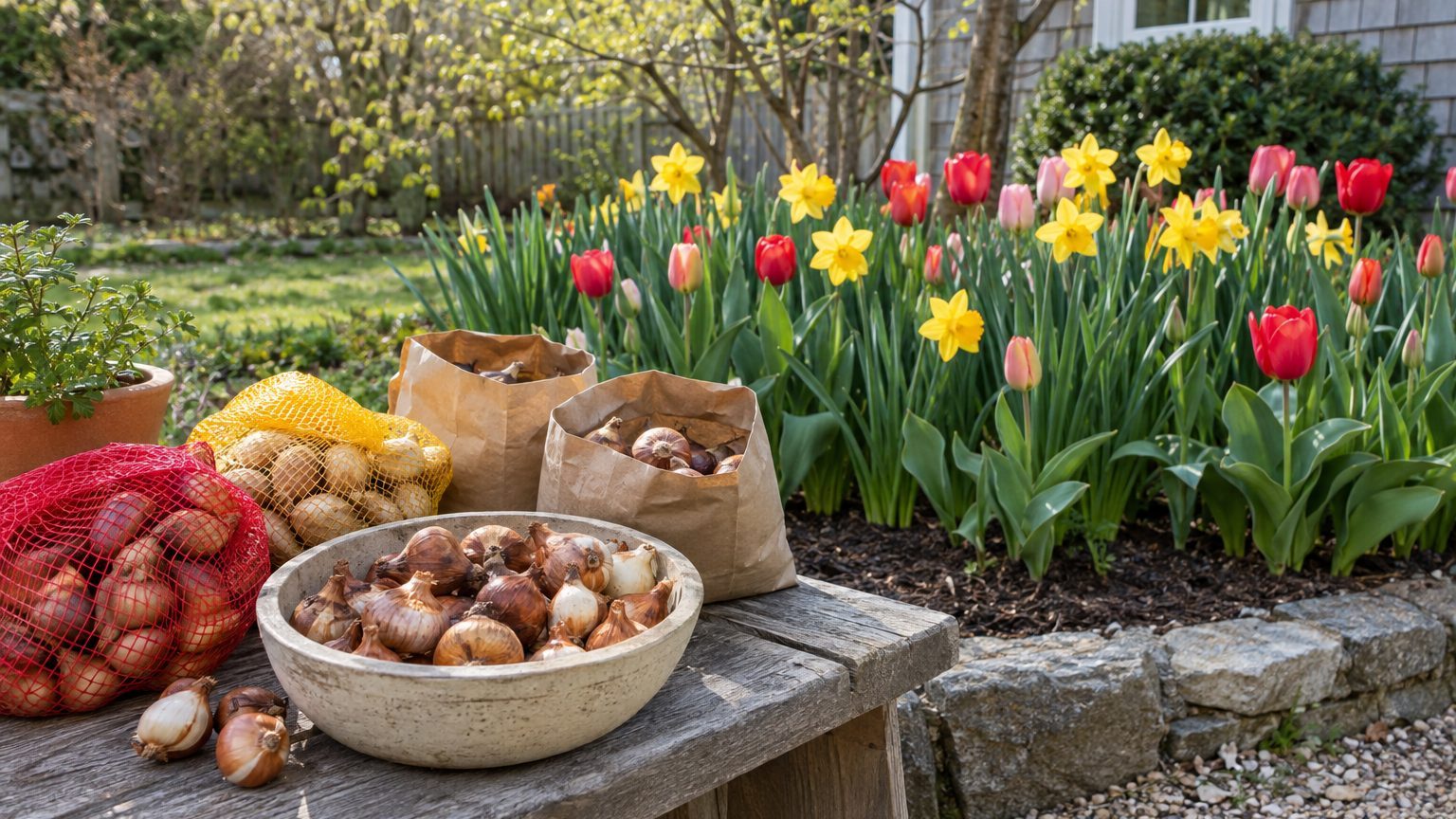
Pick up a bulb in the garden center bin and it tells you a lot before you ever dig a hole: the weight in your palm, the feel of the skin, the firmness under your thumb. Choosing spring bulbs comes down to size, soundness and type, with climate deciding what suits your yard.

Which Spring Bulbs Should You Buy?

Buy the biggest, firmest bulbs of the type your winters suit, since spring bulbs need cold to flower and size decides how much they bloom. Tulips, daffodils, hyacinths and crocus all follow that rule, but each type sets its own size and handling needs.

Climate narrows the field. Where winters are mild, some types need more chilling than your ground provides, and where winters are hard, bulbs that settle in well before the freeze do best.

The state selector just below this section takes you to the page for your state.

How to Choose Bulbs at the Store

How to Choose Spring Bulbs: Size, Type and What to Buy

Good bulbs are picked in a particular order, starting with when you shop and ending with how you carry them home.

  1. Shop early in the season, because in Colorado a September purchase gives the widest selection of size and variety, and Ohio gardeners are told the same about quality.
  2. Lift each bulb and feel its weight, since a bulb heavy for its size is full of stored food, and larger bulbs give bigger or more numerous flowers.
  3. Squeeze gently and reject soft spots, mold or rot, because firm, unblemished bulbs bloom well while withered or damaged ones may bloom poorly.
  4. Check the skin, which should be whole and papery, though some sloughing and cracking is fine on tulips and crocus.
  5. Look at the tips and roots and leave behind any bulb that is already sprouting or has elongated roots, because it has started growing before it is in the ground.
  6. Take bulbs home to a cool place, and plant as soon as the ground allows.

Size varies by type, so compare like with like. Some tulip and daffodil varieties are naturally small in stature, and a modest bulb of such a variety is not a poor one. Heat is the quiet danger after purchase. In Washington, bulbs are kept in a dry, dark spot that stays cool if planting must wait, and in South Carolina a cool place between 35 and 55°F is recommended. In North Carolina, bulbs bought in September or October wait in a cool area until planting time.

Choosing Bulbs by Bulb Type

Tulips are where size matters most, so they deserve a closer look at the label and the bulb itself. A bulb that is too small may leaf out and never bloom, and that is a disappointing way to spend a spring.

Daffodils respond to storage temperature, so how the store keeps them counts as much as how they look.

Bulb Type What changes Why it matters
Tulips In South Dakota, a circumference of four inches or greater is recommended, and under 2.5 inches flower initiation will not occur A small bulb gives leaves without a flower
Tulips for cutting In Maryland, a top size of 12/+ cm is ideal, and some growers accept 11/12 cm Smaller bulbs give smaller flowers and shorter stems
Daffodils In Nebraska, storage at 60 to 65°F preserves the bulb’s energy, while long spells above 65°F can damage the flower inside A bulb kept too warm can fail to bloom

For you, that means measuring tulips and keeping daffodils out of warm garages and sunny car trunks. Hyacinths and crocus are best judged by the general signs of weight, firmness and a sound skin, and a crocus with some cracking in its skin is still fine.

Bulb Buying Mistakes to Avoid

Buying Small Tulip Bulbs

Buying Small Tulip Bulbs — How to Choose Spring Bulbs: Size, Type and What to Buy

Bargain bags often hold undersized bulbs. In South Dakota, a tulip under 2.5 inches around will not initiate a flower, so you get foliage and no bloom. Check the size on the package, and choose bulbs of four inches or more when the label allows.

Letting Bulbs Sit in Heat

Letting Bulbs Sit in Heat — How to Choose Spring Bulbs: Size, Type and What to Buy

A bag left in a hot garage or a warm shed can ruin the flower inside before it is planted. In Washington, bulbs should never be exposed to heat before planting, even briefly. Keep them cool and dark, and get them in the ground when the soil can be worked.

Ignoring Soil Before Planting

Good bulbs still struggle in the wrong soil. In Kansas, a soil pH between 6.0 and 7.0 is recommended. A simple soil test before you plant tells you whether the ground suits the bulbs you bought, and gives you time to adjust it.

Best Bulbs for Your State

The sign to act on is simple: bulbs appear in stores and the soil has cooled enough to dig. The months for each state sit on that state’s page, where you will find what suits your winters.

  • Open your state’s page to see which months suit planting where you live.
  • Go shopping as soon as bulbs reach the shelves, then plant promptly once the ground can be dug.

Common Questions

Can You Plant Bulbs That Have Started to Sprout?

Sprouting is a sign the bulb has begun growing too early, so it is better to pick unsprouted ones in the store. A bulb you already own that has sprouted should still go in as soon as the ground can be dug, with the shoot left uncovered by hand-packed soil only lightly.

Does a Bulb’s Paper Skin Need to Be Perfect?

For most bulbs, the skin should be whole. Tulips and crocus are the exception, where some sloughing and cracking does no harm.

Is a Bigger Bulb Always Better?

Larger bulbs generally give bigger or more numerous flowers. Some tulip and daffodil varieties are small by nature, so compare bulbs within the same variety.

Alliums: When to Plant, Bloom Time and Care

Alliums: When to Plant, Bloom Time and Care

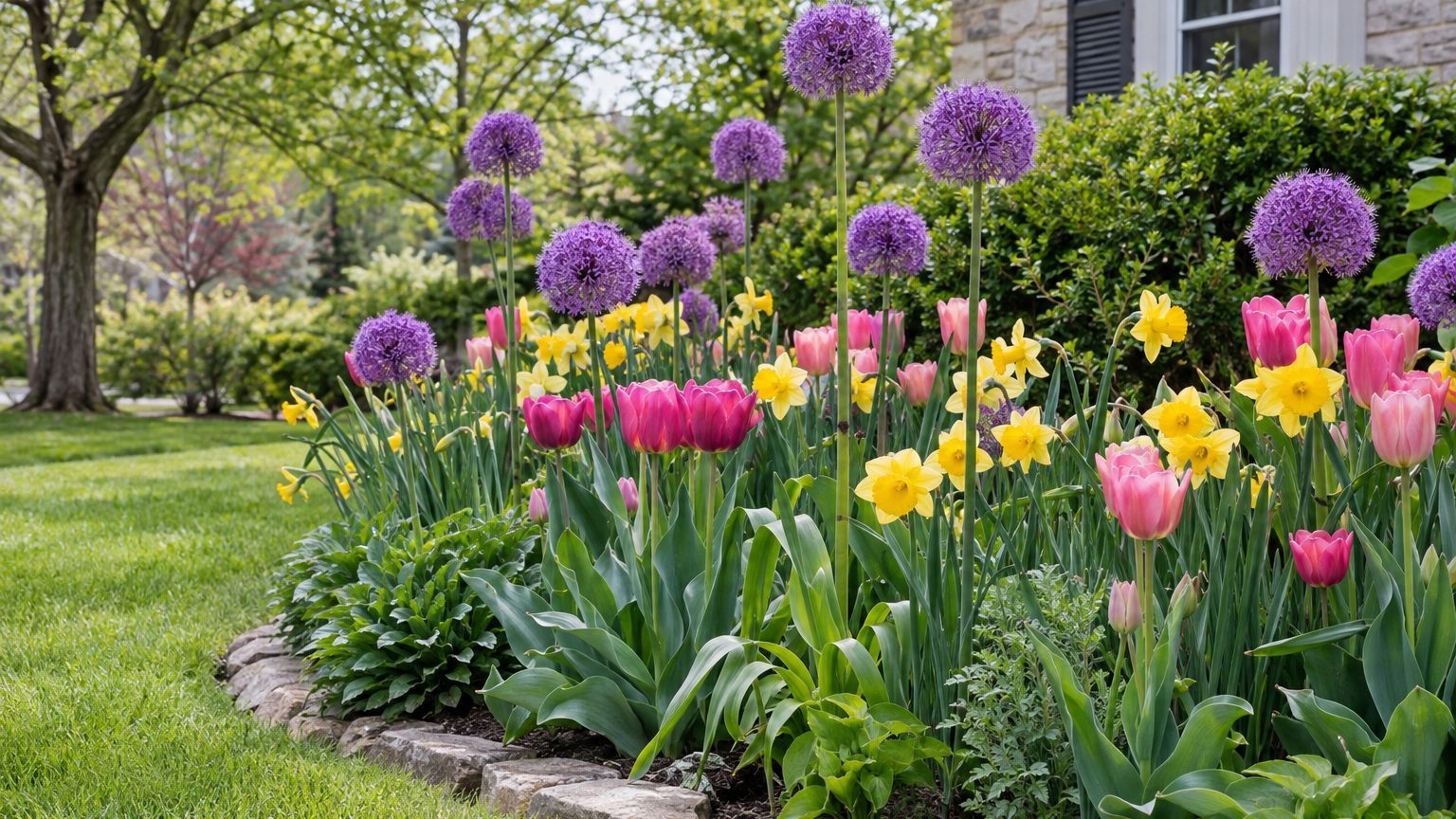
Tall pinkish purple globes held high on bare stalks are a late spring sight, and each one begins as a bulb tucked into cool autumn soil. Growing alliums well comes down to a few simple choices about timing, depth and sun, and most of them are settled in a single afternoon of planting.

When Should You Plant Allium Bulbs?

Plant allium bulbs in the fall, a little ahead of the hard freeze that locks up the soil. Gardeners in the South plant later than those in the northern states, and big bulbs go deeper than small ones, so climate and bulb type both move the exact date.

In Iowa, bulbs are planted in October. In South Dakota, alliums are easygoing enough to go in a few weeks before a hard frost, which still leaves the roots time to settle before the ground stiffens.

Roots that form in the cool autumn soil are what carry the plant into its spring growth. The state selector just below this section leads to the page for your state, where the planting months are set for your climate.

How to Grow Alliums

Alliums: When to Plant, Bloom Time and Care

Alliums ask for very little, and a short order of work protects the bulb all the way to bloom.

  1. Choose a spot with dry to medium, well-drained soil, so that the bulb never sits in cold standing water through the winter.
  2. Dig each hole to a depth that matches the bulb, deeper for large bulbs and shallower for small ones, so the tall stalk stands on firm ground.
  3. Set each bulb pointed end up and one foot from its neighbor, so the big flower heads have room to open without crowding.
  4. Cover the bulbs and water them in during the fall, so the roots start growing before the soil turns cold.
  5. Let the leaves stay after the flowers fade until they turn yellow, then cut them back, so the bulb has time to store energy for next year.

Bloom comes late in the bulb season. In Illinois, the flowers open from late spring to early summer, and in New Hampshire the big globes show up in late April or May. Deer may pass them by, but pocket gophers in Wyoming have been known to eat them.

Allium Types by Bulb Type

Bulb size decides how deep the hole goes, and the type of allium decides how tall the flower stands. Garden centers sell everything from compact types to giants, so a quick look at the label saves guesswork.

Planting and bloom differences vary by bulb type, and each figure is given along with the place where it was written.

Bulb Type What changes Why it matters
Larger bulbs Planted 6 to 8 inches deep A deep hole suits the bulk of a big bulb
Smaller bulbs Planted 3 to 4 inches deep A shallow hole keeps a small bulb from being buried too far down
Big globe types Stalk 3 to 4 feet tall in Illinois Tall stalks belong behind lower plants
Giant globe types Stalk 4 to 5 feet tall in Nebraska Some stand taller than the fence rail, so plan the view
Compact to mid-height types Height from 6 inches to almost 3 feet in Utah Short ones suit the front of a bed
Allium ‘Millenium’ Stems 18 to 20 inches tall, blooming mid to late summer in North Carolina It brings color later in the season than the spring globes

For you, this means reading the bulb size before digging. Large bulbs get the deeper hole, small ones the shallow hole, and the expected height decides where in the bed they stand.

Allium Growing Mistakes to Avoid

Planting in Shade

Planting in Shade — Alliums: When to Plant, Bloom Time and Care

Alliums love sunlight, and in South Dakota they do best where the spot stays sunny all day long. Part shade can work, as in South Carolina where they grow in full sun to part shade, but a deeply shaded bed gives the bulb little of what it likes. Move the planting to the brightest open ground you have.

Leaving Bulbs Unplanted

Leaving Bulbs Unplanted — Alliums: When to Plant, Bloom Time and Care

A bag of bulbs forgotten on a shelf past planting time still has a chance. Plant it as soon as the soil can be dug, because a bulb in the ground can grow roots and one in the bag cannot. Check the bulbs first and discard any that feel soft.

Ignoring Crowded Clumps

Clumps grow thicker each year, and bulbs packed together compete for room. In Wisconsin, the advice is to divide every third year or when 8 to 10 bulbs appear in the clump. Lift the clump, separate the bulbs and replant them with space around each one.

When to Plant Alliums in Your State

The sign to act is cooling autumn soil with a hard frost still ahead of you. That is the moment the bulbs should be going into the ground, and the months for each state are on the page for that state.

  • You will find the planting months for your state there, so open it before you shop for bulbs.
  • Go back to it when nights turn cool, then dig your holes and set the bulbs in.

Common Questions

How Long Do Alliums Keep Coming Back?

In North Carolina, ornamental onions bloom for three or four years before dying out, and they may occasionally last longer when planted in perfect conditions. Dividing crowded clumps helps keep a planting going.

Can You Divide Alliums in Spring or Only in Fall?

In North Carolina, bulbs are divided as needed in spring or fall. Pick the season when the clump looks crowded and the ground is workable.

Is ‘Purple Sensation’ a Good Allium for Cold Climates?

In Alaska, the showy allium called ‘Purple Sensation’ is recommended as a bulb to consider planting in the fall. It joins the bed on the same schedule as other alliums.

The almanac, state by state. Every date on this site comes from a state’s own frost facts and its extension service’s calendar — and says where it comes from.